Thought Leadership

The Laser’s Radar Moment: Changing the Economics of Air Defense

09/03/2026

By Mary Clum, President of Space, Cyber and Directed Energy, AV 

Every generation sees a small number of technologies move into military force structure and fundamentally change the dynamics of warfare. 

Radar did it. 

Uncrewed and autonomous aircraft did it. 

Now, high-energy lasers are doing it. 

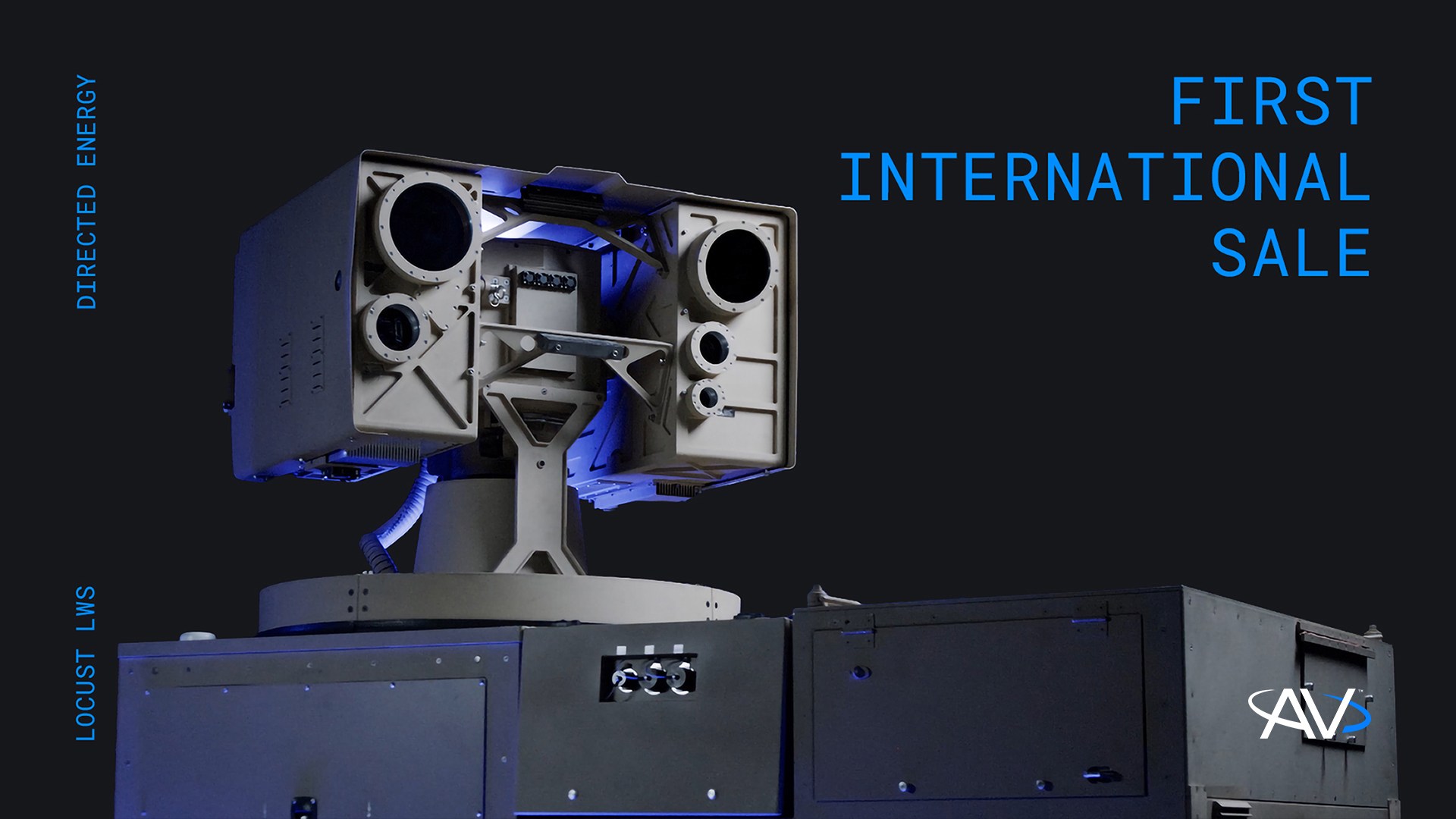
This week’s announcement that the United States Army has selected AV’s LOCUST® laser weapon system for its Enduring-High Energy Laser (E-HEL) program is a significant moment in American history.  

The selection represents the first-ever production contract for directed energy systems in United States history, signaling a historic transition from prototype to production for laser weapon systems.  

After decades of research, development and demonstration, lasers are ready to become part of how we defend the force and they have arrived at exactly the moment we need them. 

We Have a Magazine Problem 

The proliferation of inexpensive drones has fundamentally changed the economics of warfare. 

An adversary no longer needs an exquisite aircraft or sophisticated missile to create a significant threat. Increasingly capable unmanned systems can be produced inexpensively and employed in large numbers, forcing defenders to respond again and again. 

At the same time, recent conflicts have underscored the importance, and limits, of our inventories of sophisticated interceptors. Those weapons remain essential, but they are expensive, take time to manufacture and exist in finite quantities. 

That creates an equation we cannot ignore. 

We cannot afford to routinely expend scarce, high-value interceptors against every low-cost drone launched by our adversaries. 

We need to change the dynamics of the engagement. 

High-energy lasers can help do exactly that. 

Thin the Herd. Preserve the Magazine. 

The power of directed energy is not that a laser replaces every missile, gun or electronic-warfare system. 

It is that it changes what those systems have to fight. 

Think about a large group of unmanned aircraft systems approaching a defended position. Today, the defender may have to make difficult choices about when to employ finite kinetic weapons and against which targets. 

Now, introduce high-energy lasers into that defensive architecture. 

The laser can engage appropriate threats repeatedly at the speed of light without consuming a traditional munition with every shot. Combined with electronic warfare and other counter-UAS effects, directed energy can thin the herd before the remaining threats reach the layers where scarce kinetic interceptors are required. 

That changes the battle. 

If lasers and other lower-cost effects can defeat a meaningful portion of an incoming raid, commanders can preserve missiles for the sophisticated, hardened or time-critical threats that truly require them. 

In a world where magazine depth matters as much as individual weapon performance, that is a profound advantage. 

It is also why the right comparison isn’t laser versus missile. 

The future is laser plus electronic warfare plus guns plus missiles, connected through sensors and command and control. 

The objective is simple: use the most appropriate and affordable effect first and preserve the most capable, and scarce, effects for when they are needed most. 

From Radar to Autonomy to Directed Energy 

There is an important historical precedent for what is happening. 

Radar transformed air defense not simply because it could detect an aircraft. Its real impact came when radar entered the force and became part of an integrated architecture connecting sensors, command and control, aircraft and weapons. 

Decades later, unmanned aircraft followed a similar trajectory. 

Their transformational moment wasn’t the first unmanned flight. It came when unmanned systems moved into military operations at scale. Today, increasingly autonomous aircraft have changed how militaries sense, target and fight. Inexpensive drones are changing the economics of warfare itself. 

Directed energy has now reached its own inflection point. 

The historic milestone is no longer proving that a laser can destroy a drone. 

We have proven that. 

The historic milestone is bringing lasers into the force structure and making them an enduring part of the architecture of air defense. 

Lasers Are Ready 

For decades, directed-energy programs were judged primarily on laser power and whether they could destroy a target under controlled conditions. 

That is no longer the standard that matters. 

A weapon has to work for the warfighter and it has to answer these questions before it can be truly operational at scale. 

  • Can soldiers operate it?  
  • Can it detect, track and defeat relevant threats?  
  • Can it perform outside the laboratory?  
  • Can it integrate with existing sensors and command and control?  
  • Can it operate across different platforms?  
  • Can industry manufacture and sustain it at scale? 

Those are the thresholds separating promising technology from an operational weapon system. 

They are also the thresholds AV has been working to cross with LOCUST. 

We have proven LOCUST across fixed-site, mobile and maritime environments. 

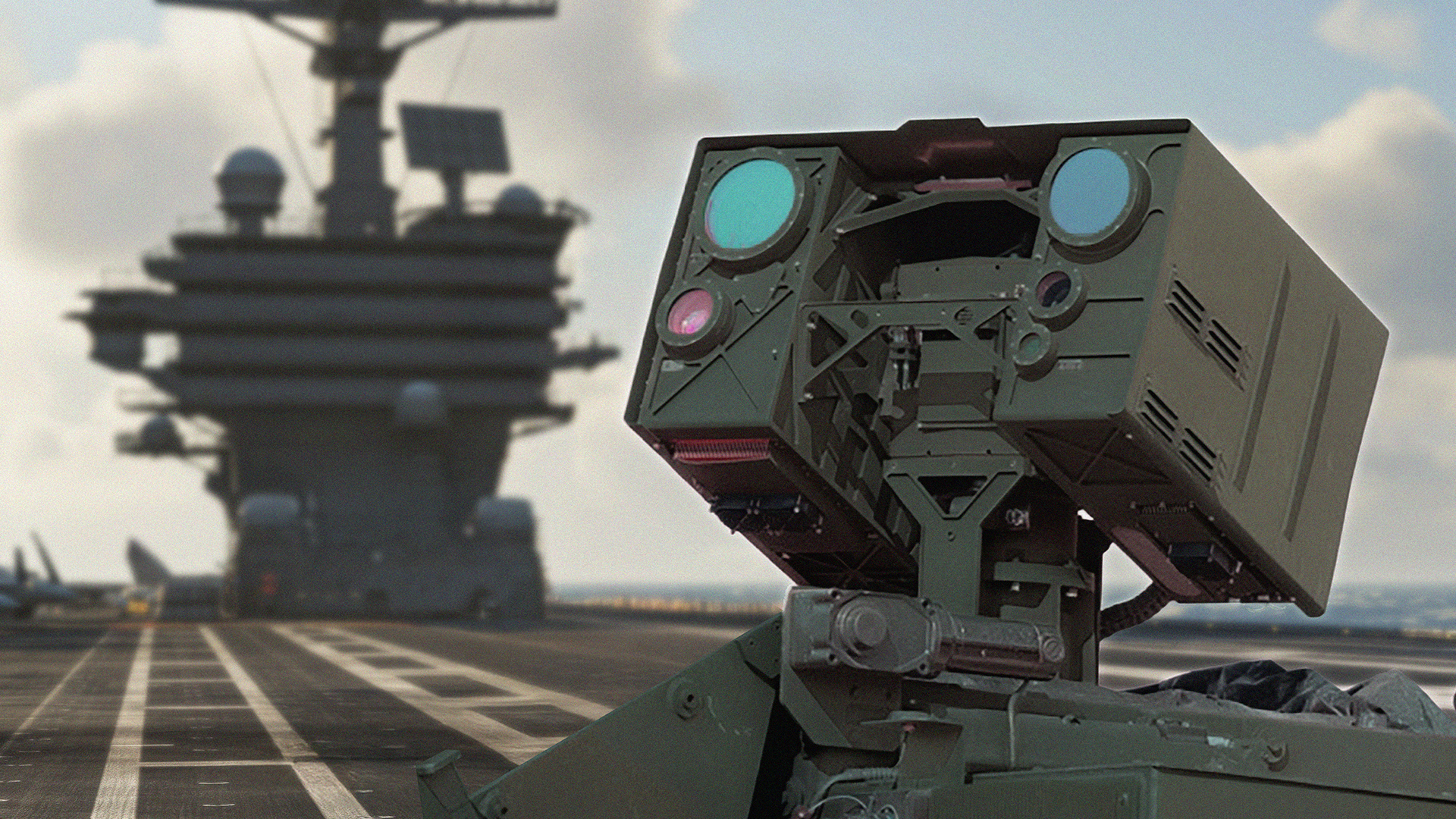
We rolled a palletized LOCUST system aboard the USS George H.W. Bush, powered it from the ship and we trained sailors to use it. After less than an hour of training, those sailors shot down 100-percent of the target presented during the demonstration. 

We took LOCUST to White Sands Missile Range and conducted a counter-UAS laser engagement in coordination with the Department of War and Federal Aviation Administration in complex national airspace. That led to a DOW-FAA agreement that established how lasers can deployed safely and predictably in domestic airspace.   

These were more than demonstrations of physics. They were demonstrations that prove the viability of lasers, specifically our LOCUST, for use at scale. 

Scaling the Industrial Base 

Introducing a new class of weapon into the force creates another responsibility: America must be able to build it at scale. 

Technology without production capacity does not create deterrence. 

That is why AV has invested ahead of the requirement. 

We are investing more than $30 million to expand our Albuquerque, New Mexico, manufacturing operations, including the facilities where LOCUST is produced.  The investment will further establish a vertically integrated, next-generation manufacturing campus expected to generate more than $670 million in economic impact over the next 10 years, boost production of mission-critical defense and space technologies, create more than 450 high-wage jobs, and enable AV to scale domestic production of directed energy systems and space-grade components that support national security and resilient supply chains. 

We didn’t invest simply to prove that another laser could work. 

We invested to build a weapon system that can be produced, fielded and scaled. 

That distinction matters.  

Recent conflicts have reminded us that America’s technological advantage must be matched by industrial capacity. We need both exquisite capabilities and the ability to produce sufficient quantities of the systems that protect our forces. 

Directed energy can contribute to that equation from both sides: expanding defensive magazine depth while preserving the kinetic inventory we already have. 

A New Air-Defense Equation 

Transformational technologies rarely eliminate what came before them. 

Radar didn’t eliminate pilots. 

Autonomous aircraft haven’t eliminated crewed aircraft. 

And lasers will not eliminate missiles, guns or electronic warfare. 

They change the architecture around them. 

Radar changed how we see. 

Autonomy changed how we sense and operate at scale. 

Directed energy changes the economics of how we defend. 

That may ultimately be the most important contribution of laser weapons. 

In an era of mass, autonomous threats and constrained interceptor inventories, victory will not simply go to the side with the most sophisticated individual weapon. It will increasingly depend on which side can generate and sustain combat power longer. 

Lasers give the defender something fundamentally different: the ability to repeatedly remove threats without depleting a traditional magazine with every engagement. 

Thin the herd with directed energy. Preserve kinetic weapons for the threats that require them. Give commanders greater magazine depth and more choices. 

For decades, laser weapons represented the future. 

Now they are ready for the force—and they can change the dynamics of air defense. 

ABOUT THE AUTHOR 

Mary Clum is President of Space, Cyber & Directed Energy at AV, bringing more than 25 years of leadership and operational experience across the defense, space, and technology sectors. Her career spans program management, systems analysis, operations, business development, and the development and delivery of highly technical products supporting the Department of War, Department of Energy, and other national security customers. She holds a BA in Political Science from the University of New Mexico and an MS in Project Management from the University of Southern California. 

—— 

ABOUT AV — JOINING THE MISSION 

AeroVironment (AV) is a defense technology company with a mission to invent and deliver advantage to U.S. and allied militaries. AV isn’t for everyone. We hire the curious, the relentless, the mission-obsessed.  

AV doesn’t just build defense technology; we redefine what’s possible. As the premier autonomous systems company in the U.S., we deliver breakthrough capabilities across air, land, sea, space, and cyber. From autonomy-enabled drones and loitering munitions to integrated autonomy and space resilience, our technologies shape the future of warfare and protect those who serve. 

Founded by legendary innovator Dr. Paul MacCready, AV has spent over 50 years pushing the boundaries of what unmanned systems can do. Our heritage includes seven platforms in the Smithsonian—but we’re not building history, we’re building what’s next. 

If you’re ready to build technology that matters – with speed, scale, and purpose – come find your people.  

EXPLORE OPPORTUNITIES 

Let’s Advance Your Mission

Product Catalog

View the full catalog to explore our solutions in detail.

Press Release

AV’s LOCUST® Selected for Nearly $500 million Army Counter-UAS Contract for Enduring-High Energy Laser (E-HEL) Program

09/02/2026

ARLINGTON, Va., September 2, 2026 — AeroVironment, Inc. (“AV”) (NASDAQ: AVAV), a global leader in proven autonomous and counter-drone systems, today announced it has been awarded a landmark contract valued at $464.8 million by the U.S. Army Portfolio Acquisition Executive for Fires (PAE Fires) program office for the Enduring-High Energy Laser (E-HEL) program.  

This award represents the first-ever production contract for high energy laser weapon systems in United States history, signaling a historic transition from prototype to production for laser weapon systems.  

“This award marks a defining moment not only for AV, but for the future of modern defense,” said Wahid Nawabi, Chairman, President, and Chief Executive Officer at AV. “The transition of directed energy from experimentation to an enduring, fielded capability reflects years of collaboration, innovation, and operational success alongside the U.S. Army. We are proud to deliver these production systems and support the Army’s mission with scalable, modular, and cost-effective defense solutions.” 

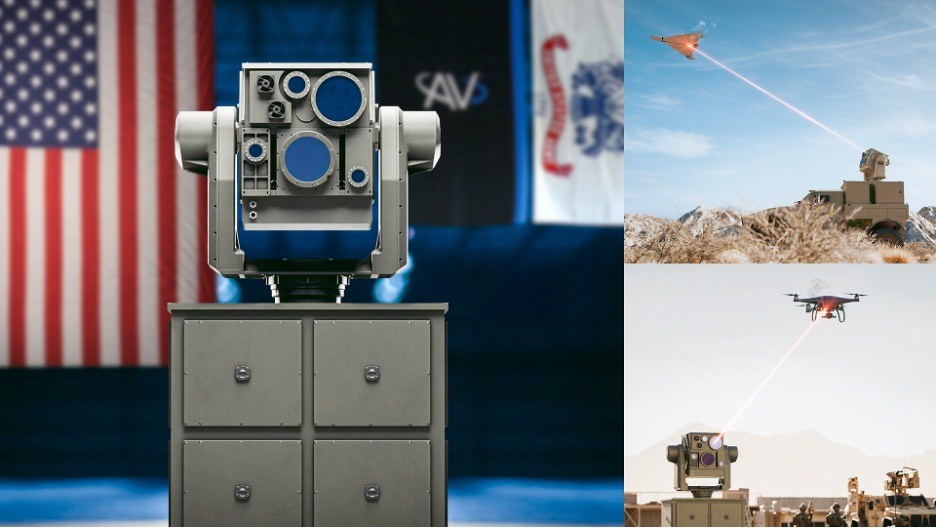
Under this Other Transaction Agreement (OTA), AV will deliver dozens of LOCUST® X3 laser weapon systems over the next few years in support of multi-year fielding requirements, advancing the Army’s layered air defense capabilities against group 1-3 unmanned aircraft systems (UAS) while also solidifying directed energy as a cornerstone of future battlefield operations.  

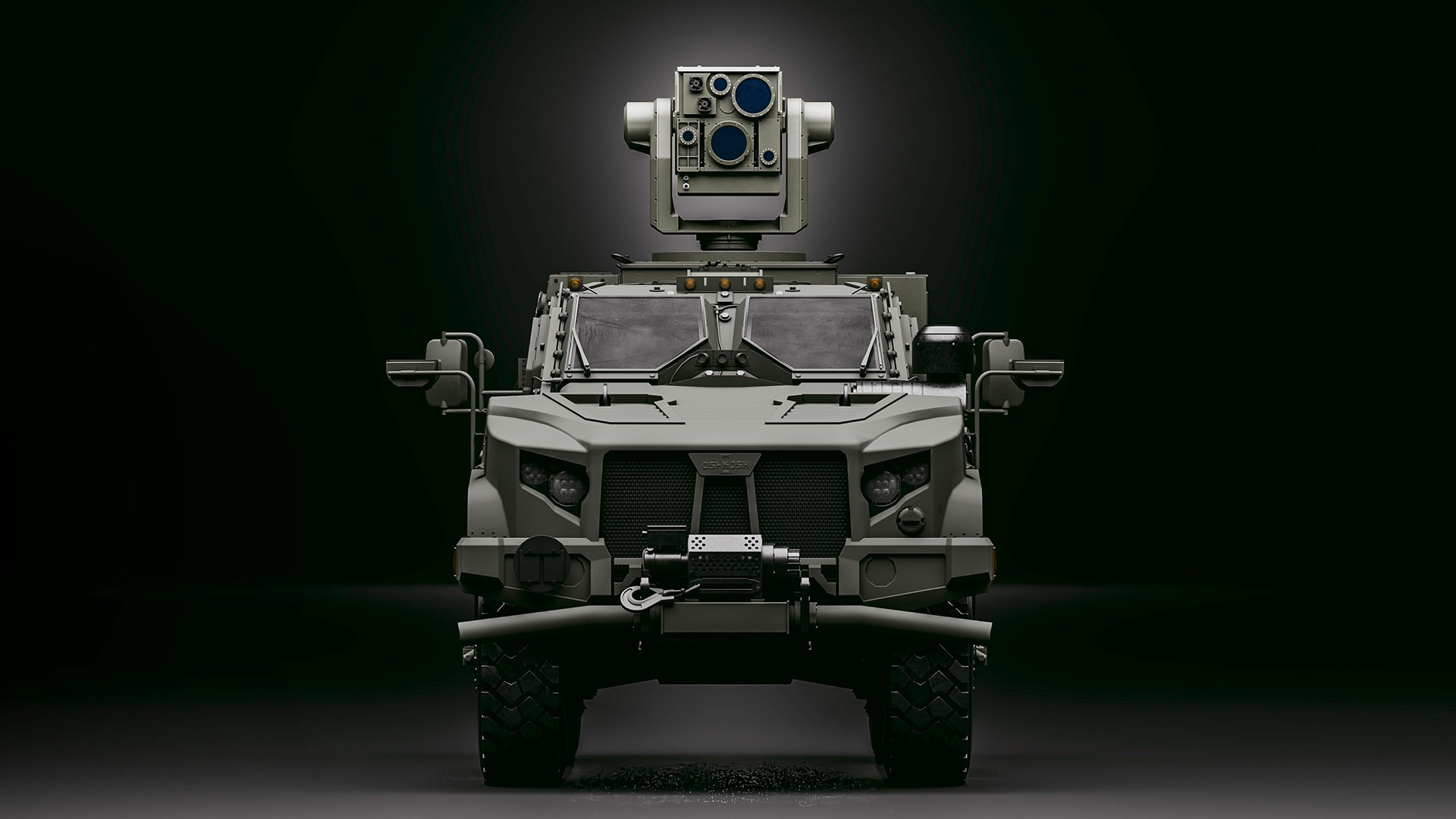
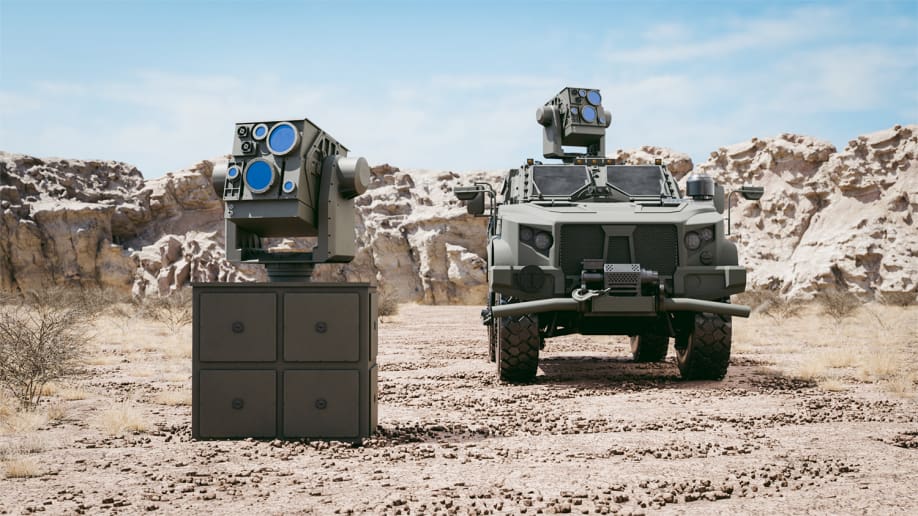
AV’s LOCUST X3, a 30-kilowatt platform-agnostic system, will be integrated with various platforms such as the Army’s Joint Light Tactical Vehicle (JLTV), with options for palletized configurations, while analyzing the potential to integrate on an Infantry Squad Vehicle (ISV) in the near future. As part of the program, AV will also provide ongoing system support and training. 

The E-HEL program builds upon the success of the Army Multi-Purpose High Energy Laser (AMP-HEL) prototypes currently in use by the Army.  

The contract follows LOCUST’s successful testing at White Sands Missile Range, led by Joint Interagency Task Force 401 (JIATF-401) and PAE Fires, which demonstrated safe, effective counter-drone operations in U.S. airspace and directly enabled a DOW–FAA safety agreement validating the system for domestic use. 

By entering production, the E-HEL program enables the Army to field a sustainable, scalable, and cost-effective solution against UAS. The ramp up in production will be supported by a $30 million investment in AV’s Albuquerque, NM facility that was announced in March of 2026 

“This program represents the culmination of years of operational lessons learned and rapid prototyping,” said John Garrity, Vice President of Directed Energy Systems at AV. “E-HEL is not a future capability, it is a production-ready system, built on proven technology, and designed to meet the demands of today’s fight while scaling for tomorrow’s threats.” 

The award further reinforces AV’s leadership in directed energy and its role as a trusted partner to the U.S. Department of War. The company’s platform-agnostic approach enables integration across multiple mission sets and platforms, ensuring flexibility and rapid deployment in diverse operational environments. 

As the Army transitions to procurement at scale, the E-HEL program establishes a foundation for sustained production, innovation, and fielding of next-generation laser weapon systems, delivering capability “at the speed of light.” 

About LOCUST® 

AV’s LOCUST family of directed energy systems represents a breakthrough in counter-UAS defense, delivering precise, scalable, and cost-effective protection against evolving aerial threats. Its performance was recently featured on CBS News’ 60 Minutes, underscoring its growing relevance in modern defense and broader adoption. LOCUST was also successfully demonstrated aboard the U.S. Navy’s USS George H.W. BushThe system was also validated in joint testing with JIATF-401 at White Sands Missile Range, a demonstration that informed Department of War and Federal Aviation Administration coordination on the safe use of lasers in domestic airspace. The latest evolution, LOCUST X3, introduces enhanced power, modularity, and AV_Halo™ AI-driven targeting and serves as a key effector within AV’s Halo_Shield™ architecture. 

About AV 

AeroVironment (“AV”) (NASDAQ: AVAV) is a defense technology leader delivering integrated capabilities across air, land, sea, space, and cyber. The Company develops and deploys autonomous systems, loitering munitions, counter-UAS technologies, space-based platforms, directed energy systems, and cyber and electronic warfare capabilities—built to meet the mission needs of today’s warfighter and tomorrow’s conflicts. At the core of these technologies lies AV_Halo™, a modular, mission-ready suite of AI-powered software tools that empowers warfighters and enables full-battlefield dominance: detect, decide, deliver. With a national manufacturing footprint and a deep innovation pipeline, AV delivers proven systems and future-defining capabilities at speed, scale, and operational relevance. For more information, visit www.avinc.com. 

Safe Harbor Statement 

Certain statements in this press release may constitute “forward-looking statements” as defined in the Private Securities Litigation Reform Act of 1995. These statements are based on current expectations, forecasts, and assumptions that involve risks and uncertainties, which could cause actual results to differ materially. Factors that may cause such differences include, but are not limited to, our ability to perform under existing contracts and obtain new ones; regulatory changes; competitor activities; market growth; product development challenges; and general economic conditions. For a more detailed discussion of these risks, please refer to AeroVironment’s filings with the Securities and Exchange Commission. We undertake no obligation to update forward-looking statements as a result of new information or future events. 

///////////////////////////////////////////////////////////////////////////////////////////////////// 

For additional media and information, please follow us: 


Media Contact:  

Debra Richardson 
pr@avinc.com 

667.356.1377 


Investor Contact:  

Denise Pacioni 

ir@avinc.com 

805.795.4108 

Let’s Advance Your Mission

Product Catalog

View the full catalog to explore our solutions in detail.

Thought Leadership

Stop Defending One Door. Start Defending the Whole Building.

08/24/2026

By Paul Webber, Director, Strategic Initiatives, Advanced Defense Solutions, AV 

There is a moment that is becoming increasingly common for operators. 

The sky gets busy. Alerts stack up. Tracks multiply. Radios get louder. Somebody says, “Just keep it moving,” which is not a strategy. It is a reaction to a symptom. 

In that moment, nobody is really asking, “Can we intercept a drone?” 

The real question is, “Can we get ahead?” 

That is what modern unmanned aircraft system, or UAS, threats do best. They do not need to be perfect. They just need to be numerous, fast, persistent, and cheap enough to push a defense past its carrying capacity.  

Once that happens, the attacker is no longer trying to beat your interceptor. They are trying to beat your decision loop. 

I’ve spent most of my career working with people whose job is to keep bad things from happening to Americans. For the past several years, I’ve architected counter-drone (C-UAS) solutions at AV and I’m watching the threat continue to move faster and scale wider while putting unprecedented strain on defenses both domestic and worldwide. 

In Part one of this series I’m authoring, I framed the problem as an S-curve mismatch: legacy air defense architectures built for a different threat regime, now stressed by UAS operating at scale, tempo, and decision-compressing speed. 

Part two is about the path to a solution: not a single sensor, not another screen, and not a big-bang leap to autonomy. The answer, I believe, is a phased, distributed architecture that increases defensive carrying capacity without overwhelming operators. 

At AV, I’m part of a team that is making that path real through testing with an important milestone upcoming as we deploy our layered defense product known as Halo_Shield™ at GrandSKY in Grand Forks, North Dakota, one of the nation’s premier unmanned aircraft systems research and testing hubs.  

GrandSKY is the right kind of environment for this work: operationally relevant, adjacent to Grand Forks Air Force Base, deeply tied to unmanned aircraft system research and testing, and complex enough to expose whether a layered counter-UAS architecture can move from concept to implementation. 

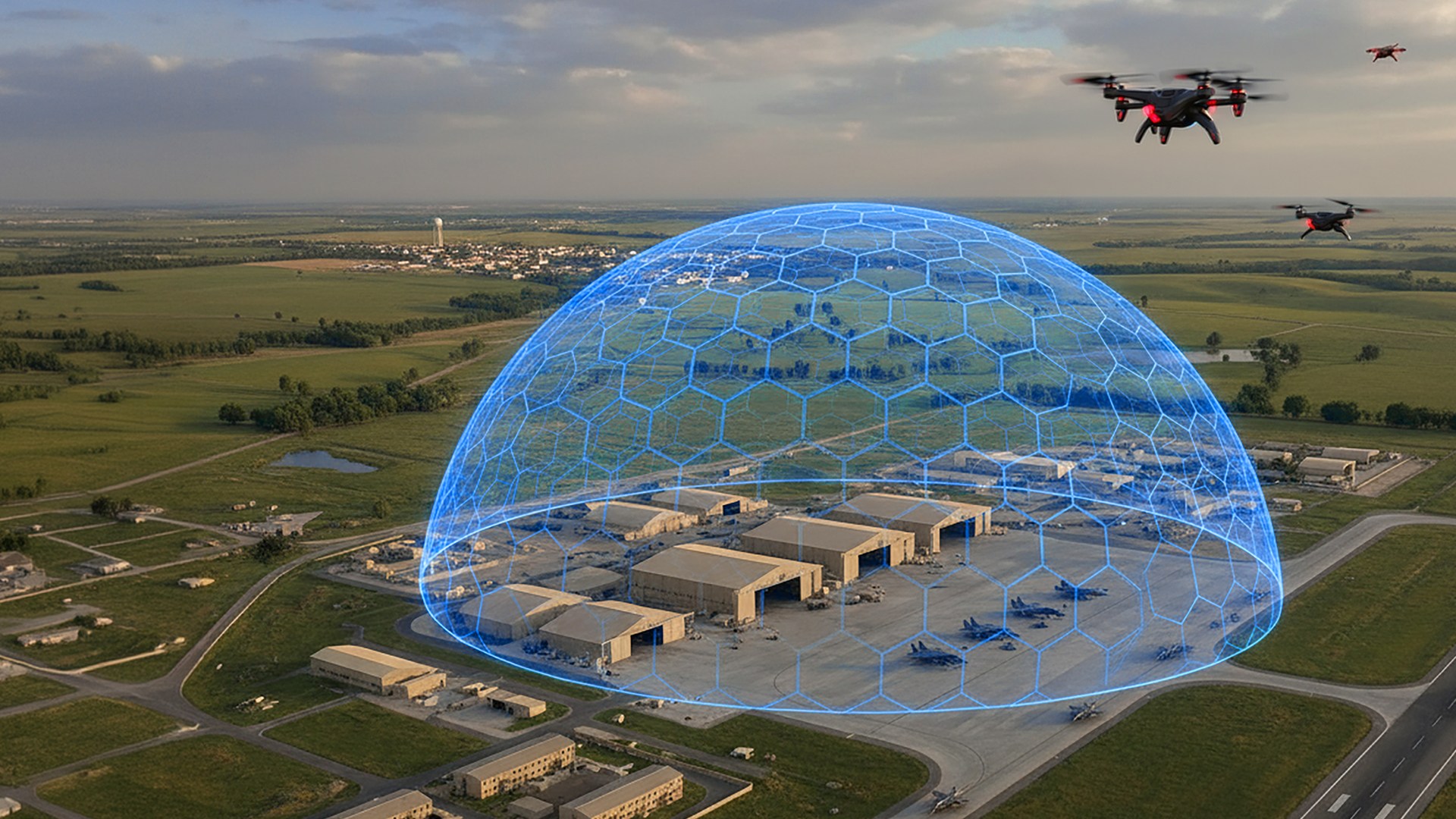
GrandSKY is not just a demonstration site. It is a proving ground for how Halo_Shield can grow from an initial tile into a scalable, distributed shield over time. 

The goal is not just to defend GrandSKY. The goal is to show how a critical asset location can evolve from an initial protective footprint into a distributed, layered shield that can be adapted for military installations, research facilities, airports, seaports, borders, power grids, energy sites, data centers, and other critical infrastructure. 

MAYA Applied to Counter-UAS 

MAYA, Most Advanced Yet Acceptable, is not a branding exercise.  

Applied to C-UAS, MAYA means being advanced enough to compress the OODA loop (Observe, Orient, Decide, Act) against scale and speed, while still acceptable enough to fit real operator workflows, rules of engagement constraints, and integration realities. 

In counter-UAS, it is the difference between a capability that looks impressive in a briefing and one an operator will actually use when the sky gets busy. 

It’s more than “Just keep it moving.” 

MAYA keeps the solution path honest by forcing three questions: 

  • Can we field a solution now without breaking existing workflows? 
  • Can we grow the solution without rewriting the system every time we add a sensor or effector? 
  • Can we trust the solution under load, when timelines collapse and operators are attention-limited? 

That is why the path has to be fielding a solution that is incremental.  

You do not jump from manual control to full autonomy in one leap. You earn trust in phases. Each phase should be measurable, explainable, and operationally useful on its own. 

Phase One of deploying Halo_Shield at GrandSKY allows for that trust to grow, beginning with a Terrestrial Tile-driven configuration focused on detection, tracking, identification, and defeat of small UAS threats, while also establishing initial Left-of-Launch detection and a focused ARGUS™ perimeter defense footprint.  

This phase is advanced but not abstract. It is designed to show what can be fielded, measured, improved, and expanded. 

What Distributed Defense Looks Like in Practice 

Traditional point defense concentrates sensors and effectors in one location and runs the mitigation cycle from that single position. It is a valid construct, but it comes with hard ceilings: finite magazine depth, finite operator bandwidth, limited coverage geometry, and a natural pull toward centralized decisions that can make the system itself the bottleneck. 

Distributed defense does not concentrate capacity. It multiplies it. 

Halo_Shield is built around mission-specific, purpose-built Tiles: Sentinel, Terrestrial, Nautical, Aerial, and Celestial. Each Tile is a defined operational area where sensors, effectors, software, and command-and-control workflows are configured around a mission, terrain, asset, and threat profile. 

In Phase One of deployment at GrandSKY, the first step is the Terrestrial Tile. That configuration integrates AV_Halo™ COMMAND for layered battle management and command and control (C2), while remaining compatible with peer and higher-echelon battle management command and control (BMC2) platforms. It brings together: 

  • TITAN®-SV MPV3 — C-UAS RF detection  
  • ARGUS™ — perimeter security and ground-domain awareness  
  • Passive radar — non-emitting detection and tracking of airborne targets  
  • Acoustic sensors — passive detection and cueing based on aircraft signatures  
  • EO/IR — visual confirmation, classification, identification, and precision tracking  
  • TITAN® — C-UAS RF detection and defeat  
  • AV_Halo™ COMMAND — battle management C2 that fuses these sensor inputs into a common operating picture and enables automated edge responses  
  • — along with additional AV and OEM partner capabilities. 

The practical effect is straightforward: distributed, multi-modal sensing extends detection and tracking, improves identification and situational awareness, and creates multiple opportunities to detect the same threat before it reaches the defended asset. RF, passive radar, acoustic, and EO/IR sensors provide complementary views of the battlespace, while AV_Halo COMMAND correlates those inputs into a common track picture. A predominantly passive sensor posture also allows the system to maintain persistent awareness while minimizing emissions and reducing the likelihood that the defensive architecture becomes an obvious target itself. 

Point defense is a single strong door.  

AV’s Halo_Shield is the perimeter, the hallway, the cameras, the listening posts, the lighting, the locks, and the guards moving through the building. You still want the strong door. You just do not want your first indication of a threat to be the sound of the doorframe cracking. 

At GrandSKY, the objective is not simply to defend the front door. It is to create multiple layers of awareness and response throughout the entire building. 

A New Mitigation Cycle for a New Threat Curve 

Distributed defense also requires updating the targeting methodology. The legacy cycle — Detect, Track, Identify, Process, Engage — was built around individual engagements. 

The distributed cycle is built for throughput: 

Place → Sense → Find → Fix → Pair → Engage → Assess 

This shift is not cosmetic. It changes how you scale. 

Place creates capacity. Coverage is designed, not assumed. 

Sense, Find, and Fix build confidence early and reduce downstream uncertainty. 

Pair preserves resources by matching the right effector to the right threat at the right time. 

Engage and Assess close the loop fast enough to handle the next track, the next axis, and the next wave. 

This is where GrandSKY becomes more than an installation. It becomes an operational test of whether a modular architecture can reduce operator workload, validate advanced planning and engagement tools, and support coordinated response in a realistic environment. 

The legacy cycle optimizes for the single shot. The distributed cycle optimizes for sustained throughput under pressure. 

The Phased Maturity Model, Building Trust 

The solution path for counter-UAS leaders is not “autonomy now.”  

It is staged maturity that builds confidence, capability, and trust over time. 

Phase 1: Auto-cue 

Auto-cue speeds Observe and Orient without changing the fundamentals of control. The solution architecture cues higher-fidelity sensors based on initial detections. Operators retain ownership of identification and engagement decisions. 

This is a natural fit for GrandSKY Phase One. The Terrestrial Tile establishes the foundation for early detection, sensor cueing, track development, and operator confidence without forcing a leap into unfamiliar workflows. 

Phase 2: Auto-task 

Auto-task makes the network behave like a network. Sensors and workflows are coordinated across the Tile automatically. Operators stay in control of decisions, but the system reduces the manual choreography that burns time and attention. 

This is where defensive carrying capacity starts to increase without simply adding more people. The goal is not to make the operator work faster. The goal is to remove work the operator should not have to do in the first place. 

Phase 3: Recommendations 

This is where scale becomes real. The solution architecture recommends actions, particularly weapons pairing and scheduling, based on track confidence, resource availability, constraints, timing, and rules of engagement. Humans remain in charge. 

Two rules apply here: recommendations must be explainable, and they must perform under load. If the system cannot explain why it recommends a course of action, operators will not trust it. If it only performs on a quiet day, it is not ready. 

At GrandSKY, this is one of the key values of a phased approach. Initial deployment can validate sensing, tracking, and workflow performance. Later phases can add more complex effectors, additional sensors, and more advanced pairing logic once the foundation is stable. 

Phase 4: Conditional autonomy with human oversight 

When threat volume or time-of-arrival compresses beyond human-compatible tempo, the system can execute within pre-approved policy, constraints, and commander’s intent, with humans supervising and able to intervene. 

This is not humans out of the loop. It is humans above the loop. 

Autonomy should function as a relief valve, not a default setting. The goal is not to replace human judgment. It is to preserve it when the sky gets crowded. 

Phasing to the Solution 

The solution path is not a big-bang leap to autonomy. It is phased adoption that builds trust, increases throughput, and expands defensive carrying capacity over time. 

GrandSKY gives that path a real implementation environment. 

Distributed Tiles expand situational awareness and multiply capacity. The updated mitigation cycle creates room for pairing, scheduling, and rapid assessment at scale. MAYA keeps the approach grounded in what operators will actually use, leaders can actually field, and integrators can actually sustain. 

The question to carry into Part 3 is simple: 

Are you buying point solutions, or are you building a path to scale that holds up when the sky gets busy? 

ABOUT THE AUTHOR 

Paul Webber is a retired Marine Raider and strategic advisor with over two decades of leadership, special operations, and systems analysis experience. He blends operational insight with design thinking to tackle complex defense challenges, particularly in emerging domains like C-UAS. Paul holds an MBA from the University of Georgia, an MS from the Naval Postgraduate School, maintains a Top Secret-SCI clearance, and applies a human-centered lens to technology adoption and workflow design in defense environments. 

—— 

ABOUT AV — JOINING THE MISSION 

AeroVironment (AV) is a defense technology company with a mission to invent and deliver advantage to U.S. and allied militaries. AV isn’t for everyone. We hire the curious, the relentless, the mission-obsessed.  

AV doesn’t just build defense technology; we redefine what’s possible. As the premier autonomous systems company in the U.S., we deliver breakthrough capabilities across air, land, sea, space, and cyber. From autonomy-enabled drones and loitering munitions to integrated autonomy and space resilience, our technologies shape the future of warfare and protect those who serve. 

Founded by legendary innovator Dr. Paul MacCready, AV has spent over 50 years pushing the boundaries of what unmanned systems can do. Our heritage includes seven platforms in the Smithsonian—but we’re not building history, we’re building what’s next. 

If you’re ready to build technology that matters – with speed, scale, and purpose – come find your people.  

EXPLORE OPPORTUNITIES 
Let’s Advance Your Mission

Product Catalog

View the full catalog to explore our solutions in detail.

Thought Leadership

Demystifying Directed Energy Starts at the Trigger

07/21/2026

Aaron Westman, Senior Director of Business Development at AV 

In his April 2026 comments to the House Armed Services Committee, Secretary of War Pete Hegseth made an important point about directed energy.  

“The Department must reform its procurement processes, warfighting tactics, and policy limitations to ‘demystify’ Directed Energy weapons and facilitate their integration into the force structure,” he said. 

The recently reported directed energy demonstration at White Sands Missile Range shows that strategy starting to take share in real time. During the event, Secretary Hegseth took the controls of AV’s LOCUST® laser weapon system and defeated a drone within minutes after a brief introduction to the system. 

By directly participating in this kind of testing, Secretary Hegseth is doing more than observing another defense technology demonstration. He is helping demystify a class of weapons that many people still treat as futuristic, exotic, or experimental. For those of us who have spent years in this field, that matters. 

It also tells us something important about the weapon itself. 

Traditional air defense tests, especially kinetic interceptors, are rarely hands-on events for senior leaders.  

I’ve been a part of many of these events over the years and they are usually tense, highly choreographed, heavily instrumented exercises. Control rooms fill with engineers, range safety personnel, test directors, operators, telemetry specialists, and program officials.  

Everyone knows the stakes.  

A target is launched. Radars acquire it. Fire-control systems calculate firing solutions. An interceptor leaves the rail. Then everyone waits to see what happened. 

Senior leaders may attend. They may receive the briefing. They may watch the screens. But they usually do not pull the trigger. 

That is not a criticism of kinetic interceptors. It is the nature of the weapon.  

A missile shot is expensive, range-constrained, safety-intensive, and largely irreversible once launched. Before the test ever begins, there are extensive plans made around a potential misfire, a malfunction, or a debris event. The entire environment reflects the complexity and risk of putting a guided projectile into the air at high speed. 

What happened recently at White Sands, where AV’s LOCUST directed energy laser weapon system was fired by senior Pentagon officials, including Hegseth, represents a different paradigm. 

With directed energy, particularly AV’s LOCUST, senior leaders are not just watching an abstract engagement unfold on a screen. They can see the system. They can understand the engagement sequence. In some cases, they can directly participate in the act of operating the weapon by manipulating an intuitive XBOX gaming controller.  

Seamless integration of automation and artificial intelligence algorithms effortlessly guides the user’s hand to snap to the target. That is profoundly different from the traditional air defense test environment. 

And when you think about the drone threat, that difference matters. 

The unmanned aircraft threat is not terrifying because every drone is sophisticated. It is terrifying because so many are not. Commercially available drones are cheap, accessible, adaptable, and increasingly lethal in the hands of hostile actors. They do not require deep pockets, years of training, or a traditional defense industrial base to acquire and employ. 

That reality changes the problem. 

A threat that is cheap, numerous, and easy to use cannot be defeated only by systems that are expensive, scarce, and difficult to employ at scale. The countermeasure has to match the character of the threat. It has to be affordable. It has to be repeatable. It has to be trainable. It has to be safe enough to use in complex environments. And it has to be available when the next drone appears, not just when the magazine has been reloaded. 

That is where laser weapons, particularly AV’s LOCUST, are different. 

A directed energy laser weapon is technically sophisticated, but the engagement can be operationally intuitive. The system tracks the target. Engagement safety zones are tightly managed. The beam is precisely pointed. The effect is delivered at the speed of light. If the operator needs to engage again, the weapon can fire again. There is no interceptor to reload after every shot and no missile debris field to manage in the same way. 

These properties make laser weapons what I like to refer to as “unusually usable” for the C-UAS mission.  

And usability matters. 

It matters for training. It matters for confidence. It matters for safety. It matters for sustainment. It matters for cost. Most importantly, it matters for scale. A weapon that can be understood, trained, and operated repeatedly is a weapon that can move out of the demonstration lane and into the hands of warfighters. 

We’ve proven LOCUST in the field numerous times, including when we rolled it onboard the USS Bush and trained sailors who then shot down 100 percent of their targets after less than an hour of training. 

Having a laser weapon that is “unusually usable” also matters to the industrial base. 

Secretary Hegseth was clear in his posture statement that the Department needs a stronger and more consistent demand signal for directed energy weapons, not just for a handful of prototypes, but for production in meaningful quantities.  

That demand signal will not emerge if senior leaders, operators, acquisition officials, and policymakers continue to treat laser weapons as exotic technologies that only specialists can understand. 

Demand comes from confidence. 

Confidence comes from seeing the weapon work. It comes from understanding how it is employed. It comes from watching operators engage targets safely and repeatedly. And in some cases, it comes from experiencing the engagement first-hand. 

That is why the image of senior leaders engaging directly with directed energy is more than a photo opportunity. It is part of the demystification process Secretary Hegseth described. The point is not that dignitaries like firing lasers. Of course they do. 

The point is that they can. 

When a system like AV’s LOCUST can be demonstrated safely, repeatedly, and credibly in front of senior defense leaders, it shows that directed energy is no longer just a technology to be explained by specialists in a control room. It is becoming a weapon that operators can understand by using. 

For counter-UAS missions, that is exactly what the moment requires. 

The drone threat is scaling. The demand signal for directed energy has to scale with it. And before the Department can buy laser weapons in meaningful numbers, it has to become comfortable treating them not as mysteries, but as practical air defense tools. 

Demystifying directed energy does not start in a policy memo or a fancy PowerPoint slide; it starts at the trigger. 

ABOUT THE AUTHOR  

Aaron Westman is an engineer and leader specializing in counter-UAS and directed energy systems. He has played a key role advancing mobile laser weapon integration and operational deployment, supporting a variety of cross-domain capabilities that improve precision engagement and layered air defense. 

JOIN THE AV MISSION 

AV isn’t for everyone. We hire the curious, the relentless, the mission-obsessed. The best of the best. 

We don’t just build defense technology—we redefine what’s possible. As the premier autonomous systems company in the U.S., AV delivers breakthrough capabilities across air, land, sea, space, and cyber. From AI-powered drones and loitering munitions to integrated autonomy and space resilience, our technologies shape the future of warfare and protect those who serve. 

Founded by legendary innovator Dr. Paul B. MacCready, Jr., AV has spent over 50 years pushing the boundaries of what unmanned systems can do. Our heritage includes seven platforms in the Smithsonian—but we’re not building history, we’re building what’s next. 

If you’re ready to build technology that matters—with speed, scale, and purpose—there’s no better place to do it than AV. 

EXPLORE OPPORTUNITIES 


Let’s Advance Your Mission

Product Catalog

View the full catalog to explore our solutions in detail.

Thought Leadership

NATO’s Next C-UAS Challenge: Orchestrating the Alliance’s Defense Network

06/15/2026

By Zach George, Director of Business Development, C-UAS, AV Europe 

Over the past decade working in counter-unmanned aircraft systems (C-UAS) across Europe, I have watched NATO nations make significant investments in radars, electronic warfare systems, kinetic interceptors, command and control networks, and advanced detection technologies to counter the growing drone threat. 

The Alliance has made tremendous progress. 

What I am seeing today is not a procurement challenge. 

It is an integration challenge. 

NATO nations have spent years acquiring world-class sensors and effectors. The next step is connecting those capabilities into a unified architecture capable of detecting, identifying, tracking, and defeating threats at operational speed. The war in Ukraine has highlighted this ability as critical.  

That challenge reminds me of a world-class kitchen. 

You can buy the finest ingredients, the best cookware, and the most advanced appliances available. None of that guarantees a great meal. 

What matters is orchestration. 

Someone has to bring everything together at the right time, in the right sequence, and for the right purpose. The meal needs a chef. 

C_UAS defense is no different. 

The Alliance already possesses many of the ingredients required for effective air defense. The challenge is ensuring they operate as a coordinated system rather than a collection of independent tools. 

That is exactly why AV developed Halo_Shield™. 

Halo_Shield is not another sensor or another interceptor. Designed from the hard-earned lessons and operational truths from Ukraine, it is the orchestration layer that connects sensors, effectors, operators, and command systems into a unified C-UAS architecture. It simplifies deployment, improves interoperability, and helps operators make faster, more informed decisions across increasingly complex environments. It is also a distributed layered defense, which enhances its autonomy and resiliency.  

As NATO strengthens its defenses against emerging drone threats, three operational realities are becoming increasingly clear: 

  • Civil and military systems must work together. 
  • Nations must win the cost exchange. 
  • Operators need more time to make decisions. 

Halo_Shield was built with those realities in mind. 

CONNECTING CIVIL AND MILITARY DEFENSE 

The drone threat does not recognize organizational boundaries, as seen in Ukraine and now in the Middle East. 

A drone targeting a military installation may transit commercial airspace, pass over civilian infrastructure, or threaten critical services that support both military and civilian populations. Across Europe, the first line of defense often includes private infrastructure operators, law enforcement agencies, border security organizations, and national militaries. 

During a crisis, these organizations must operate as one network, not as separate systems. 

Many NATO nations continue to face challenges integrating civil, commercial, and military capabilities into a common operational picture. 

Halo_Shield addresses this challenge through a modular, open architecture designed to connect disparate sensors, effectors, and command systems into a unified framework. Through AV_Halo™ COMMAND, military forces can rapidly integrate with existing national infrastructure, air traffic systems, and partner networks to create a more comprehensive and responsive defense architecture. 

The result is faster coordination, greater interoperability, and a stronger forward line of defense. 

WINNING THE COST EXCHANGE 

Drone warfare is not only a military challenge. It is an economic one that our NATO allies are witnessing being played out during the war in Ukraine and other conflicts. 

Many UAS can be fielded at relatively low cost. Defending against every threat with expensive interceptors alone is not sustainable during prolonged operations. These ‘swarms’ can and have overwhelmed point-based defenses. 

Halo_Shield helps operators make smarter engagement decisions by continuously evaluating available response options based on threat characteristics, engagement geometry, inventory levels, and mission priorities.  

The Terrestrial and Sentinel tiles integrate kinetic interceptors, electronic warfare capabilities, RF countermeasures, acoustic sensor, passive radar such as AV’s Titan® C-UAS platform, and directed energy solutions such as AV’s LOCUST® laser weapon system into a single decision framework and in a repeatable deployment pattern. 

A skilled chef knows when to use premium ingredients and when a simpler option will achieve the same result. So does Halo_Shield. It helps operators apply the right capability to the right threat at the right time, right-sizing the effect to the threat. 

THE RACE AGAINST TIME 

Every second matters in C-UAS defense. 

The earlier a threat is detected and understood, the more options operators have to respond successfully, also known as the “elongation of the kill chain.” 

This is where Halo_Shield extends beyond traditional C-UAS architectures. 

The CELESTIAL Tile provides wide-area intelligence that can identify threat staging, deployment, and launch activity well beyond the defended perimeter, creating earlier warning and additional decision space for operators. 

The AERIAL Tile extends sensing vertically, providing elevated coverage that fills gaps, improves track quality, and increases awareness across complex terrain and threat corridors. 

Together, these capabilities help move detection and decision-making further left, extending and automating the kill chain, giving our NATO allies more time to act before threats reach critical assets. 

THE HEAT IS ON 

NATO’s C-UAS challenge is no longer defined by a lack of technology. 

The Alliance already fields some of the world’s most capable sensors, effectors, and command systems. It continues to invest heavily in the technologies needed to counter increasingly sophisticated drone threats. 

The challenge now is integration.  

Success will depend on how effectively NATO can connect those sovereign capabilities across national borders, military services, and civil authorities to create a layered, scalable, and interoperable defense architecture. It is doing so at the operational and theater level with air defense, but now tactical C-UAS integration is needed. 

That is the role Halo_Shield was built to play. Ready to be validated at the NATO edge. 

Because the future of C-UAS defense will not be determined by who has the most ingredients. 

It will be determined by who can bring them together fastest when the mission demands it, with the flexibility to adapt to a changing threat and incorporate new technologies at the speed of relevance.  

And that is why NATO needs a counter-drone orchestration layer as much as it needs another sensor or interceptor. It needs the right pairing and balance.  

It needs Halo Shield.  

ABOUT THE AUTHOR 

Zach George is Director of Business Development for Counter-Uncrewed Aircraft Systems (C-UAS ) at AV Europe. A recognized expert in electronic warfare, air defense, and C-UAS operations, he has spent more than a decade working with military and defense organizations across Europe on integrated air and missile defense challenges. A transatlantic defense professional, Zach lives and works in Europe and continues to serve in the U.S. Naval Reserve, supporting missions throughout the European theater. He holds a Master’s degree in International Affairs from American University and a Bachelor’s degree from Auburn University. He speaks English and German and is an avid sailor and skier. 


Let’s Advance Your Mission

Product Catalog

View the full catalog to explore our solutions in detail.

Thought Leadership

MILESTONES AT WHITE SANDS, Driscoll’s Test, The FAA and DoW’s Landmark Safety Agreement

Major paradigm shifts in defense do not announce themselves with fanfare. They show up as milestones. 

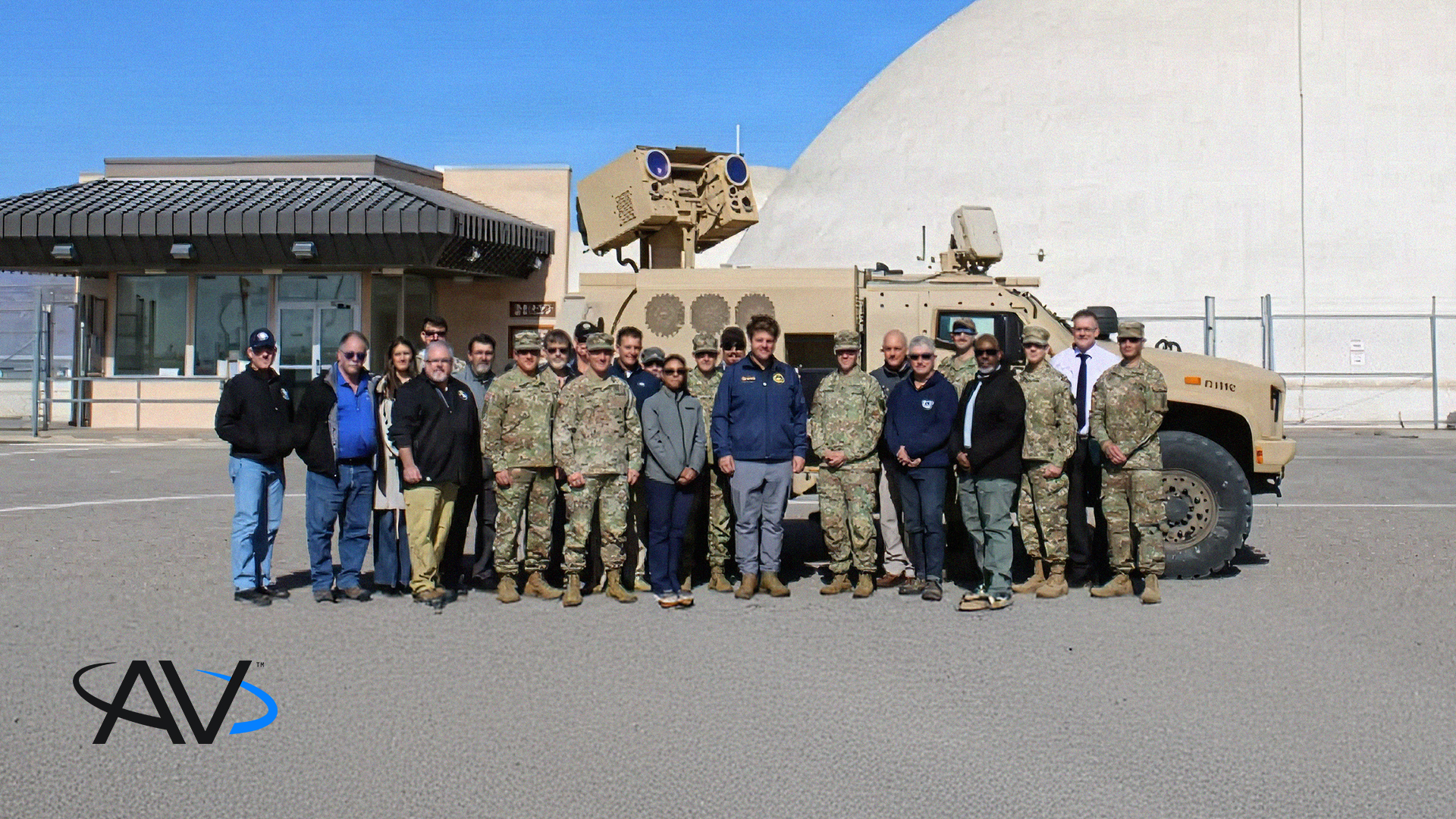
Last week, at White Sands Missile Range in New Mexico, Army Secretary Dan Driscoll climbed behind AV’s LOCUST®-powered vehicle and personally tested the Army’s directed-energy capability 

To some, it may have looked like a routine demonstration. For those of us who have spent our careers advancing laser weapon systems, it represents something far more significant: a turning point. 

For AV’s LOCUST-powered AMP-HEL system, the event marks another step toward a capability that is operational, deployable, scalable, and increasingly real in the minds of the Army and the American public alike. Lasers are no longer a future concept.  

They have arrived. 

Around the same time, another milestone at White Sands quietly arrived with far less attention. 

On April 10, the FAA and Department of War signed a landmark safety agreement creating a path for counter-drone laser systems to operate in coordination with civil aviation. This agreement followed another LOCUST-powered milestone, when the JIATF-401 tapped AV’s laser weapons system for testing at White Sands to help create the framework for that agreement.  

That agreement establishes where lasers can be used, how operators avoid conflicts with aircraft, and how these systems can be deployed safely and predictably 

That might sound bureaucratic. It is not. 

Together, those tests at White Sands, both Driscoll’s turn on the X-Box style controller and the FAA agreement, point to something larger: laser weapons are beginning to move from research and development to operational reality in broad daylight and on a wider scale. 

And history suggests this moment matters. 

America Wins When It Moves Technology Into Use 

The United States has always excelled at invention. But invention alone has never been the advantage. 

The internet emerged from defense-backed research. The space race created technologies that became foundational to the modern economy, from GPS to satellite communications. In every case, the pattern was the same: innovation mattered because America applied it, tested it, improved it, and scaled it. 

Which brings us to lasers. 

For years, the biggest obstacle to counter-drone laser systems was not the technology itself. It was the question of how to safely operate these systems in shared airspace. 

Since lasers interact directly with the atmosphere, legitimate concerns about aviation safety, sensor interference, and unintended exposure slowed broader operational use. 

That is why the FAA agreement matters so much. It represents a shift in the conversation from Can we make this technology work? to Can we deploy and scale it safely?  

And that shift is everything. 

The Jenny Lesson 

History offers a useful comparison. 

Most people assume American aviation dominance began with the Wright brothers. In truth, progress stalled after the Wright Flyer and Europe surged ahead. 

The turning point was not another invention. It was use. 

The Curtiss JN-4 “Jenny,” a relatively simple aircraft, flew real missions during General John J. Pershing’s expedition against Pancho Villa along the Southwest border. It was imperfect, but operational. And because it was operational, the United States gained trained personnel, institutional experience, and the foundation to scale aviation. 

By the time World War I arrived, America was no longer starting from zero. 

The lesson feels familiar. 

America invented the laser and has led directed-energy research for decades, from ABL and THEL to operational systems like LaWS. Yet, widespread deployment has lagged. We have proven concepts, but struggled to transition them into scalable capability. Meanwhile, competitors are moving quickly. 

Which is why these two moments at White Sands matter. 

When senior leaders are personally testing systems and regulatory frameworks begin to enable operational use, the conversation changes. The milestone is no longer scientific feasibility. It becomes operational adoption. 

What comes next is not another science project. 

It is demand. 

From Experimentation to Production 

A clear regulatory framework enables procurement. Procurement enables production. Production drives reliability, lower cost, stronger supply chains, and operational scale. 

This is how industries mature. 

Small drones are becoming cheaper, more capable, and more common. Homeland security, airspace protection, military installations, and critical infrastructure increasingly need affordable, scalable counter-drone defenses. 

Laser systems will not matter because they are novel, but because they become usable, trusted, and deployable. 

That is what milestones like White Sands and the FAA agreement may ultimately represent: the beginning of the transition from experimentation to production. 

The Window Is Open 

The United States still holds a strong position in directed energy, but history offers a warning: inventing a technology does not guarantee leadership in using it. 

Leadership comes from recognizing inflection points and acting on them. 

Driscoll’s White Sands test was a milestone. The FAA agreement was another. 

Neither milestone guarantees success. 

But together, they suggest something important: America may finally be building the conditions for laser systems to move from the lab to the field at scale.  

ABOUT THE AUTHOR  

Aaron Westman is an engineer and leader specializing in counter-UAS and directed energy systems. He has played a key role advancing mobile laser weapon integration and operational deployment, supporting a variety of cross-domain capabilities that improve precision engagement and layered air defense.  

JOIN THE AV MISSION  

AV isn’t for everyone. We hire the curious, the relentless, the mission-obsessed. The best of the best.  

We don’t just build defense technology—we redefine what’s possible. As the premier autonomous systems company in the U.S., AV delivers breakthrough capabilities across air, land, sea, space, and cyber. From AI-powered drones and loitering munitions to integrated autonomy and space resilience, our technologies shape the future of warfare and protect those who serve.  

Founded by legendary innovator Dr. Paul B. MacCready, Jr., AV has spent over 50 years pushing the boundaries of what unmanned systems can do. Our heritage includes seven platforms in the Smithsonian—but we’re not building history, we’re building what’s next.  

If you’re ready to build technology that matters—with speed, scale, and purpose—there’s no better place to do it than AV.  

EXPLORE OPPORTUNITIES 


Let’s Advance Your Mission

Product Catalog

View the full catalog to explore our solutions in detail.

Press Release

AV’s LOCUST Demonstrates Landmark Capability at White Sands with JIATF-401 and FAA

05/06/2026

Coordinated test confirms safe, controlled laser engagement of drone targets in complex national airspace

AV’s LOCUST ® high-energy laser system undergoes testing at White Sands Missile Range, demonstrating safe, precise counter-drone capability in coordination with DOW–FAA national airspace validation efforts. (Photo Courtesy of the U.S. Army).


ARLINGTON, Va. – May 6, 2026 — AeroVironment, Inc. (“AV”) (NASDAQ: AVAV) today announced a historic milestone for directed energy and homeland defense following the successful execution of a first-of-its-kind counter-unmanned aircraft system (C-UAS) laser test in coordination with the U.S. Department of War and the Federal Aviation Administration (FAA).

During an early March test event at White Sands Missile Range (WSMR), led by Joint Interagency Task Force 401 (JIATF-401), AV’s LOCUST® high-energy laser system demonstrated its ability to safely and effectively defend U.S. national airspace against emerging drone threats, directly supporting a subsequent agreement between the DOW and FAA that validates the system for domestic use.

“This is a defining moment for directed energy and for the future of homeland defense,” said John Garrity, Vice President for Directed Energy Systems at AV. “LOCUST has now proven its ability to operate safely and effectively in the most complex airspace environment in the world. This achievement accelerates the transition of directed energy from experimentation to operational deployment—delivering a scalable, cost-effective solution to counter the rapidly growing drone threat.”

The test at WSMR demonstrated automated safety shut-off capabilities that ensure the system only engages validated targets, among other safety features. The testing also showed no adverse impact to civilian aircraft during controlled evaluation scenarios and showed precision engagement through strict positive identification protocols.

AV’s LOCUST also showed the ability to hit both stationary and airborne targets to demonstrate accuracy, persistence, and operational realism.

“This successful test showcases the significant advancements we’re making in counter-drone technology to ensure that our warfighters have the most advanced tools to defend the homeland,” U.S. Army Brigadier General Matt Ross, director of JIATF-401 said recently in a joint Press Release. “By working hand-in-hand with the FAA and our interagency partners, the Department of War is proving that these cutting-edge capabilities are safe, effective, and ready to protect all air travelers from illicit drone use in the national airspace.”

The demonstration at WSMR comes amid increasing urgency to address drone incursions across U.S. airspace. The successful validation of LOCUST underscores its role as a critical layer in a modern, integrated air defense architecture—providing precision engagement, deep magazine capacity, and the ability to defeat threats at the speed of light.

“The FAA’s top priority is protecting the safety of the American flying public, and we value the collaboration with the Department of War in that effort,” FAA Administrator Bryan Bedford said in the release. “Following a thorough, data-informed Safety Risk Assessment, we determined that these systems do not present an increased risk to the flying public. We will continue working with our interagency partners to ensure the National Airspace System remains safe while addressing emerging drone threats.”

 AV recently announced LOCUST as a key offering in its new rollout of Halo_Shield™, —a layered, tile-based defense architecture that integrates sensors, battle management, and effectors to identify, detect, track, and defeat evolving aerial threats—positioning the company to help defend critical infrastructure, secure borders, and protect the American public as drone incursions continue to rise across U.S. airspace.

“JIATF-401’s coordination across federal partners was instrumental in aligning operational, safety and regulatory stakeholders for this unprecedented test,” said Mary Clum, President of Space, Cyber and Directed Energy at AV. “PEO Missiles & Space – PAE Fires continues to drive directed energy innovation and fielding, while the FAA’s rigorous safety oversight is enabling the responsible integration of these capabilities into national airspace.”

About AV

AeroVironment (“AV”) (NASDAQ: AVAV) is a defense technology leader delivering integrated capabilities across air, land, sea, space, and cyber. The Company develops and deploys autonomous systems, loitering munitions, counter-UAS technologies, space-based platforms, directed energy systems, and cyber and electronic warfare capabilities—built to meet the mission needs of today’s warfighter and tomorrow’s conflicts. At the core of these technologies lies AV_Halo™, a modular, mission-ready suite of AI-powered software tools that empowers warfighters and enables full-battlefield dominance: detect, decide, deliver. With a national manufacturing footprint and a deep innovation pipeline, AV delivers proven systems and future-defining capabilities at speed, scale, and operational relevance. For more information, visit www.avinc.com.

Safe Harbor Statement

Certain statements in this press release may constitute “forward-looking statements” as defined in the Private Securities Litigation Reform Act of 1995. These statements are based on current expectations, forecasts, and assumptions that involve risks and uncertainties, which could cause actual results to differ materially. Factors that may cause such differences include, but are not limited to, our ability to perform under existing contracts and obtain new ones; regulatory changes; competitor activities; market growth; product development challenges; and general economic conditions. For a more detailed discussion of these risks, please refer to AeroVironment’s filings with the Securities and Exchange Commission. We undertake no obligation to update forward-looking statements as a result of new information or future events.

/////////////////////////////////////////////////////////////////////////////////////////////////////

For additional media and information, please follow us:

Media Contact:

BJ Koubaroulis
pr@avinc.com

703.718.4060

Investor Contact:

Denise Pacioni

ir@avinc.com

805.795.4108


Let’s Advance Your Mission

Product Catalog

View the full catalog to explore our solutions in detail.

Thought Leadership

100-Percent: LOCUST’s First Day at Sea

04/28/2026

By Mary Clum and John Garrity

When most people picture a shipboard laser weapon, they likely imagine a massive, bulky system—welded into the hull and fixed in place.

That’s not what we brought aboard USS George H.W. Bush.

For a single day at sea, AV’s palletized LOCUST® laser weapon system was forklifted onto the flight deck, enabling a live-fire exercise that demonstrated its performance in real-world operational conditions. The system was powered from the ship, operated by sailors with less than an hour of training, and engaged every target presented. Every single target was destroyed. 100 percent success.

For the Navy, it was a first look at what our containerized, “roll‑on/roll‑off” laser weapon, LOCUST, can really do. For us, it was the payoff from years of work in directed energy—and a hint of where this technology is going.

From Bolted‑In Experiments to Roll‑On Capability

The Navy’s early laser efforts focused on high‑power systems integrated into the ship, hard‑wired into the hull and power system. Those programs taught us a lot, but they also revealed constraints: if the ship goes into maintenance, the weapon does too; if the laser needs upgrades, you work around the ship; moving capability between hulls is slow and costly.

Meanwhile, counter‑UAS was becoming a daily operational problem. The Army had proven that palletized, truck‑mounted lasers could consistently defeat small drones in harsh environments. The natural question was: could that same modular, field‑ready architecture work at sea?

AV’s mission? Prove it viable at sea.

Turning a Land System into a Sea System

On paper, we took a standard palletized LOCUST system—the same basic architecture used on land—and operated it from a carrier. In reality, we had to solve three sets of problems.

First, marinization. The LOCUST variant used on USS Bush was built on our Army fielded design, but carrier life demands more:

  • Hardened electronics for salt fog, humidity, vibration, and long deployments
  • Stabilization hardware to manage ship motion
  • Sealing and environmental protection so the system would be ready whenever it was needed
  • A laser weapon system that delivers precise, low-collateral effects—enhancing ship self-defense while minimizing risk to nearby personnel, platforms, and flight operations.

We implemented a series of hardware upgrades focused on these issues. Our software and tracking heritage, including work on the Optical Dazzling Interdictor, Navy, or ODIN, meant the control stack already reflected decades of naval experience. The emphasis here was making a proven laser weapon reliable at sea, not reinventing it.

Second, roll‑on/roll‑off. The Navy has been clear: it wants containerized, movable weapons. On USS Bush, LOCUST was:

  • Forklifted onto the flight deck in palletized form
  • Positioned in a location that required pausing normal flight operations during the test window
  • Forklifted back off once the demonstration ended so the carrier could resume its standard tempo

We wanted to show that a high‑energy laser could arrive as a containerized asset, fight, and then get out of the way. That flexibility—roll on, roll off—is exactly what the Navy has been signaling in its public comments on containerized systems.

Third, safety and integration. However, bringing a laser weapon onto a carrier isn’t just a technical question. The Navy reviewed how the system would be brought aboard, powered, and operated safely alongside flight deck activity and other systems. Working through that set of questions created a path not just for this event, but for future containerized deployments.

One Day, 100 Percent Successful Engagements

The test window aboard USS Bush lasted one day. Within that day, three things mattered most: effectiveness, repeatability, and usability.

Effectiveness was straightforward. LOCUST targeted, tracked and defeated every single small unmanned aircraft target and defeated all threats flown. 100 percent success. For any counter‑UAS system, kinetic or non‑kinetic, a 100 percent success rate in live testing is notable. For a palletized laser operating from a carrier, it was a clear signal: the technology is ready.

Repeatability came from the laser’s basic economics. Every engagement consumed electricity, not interceptors. In a kinetic system, these defeats would have meant that dozens of interceptors would have been expended, with all the associated production, storage, and resupply burden. With LOCUST, the system drew power from the ship, recharged, and was ready for the next shot. On a nuclear‑powered carrier, that’s a natural fit: high‑volume defense without an exponential logistics tail.

The most important part, though, was usability. Roughly half the engagements were executed by sailors—from enlisted operators up through senior officers, including flag leadership. Training time was measured in tens of minutes.

Within about an hour of using the system, sailors who had never fired a laser weapon before were acquiring targets, working the interface, and making successful engagements. That’s what it looks like when directed energy stops being a lab project and becomes a practical tool.

What It Meant for the Navy—and for Us

For the Navy, the USS Bush demonstration answered key questions that need to be addressed as technology transitions from labs to the field. Most important of all, the demo showed that a containerized laser weapon can operate effectively from a carrier without being permanently integrated into the ship. The demo also showed the Navy that training for these new systems can be straight forward and quickly implemented for sailors.

For AV, this demo validated a design philosophy that has been guiding this program over the last five years: Start with a modular, platform‑agnostic architecture and leverage decades of naval tracking and control experience to harden the system for the environment and let real operators use it. In working with the Navy during this demonstration, valuable lessons learned were gained of how to make the next generation of LOCUST Laser Weapon Systems tailored for the Navy. It also underscored where the technology is going. Across the services, modalities, and environments, interest in directed energy—especially for counter‑UAS—is now reflected in budgets, not just briefings. The center of gravity is shifting from one‑off demos to production and fielding.

Looking forward, we are laser-focused (pun intended) on scaling LOCUST production to meet the needs while continuing ruggedization and spiral upgrades for long‑duration maritime deployments. This should help us to provide evolving containerized variants tailored for the Navy and partners in maritime environments.

Lasers in the Layered Defense

Directed energy won’t replace every other effector, and it shouldn’t. RF systems, guns, and kinetic interceptors are all essential parts of a layered defense and sea deployments are no exception.

But against high volumes of small, inexpensive unmanned systems at sea, a containerized, ship‑powered laser offers something unique: very low marginal cost per shot, effectively bottomless “magazine” tied to ship power, modular deployment across platforms, and rapid usability by sailors.

On USS George H.W. Bush, that combination translated into a simple outcome: a laser weapon rolled onto the flight deck, powered up, trained its first Navy operators, hit 100-percent of the targets, and rolled back off.

ABOUT THE AUTHOR

John Garrity is an engineer and defense technology leader specializing in directed energy and counter-UAS systems. He has helped advance high-energy laser integration, fielding scalable solutions that enhance precision engagement, air defense, and layered protection across complex operational environments.

Mary Clum is a defense technology executive leading space, cyber, and directed energy initiatives. With more than 25 years of experience across AV, BlueHalo, and Raytheon, she has driven the development and deployment of advanced mission systems, guiding highly technical programs from innovation through operational fielding in support of national security.

JOIN THE AV MISSION

AV isn’t for everyone. We hire the curious, the relentless, the mission-obsessed. The best of the best.

We don’t just build defense technology—we redefine what’s possible. As the premier autonomous systems company in the U.S., AV delivers breakthrough capabilities across air, land, sea, space, and cyber. From AI-powered drones and loitering munitions to integrated autonomy and space resilience, our technologies shape the future of warfare and protect those who serve.

Founded by legendary innovator Dr. Paul B. MacCready, Jr., AV has spent over 50 years pushing the boundaries of what unmanned systems can do. Our heritage includes seven platforms in the Smithsonian—but we’re not building history, we’re building what’s next.

If you’re ready to build technology that matters—with speed, scale, and purpose—there’s no better place to do it than AV.

EXPLORE OPPORTUNITIES


Let’s Advance Your Mission

Product Catalog

View the full catalog to explore our solutions in detail.

News

AV Unveils LOCUST® X3: Third-Generation Modular Directed Energy Weapon System

03/24/2026

AV Unveils LOCUST® X3: Third-Generation Modular Directed Energy Weapon System

AeroVironment, Inc. (“AV”) (NASDAQ: AVAV), a global defense technology leader, today announced the release of LOCUST® X3, the third generation of AV’s high-energy laser weapon system that delivers precise, speed-of-light engagement for rapid defeat of unmanned aerial threats.

LOCUST X3 builds on lessons learned from widely deployed systems to set a new standard in modular, AI-enabled drone defense—delivering unprecedented precision, scalability, and operational flexibility to defeat current and emerging aerial threats, including Group 1-3 unmanned aircraft systems and unmanned surface vehicles.

Recently featured by CBS News’ 60 Minutes, the LOCUST X3 offers cost-effective engagements below $5 per shot and sustained defense without the reload limitations of traditional defense systems, LOCUST X3 offers a transformative solution for modern air defense.

“In today’s rapidly evolving battlespace, adversaries are deploying mass drone attacks and saturation tactics that threaten mission success and warfighter survivability,” said Wahid Nawabi, Chairman, President, and Chief Executive Officer at AV. “With LOCUST X3, we deliver an affordable, scalable solution to outpace and neutralize large-scale aerial threats, safeguard critical infrastructure, and maintain decisive advantage wherever the fight demands.”

The new LOCUST X3 features a scalable 20–35+ kilowatt laser, a modular beam director, and advanced AI-enabled detection, tracking, and engagement automation powered by AV_Halo™ PINPOINT, part of the company’s hardware-agnostic software platform for layered counter-Unmanned Aircraft System (C-UAS) defense.

Aligned with Department of War’s mandated Modular Open Systems Approach (MOSA) principles, LOCUST X3 enables rapid upgrades and seamless integration across both fixed and mobile defense platforms. LOCUST X3 builds on the proven legacy of the LOCUST platform, which has been successfully fielded through the Army Multi-Purpose High Energy Laser (AMP-HEL) and Palletized High Energy Laser (PHEL) programs, and validated on platforms like the Joint Light Tactical Vehicle (JLTV) and the Infantry Squad Vehicle (ISV).

“LOCUST X3 transforms how defenders respond to the challenge of massed drone attacks,” said Mary Clum, President of AV’s Space, Cyber & Directed Energy segment. “Its modular design and advanced AI allow for resilient, adaptive protection of critical assets—on any platform, at the tactical edge or at fixed sites. With LOCUST X3, operators can now counter high-volume threats with unmatched speed, precision, and affordability.”

LOCUST X3: Precise, Persistent, and Production-Ready for Modern Defense

Designed for persistent counter-UAS defense, LOCUST X3 offers: 

  • Maintainability and Maneuverability in the Field: The LOCUST X3 is battle tested, leveraging hundreds of lessons learned from prior deployments that drive system performance, and field maintainability—particularly in dynamic, high-density threat environments.
  • Platform Agnostic: The LOCUST X3 is ready for the fight today and in the future, regardless of configuration and platform. Seamless integration on tactical vehicles (e.g., JLTV, ISV), fixed sites for broad platform and mission compatibility, or scaled for maritime environments.
  • Producibility In Mind: The third-generation LOCUST technology optimized for repeatable manufacturing and force-wide deployment. Built with modular subsystems and dual-use, commercially mature components to enable rapid production ramp, reduced unit cost at scale, and sustainable long-term support.
  • Scaled Lethality: The LOCUST X3 leverages best of breed laser capability to scale the lethality of the system to be right sized from low power configurations to high power 30kW+ configurations to be right sized for all customer missions and needs.
  •  AV_Halo PINPOINT Precision: AV’s exclusive software delivers unmatched precision in acquisition, targeting and pointing. This removes the burden on the operator and allows them to focus on the mission while providing seamless tracking, identification, and defeat.

Domains

Capabilities

Solutions

Let’s Advance Your Mission

Product Catalog

View the full catalog to explore our solutions in detail.

Thought Leadership

Can a Laser Weapon Operate Safely in Civilian Airspace?

03/23/2026

Can a Laser Weapon Operate Safely in Civilian Airspace?

When most people hear the phrase laser weapon, they picture something out of science fiction — a glowing beam shooting across the sky toward a target and then carving through that target with ease, like a knife through butter.

The reality of lasers is very different.

Recently, the Joint Interagency Task Force 401 (JIATF 401) — the U.S. Department of War’s lead agency on C-UAS – worked alongside the Federal Aviation Administration (FAA) and completed a series of safety demonstrations at White Sands Missile Range in New Mexico using the Army’s Multipurpose High Energy Laser (AMP-HEL) system. These tests were designed specifically to answer the question many people are asking:

Can counter-drone lasers operate safely in mixed civilian airspace?

The short answer is yes — and the reason why comes down to how these systems are built and operated.

Over the past two decades as an engineer working in counter-UAS systems — including extensive testing of directed energy platforms — I’ve worked on systems designed with layered safety at their core. In the last four years alone, our LOCUST® team has conducted more than 66 test events and safely engaged over a thousand drone targets without incident.

That body of testing helps illustrate how these systems are engineered to operate safely in complex environments.

But how do they actually work?

LAYERS OF SAFETY

Most people imagine a laser weapon working like a laser gun in a science fiction movie: an operator points it, pulls the trigger, and a beam shoots toward the target.

In reality, modern laser systems operate much more like commercial aviation systems — with multiple independent safety layers designed to prevent a single mistake from creating a hazardous situation.

Every time an operator presses the “fire” button, the system runs through a series of automated checks. Some examples include:

  • Is the laser pointing away from protected “keep-out” zones?
  • Are all internal subsystems operating within safe parameters?
  • Is the system properly locked onto a target?
  • Are safety interlock switches engaged?
  • Are all software safety checks satisfied?

Each of these checks acts as a safety “vote.”

If any subsystem registers a “no vote,” the laser simply will not fire. An operator can press the trigger — and nothing happens. The system refuses to engage until all conditions are verified as safe.

These automated safeguards are built into both the hardware and the software of the system.

A WIDER VIEW OF THE AIRSPACE

Laser systems also don’t operate alone.

They are connected to higher-level command and control (C2) systems that maintain awareness of everything flying in the surrounding airspace. These systems combine data from radar, aircraft transponders, and other sensors to create what is known as an Integrated Air Picture.

By fusing information from multiple sources, operators can see civilian aircraft, military aircraft, and other objects operating nearby in real time.

This broader view provides another layer of safety. The command system can also issue its own “votes” that prevent the laser from firing if protected aircraft or restricted airspace are nearby.

In practical terms, this means that if an operator accidentally points the system toward an area where protected aircraft are operating, the laser will not fire. The system automatically blocks the engagement.

It’s another example of the principle used widely in aviation: multiple independent safeguards working together to prevent unsafe conditions.

WHAT ACTUALLY HAPPENS WHEN A LASER FIRES?

Another common misconception is how the laser beam behaves once it leaves the system.

In movies, laser beams look like glowing bolts of light traveling across the sky. Real directed-energy systems don’t work that way.

The beam itself is invisible and travels at the speed of light. The system can turn the laser on and off extremely quickly — engaging or disengaging in fractions of a second as safety systems continuously monitor conditions.

People also often imagine that the beam continues indefinitely into space like a perfectly straight pencil.

In reality, the beam is shaped like an hourglass. The center of the hourglass is called the focus point. The focus point is set to a specific, controlled distance to concentrate energy on a target. Beyond that focus point, the beam naturally spreads, reducing in intensity by an order of magnitude a few hundred meters beyond the focus point.

This means that after the target area, the beam quickly loses the intensity needed to cause damage. The natural physics of the beam significantly limits the risk to aircraft far beyond the engagement area.

FAMILIAR TECHNOLOGY


It’s also important to remember that the core laser technology used in these systems is not exotic.

The same class of near-infrared fiber lasers used in directed-energy systems is widely deployed across industry. Variants of these lasers are used every day in manufacturing to cut and weld metals, in medicine to perform precise surgical procedures, and even in agriculture as an herbicide-free way to remove weeds.

What makes counter-drone systems different is not the laser itself, but the sophisticated sensors, targeting systems, and safety controls built around it.

A SAFER WAY TO COUNTER DRONE THREATS

The rapid growth of small drone threats has created a difficult challenge: how to stop dangerous aircraft without introducing new risks into already busy airspace. That challenge now affects airports, critical infrastructure, public events, and military installations alike.

Properly designed laser systems help solve that problem.

Taken together — automated safety checks, integrated airspace awareness, and the natural physics of the beam itself — these systems are designed to operate safely even in mixed civilian airspace.

In a crowded airspace, the safest way to stop a dangerous drone may ultimately be a precisely controlled beam of light.

ABOUT THE AUTHOR

Aaron Westman is an engineer and leader specializing in counter-UAS and directed energy systems. He has played a key role advancing mobile laser weapon integration and operational deployment, supporting a variety of cross-domain capabilities that improve precision engagement and layered air defense.

JOIN THE AV MISSION

AV isn’t for everyone. We hire the curious, the relentless, the mission-obsessed. The best of the best.

We don’t just build defense technology—we redefine what’s possible. As the premier autonomous systems company in the U.S., AV delivers breakthrough capabilities across air, land, sea, space, and cyber. From AI-powered drones and loitering munitions to integrated autonomy and space resilience, our technologies shape the future of warfare and protect those who serve.

Founded by legendary innovator Dr. Paul B. MacCready, Jr., AV has spent over 50 years pushing the boundaries of what unmanned systems can do. Our heritage includes seven platforms in the Smithsonian—but we’re not building history, we’re building what’s next.

If you’re ready to build technology that matters—with speed, scale, and purpose—there’s no better place to do it than AV.

Let’s Advance Your Mission

Product Catalog

View the full catalog to explore our solutions in detail.

News

AV Featured on CBS News’ 60 Minutes

03/15/2026

AV Featured on CBS News’ 60 Minutes

ARLINGTON, Va., March 15, 2026 – AeroVironment, Inc. (“AV”) (NASDAQ: AVAV), a global defense technology leader, was featured on CBS News’ 60 Minutes in a national television broadcast that examined the company’s role in the rapid evolution of advanced technologies that are shaping the future of global security.

The segment, entitled “Laser Focus,” provided viewers with a behind-the-scenes look at the technologies and engineers driving innovation at AV, while also examining how scalable, cost-effective defense solutions, like AV’s laser weapons systems, are becoming increasingly critical in an era defined by proliferating autonomous threats and rapidly advancing battlefield technologies.

During the program, 60 Minutes correspondent Lesley Stahl visited AV’s Albuquerque, New Mexico facility for a firsthand look at the company’s advanced engineering and development operations, where teams are designing systems capable of detecting, tracking, and defeating increasingly sophisticated unmanned aerial threats. Stahl also interviewed Wahid Nawabi, AV’s Chairman, President and Chief Executive Officer.

“60 Minutes recognized what many of our partners across government and industry already know—that AV is at the forefront of the technologies reshaping modern defense,” said Nawabi. “From autonomous systems to counter-UAS and directed energy laser weapons systems, our teams are developing capabilities designed to address the rapidly evolving threats facing the United States and its allies.”

As part of the segment, Stahl also participated in a demonstration of AV’s LOCUST®, a high-energy laser weapon system capable of defeating aerial threats at the speed of light. Working alongside John Garrity, AV’s Vice President of Directed Energy Systems, Stahl operated the LOCUST system during a controlled demonstration at the company’s New Mexico facility, where she detected, tracked, and neutralized a drone target.

In addition to LOCUST, the segment featured Switchblade®, AV’s man-portable loitering munition system widely used in modern conflicts, including Ukraine.

60 Minutes, one of the most widely viewed and influential news programs in the world, reaches millions of viewers each week and is known for in-depth reporting on issues shaping global policy, technology, and national security.

The full segment is available on CBS News and 60 Minutes digital platforms.

Let’s Advance Your Mission

Product Catalog

View the full catalog to explore our solutions in detail.

Thought Leadership

The Math Problem Breaking Air Defense, And Why Lasers Change It

03/04/2026

The Math Problem Breaking Air Defense, And Why Lasers Change It

By Aaron Westman, Senior Director of Business Development at AV  

A $50,000 drone can destroy a $30 million aircraft.

A $2 million missile can destroy a $50,000 drone.

If that sounds like a losing proposition, it’s because it is.

Unmanned Aircraft Systems (UAS) have fundamentally altered the economics of conflict. We have all seen the videos — small, inexpensive aircraft delivering outsized battlefield effects. Nowhere has this been more visible than in Ukraine, where production numbers and lethality statistics are staggering.

While much attention is focused on drone technology, the equally critical and often overlooked counterpart is counter-unmanned aerial systems (C-UAS), systems that allow us to defend against aerial threats. The ongoing cat-and-mouse game between drones and the defense systems designed to defeat them is evolving at an unprecedented pace. Dedicated C-UAS formations are being developed and adopted around the world. Advanced sensors and effectors are being deployed not just by militaries, but by law enforcement agencies, critical infrastructure operators, and even professional sports venues.

The importance of C-UAS is understood. Its implications are not.

At its core, the C-UAS challenge is not just technological. It is also economic.

Drones live in the world of software—iterative, mass-produced, and scaled across global supply chains capable of producing hundreds of thousands, even millions, of units per year. Air defense lives in the world of atoms. Every interceptor must be built, shipped, stored, and sustained. Each one is a discrete, exhaustible object. Once fired, it disappears from inventory, and replacing it takes time, money, and industrial capacity that cannot surge at the speed of software.

This creates a structural imbalance in cost and scale. A single defended site facing sustained drone pressure can consume thousands of interceptors in a matter of months, turning defense into a contest of industrial endurance rather than tactical skill. When each engagement carries a five or six-figure price tag, the defender risks spending more to defeat the threat than the attacker spends to create it.

In this environment, the defining metric of effectiveness is no longer whether a system can intercept a drone, but whether it can do so affordably, repeatedly, and at the scale the threat demands.

In essence, C-UAS is no longer defined by whether you can stop a drone, but whether you can afford to stop them all.

Why Cost Parity Is Not Enough

Conventional wisdom holds that if we can simply make interceptors cheaper, the problem goes away. It does not.

Even if an interceptor achieves nominal cost parity with a one-way attack drone, the defender still faces the burden of manufacturing, storing, and distributing large quantities of physical munitions. The attacker retains initiative. The defender retains logistical burden.

What the C-UAS fight demands is not just cost reduction. It demands a fundamentally different scaling model — one that can keep pace with, or outpace, the industrial production of drones.

That is where directed energy enters the conversation.

A Different Model: Electricity Instead of Inventory

Laser Directed Energy Weapons (LDEWs) invert the economics of C-UAS.

A missile is consumed when fired. A laser recharges.

Instead of throwing hardware at hardware, a laser delivers concentrated energy onto the target.  The marginal cost per engagement is measured in electricity — typically about a kilowatt-hour or $0.18 worth of electricity per shot, roughly comparable to the amount required to operate a household refrigerator for a day.

A laser system does not need a warehouse of interceptors. It does not require constant munitions resupply convoys. It is limited primarily by power availability and thermal management, not by missile inventory.

In practical terms, this means that a C-UAS unit equipped with an effective LDEW can defend against large volumes of small UAS threats without the exponential logistics burden associated with kinetic interceptors.

This is not science fiction. It is not a cinematic “death ray.” A modern LDEW functions more like a long-range precision welder, applying concentrated energy to structurally or functionally disable a drone. The physics are straightforward. The engineering challenge has been shrinking the system, lowering the cost, and making it rugged enough for real-world use.

Thanks to advances in commercial fiber lasers, optics, and power electronics, that tipping point has arrived.

Demonstrated Scale

Over the past four years, our team at AV has conducted more than 66 test, demonstration, live-fire, and operational exercises with our LOCUST family of C-UAS laser systems. Across those events — including preparations and supporting trials — we estimate that our systems have safely defeated over 1,000 small UAS targets.

These were not simulations. They were real unmanned aircraft, real sensors, real power systems, and real environmental conditions.

What is noteworthy is not simply that lasers work. It is that they can operate repeatedly without the inventory constraints that define kinetic systems. Even with only a limited number of prototypes built to date, the cumulative number of engagements would have required substantial missile expenditure had traditional interceptors been used.

That difference scales.

Not a Silver Bullet — But a Necessary One

No single system will solve every aspect of the C-UAS problem. RF-based systems will continue to play an important role against nuisance or commercially derived drones. Gun-based systems will retain utility at very close ranges or in specific environments. Kinetic interceptors remain essential against certain classes of threats.

But when confronting high-volume, low-cost robotic systems, it is difficult to envision a more suitable hard-kill effector than an affordable, producible LDEW.

The question is not whether lasers can defeat drones. They can, they do.

The real question is whether we are willing to align our defensive strategy with the economics of the threat.

In the C-UAS fight, cost structure is destiny. 


Yesterday, AV Announced a $30 million investment in its New Mexico campus, which is where the LOCUST system is manufactured.

ABOUT THE AUTHOR 

Aaron Westman is an engineer and leader specializing in counter-UAS and directed energy systems. He has played a key role advancing mobile laser weapon integration and operational deployment, supporting a variety of cross-domain capabilities that improve precision engagement and layered air defense.

JOIN THE AV MISSION 

AV isn’t for everyone. We hire the curious, the relentless, the mission-obsessed. The best of the best.

We don’t just build defense technology—we redefine what’s possible. As the premier autonomous systems company in the U.S., AV delivers breakthrough capabilities across air, land, sea, space, and cyber. From AI-powered drones and loitering munitions to integrated autonomy and space resilience, our technologies shape the future of warfare and protect those who serve.

Founded by legendary innovator Dr. Paul B. MacCready, Jr., AV has spent over 50 years pushing the boundaries of what unmanned systems can do. Our heritage includes seven platforms in the Smithsonian—but we’re not building history, we’re building what’s next.

If you’re ready to build technology that matters—with speed, scale, and purpose—there’s no better place to do it than AV.


Let’s Advance Your Mission

Product Catalog

View the full catalog to explore our solutions in detail.