News

Why lasers, at $3 per shot, may be the next frontier for stopping drone attacks

03/15/2026

Amid attacks from cheaply made Iranian Shahed drones, the U.S. is looking toward new, cost-effective ways to neutralize the threat.

A drone attack killed six U.S. service members in Kuwait. To shoot down the drones, which can cost as little as $20,000 each, the U.S. military is using anti-missile interceptors that cost millions.

Laser technology is still relatively young and experimental. But with a cost of just a few dollars a shot, lasers are being looked at as a possible solution as combatting Iran’s drones drains the U.S. weapons stockpile, according to Wahid Nawabi, CEO of American defense contractor AeroVironment.

Let’s Advance Your Mission

Product Catalog

Download the full catalog to explore our solutions in detail.

News

AV Featured on CBS News’ 60 Minutes

AV Featured on CBS News’ 60 Minutes

ARLINGTON, Va., March 15, 2026 – AeroVironment, Inc. (“AV”) (NASDAQ: AVAV), a global defense technology leader, was featured on CBS News’ 60 Minutes in a national television broadcast that examined the company’s role in the rapid evolution of advanced technologies that are shaping the future of global security.

The segment, entitled “Laser Focus,” provided viewers with a behind-the-scenes look at the technologies and engineers driving innovation at AV, while also examining how scalable, cost-effective defense solutions, like AV’s laser weapons systems, are becoming increasingly critical in an era defined by proliferating autonomous threats and rapidly advancing battlefield technologies.

During the program, 60 Minutes correspondent Lesley Stahl visited AV’s Albuquerque, New Mexico facility for a firsthand look at the company’s advanced engineering and development operations, where teams are designing systems capable of detecting, tracking, and defeating increasingly sophisticated unmanned aerial threats. Stahl also interviewed Wahid Nawabi, AV’s Chairman, President and Chief Executive Officer.

“60 Minutes recognized what many of our partners across government and industry already know—that AV is at the forefront of the technologies reshaping modern defense,” said Nawabi. “From autonomous systems to counter-UAS and directed energy laser weapons systems, our teams are developing capabilities designed to address the rapidly evolving threats facing the United States and its allies.”

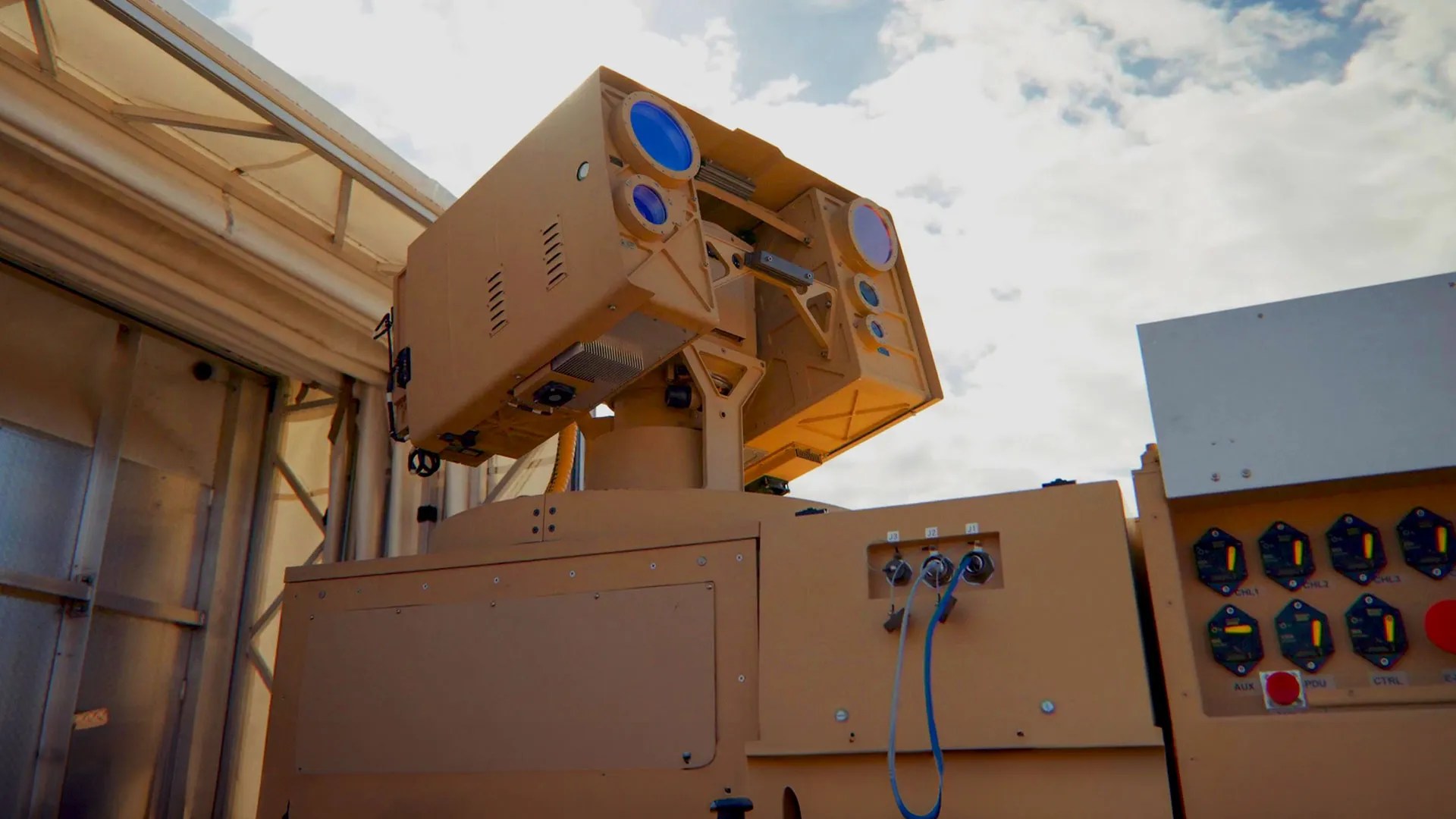
As part of the segment, Stahl also participated in a demonstration of AV’s LOCUST®, a high-energy laser weapon system capable of defeating aerial threats at the speed of light. Working alongside John Garrity, AV’s Vice President of Directed Energy Systems, Stahl operated the LOCUST system during a controlled demonstration at the company’s New Mexico facility, where she detected, tracked, and neutralized a drone target.

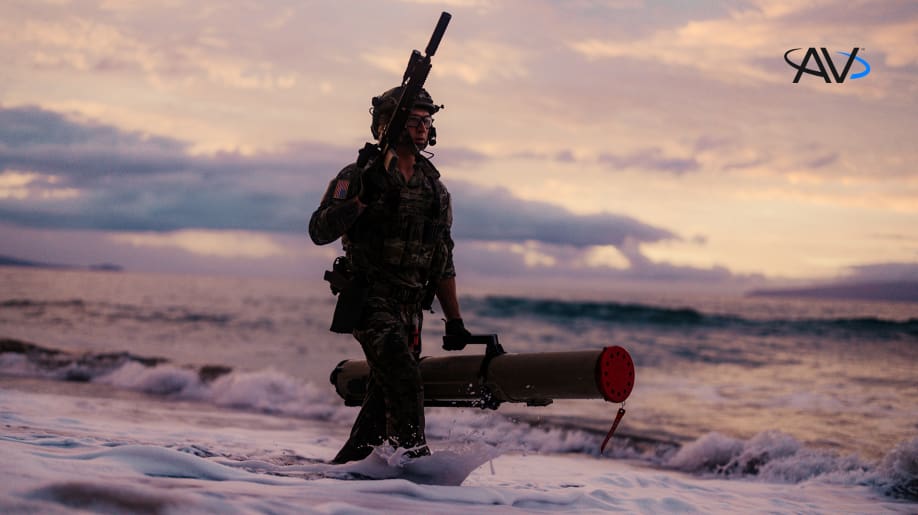
In addition to LOCUST, the segment featured Switchblade®, AV’s man-portable loitering munition system widely used in modern conflicts, including Ukraine.

60 Minutes, one of the most widely viewed and influential news programs in the world, reaches millions of viewers each week and is known for in-depth reporting on issues shaping global policy, technology, and national security.

The full segment is available on CBS News and 60 Minutes digital platforms.

Let’s Advance Your Mission

Product Catalog

Download the full catalog to explore our solutions in detail.

Press Release

AeroVironment Announces Fiscal 2026 Third Quarter Results

03/10/2026

ARLINGTON, VA, March 10, 2026 — AeroVironment, Inc. (NASDAQ: AVAV) (“AeroVironment” or the “Company”) reported today financial results for the fiscal third quarter ended January 31, 2026.

Third Quarter Highlights:

• Third quarter revenue of $408.0 million
• Bookings of $2.1 billion and book-to-bill ratio of 1.6 for the first nine months of the fiscal year
• Record funded backlog of $1.1 billion

“While our third quarter results were impacted by revenue timing and adjustments in our Space business, demand for our unique solutions remains robust,” said Wahid Nawabi, AeroVironment chairman, president and chief executive officer. “Strong order flow and growth in funded backlog during the quarter are setting the stage for record fourth quarter revenue and a solid start to fiscal year 2027. We are executing with discipline, scaling manufacturing ahead of demand and accelerating the commercialization of our platforms to improve profitability and time to market. We believe there are tremendous opportunities ahead for AV to shape the next era of defense and we remain confident in our ability to deliver long-term shareholder value.”

FISCAL 2026 THIRD QUARTER RESULTS

Revenue for the third quarter of fiscal 2026 was $408.0 million and $1.3 billion of revenue for the first nine months of the fiscal year. Revenue for third quarter of fiscal 2026 increased 143% as compared to $167.6 million for the third quarter of fiscal 2025, due to higher product sales of $138.1 million and higher service revenue of $102.3 million. The acquisition of BlueHalo on May 1, 2025 contributed to $85.1 million and $91.4 million of the current quarter product and service revenue, respectively. From a segment standpoint, Autonomous Systems (“AxS”) recorded revenue of $278.7 million and Space, Cyber and Directed Energy (“SCDE”) recorded revenue of $129.3 million.

Gross margin for the third quarter of fiscal 2026 was $98.8 million, an increase of 56% as compared to $63.2 million for the third quarter of fiscal 2025, reflecting higher product margin of $19.1 million and higher service margin of $16.5 million. Fiscal 2026 third quarter gross margin was negatively impacted by $12.7 million of intangible amortization expense and other related non-cash purchase accounting expenses, as compared to $3.7 million in the third quarter of fiscal 2025. As a percentage of revenue, gross margin fell to 24% from 38%, primarily due to an increase in the proportion of service revenue resulting from the BlueHalo acquisition and the increased amortization and other non-cash purchase accounting expenses.

Impairment of goodwill for the third quarter of fiscal 2026 was $151.3 million. In January 2026, a stop-work order was received on the Company’s Other Transaction Agreement for the delivery of BADGER phased array antenna systems to support Space Force’s Satellite Communication Augmentation Resource (“SCAR”) program. We concluded that the stop-work order represented a trigger event that indicated the carrying value of the Space reporting unit exceeded its fair value. As a result, we updated our estimates of the long-term cash flows of the Space reporting unit to reflect the reduced revenue associated with the stop-work order as well as an increase in expected research and development and capital investments to achieve product commercialization, which is expected to result in expanded opportunities and improve long term product margins. The changes in estimates resulted in the recognition of a goodwill impairment charge of $151.3 million in the Space reporting unit.

Loss from operations for the third quarter of fiscal 2026 was $(179.0) million as compared to $(3.1) million for the third quarter of last fiscal year. The current quarter was negatively impacted by $43.9 million of intangible amortization and other related non-cash purchase accounting expenses as compared to $4.8 million in the third quarter of fiscal 2025. The decrease year-over-year was primarily due to the goodwill impairment of $151.3 million recorded during the third quarter of fiscal 2026 related to Space, an increase in selling, general and administrative (“SG&A”) expense of $55.6 million, which includes an increase of $30.1 million of intangible amortization expense and incremental headcount resulting from our acquisition of BlueHalo which closed on May 1, 2025, partially offset by a decrease of $3.1 million of acquisition related expenses, an increase in research and development (“R&D”) expense of $4.6 million, partially offset by an increase in gross margin of $35.6 million.

Other income, net for the third quarter of fiscal 2026 was $3.3 million, as compared to $0.7 million for the third quarter of fiscal 2025. The increase year-over-year was primarily due to an increase in interest income due to a combination of higher cash and investment balances and lower interest bearing debt balances.

Benefit from income taxes for the third quarter of fiscal 2026 was $(19.5) million, as compared to $(0.6) million for the third quarter of last fiscal year. The increase year-over-year was primarily due to the loss before income taxes, partially offset by non-deductible goodwill impairment.

Net loss for the third quarter of fiscal 2026 was $(156.6) million, or $(3.15) per diluted share, as compared to $(1.8) million, or $(0.06) per diluted share, in the prior-year period, respectively. The current quarter was negatively impacted by goodwill impairment charges of $151.3 million, or $2.95 per diluted share, and $43.9 million, or $0.70 per diluted share, of intangible amortization and other related non-cash purchase accounting expenses as compared to $4.8 million, or $0.13 per diluted share, in the third quarter of fiscal 2025.

Non-GAAP adjusted EBITDA for the third quarter of fiscal 2026 was $44.5 million and non-GAAP earnings per diluted share were $0.64, as compared to $21.8 million and $0.30, respectively, for the third quarter of fiscal 2025.

BACKLOG

As of January 31, 2026, funded backlog (defined as remaining performance obligations under firm orders for which funding is currently appropriated to us under a customer contract) was $1.1 billion, as compared to $726.6 million as of April 30, 2025.

FISCAL 2026 — OUTLOOK FOR THE FULL YEAR

For fiscal year 2026, the Company now expects revenue of between $1.85 billion and $1.95 billion, net loss of between $(218) million and $(201) million, non-GAAP adjusted EBITDA of between $265 million and $285 million, loss per diluted share of between $(4.44) and $(4.10) and non-GAAP earnings per diluted share, which excludes amortization of intangible assets, other non-cash purchase accounting expenses, goodwill impairment, equity securities investments gains or losses, and equity method income or loss of between $2.75 and $3.10.

The foregoing estimates are forward-looking and reflect management’s view of current and future market conditions, subject to certain risks and uncertainties, including certain assumptions with respect to our ability to efficiently and on a timely basis integrate acquisitions, obtain and retain government contracts, changes in the timing and/or amount of government spending, react to changes in the demand for our products and services, activities of competitors, changes in the regulatory environment, and general economic and business conditions in the United States and elsewhere in the world. Investors are reminded that actual results may differ materially from these estimates and investors should review all risks related to achievement of the guidance reflected under “forward-looking statements” below and in the Company’s filings with the Securities and Exchange Commission.

In conjunction with this release, AeroVironment, Inc. will host a conference call today, Tuesday, March 10, 2026, at 4:30 pm Eastern Time that will be webcast live. Wahid Nawabi, chairman, president and chief executive officer, Kevin P. McDonnell, executive vice president and chief financial officer, and Denise Pacioni, investor relations director, will host the call.

Investors may access the call by registering via the following participant registration link up to ten minutes prior to the start time.

Participant registration URL:
https://register-conf.media-se…

Investors may also listen to the live audio webcast via the Investor Relations page of the AeroVironment, Inc. website, http://investor.avinc.com. Please allow 15 minutes prior to the call to download and install any necessary audio software.

A supplementary investor presentation for the third quarter fiscal year 2026 can be accessed at https://investor.avinc.com/events-and-presentations.

Audio Replay

An audio replay of the event will be archived on the Investor Relations section of the Company’s website at http://investor.avinc.com.

About AeroVironment, Inc.

AeroVironment (“AV”) (NASDAQ: AVAV) is a defense technology leader delivering integrated capabilities across air, land, sea, space, and cyber. The Company develops and deploys autonomous systems, loitering munitions, counter-UAS technologies, space-based platforms, directed energy systems, and cyber and electronic warfare capabilities—built to meet the mission needs of today’s warfighter and tomorrow’s conflicts. At the core of these technologies lies AV_Halo, a modular, mission-ready suite of AI-powered software tools that empowers warfighters and enables full-battlefield dominance: detect, decide, deliver. With a national manufacturing footprint and a deep innovation pipeline, AV delivers proven systems and future-defining capabilities at speed, scale, and operational relevance. For more information, visit www.avinc.com.


Safe Harbor Statement

Certain statements in this press release may constitute “forward-looking statements” as that term is defined in the Private Securities Litigation Reform Act of 1995. These statements are made on the basis of current expectations, forecasts and assumptions that involve risks and uncertainties, including, but not limited to, economic, competitive, governmental and technological factors outside of our control, that may cause our business, strategy or actual results to differ materially from those expressed or implied. Factors that could cause actual results to differ materially from the forward-looking statements include, but are not limited to, our ability to perform under existing contracts and obtain additional contracts; changes in the regulatory environment; the activities of competitors; failure of the markets in which we operate to grow; failure to expand into new markets; failure to develop new products or integrate new technology with current products; and general economic and business conditions in the United States and elsewhere in the world. For a further list and description of such risks and uncertainties, see the reports we file with the Securities and Exchange Commission. We do not intend, and undertake no obligation, to update any forward-looking statements, whether as a result of new information, future events or otherwise.


CONTACT:

AeroVironment
+1.703.418.2828
pr@avinc.com

Let’s Advance Your Mission

Product Catalog

Download the full catalog to explore our solutions in detail.

News

AV Awarded $97 Million U.S. Army Contract to Advance Next-Generation Sensor Testing

03/05/2026

AV Awarded $97 Million U.S. Army Contract to Advance Next-Generation Sensor Testing

ARLINGTON, Va. – March 5, 2026 – AeroVironment, Inc. (“AV”) (NASDAQ: AVAV), a leading provider of advanced research and development solutions for national security missions, today announced it has been awarded a three-year, $97.4 million contract under the U.S. Army’s Aviation and Missile Technology Consortium (AMTC) to develop and deliver the Generative Environment for the Next Era of Spectral Imaging Stimulators (GENESIS)—a next-generation Hardware-in-the-Loop (HWIL) test environment for validating advanced missile defense and electro-optical/infrared (EO/IR) sensor systems.

AV will design and integrate prototype test environments—including flight motion table and cryogenic space chamber facilities—at Redstone Arsenal in Huntsville, Alabama, to accelerate the next generation of Integrated Air and Missile Defense (IAMD). The unified environment will enable joint planning, modeling, and validation across space, air, and missile defense domains in support of the Combat Capabilities Development Command Aviation & Missile Center (DEVCOM AvMC), and its government partners.

“True innovation in defense starts long before technology reaches the battlefield—it starts in how we test, refine, and prove it,” said Mary Clum, President of Space, Cyber and Directed Energy at AV. “By creating realistic, repeatable, and scalable testing ecosystems, we’re helping the Army accelerate innovation, strengthen deterrence, and ensure our warfighters maintain a decisive advantage in every domain.”

GENESIS represents a generational leap in Hardware-in-the-Loop (HWIL) capability, integrating advanced multi-spectral projection, ultra–high frame-rate imaging, precision optics, and intelligent facility control systems to recreate complex, real-world environments with unmatched fidelity. By combining real hardware with simulated environments, HWIL and Scene Generation enable realistic, dynamic testing of sensors, guidance, and control systems, allowing DEVCOM AvMC to validate and field technologies faster and with greater confidence, while refining performance, reducing risk, and strengthening the industrial base for future military applications.

“GENESIS shows what’s possible when industry and government align around a shared vision of innovation,” said Johnathan Jones, Senior Vice President for Cyber and Mission Solutions at AV. “We’re pushing the boundaries of sensor testing—advancing realism and precision to help the U.S. military accelerate development, reduce risk, and deliver mission-ready technologies that preserve our nation’s decisive advantage and give warfighters the most capable, reliable systems possible.”

Let’s Advance Your Mission

Product Catalog

Download the full catalog to explore our solutions in detail.

Blog

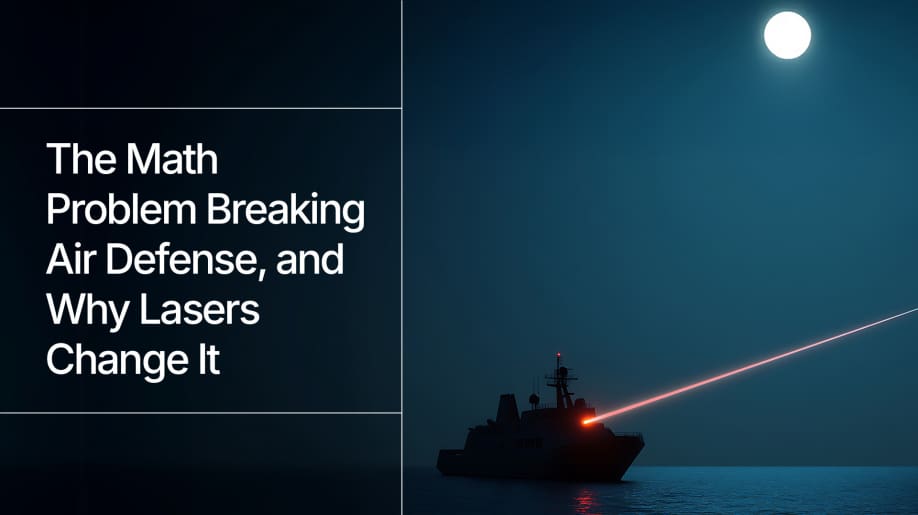
The Math Problem Breaking Air Defense, And Why Lasers Change It

03/04/2026

The Math Problem Breaking Air Defense, And Why Lasers Change It

By Aaron Westman, Senior Director of Business Development at AV  

A $50,000 drone can destroy a $30 million aircraft.

A $2 million missile can destroy a $50,000 drone.

If that sounds like a losing proposition, it’s because it is.

Unmanned Aircraft Systems (UAS) have fundamentally altered the economics of conflict. We have all seen the videos — small, inexpensive aircraft delivering outsized battlefield effects. Nowhere has this been more visible than in Ukraine, where production numbers and lethality statistics are staggering.

While much attention is focused on drone technology, the equally critical and often overlooked counterpart is counter-unmanned aerial systems (C-UAS), systems that allow us to defend against aerial threats. The ongoing cat-and-mouse game between drones and the defense systems designed to defeat them is evolving at an unprecedented pace. Dedicated C-UAS formations are being developed and adopted around the world. Advanced sensors and effectors are being deployed not just by militaries, but by law enforcement agencies, critical infrastructure operators, and even professional sports venues.

The importance of C-UAS is understood. Its implications are not.

At its core, the C-UAS challenge is not just technological. It is also economic.

Drones live in the world of software—iterative, mass-produced, and scaled across global supply chains capable of producing hundreds of thousands, even millions, of units per year. Air defense lives in the world of atoms. Every interceptor must be built, shipped, stored, and sustained. Each one is a discrete, exhaustible object. Once fired, it disappears from inventory, and replacing it takes time, money, and industrial capacity that cannot surge at the speed of software.

This creates a structural imbalance in cost and scale. A single defended site facing sustained drone pressure can consume thousands of interceptors in a matter of months, turning defense into a contest of industrial endurance rather than tactical skill. When each engagement carries a five or six-figure price tag, the defender risks spending more to defeat the threat than the attacker spends to create it.

In this environment, the defining metric of effectiveness is no longer whether a system can intercept a drone, but whether it can do so affordably, repeatedly, and at the scale the threat demands.

In essence, C-UAS is no longer defined by whether you can stop a drone, but whether you can afford to stop them all.

Why Cost Parity Is Not Enough

Conventional wisdom holds that if we can simply make interceptors cheaper, the problem goes away. It does not.

Even if an interceptor achieves nominal cost parity with a one-way attack drone, the defender still faces the burden of manufacturing, storing, and distributing large quantities of physical munitions. The attacker retains initiative. The defender retains logistical burden.

What the C-UAS fight demands is not just cost reduction. It demands a fundamentally different scaling model — one that can keep pace with, or outpace, the industrial production of drones.

That is where directed energy enters the conversation.

A Different Model: Electricity Instead of Inventory

Laser Directed Energy Weapons (LDEWs) invert the economics of C-UAS.

A missile is consumed when fired. A laser recharges.

Instead of throwing hardware at hardware, a laser delivers concentrated energy onto the target.  The marginal cost per engagement is measured in electricity — typically about a kilowatt-hour or $0.18 worth of electricity per shot, roughly comparable to the amount required to operate a household refrigerator for a day.

A laser system does not need a warehouse of interceptors. It does not require constant munitions resupply convoys. It is limited primarily by power availability and thermal management, not by missile inventory.

In practical terms, this means that a C-UAS unit equipped with an effective LDEW can defend against large volumes of small UAS threats without the exponential logistics burden associated with kinetic interceptors.

This is not science fiction. It is not a cinematic “death ray.” A modern LDEW functions more like a long-range precision welder, applying concentrated energy to structurally or functionally disable a drone. The physics are straightforward. The engineering challenge has been shrinking the system, lowering the cost, and making it rugged enough for real-world use.

Thanks to advances in commercial fiber lasers, optics, and power electronics, that tipping point has arrived.

Demonstrated Scale

Over the past four years, our team at AV has conducted more than 66 test, demonstration, live-fire, and operational exercises with our LOCUST family of C-UAS laser systems. Across those events — including preparations and supporting trials — we estimate that our systems have safely defeated over 1,000 small UAS targets.

These were not simulations. They were real unmanned aircraft, real sensors, real power systems, and real environmental conditions.

What is noteworthy is not simply that lasers work. It is that they can operate repeatedly without the inventory constraints that define kinetic systems. Even with only a limited number of prototypes built to date, the cumulative number of engagements would have required substantial missile expenditure had traditional interceptors been used.

That difference scales.

Not a Silver Bullet — But a Necessary One

No single system will solve every aspect of the C-UAS problem. RF-based systems will continue to play an important role against nuisance or commercially derived drones. Gun-based systems will retain utility at very close ranges or in specific environments. Kinetic interceptors remain essential against certain classes of threats.

But when confronting high-volume, low-cost robotic systems, it is difficult to envision a more suitable hard-kill effector than an affordable, producible LDEW.

The question is not whether lasers can defeat drones. They can, they do.

The real question is whether we are willing to align our defensive strategy with the economics of the threat.

In the C-UAS fight, cost structure is destiny. 


Yesterday, AV Announced a $30 million investment in its New Mexico campus, which is where the LOCUST system is manufactured.

ABOUT THE AUTHOR 

Aaron Westman is an engineer and leader specializing in counter-UAS and directed energy systems. He has played a key role advancing mobile laser weapon integration and operational deployment, supporting a variety of cross-domain capabilities that improve precision engagement and layered air defense.

JOIN THE AV MISSION 

AV isn’t for everyone. We hire the curious, the relentless, the mission-obsessed. The best of the best.

We don’t just build defense technology—we redefine what’s possible. As the premier autonomous systems company in the U.S., AV delivers breakthrough capabilities across air, land, sea, space, and cyber. From AI-powered drones and loitering munitions to integrated autonomy and space resilience, our technologies shape the future of warfare and protect those who serve.

Founded by legendary innovator Dr. Paul B. MacCready, Jr., AV has spent over 50 years pushing the boundaries of what unmanned systems can do. Our heritage includes seven platforms in the Smithsonian—but we’re not building history, we’re building what’s next.

If you’re ready to build technology that matters—with speed, scale, and purpose—there’s no better place to do it than AV.


Let’s Advance Your Mission

Product Catalog

Download the full catalog to explore our solutions in detail.

Press Release

AV Issues Statement Regarding Active Negotiations for Contract Amendment to Support U.S. Space Force’s SCAR Program

03/03/2026

Confident in ability to successfully deliver AV’s systems ahead of competitors 

ARLINGTON, Va., March 3, 2026 – AeroVironment, Inc. (“AV” or the “Company”) (NASDAQ: AVAV), a global defense technology leader, today issued the following statement regarding the U.S. Space Force’s delivery of BADGER phased array antenna systems to support the Satellite Communications Augmentation Resource (“SCAR”) program:

We remain in active negotiations with the U.S. Space Force regarding AV’s contract to deliver  ground stations to support the SCAR program. AV appreciates that the contract was temporarily paused while both parties work together on a firm-fixed-price contract that provides a commercialized product solution with an expedited delivery timeline. AV is focused on aligning to customer needs and, as separately announced, is actively investing in expanding manufacturing capacity in Albuquerque, New Mexico to support growth in our Space and Directed Energy platforms, including manufacturing for the SCAR program.

AV’s innovation and ability to scale ahead of manufacturing remains a key differentiator, giving us a competitive edge in the broader defense market. AV is confident in its ability to successfully deliver our systems ahead of competitors.

As previously announced, AV will report its financial results for the third quarter of fiscal year 2026 after the market closes on March 10, 2026. Management will host a conference call and live audio webcast at 4:30 p.m. Eastern Time that same day to discuss the results.


About AeroVironment, Inc.

AeroVironment (“AV”) (NASDAQ: AVAV) is a defense technology leader delivering integrated capabilities across air, land, sea, space, and cyber. The Company develops and deploys autonomous systems, loitering munitions, counter-UAS technologies, space-based platforms, directed energy systems, and cyber and electronic warfare capabilities—built to meet the mission needs of today’s warfighter and tomorrow’s conflicts. At the core of these technologies lies AV_Halo, a modular, mission-ready suite of AI-powered software tools that empowers warfighters and enables full-battlefield dominance: detect, decide, deliver. With a national manufacturing footprint and a deep innovation pipeline, AV delivers proven systems and future-defining capabilities at speed, scale, and operational relevance. For more information, visit www.avinc.com.


Safe Harbor Statement

Certain statements in this press release may constitute “forward-looking statements” as that term is defined in the Private Securities Litigation Reform Act of 1995. These statements are made on the basis of current expectations, forecasts and assumptions that involve risks and uncertainties, including, but not limited to, economic, competitive, governmental and technological factors outside of our control, that may cause our business, strategy or actual results to differ materially from those expressed or implied. Factors that could cause actual results to differ materially from the forward-looking statements include, but are not limited to, our ability to perform under existing contracts and obtain additional contracts; changes in the regulatory environment; the activities of competitors; failure of the markets in which we operate to grow; failure to expand into new markets; failure to develop new products or integrate new technology with current products; and general economic and business conditions in the United States and elsewhere in the world. For a further list and description of such risks and uncertainties, see the reports we file with the Securities and Exchange Commission. We do not intend, and undertake no obligation, to update any forward-looking statements, whether as a result of new information, future events or otherwise.


Contact:

AeroVironment
+1.703.418.2828
pr@avinc.com

Let’s Advance Your Mission

Product Catalog

Download the full catalog to explore our solutions in detail.

News

AV Partners with City of Albuquerque and State of New Mexico in Defense Manufacturing Expansion

LOCUST

ALBUQUERQUE, N.M. — March 3, 2026 — AeroVironment, Inc. (“AV”) (NASDAQ: AVAV), a global leader in advanced defense and aerospace solutions, today announced plans to invest more than $30 million to significantly expand its manufacturing operations in Albuquerque, New Mexico.

Supported by an initial $5 million from the State of New Mexico and $1 million from the City of Albuquerque through the Local Economic Development Act (LEDA), the investment will expand AV’s manufacturing operations across its three existing manufacturing sites in the Sandia Science & Technology Park while supporting major capital equipment purchases and workforce growth.

“The growth we’re driving in Albuquerque goes beyond our own business,” said Wahid Nawabi, Chairman, President, and Chief Executive Officer at AV. “It’s about strengthening the domestic defense industrial base, creating high-quality American jobs, and partnering with New Mexico to continue to develop a durable innovation and manufacturing hub that can deliver when it matters most.”

The investment will further establish a vertically integrated, next-generation manufacturing campus expected to generate more than $670 million in economic impact over the next 10 years, boost production of mission-critical defense and space technologies, create more than 450 high-wage jobs, and strengthen New Mexico’s role in the U.S. defense industrial base by enabling scaled domestic production of directed energy systems and space-grade components that support national security and resilient supply chains.

As part of the expansion, the State of New Mexico and City of Albuquerque have approved a $6 million performance-based incentive package, structured as cash reimbursements tied to verified hiring milestones. The incentive reflects AV’s long-term commitment to New Mexico’s advanced manufacturing and technology workforce, where the company currently employs more than 400 people and has a proven growth record of nearly 30 percent year-over-year from 2023 to 2026.

AV’s Albuquerque operations are a cornerstone of the company’s advanced manufacturing strategy, anchored by its Space & Directed Energy Group, which supports next-generation defense, aerospace, and commercial space programs and develops advanced capabilities, including laser communications, counter-UAS systems, and autonomous and space-based solutions, while also supporting prototype development for U.S. military customers and regional testing and operations.

“This move marks a step change in our ability to deliver mission-critical capabilities at scale,” said Mary Clum, President of AV’s Space, Cyber & Directed Energy segment. “Albuquerque is a strategic production and integration hub for space-grade components and directed energy systems that directly support U.S. national security priorities. The state’s partnership allows us to accelerate manufacturing, strengthen domestic supply chains, and deliver advanced capabilities to our customers faster and more reliably.”

AV currently manufactures several products critical to national security priorities, including advanced radio frequency (RF) systems, satellite communications ground terminals, laser systems and stabilized precision optics and tracking technologies, among others.

“This expansion comes as the federal government continues to emphasize the importance of defense contractors leaning forward, investing in domestic facilities, resilient supply chains, and skilled workforces that can deliver critical capabilities at scale, on time, and cost-effectively,” said Church Hutton, Chief Growth Officer at AV. “AV’s Albuquerque growth reflects this national priority and positions the company to meet accelerating demand across defense, aerospace, and space markets.”

“Albuquerque is where defense innovation becomes advanced manufacturing,” said Mayor Tim Keller. “With LEDA support, AV Defense is expanding here, bringing hundreds of good-paying jobs and strengthening our local economy.”

Let’s Advance Your Mission

Product Catalog

Download the full catalog to explore our solutions in detail.

News

AV, Inc. to Announce Third Quarter of Fiscal Year 2026 Earnings and Host Conference Call

02/27/2026

ARLINGTON, Va., February 27, 2026 – AeroVironment, Inc. (“AV”) (NASDAQ: AVAV) will report its financial results for the third quarter of fiscal year 2026, which ended January 31, 2026, after the market closes on March 10, 2026. Management will host a conference call and live audio webcast at 4:30 p.m. Eastern Time that same day to discuss the results.

The call will be led by Wahid Nawabi, AV’s chairman, president, and chief executive officer; Kevin P. McDonnell, executive vice president and chief financial officer; and Denise Pacioni, head investor relations officer.

Investors may access the conference call by registering through the following link up to 10 minutes before the event begins:

Conference Call Details

Date: March 10, 2026 Time: 4:30 p.m. ET | 1:30 p.m. PT | 2:30 p.m. MT | 3:30 p.m. CT Participant registration URL:

https://register-conf.media-server.com/register/BI42ffd1d0f4154de3b038f735824a329c

The live audio webcast will also be accessible via the Investor Relations section of AV’s website, http://investor.avinc.com. Please access the site 15 minutes before the event to ensure any necessary software is downloaded.

Audio Replay

An audio replay and transcript of the event will be archived on the Investor Relations section of the company’s website shortly after the event: http://investor.avinc.com.

Capabilities

Let’s Advance Your Mission

Product Catalog

Download the full catalog to explore our solutions in detail.

News

The Human Is Infrastructure: Readiness in the Age of Autonomy

02/26/2026

The Human Is Infrastructure: Readiness in the Age of Autonomy

By Dr. Stephaney Shanks, Vice President, Health and Performance Technologies 

For decades, military infrastructure has been defined as platforms, networks, logistics, and installations. Yet, as autonomous technologies reshape the battlespace, one truth is increasingly unavoidable, and too often overlooked: The human operator is the most critical element of military infrastructure. The future of readiness will not be defined by machines alone, but by how well we enable the humans who command, control, and collaborate with them.

The warfighter is both person and critical component of the weapons system. That duality shapes how we innovate. It drives us to design technologies that support operator mental and physical performance during their service and throughout their lives. Centering the human in our work acknowledges that warfare is a human endeavor, correctly frames system optimization and, frankly, honors their sacrifice.

I lead AV’s efforts focused on the heart of the human decision-making process. In this work, performance technologies are not ancillary health tools; they are foundational infrastructure. We see the warfighter as a measurable, protectable, and optimizable element of the force, and guide the development of precision medicine, AI/ML-enabled health tools, and wearable and drone-mounted sensing systems that give operators the edge, so when autonomy fails or behaves unexpectedly, the human can act immediately. The technologies pioneered for military health do not stop at the battlefield; they ripple outward, strengthening healthcare for civilians, first responders, families, and communities everywhere. Equipping these groups of incredible people is exactly why I got into this industry.

I began my career grounded in public health and microbiology, focused on environmental exposure and protecting human health. Like many Americans, the events of September 11, 2001 reshaped my sense of purpose. As our nation entered the global war on terror, I felt a profound responsibility to apply my training in service of those who would carry the burden of that conflict. What began as a public health calling evolved into a mission-driven commitment to protect the health and performance of the brave men and women of the U.S. military, who volunteer to put their lives in harm’s way every day and who operate every day under extraordinary physical, cognitive, and environmental stress.

These people’s missions do not execute themselves. Humans remain indispensable for judgment, authorization, adaptation, and accountability. They supervise autonomy, intervene when systems fail, and operate in the ambiguity that machines are not yet equipped to resolve. As autonomy scales, the operator does not disappear from the system. They become the decisive node.

The prevailing assumption is that autonomy reduces human burden. In practice, it often simply redistributes it. Supervising multiple autonomous systems, interpreting AI-driven outputs, and making time-compressed decisions under uncertainty place extraordinary cognitive and physiological demands on operators.

Fatigue, cognitive overload, stress, injury, and environmental exposure are not personal health concerns, they are mission-level risks that propagate across platforms. If aircraft maintenance, fuel supply, and network resilience are infrastructure investments, then operator readiness deserves the same innovation, rigor, instrumentation, and lifecycle management.

Traditionally, human performance is assessed episodically during training, pre-deployment screenings, or post-mission evaluations. This model no longer aligns with modern operations, where stressors accumulate continuously and readiness can change rapidly. The future is persistent, unobtrusive sensing paired with real-time analytics in systems that operate in the background, delivering insight without distracting from the mission. This is not about overwhelming the warfighter with large, complex dashboards. It is about enabling commanders, medics, and operators themselves to identify risks earlier, intervene sooner, and sustain performance during forward, distributed, resource-constrained missions.

A critical enabler of this shift is the maturation of flexible hybrid electronics (FHE). FHE allows sensing, processing, and connectivity to be embedded directly into body-conformal systems, enabling continuous monitoring without compromising mobility, comfort, or compliance. This represents a fundamental change in how infrastructure is deployed. Instead of surrounding the human with systems, we can now integrate infrastructure with the human themselves.

RehabXR, part of AV’s nxtHealth® product line, reflects this approach by combining wearable sensing, immersive environments, and adaptive analytics for concussion and mild traumatic brain injury rehabilitation. It continuously assesses movement quality, neuromuscular performance, and recovery trajectories. RehabXR enables rehabilitation and performance optimization that is operationally relevant and interactive rather than episodic and with secure, real-time data delivery to clinicians.

As we strive for increased system autonomy in contested and resource-constrained environments, data from FHE-enabled devices alone will not create advantage. Advantage comes from what is done with that data. This requires on-device, edge computing to turn raw measurements into real-time guidance without reliance on cloud infrastructure.

This philosophy underpins AV’s ChemiSens™ portfolio, including biohybrid sensors that integrate biology with advanced electronics developed in partnership with the Air Force Research Laboratory. These sensors detect and characterize chemical exposures with high specificity and sensitivity, while processing signals locally for rapid response. When combined with human performance monitoring, ChemiSens can extend readiness beyond physiology alone, linking environmental exposure directly to functional degradation, stress response, and cognitive load.

AV recognizes that human performance technologies have direct relevance beyond defense. Capabilities developed for warfighter readiness – continuous monitoring, exposure awareness, adaptive recovery, and early risk detection – naturally translate to civilian settings where safety, resilience, and sustained performance are equally critical. Platforms like RehabXR and ChemiSens can support applications for first responders, industrial workers, elite athletes, transportation operators and healthcare professionals. The dual-use model accelerates technology transition, lowers cost to the taxpayer, and strengthens national resilience.

Human performance is no longer a support function. It is strategic infrastructure, and it must be built with the same intent, precision, and urgency as any other element of national security. In an age of autonomy, the human remains the ultimate point of accountability and our decisive advantage.

ABOUT THE AUTHOR

Stephaney Shanks, Ph.D. is a health, defense, and technology executive serving as Vice President of Health & Performance Technologies at AV. She leads multi-site teams and a $35M+ portfolio to develop real-world medical technologies, precision medicine, AI/ML health tools, and wearable systems for military and commercial health applications.

JOIN THE AV MISSION 

AV isn’t for everyone. We hire the curious, the relentless, the mission-obsessed. The best of the best.

We don’t just build defense technology—we redefine what’s possible. As the premier autonomous systems company in the U.S., AV delivers breakthrough capabilities across air, land, sea, space, and cyber. From AI-powered drones and loitering munitions to integrated autonomy and space resilience, our technologies shape the future of warfare and protect those who serve.

Founded by legendary innovator Dr. Paul B. MacCready, Jr., AV has spent over 50 years pushing the boundaries of what unmanned systems can do. Our heritage includes seven platforms in the Smithsonian—but we’re not building history, we’re building what’s next.

If you’re ready to build technology that matters—with speed, scale, and purpose—there’s no better place to do it than AV.

Let’s Advance Your Mission

Product Catalog

Download the full catalog to explore our solutions in detail.

News

AV Receives $186 Million U.S. Army Delivery Order for Next-Generation Switchblade Systems

AV Receives $186 Million U.S. Army Delivery Order for Next-Generation Switchblade Systems

ARLINGTON, Va. — February 26, 2026 — AeroVironment, Inc. (“AV”) (NASDAQ: AVAV), a global leader in autonomous systems and precision strike solutions, today announced receipt of a $186 million delivery order from the U.S. Army for Switchblade® 600 Block 2 and Switchblade® 300 Block 20 explosively formed penetrator (EFP) loitering munition systems.

The order was issued under the Army’s existing five-year, $990 million Indefinite Delivery, Indefinite Quantity (IDIQ) contract for Lethal Unmanned Systems (LUS), which was awarded in August 2024. This delivery order marks the U.S. Army’s first procurement of AV’s next-generation Switchblade product line, underlining a significant step forward in fielding advanced, precision loitering munitions across infantry and maneuver formations. It is the Army’s first Switchblade order containing EFP payload, delivering enhanced lethality against armored threats.

“This delivery order reflects the Army’s confidence in the next evolution of the Switchblade family and its relevance to modern, contested battlefields,” said Brian Young, Senior Vice President of Loitering Munitions at AV. “Switchblade 600 Block 2 and Switchblade 300 Block 20 build on years of combat experience while delivering meaningful upgrades in autonomy, resilience, and lethality tailored to today’s operational demands.”

Switchblade 600 Block 2 is AV’s most advanced long-range loitering munition to date, designed for multi-domain operations and ruggedized for maritime and highly contested environments. Developed in collaboration with United States Special Operations Command (SOCOM), the system features upgraded avionics and advanced Automatic Target Recognition (ATR), enabling faster detection, identification, and engagement of threats. Integrated resilient communications, including Silvus MANET radios, support distributed operations and extended handoff ranges, while improved navigation and mission resilience allow effective employment in GPS-challenged environments. These upgrades provide commanders with increased reach, flexibility, and confidence against armored and high-value targets.

Switchblade 300 Block 20 introduces a new modular payload capability to the combat-proven, backpackable loitering munition. For the first time, the Army has procured the system with an Explosively Formed Penetrator (EFP) payload, delivering enhanced lethality against armored threats while retaining the speed, portability, and ease of use that have made Switchblade 300 a trusted solution at the small-unit level. The Block 20 configuration also includes sensor improvements, enhanced user interfaces, and extended range options, allowing rapid, precision effects beyond line of sight.

Together, the Switchblade 600 Block 2 and Switchblade 300 Block 20 provide the Army with a scalable family of precision loitering munitions—from lightweight, single-operator systems to long-endurance, multi-domain capabilities—designed to operate seamlessly across echelons and mission sets.

“This delivery order further advances the Army’s Lethal Unmanned Systems Directed Requirement and reinforces AV’s role as the leading provider of combat-proven loitering munition systems,” said Young. “As we continue to invest in expanding Switchblade manufacturing capacity and accelerating delivery timelines, we are continuing to meet the growing demand for these products from U.S. and allied forces.”

Let’s Advance Your Mission

Product Catalog

Download the full catalog to explore our solutions in detail.

News

AV Announces Retirement of Chief Financial Officer Kevin McDonnell

AV Announces Retirement of Chief Financial Officer Kevin McDonnellARLINGTON, Va., February 23, 2026 – AeroVironment, Inc. (“AV” or the “Company”) (NASDAQ: AVAV), a global defense technology leader, today announced that Kevin McDonnell, Executive Vice President and Chief Financial Officer, has informed the Company of his decision to retire from AV, effective July 31, 2026.

“Kevin has played an important role in strengthening AV’s financial performance, driving improved profitability during a period of revenue, bookings and backlog growth,” said Wahid Nawabi, Chairman, President and Chief Executive Officer. “On behalf of our Board and leadership team, I thank Kevin for his contributions to the Company and our finance organization. We wish him all the best in his retirement.”

McDonnell joined AV in 2020. During his tenure as CFO, AV strengthened its balance sheet, enhanced its financial and operational discipline, completed strategic acquisitions and organic growth initiatives, and reinforced its capital allocation framework to drive long-term shareholder value.

“It has been a privilege to work with Wahid and the team at AV during an important period for the Company, including with the successful integration of BlueHalo,” said Kevin McDonnell, Executive Vice President and Chief Financial Officer. “I am proud of the progress we have made in strengthening our financial foundation and supporting our strategy. AV is well positioned for the future, and I look forward to watching the Company’s continued success.”

AV is actively working to find a successor and McDonnell will continue to support through the transition period.

Let’s Advance Your Mission

Product Catalog

Download the full catalog to explore our solutions in detail.

News

AV, Inc. to Present at Citizens Technology Conference

02/18/2026

ARLINGTON, Va., February 18, 2026 – AeroVironment, Inc. (“AV”) (NASDAQ: AVAV) will participate in the upcoming Citizens Technology Conference in San Francisco, California. AV Executive Vice President and Chief Financial Officer Kevin McDonnell will take part in a fireside chat on March 2 at 6:30 p.m. ET | 5:30 p.m. CT | 3:30 p.m. PT. The fireside chat will be webcast live at the times listed above and archived on AV’s website at the link below:

About AV

AeroVironment (“AV”) (NASDAQ: AVAV) is a defense technology leader delivering integrated capabilities across air, land, sea, space, and cyber. The Company develops and deploys autonomous systems, loitering munitions, counter-UAS technologies, space-based platforms, directed energy systems, and cyber and electronic warfare capabilities—built to meet the mission needs of today’s warfighter and tomorrow’s conflicts. At the core of these technologies lies AV_Halo, a modular, mission-ready suite of AI-powered software tools that empowers warfighters and enables full-battlefield dominance: detect, decide, deliver. With a national manufacturing footprint and a deep innovation pipeline, AV delivers proven systems and future-defining capabilities at speed, scale, and operational relevance. For more information, visit www.avinc.com.

Safe Harbor Statement

Certain statements in this press release may constitute “forward-looking statements” as defined in the Private Securities Litigation Reform Act of 1995. These statements are based on current expectations, forecasts, and assumptions that involve risks and uncertainties, which could cause actual results to differ materially. Factors that may cause such differences include, but are not limited to, our ability to perform under existing contracts and obtain new ones; regulatory changes; competitor activities; market growth; product development challenges; and general economic conditions. For a more detailed discussion of these risks, please refer to AeroVironment’s filings with the Securities and Exchange Commission. We undertake no obligation to update forward-looking statements as a result of new information or future events.

Let’s Advance Your Mission

Product Catalog

Download the full catalog to explore our solutions in detail.