Blog

From Setback to Standard: How Learning Fast Delivered VAPOR® CLE to the Army’s MRR Program

04/21/2026

Jason Wright, Senior Product Line Manager

The Moment That Matters Isn’t the Win—It’s the Reset

In defense technology, the defining moment isn’t when you win—it’s how quickly you learn, improve and deliver after a failure.

When AV’s VAPOR® unmanned aircraft system (UAS), an all-electric vertical takeoff and landing (VTOL) platform, was not selected in the initial tranche of the Army’s Medium Range Reconnaissance (MRR) effort, the feedback was clear—and candid.

Our system wasn’t ready.

It was more prototype than deployable solution. It did not yet meet requirements for compact packout. It wasn’t fully operational on Kinesis, the open-standard one-to-many robotic command-and-control system AV is iterating for the Army. It didn’t meet the Army’s expectation for system maturity.

We had a choice: walk away—or rebuild with purpose.

Listening Hard: Turning Gaps into a Roadmap

We didn’t interpret the Army’s feedback as a rejection. We treated it as a roadmap.

The requirements weren’t abstract—they were operational. The system needed to deploy faster, integrate seamlessly, carry more, fly longer, and perform in real-world conditions from day one.

The AV team re-architected the platform with a focus on usability and speed of tactical employment. We replaced tool-assembly with quick-connect rotor blades, landing gear, and tail assembly. We shrunk the tactical footprint nearly 50-percent, reducing a 28-cubic foot, 110-pound packout to seven cubic feet and 58 pounds for a full packout.

Engineers upgraded the power system from a legacy battery lasting 75 minutes to an upgraded Amprius SA08 battery pack, extending endurance to 120 minutes, unlocking the persistent loitering demanded by operators.

The team embedded NVIDIA’s Jetson Orin processor, adding onboard compute to enhance VAPOR’s performance, autonomy, and capacity for future AI capabilities, and fully integrated the platform with Tomahawk Grip’s TA5 control hardware and Kinesis software.

It wasn’t a patch. It was a full reset, executed in 10 months, to deliver the next-generation VAPOR® Compact Long Endurance (CLE).

Engineering for the Mission, Not the Demo

VAPOR CLE wasn’t built to impress in a lab. It was built to perform in the field.

Payload integration became central to that mission.

We incorporated Trillium’s HD-40LVV gimbal, for high-definition intelligence, surveillance, and reconnaissance. And HD-40LVV-LP for laser target designation. We integrated SPOTR-Edge ATR (Automatic Target Recognition) to allow operators to move faster from detection to decision. We added a communications relay for MANET mesh networks, allowing operators remote viewing, camera control, and vehicle control.

We brought in the CACI Pit Viper-Air electronic warfare payload, expanding the system’s mission profile into contested environments and giving operators a tool to mitigate radio frequency and WIFI threats.

And we aligned with DEVCOM Armament’s Center’s CLIK (Common Lethality Interface Kit) standards, enabling lethality integration and ensuring the platform supports evolving Army strike requirements.

The Road Back: Proving, Not Promising

Re-entering the Army’s evaluation process meant one thing: proof.

Our venue was second tranche of the Medium Range Reconnaissance, a program pathway designed for acquisition speed without lowering the standards for reliability, usability, and immediate operational value.

The Army gave us a flyoff opportunity.

Independent evaluators assessed the system’s performance on more than 35 key system requirements: flight endurance, sensor and targeting quality, operational readiness, operation day/night and in GPS denied environments.

Targeting was an early test. In forward flight, hundreds of feet above ground, VAPOR put a 60-millimeter mortar within five inches of target center. A first proof point of many to come; and validation of our payload drop software.

Mission testing continued, defined by performance not potential.

Testers deployed the system in minutes and demonstrated adaptability and effectiveness for ISR, EW, and strike missions, in dynamic conditions. The flight test card was lengthy and rigorous. And the results vindicating; the Army selected VAPOR for production award on the second tranche of the MRR program.  We showed that we had listened and learned.

What It Means Going Forward

Bottom line, AV learned from failure, redoubled our effort and investment, and performed. The VAPOR experience represents our values: Results, Ownership, Innovation, Dedication to Customers. These things matter, learning fast and delivering successfully matters. We’re proud to provide VAPOR CLE to American soldiers.


ABOUT THE AUTHOR

Jason Wright is a senior product line manager at AV with over 20 years of defense aerospace experience. He is experienced in leading complex projects and driving operational execution. Leading from the front, with the VAPOR engineering team has been the focus for the last 18 months. He emphasizes continuous learning and professional development, with a background in structured project delivery, cross-functional coordination, and supporting mission-focused aerospace and defense initiatives.


JOIN THE AV MISSION

AV isn’t for everyone. We hire the curious, the relentless, the mission-obsessed. The best of the best.

We don’t just build defense technology—we redefine what’s possible. As the premier autonomous systems company in the U.S., AV delivers breakthrough capabilities across air, land, sea, space, and cyber. From AI-powered drones and loitering munitions to integrated autonomy and space resilience, our technologies shape the future of warfare and protect those who serve.

Founded by legendary innovator Dr. Paul B. MacCready, Jr., AV has spent over 50 years pushing the boundaries of what unmanned systems can do. Our heritage includes seven platforms in the Smithsonian—but we’re not building history, we’re building what’s next.

If you’re ready to build technology that matters—with speed, scale, and purpose—there’s no better place to do it than AV.
Let’s Advance Your Mission

Product Catalog

Download the full catalog to explore our solutions in detail.

Press Release

AV’s Precision Hardware Points Artemis II Laser Link to Earth

04/15/2026

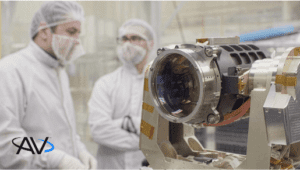
Laser Communications BannerARLINGTON, Va. – April 15, 2026 – AeroVironment, Inc. (“AV”) (NASDAQ: AVAV) today announced that its precision pointing hardware was on board NASA’s historic Artemis II Mission as part of the Orion Artemis II Optical Communications System (O2O) – a laser communications terminal developed by the Massachusetts Institute of Technology Lincoln Laboratory in collaboration with NASA Goddard Space Flight Center.

During the Artemis II mission, O2O used lasers to send high-resolution video and images of the lunar surface back to Earth. AV’s best-in-class laser gimbal allowed the spacecraft to precisely point the laser at terrestrial receivers, providing high‑speed data links between astronauts in lunar orbit and ground stations. The technology enabled data transfer at speeds “orders of magnitude more than we get via our S-band telemetry system,” NASA Flight Director Rick Henfling told the New York Times.

“Contributing to the Artemis II mission is an honor for our team,” said Wahid Nawabi, Chairman, President and Chief Executive Officer at AV. “Our role is focused but critical: making sure the laser communications beam is precisely pointed back to Earth so that astronauts can send large volumes of data quickly and reliably.”

As part of O2O payload, AV delivered a two-axis gimbal and launch latch assembly that provided coarse pointing of the laser communications beam toward the ground station as the spacecraft changed orientation during its mission. The O2O laser communications terminal was delivered to NASA in 2023 to support the Artemis II mission.

“Laser communications systems like O2O dramatically increase the speed and amount of data a mission can send and receive in a single transmission compared to traditional radio frequency systems,” said Mary Clum, President of Space, Cyber and Directed Energy at AV. “When you can return more images, more video and more science data, you accelerate discovery — and that’s what ultimately advances human exploration.”

AV also supplied multiple fast steering mirrors that provide jitter stabilization and extremely fine pointing adjustments to compensate for small motions on board the spacecraft caused by equipment operation, crew movement and environmental disturbances while in flight.

All of these components are precision‑engineered to survive the intense vibration and acceleration of launch on one of the world’s largest rockets and then deliver ultra‑stable performance in space. Together, they enable payload pointing with an accuracy on the order of a single micro‑radian—roughly equivalent to hitting a one millimeter target from one kilometer away.

Historically, AV has delivered over 150 subsystems across critical mission areas, including laser communications, for a range of customers. AV’s work on the Artemis II laser communications terminal builds on the company’s decades of experience in advanced electro‑optical systems, precision pointing mechanisms and mission‑critical hardware for challenging space environments.

Let’s Advance Your Mission

Product Catalog

Download the full catalog to explore our solutions in detail.

Press Release

AV Introduces MAYHEM 10: Multi-Role Launched Effects System at AAAA 2026

AV Introduces MAYHEM 10: Multi-Role Launched Effects System at AAAA 2026

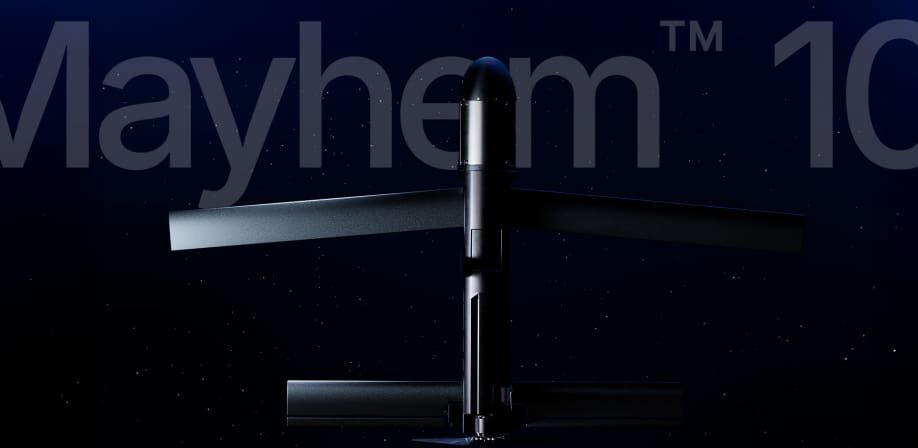
ARLINGTON, Va. — April 15, 2026 — AeroVironment, Inc. (“AV”) (NASDAQ: AVAV) today announced the debut of MAYHEM 10, a groundbreaking, multi-role launched effects system purpose-built for deployment from air, ground, and maritime platforms.

MAYHEM 10 is an autonomous, multi-role launched effects system that delivers significant operational versatility with a modular payload that supports interchangeable lethal and non-lethal effects—including intelligence surveillance and reconnaissance (ISR), electronic warfare, communications relay, and precision strike—tailored to specific mission requirements and adaptable as operational conditions change.

“MAYHEM 10 sets a new standard for operational versatility and survivability on the modern battlefield,” said Wahid Nawabi, Chairman, President and Chief Executive Officer at AV. “By integrating advanced autonomy, multi-domain payloads, and rapid adaptability, we empower our forces to sense, disrupt, and strike with precision—even in the most contested environments. This breakthrough allows commanders to extend their reach, accelerate decision-making, and maintain superiority without putting crews or high-value assets at unnecessary risk.”

Developed on the heritage of AV’s Switchblade® family and designed for demanding, contested environments, MAYHEM 10 boasts a 10-pound (4.5 kg) payload capacity, up to 100 km operational range, 50 minutes of endurance, and readiness for assembly and launch in less than five minutes.

Built using a Modular Open Systems Approach (MOSA), the system supports seamless upgrades, third-party payload integration, and unified control through AV’s Tomahawk Grip controller and AV_Halo™ COMMAND interface, empowering networked, distributed, and scalable employment alone or in collaborative swarms to execute multiple effects in parallel and adapt quickly to evolving threats and mission needs.

“MAYHEM 10 changes how forces generate combat power by enabling collaborative swarm operations at scale,” said Brian Young, Senior Vice President of Loitering Munitions at AV. “Operators can employ multiple systems to work collaboratively—expanding coverage, overwhelming defenses, and executing synchronized effects across the battlespace—without increasing platform risk or force concentration.”

MAYHEM 10 features a removeable forward modular payload for rapid integration of third-party payloads to enhance mission flexibility. Its self-contained launcher supports flexible deployment across dismounted, mobile ground, air-mounted and vehicle-mounted operations.

Advanced autonomy is powered by an AI-driven processor and enables effective operations in contested and denied environments, with resilience to jamming, spoofing, and navigation-denied conditions. Secure navigation and communication are facilitated by M-Code GPS and Silvus datalink, while a MANET secure mesh network ensures robust command-and-control links with a 25-40 km link range.

Key features of the MAYHEM 10.

  • Multi-Platform Extended Standoff: Deployable from air, ground, and maritime platforms, MAYHEM 10 extends host-platform standoff by enabling threat detection and engagement at range—pushing sensing and effects 100+ km forward while reducing risk to crews and high-value assets.
  • One System, Multiple Effects: A single MAYHEM 10 supports configurations for Intelligence, Surveillance, and Reconnaissance (ISR), electronic warfare/disruption, deception/decoy, communications relay, and precision strike with up to 10 lbs of tailorable nonlethal or lethal payloads—without changing launch concepts.
  • Scalable, Coordinated Effects: Employ MAYHEM 10 individually or in collaborative swarms to expand coverage, overwhelm or confuse defenses, and execute multiple effects in parallel—without concentrating forces or crewed platforms.
  • Autonomy for Contested Environments: AI-enabled autonomy allows MAYHEM 10 to maintain mission effectiveness through jamming, spoofing, degraded communications, and denied navigation, reducing reliance on continuous operator control and operator burden.
  • Built to Adapt and Evolve: A Modular Open Systems Approach (MOSA)-based, interoperable architecture enables rapid payload integration, autonomy upgrades, and system employment keeping MAYHEM 10 aligned with evolving threats, networks, and priorities.

Domains

Capabilities

Solutions

Let’s Advance Your Mission

Product Catalog

Download the full catalog to explore our solutions in detail.

Press Release

AV Appoints Sean Woodward as Chief Financial Officer

04/13/2026

AV Appoints Sean Woodward as Chief Financial Officer

ARLINGTON, Va., April 13, 2026 – AeroVironment, Inc. (“AV”) (NASDAQ: AVAV), a global defense technology leader, today announced the appointment of Sean T. Woodward as Executive Vice President and Chief Financial Officer, effective May 1, 2026. Woodward succeeds Kevin McDonnell, who will be stepping down from the role, as announced earlier this year. McDonnell will remain with the Company in an advisory role through July 2026 to help ensure a smooth transition of responsibilities.

Woodward is a seasoned finance leader with more than 22 years of experience in defense technology, including at AV, General Dynamics, and Honeywell Aerospace. Woodward joined AV in 2010 and has spent more than 15 years in leadership roles across the company supporting AV’s revenue growth and profitability that led AV to becoming a global defense technology leader with roughly $10 billion in market cap. Woodward most recently served as CFO of AV’s Autonomous Systems (AxS) segment, where he has been instrumental in growing and expanding several key franchise programs within AxS, and was responsible for the segment’s FP&A, operational finance, pricing and cost estimating, government accounting compliance, and program controls. Over his tenure at AV, Woodward has played a key role in building and scaling the finance organization, strengthening financial reporting, and supporting execution across the enterprise.

“Sean brings deep institutional knowledge and a strong understanding of our financial and business strategy, and he has been instrumental in AV achieving its strategic growth goals,” said Wahid Nawabi, Chairman, President and Chief Executive Officer. “Sean has played a critical role in commercializing several of our high-growth products, which are now key franchises for the company. His leadership has strengthened our finance organization while supporting AV’s expansion and integration efforts – a critical attribute that will play an increasingly important role as we internally build our systems and processes enabling AV to effectively scale. I look forward to continuing to work with Sean in his new role as CFO as we execute our growth strategy and deliver shareholder value.”

“I am honored to step into the role of CFO and look forward to building on our strong financial foundation,” said Woodward. “I am focused on continued collaboration with our leadership team in support of AV’s growth priorities to ensure the company remains well positioned for its next phase of execution.”

Woodward holds a Bachelor of Science in business management from the University of South Florida and an MBA with a concentration in Finance from the University of Tampa.

Let’s Advance Your Mission

Product Catalog

Download the full catalog to explore our solutions in detail.

Press Release

AV Appoints Dr. Robert Smith as Chief Operating Officer
04/09/2026

Dr. Robert SmithAV Appoints Dr. Robert Smith as Chief Operating Officer
Defense Veteran to Strengthen Operational Execution as AV Scales Manufacturing and Supply Chain Capabilities

ARLINGTON, Va., April 9, 2026 – AeroVironment, Inc. (“AV”) (NASDAQ: AVAV), a global defense technology leader, today announced the appointment of Dr. Robert (Rob) Smith as Executive Vice President and Chief Operating Officer, effective April 13, 2026.

In this role, Dr. Smith will oversee the Company’s Autonomous Systems (AxS) and Space, Cyber and Directed Energy (SCDE) business units, as well as the Company’s global operations and manufacturing footprint. His appointment reflects AV’s continued focus on scaling manufacturing to meet rising customer demand, strengthening operational execution and enhancing capabilities in a dynamic global defense environment. Dr. Smith will report to Wahid Nawabi, Chairman, President and Chief Executive Officer.

Dr. Smith joins AV from Raytheon, an RTX company, where he most recently served as Vice President, Radio Frequency Solutions. At Raytheon, Dr. Smith oversaw the P&L for a multi-billion-dollar radar and electronic warfare business. Previously, he was Vice President of Mission Suites, responsible for leading the development and delivery of integrated sensor and electronic warfare products and systems for U.S. and international customers.

“Rob is a proven global operations leader with a track record of driving performance at large, complex and industry-leading defense companies,” said Wahid Nawabi, Chairman, President and Chief Executive Officer. “I am excited to welcome Rob to the team as we accelerate our work to build a stronger AV, scale our manufacturing capabilities, strengthen our supply chain and ensure our operations can support the growing demand we are experiencing.”

“AV is pioneering the development and delivery of leading-edge autonomous defense technologies, and I am honored to join the team at this important time,” said Dr. Smith. “I have admired AV’s portfolio and success and look forward to working with Wahid and the leadership team to advance the Company’s strategic priorities, deliver for our customers and drive value creation for shareholders.”

About Dr. Rob Smith

Prior to joining Raytheon, Dr. Smith was the Senior Vice President and General Manager, Integrated Defense Solutions for CAES. Previously, he was President of Government Operations at BWX Technologies (BWXT), where he was responsible for all of the company’s U.S.-based nuclear business lines, including the company’s work for the Naval Nuclear Propulsion Program, the U.S. Department of Energy, the National Nuclear Security Administration, NASA and other government customers. Prior to joining BWXT, Dr. Smith held multiple executive roles at Lockheed Martin, and Nantero’s Government Business Unit where he played a critical role in the acquisition by Lockheed. He was also a Director at Windermere and a civil servant in the intelligence community where he held various operational, engineering, and leadership positions. Dr. Smith holds a bachelor’s degree (Cum Laude) in chemical engineering from the University of Maryland Baltimore County, a Ph.D. in chemical engineering from Auburn University, and a MBA from Johns Hopkins University.


About AeroVironment, Inc.

AeroVironment (“AV”) (NASDAQ: AVAV) is a defense technology leader delivering integrated capabilities across air, land, sea, space, and cyber. The Company develops and deploys autonomous systems, loitering munitions, counter-UAS technologies, space-based platforms, directed energy systems, and cyber and electronic warfare capabilities—built to meet the mission needs of today’s warfighter and tomorrow’s conflicts. At the core of these technologies lies AV_Halo, a modular, mission-ready suite of AI-powered software tools that empowers warfighters and enables full-battlefield dominance: detect, decide, deliver. With a national manufacturing footprint and a deep innovation pipeline, AV delivers proven systems and future-defining capabilities at speed, scale, and operational relevance. For more information, visit www.avinc.com.


Safe Harbor Statement

Certain statements in this press release may constitute “forward-looking statements” as that term is defined in the Private Securities Litigation Reform Act of 1995. These statements are made on the basis of current expectations, forecasts and assumptions that involve risks and uncertainties, including, but not limited to, economic, competitive, governmental and technological factors outside of our control, that may cause our business, strategy or actual results to differ materially from those expressed or implied. Factors that could cause actual results to differ materially from the forward-looking statements include, but are not limited to, our ability to perform under existing contracts and obtain additional contracts; changes in the regulatory environment; the activities of competitors; failure of the markets in which we operate to grow; failure to expand into new markets; failure to develop new products or integrate new technology with current products; and general economic and business conditions in the United States and elsewhere in the world. For a further list and description of such risks and uncertainties, see the reports we file with the Securities and Exchange Commission. We do not intend, and undertake no obligation, to update any forward-looking statements, whether as a result of new information, future events or otherwise.


CONTACT:

AeroVironment
+1.703.418.2828
pr@avinc.com

Let’s Advance Your Mission

Product Catalog

Download the full catalog to explore our solutions in detail.

Blog

How Does Weather Affect Laser Weapons? A More Important Question Than It Seems

04/08/2026

How Does Weather Affect Laser Weapons? A More Important Question Than It Seems

By Aaron Westman, Senior Director of Business Development at AV 

One of the most common questions I’m asked about laser weapon systems is simple:

How do they perform in bad weather? 

At first glance, this appears to be a straightforward technical question. In reality, it’s not. Because laser weapons don’t operate in isolation—they operate within a broader contest between offensive and defensive systems, where environmental factors shape outcomes on both sides.

Weather is one of the most important of those factors. And historically, it has tended to favor the defender.

From Napoleon’s invasion of Russia to the D-Day landings, adverse weather has repeatedly slowed maneuver, disrupted coordination, and degraded the timing and precision required for offensive operations. Attacking forces depend on synchronization, visibility, and reliable sensing—all of which are vulnerable to environmental conditions.

Defensive systems, by contrast, are designed to absorb uncertainty.

This distinction is critical. Weather does not uniquely disadvantage laser weapons—it affects all systems. But in many cases, it degrades the attacker more than the defender. And because laser weapons are inherently defensive tools—providing speed-of-light engagement, precision, and persistent coverage—they often benefit from this dynamic on balance.

This is not just theoretical. It is consistently observed in testing and operations.

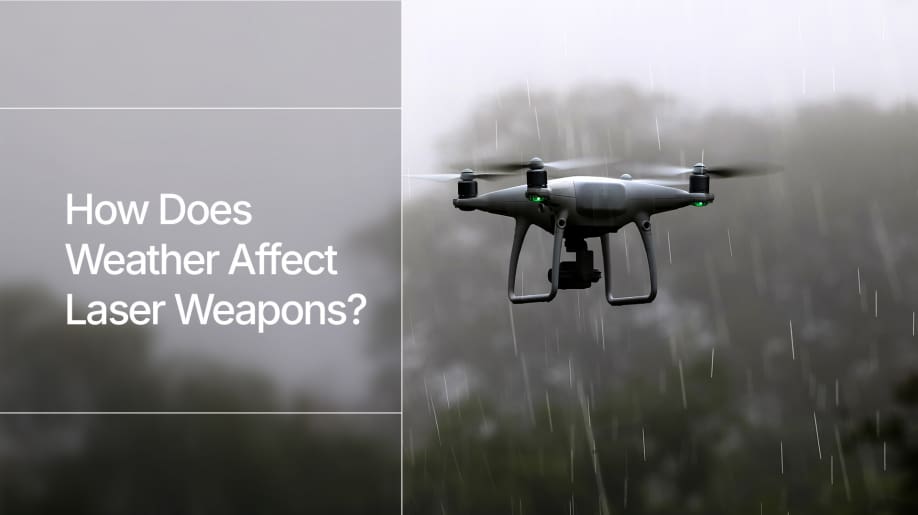
In ongoing evaluations of the LOCUST laser weapon system, high wind conditions degrade small UAS performance—impacting stability, navigation, and sensor effectiveness—well before degrading the laser system’s ability to to track and engage them. Similarly, reduced visibility conditions like haze, fog, or cloud cover undermine onboard sensors of small drones long before the more capable sensing and tracking systems of modern laser weapon platforms.

This is not to suggest laser performance is unaffected by weather. All systems are affected by environmental conditions. The key point is comparative: in operationally relevant scenarios, the threat system is degraded more than the defensive weapon engaging it.

This conclusion may seem counterintuitive, but it reflects a broader reality across modern warfare.

Over the course of two decades working with drones, radars, and directed energy platforms, I have yet to encounter a system that is immune to weather. Which raises an important question: why are laser weapons often characterized as “fair weather” systems?

One possible explanation is laser weapons rely on optical systems to complete their kill chain. But this is not unique.

Most modern targeting and guidance systems depend on optical sensing in some form. From the human eye to widely deployed munitions such as Hellfire, AIM-9 Sidewinder, and Stinger, optical and infrared sensors are fundamental to detection, tracking, and engagement across the battlefield.

Even systems that rely primarily on radio frequency (RF) sensing are not immune to environmental effects. Operators of advanced radar systems understand well that atmospheric conditions including precipitation, humidity, and turbulence can impact performance, detection range, and track quality. No sensing modality operates outside the influence of weather.

A related concern exploitation of weather by an attacker to achieve surprise or concealment.

In such scenarios, passive systems become particularly valuable. Laser weapons rely on passive sensing for detection and tracking, meaning they don’t emit signals detectable by an adversary. They can continuously observe the environment without revealing their position, even when operating in degraded conditions.

By contrast, active sensing systems such as radars inherently emit energy, making them detectable and targetable. As a result, these systems are often employed with emission control considerations, which can limit their availability at critical moments.

Looking ahead, the more important question is not how any single system performs in ideal conditions, but how systems perform in the environments where future conflicts are most likely to occur.

Will those conflicts be fought in good conditions—or in contested, uncertain, and degraded environments?

What attributes will matter most: magazine depth, persistence, survivability, and precision under imperfect conditions?

When viewed through that lens, laser weapon systems offer a compelling set of advantages. Their deep magazine, passive sensing approach, and speed-of-light engagement enable persistent defensive coverage without the logistical and operational constraints associated with traditional interceptors.

Integrated in a layered air defense architecture, these attributes enhance resilience and reduce overall system vulnerability, particularly in the face of increasingly numerous and low-cost aerial threats.

Ultimately, the value of any defensive system lies not only in its ability to perform, but in its ability to deter.

By improving the reliability, persistence, and cost-effectiveness of air defense in real-world conditions, including adverse weather, laser weapons can contribute meaningfully to that objective.

And effective deterrence remains the most important outcome of all.

About the Author

Aaron Westman is an engineer and leader specializing in counter-UAS and directed energy systems. He has played a key role advancing mobile laser weapon integration and operational deployment, supporting a variety of cross-domain capabilities that improve precision engagement and layered air defense.

Join the AV Mission

AV isn’t for everyone. We hire the curious, the relentless, the mission-obsessed. The best of the best.

We don’t just build defense technology—we redefine what’s possible. As the premier autonomous systems company in the U.S., AV delivers breakthrough capabilities across air, land, sea, space, and cyber. From AI-powered drones and loitering munitions to integrated autonomy and space resilience, our technologies shape the future of warfare and protect those who serve.

Founded by legendary innovator Dr. Paul B. MacCready, Jr., AV has spent over 50 years pushing the boundaries of what unmanned systems can do. Our heritage includes seven platforms in the Smithsonian—but we’re not building history, we’re building what’s next.

If you’re ready to build technology that matters—with speed, scale, and purpose—there’s no better place to do it than AV.

Explore Opportunities

Domains

Let’s Advance Your Mission

Product Catalog

Download the full catalog to explore our solutions in detail.

News

AV’s UES Awarded $25M AFRL Contract to Mature Human Performance Technologies for Warfighter Readiness

04/07/2026

AV’s UES Awarded $25M AFRL Contract to Mature Human Performance Technologies for Warfighter Readiness

The United States Air Force has awarded UES, a division of advanced research and development leader AeroVironment, Inc. (“AV”) (NASDAQ: AVAV), a three-year, $25M contract to transition innovative human health and performance technologies from research to field deployment.

Supporting the Air Force Research Laboratory’s 711th Human Performance Wing Human Effectiveness Directorate (711 HPW), AV will mature mid-stage sensor, diagnostic, and material technologies that have remained largely confined to Technology Readiness Levels (TRL) 3-5. Work completed under this contract will accelerate the delivery of deployable solutions to enhance warfighter readiness, resilience, and survivability.

“With stringent requirements, harsh operating environments, and limited access to specialized infrastructure, health-focused devices for our military service members have faced unique challenges in reaching operational use,” said Dr. Stephaney Shanks, Vice President of Health and Performance Technologies at AV. “AV has the tools, track record, and technical expertise to tackle these challenges with solutions that deliver real-world impact, using the power of science to protect and empower our warfighters.”

With in-house prototyping and AI-enhanced data analytics, AV will test at scale and advance health-focused technologies and devices. This work integrates disciplined research methods and structured decision criteria to identify viable solutions for transition. The scope of work will focus on four critical areas:

  • Advanced sensor systems for airframe and pilot integration, improving in-field monitoring of physiological and environmental conditions.
  • Ruggedized wearable diagnostic tools for medical, chemical, and biological assessments in austere conditions
  • Powerful AI/ML-enabled databases and analytics to convert raw biosensor data into actionable insights and intelligence
  • Emerging biotechnology platforms, including stress-mitigating probiotics and synbio-based sensors, to support and protect force health

“By integrating biosensing and advanced materials with AI-enabled analytics and insights, we’re shaping the future of military readiness,” added Johnathan Jones, Senior Vice President of Cyber and Mission Solutions at AV. “Taking technology from the lab to the frontlines, we’re turning today’s challenges into tomorrow’s capabilities.”

AV has collaborated with the 711 HPW on prior efforts, such as deploying onboard oxygen monitoring sensors to investigate unexplained physiological events (UPEs) in pilots. This contract builds upon these successes to address hardware ruggedization, faster data processing, and enhanced user interfaces, meeting the demands of the Air and Space Force.

Domains

Let’s Advance Your Mission

Product Catalog

Download the full catalog to explore our solutions in detail.

News

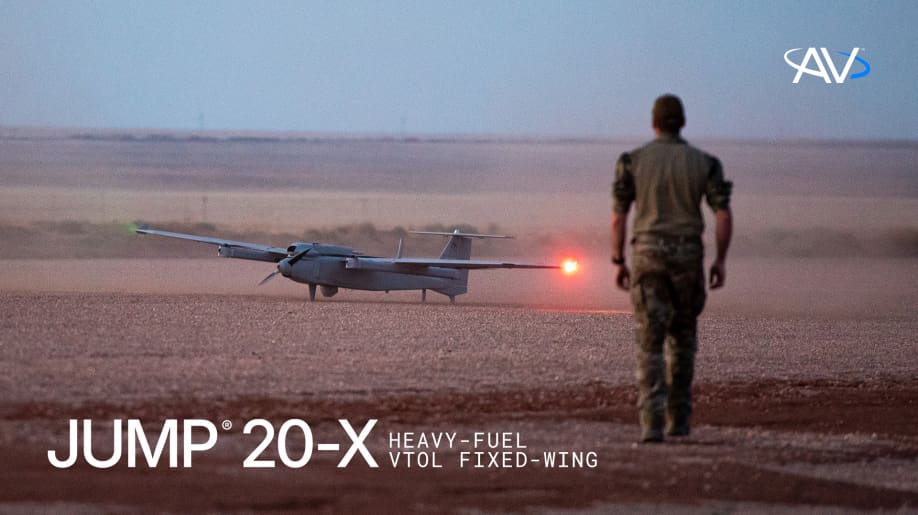
AV Selected to Deliver Intelligence, Surveillance and Reconnaissance Services to U.S. Navy with JUMP 20-X, Advanced Payload Integrations

03/31/2026

AV Selected to Deliver Intelligence, Surveillance and Reconnaissance Services to U.S. Navy with JUMP 20-X, Advanced Payload Integrations

AeroVironment, Inc. (“AV”) (NASDAQ: AVAV), a global leader in autonomous systems and intelligence services, today announced its selection by the United States Navy to provide Contractor-Owned, Contractor-Operated (COCO) Intelligence, Surveillance and Reconnaissance (ISR) services in support of critical naval operations. Under the Navy’s recently announced initiative to expand and modernize ISR capabilities, AV will compete for delivery orders alongside other selected industry partners to deliver turnkey persistent ISR support–with autonomous platforms, multi-sensor integration, and intelligence expertise.

AV’s JUMP 20-X Group 3 vertical take-off and landing (VTOL) uncrewed aircraft system (UAS) will equip the Navy with expanded ISR capabilities tailored to support diverse land and maritime missions. The platform enables multi-domain missions with fully autonomous, hands-free operation and more than 13 hours of flight time, a 115-mile (185 km) range, and 30 pounds of payload capacity. With more than 70 different payload integrations, JUMP 20-X is uniquely configurable to meet mission-specific requirements.  The system is engineered to eliminate the need for bulky launch and recovery equipment, simplifying logistics and enabling rapid deployment while reducing required operational space.

“We are honored to be selected as a partner to help the U.S. Navy expand its ISR services and enhance mission-critical awareness for warfighters around the globe,” said Shane Hastings, Vice President of Medium Uncrewed Systems at AV. “We have the people and product to deliver a superior capability across the fleet and are committed to supporting our customers with a flexible, scalable, full lifecycle ISR solution–any mission, any domain.”

This selection reinforces AV’s longstanding commitment to advancing U.S. national security objectives and supporting operational readiness across global theaters. The company has successfully delivered advanced ISR support services to the US Naval Forces Southern Command/US 4th Fleet, the US Marine Corps 22nd Marine Expeditionary Unit, and the Korean Navy.

“This is a win for AV and a win for the US Navy,” said Hastings. “Our technology is deployed, proven, and mature. Our team is ready to deliver. We are reshaping our nation’s ISR capabilities.”

NAVAIR Public Release SPR-2026-0153. Distribution Statement A – Approved for public release; distribution is unlimited. 

Let’s Advance Your Mission

Product Catalog

Download the full catalog to explore our solutions in detail.

News

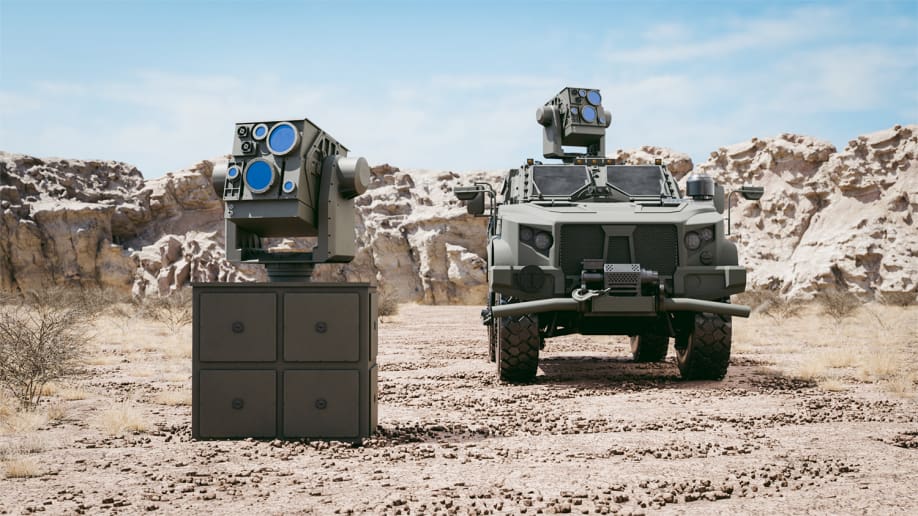
AV Unveils LOCUST® X3: Third-Generation Modular Directed Energy Weapon System

03/24/2026

AV Unveils LOCUST® X3: Third-Generation Modular Directed Energy Weapon System

AeroVironment, Inc. (“AV”) (NASDAQ: AVAV), a global defense technology leader, today announced the release of LOCUST® X3, the third generation of AV’s high-energy laser weapon system that delivers precise, speed-of-light engagement for rapid defeat of unmanned aerial threats.

LOCUST X3 builds on lessons learned from widely deployed systems to set a new standard in modular, AI-enabled drone defense—delivering unprecedented precision, scalability, and operational flexibility to defeat current and emerging aerial threats, including Group 1-3 unmanned aircraft systems and unmanned surface vehicles.

Recently featured by CBS News’ 60 Minutes, the LOCUST X3 offers cost-effective engagements below $5 per shot and sustained defense without the reload limitations of traditional defense systems, LOCUST X3 offers a transformative solution for modern air defense.

“In today’s rapidly evolving battlespace, adversaries are deploying mass drone attacks and saturation tactics that threaten mission success and warfighter survivability,” said Wahid Nawabi, Chairman, President, and Chief Executive Officer at AV. “With LOCUST X3, we deliver an affordable, scalable solution to outpace and neutralize large-scale aerial threats, safeguard critical infrastructure, and maintain decisive advantage wherever the fight demands.”

The new LOCUST X3 features a scalable 20–35+ kilowatt laser, a modular beam director, and advanced AI-enabled detection, tracking, and engagement automation powered by AV_Halo™ PINPOINT, part of the company’s hardware-agnostic software platform for layered counter-Unmanned Aircraft System (C-UAS) defense.

Aligned with Department of War’s mandated Modular Open Systems Approach (MOSA) principles, LOCUST X3 enables rapid upgrades and seamless integration across both fixed and mobile defense platforms. LOCUST X3 builds on the proven legacy of the LOCUST platform, which has been successfully fielded through the Army Multi-Purpose High Energy Laser (AMP-HEL) and Palletized High Energy Laser (PHEL) programs, and validated on platforms like the Joint Light Tactical Vehicle (JLTV) and the Infantry Squad Vehicle (ISV).

“LOCUST X3 transforms how defenders respond to the challenge of massed drone attacks,” said Mary Clum, President of AV’s Space, Cyber & Directed Energy segment. “Its modular design and advanced AI allow for resilient, adaptive protection of critical assets—on any platform, at the tactical edge or at fixed sites. With LOCUST X3, operators can now counter high-volume threats with unmatched speed, precision, and affordability.”

LOCUST X3: Precise, Persistent, and Production-Ready for Modern Defense

Designed for persistent counter-UAS defense, LOCUST X3 offers: 

  • Maintainability and Maneuverability in the Field: The LOCUST X3 is battle tested, leveraging hundreds of lessons learned from prior deployments that drive system performance, and field maintainability—particularly in dynamic, high-density threat environments.
  • Platform Agnostic: The LOCUST X3 is ready for the fight today and in the future, regardless of configuration and platform. Seamless integration on tactical vehicles (e.g., JLTV, ISV), fixed sites for broad platform and mission compatibility, or scaled for maritime environments.
  • Producibility In Mind: The third-generation LOCUST technology optimized for repeatable manufacturing and force-wide deployment. Built with modular subsystems and dual-use, commercially mature components to enable rapid production ramp, reduced unit cost at scale, and sustainable long-term support.
  • Scaled Lethality: The LOCUST X3 leverages best of breed laser capability to scale the lethality of the system to be right sized from low power configurations to high power 30kW+ configurations to be right sized for all customer missions and needs.
  •  AV_Halo PINPOINT Precision: AV’s exclusive software delivers unmatched precision in acquisition, targeting and pointing. This removes the burden on the operator and allows them to focus on the mission while providing seamless tracking, identification, and defeat.

Domains

Capabilities

Solutions

Let’s Advance Your Mission

Product Catalog

Download the full catalog to explore our solutions in detail.

Blog

Can a Laser Weapon Operate Safely in Civilian Airspace?

03/23/2026

Aaron Westman, Senior Director of Business Development at AV 
Can a Laser Weapon Operate Safely in Civilian Airspace?

When most people hear the phrase laser weapon, they picture something out of science fiction — a glowing beam shooting across the sky toward a target and then carving through that target with ease, like a knife through butter.

The reality of lasers is very different.

Recently, the Joint Interagency Task Force 401 (JIATF 401) — the U.S. Department of War’s lead agency on C-UAS – worked alongside the Federal Aviation Administration (FAA) and completed a series of safety demonstrations at White Sands Missile Range in New Mexico using the Army’s Multipurpose High Energy Laser (AMP-HEL) system. These tests were designed specifically to answer the question many people are asking:

Can counter-drone lasers operate safely in mixed civilian airspace?

The short answer is yes — and the reason why comes down to how these systems are built and operated.

Over the past two decades as an engineer working in counter-UAS systems — including extensive testing of directed energy platforms — I’ve worked on systems designed with layered safety at their core. In the last four years alone, our LOCUST® team has conducted more than 66 test events and safely engaged over a thousand drone targets without incident.

That body of testing helps illustrate how these systems are engineered to operate safely in complex environments.

But how do they actually work?

LAYERS OF SAFETY

Most people imagine a laser weapon working like a laser gun in a science fiction movie: an operator points it, pulls the trigger, and a beam shoots toward the target.

In reality, modern laser systems operate much more like commercial aviation systems — with multiple independent safety layers designed to prevent a single mistake from creating a hazardous situation.

Every time an operator presses the “fire” button, the system runs through a series of automated checks. Some examples include:

  • Is the laser pointing away from protected “keep-out” zones?
  • Are all internal subsystems operating within safe parameters?
  • Is the system properly locked onto a target?
  • Are safety interlock switches engaged?
  • Are all software safety checks satisfied?

Each of these checks acts as a safety “vote.”

If any subsystem registers a “no vote,” the laser simply will not fire. An operator can press the trigger — and nothing happens. The system refuses to engage until all conditions are verified as safe.

These automated safeguards are built into both the hardware and the software of the system.

A WIDER VIEW OF THE AIRSPACE

Laser systems also don’t operate alone.

They are connected to higher-level command and control (C2) systems that maintain awareness of everything flying in the surrounding airspace. These systems combine data from radar, aircraft transponders, and other sensors to create what is known as an Integrated Air Picture.

By fusing information from multiple sources, operators can see civilian aircraft, military aircraft, and other objects operating nearby in real time.

This broader view provides another layer of safety. The command system can also issue its own “votes” that prevent the laser from firing if protected aircraft or restricted airspace are nearby.

In practical terms, this means that if an operator accidentally points the system toward an area where protected aircraft are operating, the laser will not fire. The system automatically blocks the engagement.

It’s another example of the principle used widely in aviation: multiple independent safeguards working together to prevent unsafe conditions.

WHAT ACTUALLY HAPPENS WHEN A LASER FIRES?

Another common misconception is how the laser beam behaves once it leaves the system.

In movies, laser beams look like glowing bolts of light traveling across the sky. Real directed-energy systems don’t work that way.

The beam itself is invisible and travels at the speed of light. The system can turn the laser on and off extremely quickly — engaging or disengaging in fractions of a second as safety systems continuously monitor conditions.

People also often imagine that the beam continues indefinitely into space like a perfectly straight pencil.

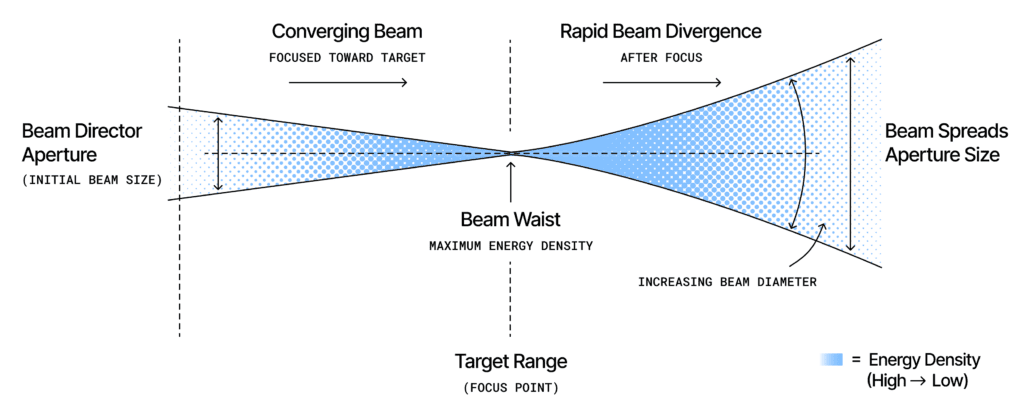
In reality, the beam is shaped like an hourglass. The center of the hourglass is called the focus point. The focus point is set to a specific, controlled distance to concentrate energy on a target. Beyond that focus point, the beam naturally spreads, reducing in intensity by an order of magnitude a few hundred meters beyond the focus point.

This means that after the target area, the beam quickly loses the intensity needed to cause damage. The natural physics of the beam significantly limits the risk to aircraft far beyond the engagement area.

FAMILIAR TECHNOLOGY


It’s also important to remember that the core laser technology used in these systems is not exotic.

The same class of near-infrared fiber lasers used in directed-energy systems is widely deployed across industry. Variants of these lasers are used every day in manufacturing to cut and weld metals, in medicine to perform precise surgical procedures, and even in agriculture as an herbicide-free way to remove weeds.

What makes counter-drone systems different is not the laser itself, but the sophisticated sensors, targeting systems, and safety controls built around it.

A SAFER WAY TO COUNTER DRONE THREATS

The rapid growth of small drone threats has created a difficult challenge: how to stop dangerous aircraft without introducing new risks into already busy airspace. That challenge now affects airports, critical infrastructure, public events, and military installations alike.

Properly designed laser systems help solve that problem.

Taken together — automated safety checks, integrated airspace awareness, and the natural physics of the beam itself — these systems are designed to operate safely even in mixed civilian airspace.

In a crowded airspace, the safest way to stop a dangerous drone may ultimately be a precisely controlled beam of light.

ABOUT THE AUTHOR

Aaron Westman is an engineer and leader specializing in counter-UAS and directed energy systems. He has played a key role advancing mobile laser weapon integration and operational deployment, supporting a variety of cross-domain capabilities that improve precision engagement and layered air defense.

JOIN THE AV MISSION

AV isn’t for everyone. We hire the curious, the relentless, the mission-obsessed. The best of the best.

We don’t just build defense technology—we redefine what’s possible. As the premier autonomous systems company in the U.S., AV delivers breakthrough capabilities across air, land, sea, space, and cyber. From AI-powered drones and loitering munitions to integrated autonomy and space resilience, our technologies shape the future of warfare and protect those who serve.

Founded by legendary innovator Dr. Paul B. MacCready, Jr., AV has spent over 50 years pushing the boundaries of what unmanned systems can do. Our heritage includes seven platforms in the Smithsonian—but we’re not building history, we’re building what’s next.

If you’re ready to build technology that matters—with speed, scale, and purpose—there’s no better place to do it than AV.

Let’s Advance Your Mission

Product Catalog

Download the full catalog to explore our solutions in detail.

Press Release

AV Acquires Empirical Systems Aerospace, Inc.

03/16/2026

ARLINGTON, Va. and San Luis Obispo, CA. — March 16, 2026 — AeroVironment, Inc. (“AV” or the “Company”) (NASDAQ: AVAV) today announced that it has acquired Empirical Systems Aerospace, Inc. (“ESAero”), a leading producer of unmanned aircraft systems (UAS) and advanced air mobility (AAM) platforms.

ESAero is recognized for its deep engineering expertise, innovative electric and hybrid propulsion capabilities, rapid aerospace prototyping, and AS9100 Certified UAS manufacturing. Operating out of a 32,000 sq. ft. design and prototyping facility and a 53,000 sq. ft. manufacturing facility in San Luis Obispo, CA, with multiple integration and test facilities in the area, ESAero has expanded its operations to support system testing and advanced product development. ESAero’s culture of technical rigor and rapid innovation also aligns with AV’s mission-focused approach and commitment to developing mission-critical solutions tailored to U.S. Department of War requirements.

“ESAero brings an impressive agility in moving from design to manufacturing, which will accelerate AV’s ability to bridge the gap between conceptual design and manufacturing execution,” said Wahid Nawabi, Chairman, President, and Chief Executive Officer at AV. “ESAero’s capabilities are vital to addressing the urgent demands of a fast-growing defense tech market, where emerging needs are driving next-generation innovation and product development. We look forward to welcoming the team to the AV family.”

“Joining AV represents a unique opportunity to amplify the reach and impact of our innovative work and achieve greater success,” said Andrew Gibson, President, CEO and co-founder of ESAero. “By combining ESAero’s engineering and manufacturing capabilities with AV’s unmatched expertise in autonomous systems, we are positioned to advance disruptive aerospace technologies and deliver real, timely value for our customers. I’d like to thank the talented ESAero team for their unwavering dedication, whose efforts have brought us to this pivotal point in our journey.”

The acquisition will further solidify AV’s position as a global defense technology leader spanning air, land, sea, space, and cyber domains and enhance the Company’s ability to seamlessly transition from innovative design to advanced manufacturing—a capability critical to addressing the urgent demands of an evolving defense tech market.

The acquisition will also strengthen AV’s leadership in electric and hybrid propulsion systems while establishing ESAero’s AS9100-certified California facilities as a center of excellence for advanced prototyping and manufacturing. These facilities specialize in conceptual air vehicle designs, electric and hybrid propulsion system development, aircraft modifications, sub-scale technology demonstrators, rapid system prototyping, design for and full-scale manufacturing.

The acquisition of ESAero follows AV’s $4.1 billion acquisition of BlueHalo in May 2025, marking the second transaction for the defense tech leader in less than a year. Together, these moves signal AV’s intent to integrate best-in-class innovation hubs into a cohesive suite of capabilities trusted by governments and industries worldwide.

Transaction Details

Under the terms of the agreement, AV acquired ESAero in a transaction valued at approximately $200 million, with approximately $160 million in stock and the remainder in cash, subject to post-closing adjustments and holdbacks. The transaction is expected to be accretive to adjusted EBITDA in the first year following the close.

ESAero will operate as a subsidiary of AV, reporting into AV’s Precision Strike and Defense Systems group, under the Loitering Munition Systems business unit, furthering production capability in AV’s existing line of loitering munitions, missiles, drones and existing adjacent domains. ESAero leadership and employees are expected to integrate into AV’s operations and culture post-close.

Let’s Advance Your Mission

Product Catalog

Download the full catalog to explore our solutions in detail.

News

Iran’s cheap drones are a drain on the U.S. weapons stockpile. Could lasers help fend them off?

03/15/2026

They call it asymmetric warfare: our highly sophisticated interceptor missiles – Patriots, THAADs – against Iran’s low-tech drones, made of materials you can largely get at your corner hobby store.

While attacks by Iranian drones were down this past week, the amount of damage they have done has come as a jolt. An Iranian drone attack caused the first American casualties of the war when it killed six soldiers in Kuwait. Iranian drones are a drain on the U.S. weapons stockpiles and a threat to the Strait of Hormuz. We have found that in the race for a counter weapon, there are contenders that look like science fiction. Lasers that focus on zapping drones out of the sky.

Let’s Advance Your Mission

Product Catalog

Download the full catalog to explore our solutions in detail.