News

Why We Created MAYHEM 10—and What the Battlefield Now Demands

05/18/2026

By Brian Young, Senior Vice President of Loitering Munitions 

For most of the last two decades, the question in precision strike has been straightforward: can you find and hit the target? 

That standard didn’t just influence a category, it defined it. It laid the foundation for systems like Switchblade®, the weapon that wrote the loitering munition playbook and invented an entirely and way of thinking. 

But the battlefield has changed. 

Today, the challenge isn’t just hitting a target. It’s understanding what that target is, how it’s behaving, what else is happening around it, and then deciding, in real time, what effect actually makes sense. In many cases, destruction isn’t the first or even the best option. 

What we’re seeing now is a gap between how quickly threats are evolving and how rigid many systems still are. Threats are more dynamic, more distributed, and more difficult to detect. They operate in contested and denied environments, often without reliable GPS, and they evolve faster than traditional systems can adapt. 

At the same time, many U.S. and partner platforms remain locked into a single mission, configured and deployed with a fixed outcome in mind. Which forces operators to commit early, often before they have the full picture, and limits their ability to adjust when the situation inevitably changes. 

That’s the problem we set out to solve. 

We created MAYHEM 10 because the battlefield now demands flexibility at a level that hasn’t existed in this category before. It’s not just about delivering an effect, it’s about tailoring that effect to the threat, in real time, as the mission unfolds. 

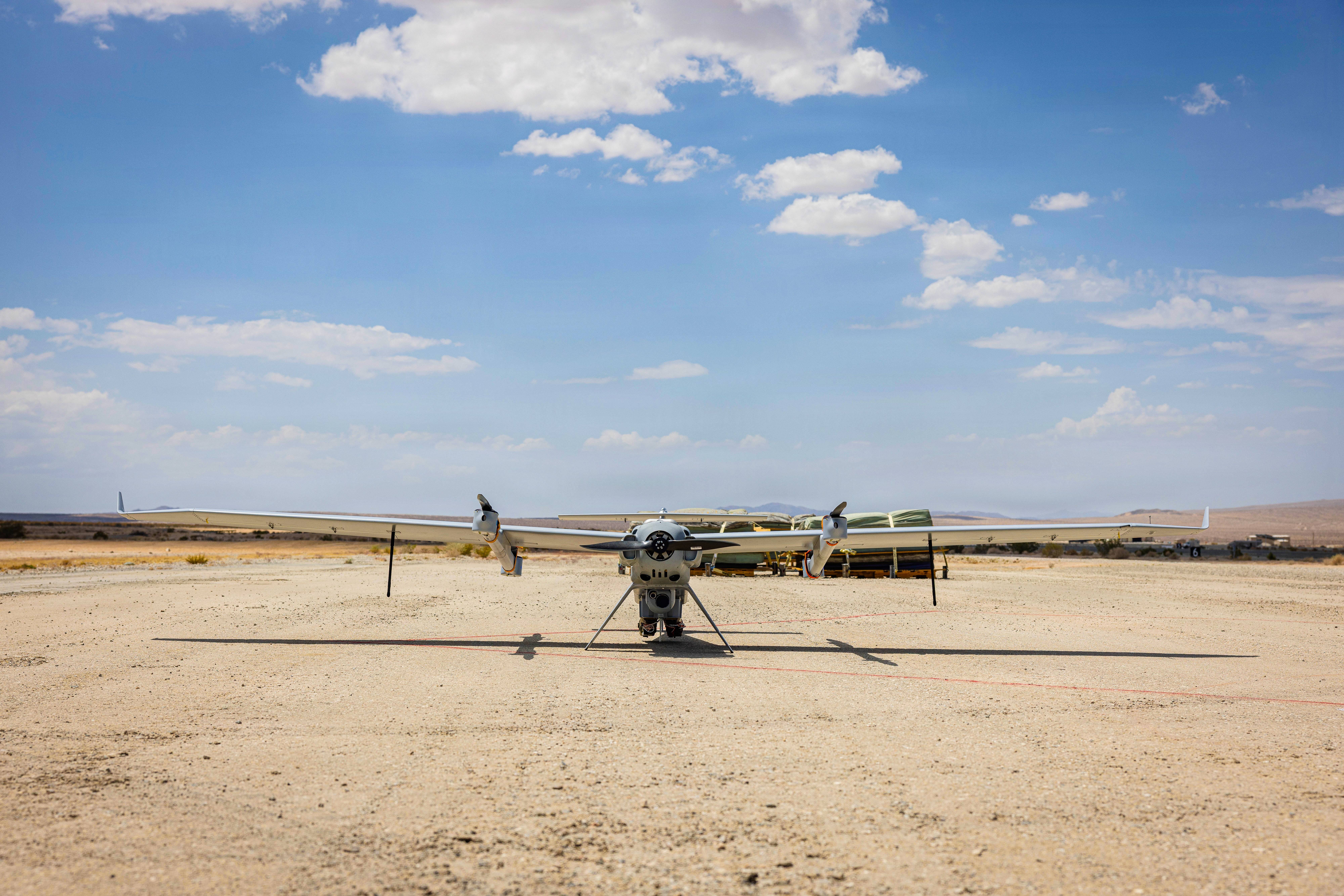
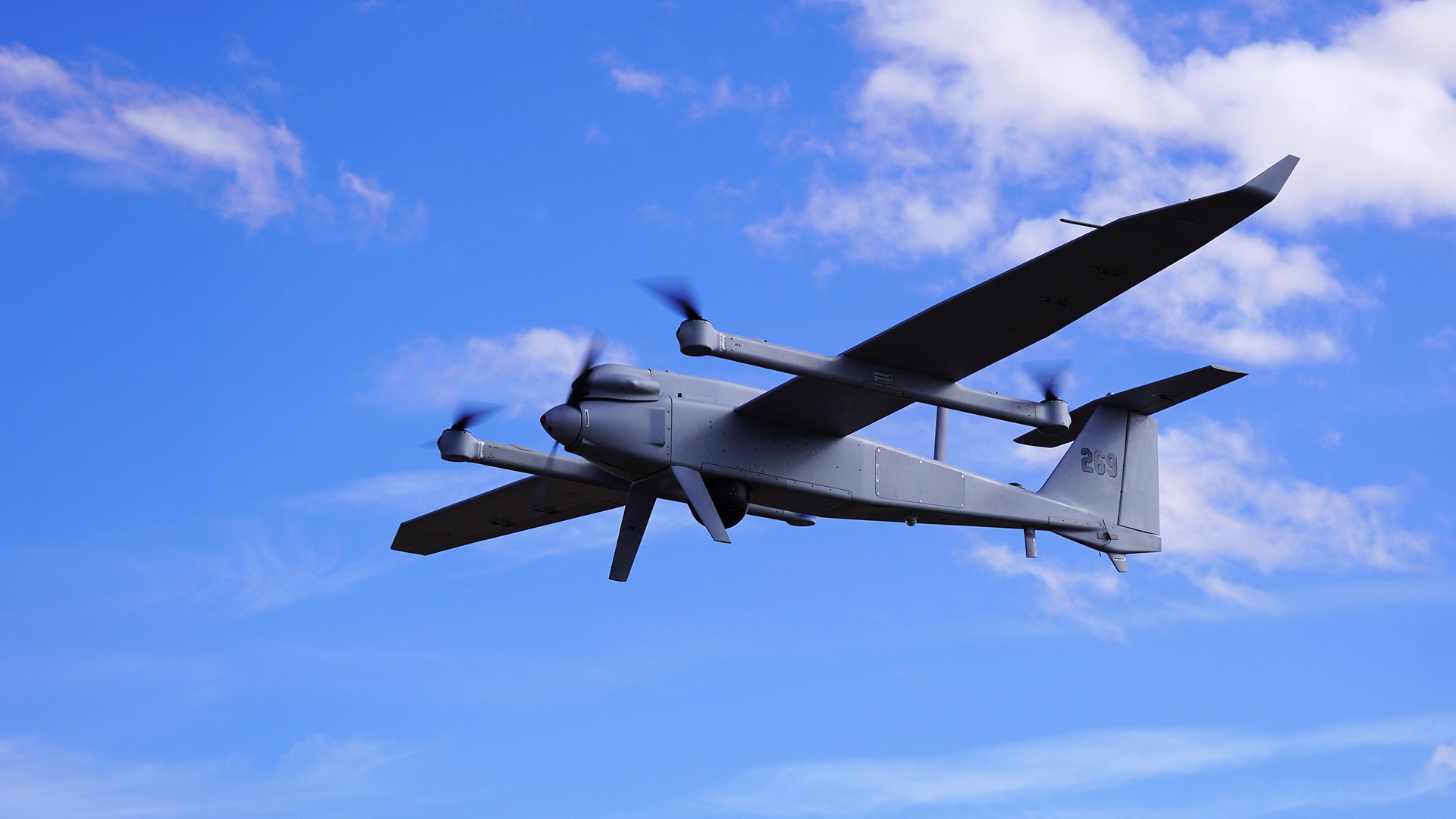
MAYHEM 10 is the first system in a new product line built around that idea. At its core, it’s a multi-role launched effect designed to give operators options. Not just the ability to strike, but to observe, detect, disrupt, deceive, relay communications, and, when required, apply kinetic force. 

That may sound like a simple expansion of capability, but it’s actually a shift in how these systems are designed and employed. 

The key difference is that MAYHEM 10 isn’t just a munition. It’s an architecture. 

We built it as an open, modular system from the beginning. That allows us to integrate multiple payloads like EO/IR sensors, electronic warfare packages, communications relays, and lethal effects onto a single platform. It also allows us to bring in third-party software and autonomy much more quickly, treating capability more like an application than a fixed feature set. 

In practical terms, that means a single system can launch, navigate into a contested environment, detect signals, identify targets, and determine the appropriate response, all within the same mission profile. 

And importantly, it can do that at meaningful operational distances—on the order of 100 kilometers with up to 50 minutes of endurance, while maintaining standoff from the threat. 

Where this truly changes the equation is when MAYHEM 10 operates in a pack.  

There’s a lot of discussion right now around “swarming.” I think that term misses the point. What matters isn’t just putting more systems in the air. It’s creating coordinated, collaborative effects that actually solve the mission. 

With MAYHEM 10, we’re focused on collaborative attack and on systems that communicate, share information, and dynamically assign roles in real time. 

That allows a team of systems to operate very differently than anything we’ve seen before. 

One system might be focused on signal detection. Another might classify and confirm a target using onboard sensors and AI-enabled targeting. A third might carry the appropriate effect, kinetic or non-kinetic, and execute at the right moment. And because they’re connected through a secure mesh network, they can adjust roles as the situation changes. 

That’s the real advantage. 

It’s not just mass. It’s intelligent mass, where every system contributes to the mission in a coordinated way. 

That coordination also compresses the sense-decide-act loop. Instead of passing information between disconnected systems, decisions can be made within the network itself, at machine speed, while still keeping the operator in control of how autonomy is applied. 

This is especially important in contested environments. 

We’ve designed MAYHEM 10 to operate where GPS may be denied and communications are challenged. By combining onboard processing, alternative navigation approaches, and adaptable data links, the system can continue to function even as conditions degrade. 

At the same time, the architecture allows us to rapidly integrate new technologies as they emerge, whether that’s improved autonomy, better sensors, or more advanced electronic warfare capabilities. The system isn’t locked into what it was at launch. It evolves. 

That speed of adaptation is critical. 

If there’s one clear lesson from recent conflicts, it’s that timelines have compressed dramatically. Capabilities are evolving in weeks, not years. Systems that can’t keep up become obsolete quickly. 

We built MAYHEM 10 to operate on that timeline. 

It’s modular in production, which means we can configure systems late in the process based on mission needs. It’s designed for scalable manufacturing, ultimately reaching Low-Rate Initial Production by Fall of 2026 with the ability to scale to hundreds per month by the first half of 2027. And it’s built to accept updates in the field, so capability can continue to improve after deployment. 

At the same time, none of this matters if the system isn’t reliable. 

One of the most important lessons we’ve learned over the past 20 years is that reliability is a capability. It’s what allows you to scale. It’s what builds trust with the operator. And it’s what ensures that when a system is called upon, it performs exactly as expected. 

We’ve taken that foundation, everything we’ve learned from developing and deploying loitering munitions at scale and built it into MAYHEM 10. 

What we’re ultimately delivering is not just a new system, but a new way of thinking about this category. 

The future isn’t about single-purpose platforms. It’s about multi-mission systems that can adapt to a wide range of scenarios. It’s about software-defined capability that evolves over time. And it’s about coordinated systems that can operate together to create effects greater than the sum of their parts. 

The battlefield is only getting more dynamic. 

The systems that succeed won’t be the ones that hit the hardest. They’ll be the ones that adapt the fastest, coordinate the smartest, and deliver the right effect at the right moment. 

That’s why we created MAYHEM 10. 

ABOUT THE AUTHOR 

Brian Young is Senior Vice President of Loitering Munitions at AeroVironment, where he leads the company’s portfolio of precision strike and launched effects systems, including the combat-proven Switchblade® family and next-generation platforms such as MAYHEM 10. With more than two decades of experience in aerospace and defense, he specializes in advancing autonomous systems, scalable production, and mission-adaptable capabilities for modern warfare.  

He has played a central role in evolving loitering munitions from single-purpose systems into flexible, multi-mission solutions that support distributed operations across air, ground, and maritime domains. 

JOIN THE AV MISSION 

AV isn’t for everyone. We hire the curious, the relentless, the mission-obsessed. The best of the best. 

We don’t just build defense technology—we redefine what’s possible. As the premier autonomous systems company in the U.S., AV delivers breakthrough capabilities across air, land, sea, space, and cyber. From AI-powered drones and loitering munitions to integrated autonomy and space resilience, our technologies shape the future of warfare and protect those who serve. 

Founded by legendary innovator Dr. Paul B. MacCready, Jr., AV has spent over 50 years pushing the boundaries of what unmanned systems can do. Our heritage includes seven platforms in the Smithsonian—but we’re not building history, we’re building what’s next. 

If you’re ready to build technology that matters—with speed, scale, and purpose—there’s no better place to do it than AV. 

EXPLORE OPPORTUNITIES 


Let’s Advance Your Mission

Product Catalog

View the full catalog to explore our solutions in detail.

News

The Strait of Hormuz is Showing us Why Mine Countermeasures Must Evolve for a Contested Maritime Fight

05/11/2026

By Chris Gibson, Eric Wirstrom, VideoRay, an AV company 

The Strait of Hormuz has a way of clarifying priorities. 

When maritime traffic slows, reroutes, or halts altogether, the global economy feels it almost immediately. Beneath the headlines about tankers and geopolitics is a quieter, more consequential reality: securing contested waters quickly and at range is becoming increasingly difficult. 

The problem with mine countermeasures (MCM) today is not that they don’t work. 

It’s that they take too long and requires operators to be too close to mines and adversaries. 

In a permissive environment, that tradeoff has been acceptable. In a contested maritime battlespace like the Strait of Hormuz, it is not. 

Some 20 percent of the world’s oil transits the Strait, and even small disruptions to the chokepoint ripple globally. America needs the tools to clear that chokepoint in the face of adversary opposition. The operational requirement is plain: before ships can move safely, someone has to clear the water. 

And today, that process is measured in time, risk, and proximity. 

Mine countermeasures have historically followed a sequential model.  

  1. Search wide areas.
  2. Identify potential threats. 
  3. Return to reacquire them. 
  4. Determine whether they are dangerous. 
  5. Neutralize them.  

It is a disciplined, proven approach, but inherently slow. Each step depends on the last. Each step introduces delay. 

In contested waters, time and proximity are risks.  

But there’s more to consider, like reach. 

Traditional MCM operations require ships, divers, and crews to operate in or near the threat area. Proximity to the threat limits how far operations can extend without escalating risk. 

Our predecessors thought to solve the MCM problem by increasing the speed of clearance, reducing time in threat envelope. We propose an alternative: doing it without having to be there at all. 

That is the shift now underway, and it’s how our team at VideoRay is approaching the future of undersea autonomy.  And it’s why we built our most advanced unmanned underwater vehicles (UUV), like Mission Specialist Wraith. 

The future of mine countermeasures is moving toward a fundamentally different model: single-sortie detect to engage, or SSDTE. But this time we want to execute SSDTE over the horizon. 

Instead of breaking the mission into separate phases across multiple platforms, the objective is to complete the entire sequence, detection, identification, and neutralization, in one continuous operation using a system of systems. No return to base. No handoff between teams. No delay between finding a threat and acting on it. 

These are the keys to compressing time on station.  

Current autonomous capabilities push mine hunting beyond the 300 feet a human diver can operate to ROV-enabled missions at 300 meters, which improves identification and neutralization confidence and increases clearance rates while reducing risk to both mission and force. 

This is a key to extending operational reach.  

Together, these two shifts, compressing time and extending operational reach, change the equation entirely. What once required multiple missions and close human involvement can now be executed remotely, continuously, and at scale. 

But enabling this model requires solving a problem that has historically been taken for granted: communications. 

Traditional subsea operations rely on high-bandwidth, low-latency links. In contested environments, those links are often degraded, intermittent, or unavailable altogether. The legacy approach—an operator controlling a vehicle in real time—does not translate over the horizon. 

The solution is not simply better connectivity. 

It is greater autonomy — enabling a shift from Human in the Loop, where operators directly control semi-autonomous systems, to Human on the Loop, where fully autonomous systems execute the mission under supervisory oversight. 

Modern systems are being designed to operate with a level of independence that allows them to execute critical tasks without continuous human control. A vehicle can be deployed into an area, navigate to a target, and conduct inspection autonomously. It can then report back, allowing an operator to make a determination and authorize the next step, whether that is further investigation or neutralization. 

The human remains in control of the decision. 

The system takes on the burden of execution. 

This shift from manual control to supervisory control is what makes over-the-horizon operations viable. It allows missions to continue despite degraded communications while preserving the judgment and accountability that human operators provide. 

The result is a new operational model defined not just by speed, but by compressed time in the detect-to-engage sequence, delivering greater operational reach, reduced risk to mission and force, and higher confidence in clearance outcomes. This is not just an improvement in capability; it is a redefinition of presence. 

The operator no longer has to be co-located with the problem. The mission can be executed forward, while decision-making remains removed from risk. 

And critically, this model is not tied to a single platform or system. It is built as a system of systems—modular, interoperable, and platform-agnostic. The mission dictates the configuration, allowing different technologies to integrate and operate as a unified whole. 

That flexibility is essential in a domain where conditions change rapidly, and no single solution fits every scenario. 

While these advancements are being driven by defense requirements, their implications extend well beyond military operations. Offshore energy companies and subsea infrastructure providers face many of the same challenges: limited access, high operational costs, and risk to personnel. The ability to deploy smaller, autonomous systems from unmanned platforms offers a path to greater efficiency and expanded capability without the overhead of traditional approaches. 

In both cases, the trajectory is clear. 

Greater emphasis on outcomes over process. 

The Strait of Hormuz is not an isolated incident. It is a preview of a maritime environment where access is contested, time is compressed, and distance matters. 

In that environment, the advantage will not go to the side with the most manned assets in the water. 

It will go to the side that can act fastest, and from farthest away. 

Because beneath the surface, the problem is no longer just clearing threats. 

It is doing so without delay, and without being there at all. 

ABOUT THE AUTHORS 

Chris Gibson is Chief Executive Officer of VideoRay, a subsidiary of AV and a global leader in underwater robotic systems. A more than 20-year veteran of the company, he has helped drive innovation in modular, mission-ready ROV technology supporting defense, offshore energy, and critical infrastructure operations worldwide. 

Eric Wirstrom is Vice President of Sales & Business Development at VideoRay and a former U.S. Navy leader in autonomous and remotely operated systems for diving, salvage, and explosive ordnance disposal, with deep experience shaping operational concepts, requirements, and resourcing for maritime robotics and subsea mission execution. 

JOIN THE AV MISSION 

AV isn’t for everyone. We hire the curious, the relentless, the mission-obsessed. The best of the best. 

We don’t just build defense technology—we redefine what’s possible. As the premier autonomous systems company in the U.S., AV delivers breakthrough capabilities across air, land, sea, space, and cyber. From AI-powered drones and loitering munitions to integrated autonomy and space resilience, our technologies shape the future of warfare and protect those who serve. 

Founded by legendary innovator Dr. Paul B. MacCready, Jr., AV has spent over 50 years pushing the boundaries of what unmanned systems can do. Our heritage includes seven platforms in the Smithsonian—but we’re not building history, we’re building what’s next. 

If you’re ready to build technology that matters—with speed, scale, and purpose—there’s no better place to do it than AV. 

EXPLORE OPPORTUNITIES 

Let’s Advance Your Mission

Product Catalog

View the full catalog to explore our solutions in detail.

Thought Leadership

We’re Fighting 2026 Drone Swarms with Cold War Architecture. It’s Time to Upgrade.

05/05/2026

Two S-Curves and the Counter-UAS Challenge: How Halo_Shield Was Built on the MAYA Concept

By Paul Webber, Director, Strategic Initiatives, Advanced Defense Solutions, AV

U.S. and allied partners have a problem: new and very real threats from a class of low-cost, autonomous, or semi-autonomous weapons that have disrupted traditional military advantages by imposing exponential costs on legacy Western defense systems. Recent media reports of Iranian Shahed-type attacks on U.S. radar facilities in the Arabian Gulf are but one example.  Shaheds cost tens of thousands of dollars, cheap enough to field at scale by most of adversary nations, and capable of delivering deadly effects. And the threat is worldwide; Russia has launched tens of thousands of long-range drones into Ukraine and are producing hundreds per day.

I’ve spent most of my career working with people whose job is to keep bad things from happening to Americans. For the past several years, I’ve architected counter-drone (C-UAS) solutions at AV. I’m paying attention to the technology paradigm shift in real time, where an S-curve that moves faster and scales wider is putting unprecedented strain on defenses built for a different era.

A useful way to understand this paradigm shift is to view the evolution of air defense as two separate S-curves (measurable growth over time) and recognize that today’s challenge is the growing mismatch between them.

S-curve #1: Traditional Air Defense

This model was designed to protect high-value assets from a limited number of high-end threats. It assumes centralized sensing and command and control (C2), time to build clean tracks, human decision management, and hard-kill interceptors to finish. Inside those assumptions, the traditional model works extremely well. The challenge is that its design assumptions don’t translate cleanly to the problem of mass adversary drones. A radar built to see large, predictable signatures at range is not optimized to find masses of drones with small radar cross sections hugging terrain as they approach our defenses.

The issue is not that the model failed. It did exactly what it was designed to do.

S-curve #2: The UAS Era and Distributed C-UAS

The UAS era flips the math, because low-cost platforms have been fielded at scale, with widely varying signatures, dynamic tactics, and coordinated deployment from saturation to swarming. The shift is not just in complexity, but in volume and velocity. The limiting factor is the speed with which a defense can detect, correlate, decide, and assign effects to mitigate those threats.

Which is where defenses break down.

Defenses don’t fail because they can’t defeat a drone. They fail because they lack counter drone capacity, because operators are saturated, decision timelines stretch, and expensive effects get consumed faster than they can be replenished.

It’s an architectural gap, not a technology gap.

From Problem to Architecture

America’s answer to mass cheap drones can’t be to stretch legacy systems further, which will be neither effector nor affordable. It has to be a rethinking of how we scale and build CUAS capacity.

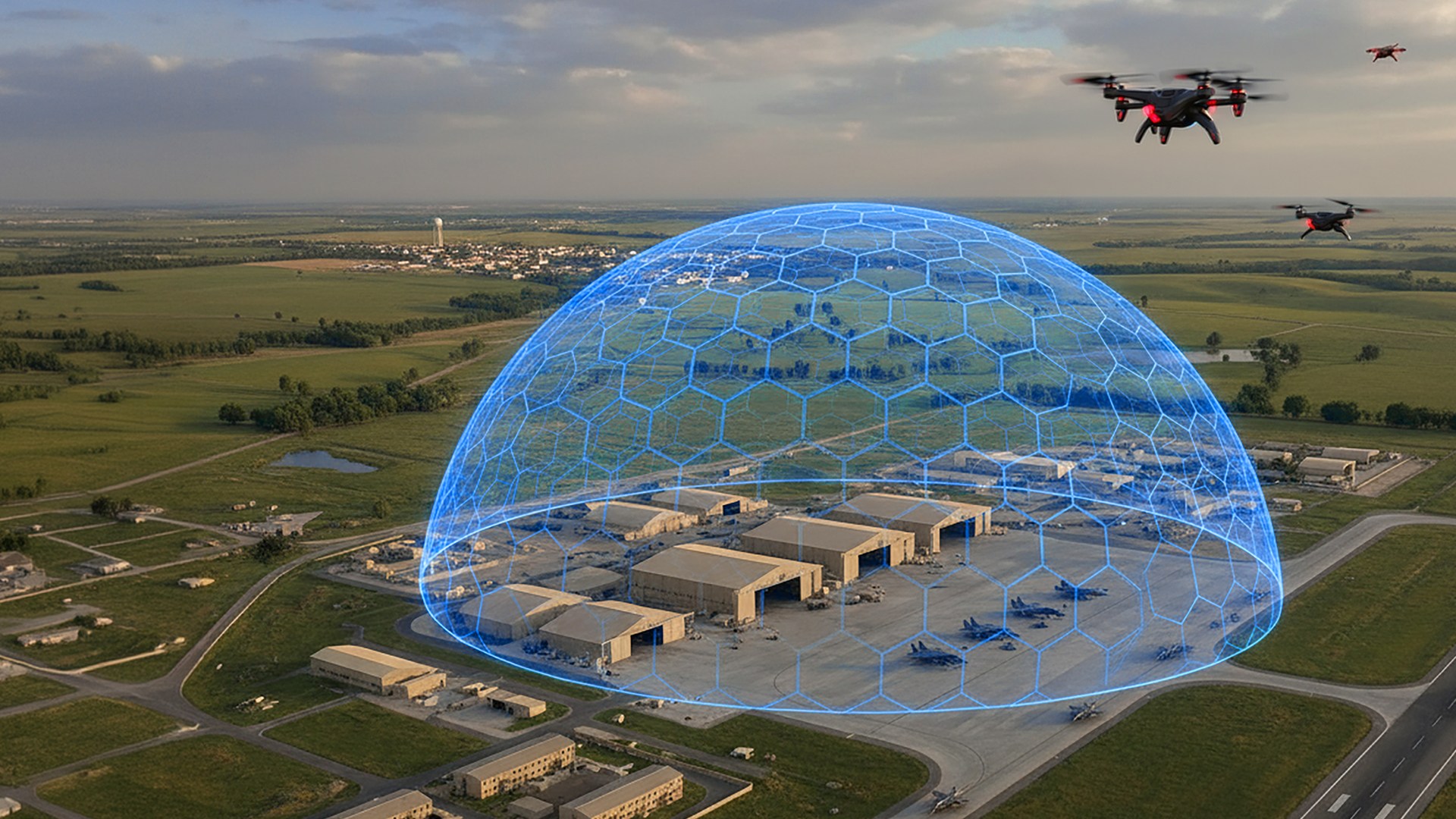
At AV, that shift is taking shape in Halo_Shield™: a modular, tile-based, distributed C-UAS architecture designed for high-volume environments. Instead of concentrating sensors, decisions, and effectors at a single point, Halo_Shield distributes them across the battlespace. Each Halo_Shield “Tile” functions as a self-contained node, combining sensing, processing, and engagement capabilities at the edge, while contributing to a shared operational picture through AV_Halo, our AI-driven command platform delivering unified, real-time battlespace awareness and control.

This is a fundamental change in how defense is constructed.

Point defense concentrates capability, and it inherits limits. Distributed defense multiplies capability.

By dispersing sensors and effectors, Halo_Shield extends detection timelines, increases engagement opportunities, and builds depth into the fight, enabling attrition before threats ever reach a final engagement window. Just as importantly, it scales without creating new bottlenecks. Each Tile adds capacity, but not complexity.

Where Good Ideas Break Down

There is a hard truth in C-UAS.

Many capable solutions work in demonstration events but fail in deployment because their interfaces are too complex, integration with command-and-control architectures is too fragile, and data overloads operators and slows decisions.

Implementing MAYA: Most Advanced Yet Acceptable

As I continue to watch the S-curve paradigm shift, I keep coming back to a design principle of product innovation: MAYA, Most Advanced Yet Acceptable.

MAYA reminds us that having exquisite technology does not necessarily mean having efficient, effective fieldable systems. Especially in defense, the best solution is the one that can be trusted, trained, integrated, and fielded quickly and repeatedly.

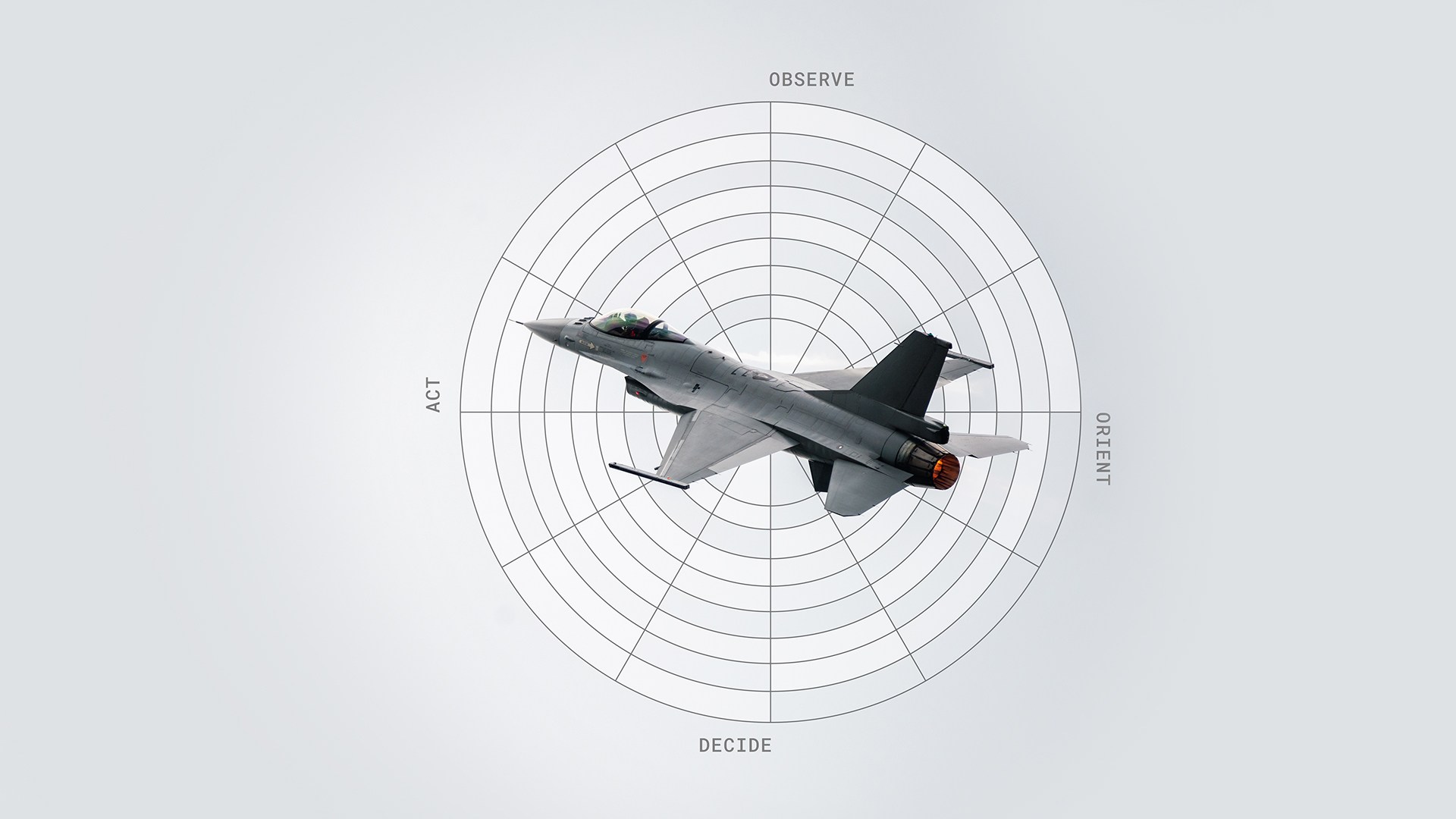
Applied to C-UAS, MAYA means being advanced enough to compress the OODA loop (Observe, Orient, Decide, Act) against scale and speed, while still acceptable enough to fit real operator workflows, rules of engagement constraints, and integration realities.

We’ve all seen the brilliant concept and working demonstration. And then reality shows up: the user experience looks like a cockpit built by committee, the integration requires sequential miracles, the sustainment plan is basically “good luck.” The operator does not trust it, and the system never scales past the pilot.

MAYA forces discipline: innovation must scale operationally, not just technically. And in C-UAS, MAYA is not just philosophy. It is survival.

We developed Halo_Shield around this philosophy.

What MAYA Looks Like in Practice

MAYA isn’t a slogan. It shows up in how systems are built, deployed, and actually used in the field. And the MAYA approach tends to share a few traits.

It starts with progress that can be measured, or stepwise capability growth. Real phases, real metrics, real learning, real measurable outcomes.

It requires clear human-in-the-loop boundaries. Automation should remove friction and compress decision time, not create mystery behavior. Trust is earned one engagement at a time.

It demands simplicity in the form of clean workflows that reduce screens and cognitive load. If the system requires a new operator for every new sensor, you did not scale the system. You scaled the staffing problem.

It depends on architecture that assumes change or what we call “Integration-first Architecture.” Sensors and effectors will evolve faster than legacy C2 cycles. The architecture assumes change as a feature, not a surprise.

Tiles Versus Point Defense: The Distributed Path to Scale

This is where the distributed concept comes in, and it is not as exotic as it sounds.

A traditional point defense site has multiple sensors and effectors applied from a single geographic location. It is usually governed by the sensor with the biggest sensing range and the effector with the longest effective range. This is a valid construct, but it also has a hard limit: finite weapons before reload, finite operator bandwidth, and a tendency to centralize decisions until the system itself becomes the bottleneck.

Distributed defense does not concentrate capacity. It multiplies it.

Halo_Shield’s distributed approach adapts a proven doctrinal idea, area air defense, to the UAS scale problem. We call a geographic area where sensors and effectors are dispersed and not co-located a “Tile.”

Each Tile has edge processing and a C2 interface to manage the mitigation cycle locally while still contributing to a broader operational picture. Tiles are modular by design, combining AV-recommended components with Government-furnished and third-party sensors and effectors, so customers can leverage what they have today and integrate new capabilities as needs evolve.

The practical takeaway is simple: distribution helps elongate detect, track, identify, and defeat to accelerate situational awareness and enable attrition in depth instead of only at the last second. You build Tiles around limited first S-curve air defense sites and increase total system carrying capacity without pretending one point defense site can do it all.

Passive Versus Active: Right Sensor, Right Time, Right Place

Active radar has a place in the mitigation cycle as well. But in a transparent battlefield with long-range precision weapons and shrinking sensor-to-shooter timelines, “radiate all the time everywhere” is not a survivability plan.

A distributed approach like Halo_Shield enables more low- or no-signature, multi-phenomenology sensing such as passive radar, acoustics, and distributable Electro-Optical/Infra-Red (EO/IR), paired with edge computation that limits what must be transmitted to higher echelons.

That reduces bandwidth demand and lowers the risk that central nodes become both overloaded and targetable. It also aligns with first principles. A threat UAS must disturb air to generate lift and move. It must have physical form to carry the technologies that make it a threat. Radio Frequency (RF) detection is valuable when it provides high information value and can support pairing and scheduling, but it is not the only foundation. A signature-centric detection strategy creates an on-ramp for advanced processing and helps reduce latency in high-density environments.

The Bottom Line

This shift in air defense is not just about a new threat. It’s about new requirements: throughput, adaptability, and trust at scale.

MAYA is the discipline that keeps us honest. It forces a simple question: will this be fielded, used, and trusted when the sky gets busy, not just when the demo is clean?

Halo_Shield is the architecture that puts that discipline into practice: not a brittle, centralized stack that collapses under its own weight, but a distributed approach that can grow, integrate, and keep pace.

Together, they move us away from point solutions and toward something more durable: a distributed, scalable, operationally viable defense that delivers value on day one and stays relevant as the fight evolves.

And to be clear, Halo_Shield is not just an upgrade. It’s a shift in how we build defense in the first place, designed for the new S-curve and built to scale with it.

WHAT’S NEXT IN THIS SERIES?

In Part 2, Paul will unpack solutions to the modern C-UAS challenge, including phased introduction of an effective and efficient distributed sensing and effecting architecture, and how leaders can measure C-UAS capacity, and how to move quickly from demo to scale.

ABOUT THE AUTHOR

Paul Webber is a retired Marine Raider and strategic advisor with two decades of leadership, special operations, and systems analysis experience. He blends operational insight with design thinking to tackle complex defense challenges, particularly in emerging domains like C-UAS. Paul holds an MBA from the University of Georgia, an MS from the Naval Postgraduate School, maintains a Top Secret-SCI clearance, and applies a human-centered lens to technology adoption and workflow design in defense environments.

——

ABOUT AV — JOINING THE MISSION

AeroVironment (AV) is a defense technology company with a mission to invent and deliver advantage to U.S. and allied militaries. AV isn’t for everyone. We hire the curious, the relentless, the mission-obsessed.

AV doesn’t just build defense technology; we redefine what’s possible. As the premier autonomous systems company in the U.S., we deliver breakthrough capabilities across air, land, sea, space, and cyber. From autonomy-enabled drones and loitering munitions to integrated autonomy and space resilience, our technologies shape the future of warfare and protect those who serve.

Founded by legendary innovator Dr. Paul MacCready, AV has spent over 50 years pushing the boundaries of what unmanned systems can do. Our heritage includes seven platforms in the Smithsonian—but we’re not building history, we’re building what’s next.

If you’re ready to build technology that matters – with speed, scale, and purpose – come find your people.
EXPLORE OPPORTUNITIES

Domains

Capabilities

Solutions

Let’s Advance Your Mission

Product Catalog

View the full catalog to explore our solutions in detail.

Thought Leadership

100-Percent: LOCUST’s First Day at Sea

04/28/2026

By Mary Clum and John Garrity

When most people picture a shipboard laser weapon, they likely imagine a massive, bulky system—welded into the hull and fixed in place.

That’s not what we brought aboard USS George H.W. Bush.

For a single day at sea, AV’s palletized LOCUST® laser weapon system was forklifted onto the flight deck, enabling a live-fire exercise that demonstrated its performance in real-world operational conditions. The system was powered from the ship, operated by sailors with less than an hour of training, and engaged every target presented. Every single target was destroyed. 100 percent success.

For the Navy, it was a first look at what our containerized, “roll‑on/roll‑off” laser weapon, LOCUST, can really do. For us, it was the payoff from years of work in directed energy—and a hint of where this technology is going.

From Bolted‑In Experiments to Roll‑On Capability

The Navy’s early laser efforts focused on high‑power systems integrated into the ship, hard‑wired into the hull and power system. Those programs taught us a lot, but they also revealed constraints: if the ship goes into maintenance, the weapon does too; if the laser needs upgrades, you work around the ship; moving capability between hulls is slow and costly.

Meanwhile, counter‑UAS was becoming a daily operational problem. The Army had proven that palletized, truck‑mounted lasers could consistently defeat small drones in harsh environments. The natural question was: could that same modular, field‑ready architecture work at sea?

AV’s mission? Prove it viable at sea.

Turning a Land System into a Sea System

On paper, we took a standard palletized LOCUST system—the same basic architecture used on land—and operated it from a carrier. In reality, we had to solve three sets of problems.

First, marinization. The LOCUST variant used on USS Bush was built on our Army fielded design, but carrier life demands more:

  • Hardened electronics for salt fog, humidity, vibration, and long deployments
  • Stabilization hardware to manage ship motion
  • Sealing and environmental protection so the system would be ready whenever it was needed
  • A laser weapon system that delivers precise, low-collateral effects—enhancing ship self-defense while minimizing risk to nearby personnel, platforms, and flight operations.

We implemented a series of hardware upgrades focused on these issues. Our software and tracking heritage, including work on the Optical Dazzling Interdictor, Navy, or ODIN, meant the control stack already reflected decades of naval experience. The emphasis here was making a proven laser weapon reliable at sea, not reinventing it.

Second, roll‑on/roll‑off. The Navy has been clear: it wants containerized, movable weapons. On USS Bush, LOCUST was:

  • Forklifted onto the flight deck in palletized form
  • Positioned in a location that required pausing normal flight operations during the test window
  • Forklifted back off once the demonstration ended so the carrier could resume its standard tempo

We wanted to show that a high‑energy laser could arrive as a containerized asset, fight, and then get out of the way. That flexibility—roll on, roll off—is exactly what the Navy has been signaling in its public comments on containerized systems.

Third, safety and integration. However, bringing a laser weapon onto a carrier isn’t just a technical question. The Navy reviewed how the system would be brought aboard, powered, and operated safely alongside flight deck activity and other systems. Working through that set of questions created a path not just for this event, but for future containerized deployments.

One Day, 100 Percent Successful Engagements

The test window aboard USS Bush lasted one day. Within that day, three things mattered most: effectiveness, repeatability, and usability.

Effectiveness was straightforward. LOCUST targeted, tracked and defeated every single small unmanned aircraft target and defeated all threats flown. 100 percent success. For any counter‑UAS system, kinetic or non‑kinetic, a 100 percent success rate in live testing is notable. For a palletized laser operating from a carrier, it was a clear signal: the technology is ready.

Repeatability came from the laser’s basic economics. Every engagement consumed electricity, not interceptors. In a kinetic system, these defeats would have meant that dozens of interceptors would have been expended, with all the associated production, storage, and resupply burden. With LOCUST, the system drew power from the ship, recharged, and was ready for the next shot. On a nuclear‑powered carrier, that’s a natural fit: high‑volume defense without an exponential logistics tail.

The most important part, though, was usability. Roughly half the engagements were executed by sailors—from enlisted operators up through senior officers, including flag leadership. Training time was measured in tens of minutes.

Within about an hour of using the system, sailors who had never fired a laser weapon before were acquiring targets, working the interface, and making successful engagements. That’s what it looks like when directed energy stops being a lab project and becomes a practical tool.

What It Meant for the Navy—and for Us

For the Navy, the USS Bush demonstration answered key questions that need to be addressed as technology transitions from labs to the field. Most important of all, the demo showed that a containerized laser weapon can operate effectively from a carrier without being permanently integrated into the ship. The demo also showed the Navy that training for these new systems can be straight forward and quickly implemented for sailors.

For AV, this demo validated a design philosophy that has been guiding this program over the last five years: Start with a modular, platform‑agnostic architecture and leverage decades of naval tracking and control experience to harden the system for the environment and let real operators use it. In working with the Navy during this demonstration, valuable lessons learned were gained of how to make the next generation of LOCUST Laser Weapon Systems tailored for the Navy. It also underscored where the technology is going. Across the services, modalities, and environments, interest in directed energy—especially for counter‑UAS—is now reflected in budgets, not just briefings. The center of gravity is shifting from one‑off demos to production and fielding.

Looking forward, we are laser-focused (pun intended) on scaling LOCUST production to meet the needs while continuing ruggedization and spiral upgrades for long‑duration maritime deployments. This should help us to provide evolving containerized variants tailored for the Navy and partners in maritime environments.

Lasers in the Layered Defense

Directed energy won’t replace every other effector, and it shouldn’t. RF systems, guns, and kinetic interceptors are all essential parts of a layered defense and sea deployments are no exception.

But against high volumes of small, inexpensive unmanned systems at sea, a containerized, ship‑powered laser offers something unique: very low marginal cost per shot, effectively bottomless “magazine” tied to ship power, modular deployment across platforms, and rapid usability by sailors.

On USS George H.W. Bush, that combination translated into a simple outcome: a laser weapon rolled onto the flight deck, powered up, trained its first Navy operators, hit 100-percent of the targets, and rolled back off.

ABOUT THE AUTHOR

John Garrity is an engineer and defense technology leader specializing in directed energy and counter-UAS systems. He has helped advance high-energy laser integration, fielding scalable solutions that enhance precision engagement, air defense, and layered protection across complex operational environments.

Mary Clum is a defense technology executive leading space, cyber, and directed energy initiatives. With more than 25 years of experience across AV, BlueHalo, and Raytheon, she has driven the development and deployment of advanced mission systems, guiding highly technical programs from innovation through operational fielding in support of national security.

JOIN THE AV MISSION

AV isn’t for everyone. We hire the curious, the relentless, the mission-obsessed. The best of the best.

We don’t just build defense technology—we redefine what’s possible. As the premier autonomous systems company in the U.S., AV delivers breakthrough capabilities across air, land, sea, space, and cyber. From AI-powered drones and loitering munitions to integrated autonomy and space resilience, our technologies shape the future of warfare and protect those who serve.

Founded by legendary innovator Dr. Paul B. MacCready, Jr., AV has spent over 50 years pushing the boundaries of what unmanned systems can do. Our heritage includes seven platforms in the Smithsonian—but we’re not building history, we’re building what’s next.

If you’re ready to build technology that matters—with speed, scale, and purpose—there’s no better place to do it than AV.

EXPLORE OPPORTUNITIES


Let’s Advance Your Mission

Product Catalog

View the full catalog to explore our solutions in detail.

Thought Leadership

From Setback to Standard: How Learning Fast Delivered VAPOR® CLE to the Army’s MRR Program

04/21/2026

The Moment That Matters Isn’t the Win—It’s the Reset

In defense technology, the defining moment isn’t when you win—it’s how quickly you learn, improve and deliver after a failure.

When AV’s VAPOR® unmanned aircraft system (UAS), an all-electric vertical takeoff and landing (VTOL) platform, was not selected in the initial tranche of the Army’s Medium Range Reconnaissance (MRR) effort, the feedback was clear—and candid.

Our system wasn’t ready.

It was more prototype than deployable solution. It did not yet meet requirements for compact packout. It wasn’t fully operational on Kinesis, the open-standard one-to-many robotic command-and-control system AV is iterating for the Army. It didn’t meet the Army’s expectation for system maturity.

We had a choice: walk away—or rebuild with purpose.

Listening Hard: Turning Gaps into a Roadmap

We didn’t interpret the Army’s feedback as a rejection. We treated it as a roadmap.

The requirements weren’t abstract—they were operational. The system needed to deploy faster, integrate seamlessly, carry more, fly longer, and perform in real-world conditions from day one.

The AV team re-architected the platform with a focus on usability and speed of tactical employment. We replaced tool-assembly with quick-connect rotor blades, landing gear, and tail assembly. We shrunk the tactical footprint nearly 50-percent, reducing a 28-cubic foot, 110-pound packout to seven cubic feet and 58 pounds for a full packout.

Engineers upgraded the power system from a legacy battery lasting 75 minutes to an upgraded Amprius SA08 battery pack, extending endurance to 120 minutes, unlocking the persistent loitering demanded by operators.

The team embedded NVIDIA’s Jetson Orin processor, adding onboard compute to enhance VAPOR’s performance, autonomy, and capacity for future AI capabilities, and fully integrated the platform with Tomahawk Grip’s TA5 control hardware and Kinesis software.

It wasn’t a patch. It was a full reset, executed in 10 months, to deliver the next-generation VAPOR® Compact Long Endurance (CLE).

Engineering for the Mission, Not the Demo

VAPOR CLE wasn’t built to impress in a lab. It was built to perform in the field.

Payload integration became central to that mission.

We incorporated Trillium’s HD-40LVV gimbal, for high-definition intelligence, surveillance, and reconnaissance. And HD-40LVV-LP for laser target designation. We integrated SPOTR-Edge ATR (Automatic Target Recognition) to allow operators to move faster from detection to decision. We added a communications relay for MANET mesh networks, allowing operators remote viewing, camera control, and vehicle control.

We brought in the CACI Pit Viper-Air electronic warfare payload, expanding the system’s mission profile into contested environments and giving operators a tool to mitigate radio frequency and WIFI threats.

And we aligned with DEVCOM Armament’s Center’s CLIK (Common Lethality Interface Kit) standards, enabling lethality integration and ensuring the platform supports evolving Army strike requirements.

The Road Back: Proving, Not Promising

Re-entering the Army’s evaluation process meant one thing: proof.

Our venue was second tranche of the Medium Range Reconnaissance, a program pathway designed for acquisition speed without lowering the standards for reliability, usability, and immediate operational value.

The Army gave us a flyoff opportunity.

Independent evaluators assessed the system’s performance on more than 35 key system requirements: flight endurance, sensor and targeting quality, operational readiness, operation day/night and in GPS denied environments.

Targeting was an early test. In forward flight, hundreds of feet above ground, VAPOR put a 60-millimeter mortar within five inches of target center. A first proof point of many to come; and validation of our payload drop software.

Mission testing continued, defined by performance not potential.

Testers deployed the system in minutes and demonstrated adaptability and effectiveness for ISR, EW, and strike missions, in dynamic conditions. The flight test card was lengthy and rigorous. And the results vindicating; the Army selected VAPOR for production award on the second tranche of the MRR program.  We showed that we had listened and learned.

What It Means Going Forward

Bottom line, AV learned from failure, redoubled our effort and investment, and performed. The VAPOR experience represents our values: Results, Ownership, Innovation, Dedication to Customers. These things matter, learning fast and delivering successfully matters. We’re proud to provide VAPOR CLE to American soldiers.


ABOUT THE AUTHOR

Jason Wright is a senior product line manager at AV with over 20 years of defense aerospace experience. He is experienced in leading complex projects and driving operational execution. Leading from the front, with the VAPOR engineering team has been the focus for the last 18 months. He emphasizes continuous learning and professional development, with a background in structured project delivery, cross-functional coordination, and supporting mission-focused aerospace and defense initiatives.


JOIN THE AV MISSION

AV isn’t for everyone. We hire the curious, the relentless, the mission-obsessed. The best of the best.

We don’t just build defense technology—we redefine what’s possible. As the premier autonomous systems company in the U.S., AV delivers breakthrough capabilities across air, land, sea, space, and cyber. From AI-powered drones and loitering munitions to integrated autonomy and space resilience, our technologies shape the future of warfare and protect those who serve.

Founded by legendary innovator Dr. Paul B. MacCready, Jr., AV has spent over 50 years pushing the boundaries of what unmanned systems can do. Our heritage includes seven platforms in the Smithsonian—but we’re not building history, we’re building what’s next.

If you’re ready to build technology that matters—with speed, scale, and purpose—there’s no better place to do it than AV.

Let’s Advance Your Mission

Product Catalog

View the full catalog to explore our solutions in detail.

Thought Leadership

How Does Weather Affect Laser Weapons? A More Important Question Than It Seems

04/08/2026

How Does Weather Affect Laser Weapons? A More Important Question Than It Seems

By Aaron Westman, Senior Director of Business Development at AV 

One of the most common questions I’m asked about laser weapon systems is simple:

How do they perform in bad weather? 

At first glance, this appears to be a straightforward technical question. In reality, it’s not. Because laser weapons don’t operate in isolation—they operate within a broader contest between offensive and defensive systems, where environmental factors shape outcomes on both sides.

Weather is one of the most important of those factors. And historically, it has tended to favor the defender.

From Napoleon’s invasion of Russia to the D-Day landings, adverse weather has repeatedly slowed maneuver, disrupted coordination, and degraded the timing and precision required for offensive operations. Attacking forces depend on synchronization, visibility, and reliable sensing—all of which are vulnerable to environmental conditions.

Defensive systems, by contrast, are designed to absorb uncertainty.

This distinction is critical. Weather does not uniquely disadvantage laser weapons—it affects all systems. But in many cases, it degrades the attacker more than the defender. And because laser weapons are inherently defensive tools—providing speed-of-light engagement, precision, and persistent coverage—they often benefit from this dynamic on balance.

This is not just theoretical. It is consistently observed in testing and operations.

In ongoing evaluations of the LOCUST laser weapon system, high wind conditions degrade small UAS performance—impacting stability, navigation, and sensor effectiveness—well before degrading the laser system’s ability to to track and engage them. Similarly, reduced visibility conditions like haze, fog, or cloud cover undermine onboard sensors of small drones long before the more capable sensing and tracking systems of modern laser weapon platforms.

This is not to suggest laser performance is unaffected by weather. All systems are affected by environmental conditions. The key point is comparative: in operationally relevant scenarios, the threat system is degraded more than the defensive weapon engaging it.

This conclusion may seem counterintuitive, but it reflects a broader reality across modern warfare.

Over the course of two decades working with drones, radars, and directed energy platforms, I have yet to encounter a system that is immune to weather. Which raises an important question: why are laser weapons often characterized as “fair weather” systems?

One possible explanation is laser weapons rely on optical systems to complete their kill chain. But this is not unique.

Most modern targeting and guidance systems depend on optical sensing in some form. From the human eye to widely deployed munitions such as Hellfire, AIM-9 Sidewinder, and Stinger, optical and infrared sensors are fundamental to detection, tracking, and engagement across the battlefield.

Even systems that rely primarily on radio frequency (RF) sensing are not immune to environmental effects. Operators of advanced radar systems understand well that atmospheric conditions including precipitation, humidity, and turbulence can impact performance, detection range, and track quality. No sensing modality operates outside the influence of weather.

A related concern exploitation of weather by an attacker to achieve surprise or concealment.

In such scenarios, passive systems become particularly valuable. Laser weapons rely on passive sensing for detection and tracking, meaning they don’t emit signals detectable by an adversary. They can continuously observe the environment without revealing their position, even when operating in degraded conditions.

By contrast, active sensing systems such as radars inherently emit energy, making them detectable and targetable. As a result, these systems are often employed with emission control considerations, which can limit their availability at critical moments.

Looking ahead, the more important question is not how any single system performs in ideal conditions, but how systems perform in the environments where future conflicts are most likely to occur.

Will those conflicts be fought in good conditions—or in contested, uncertain, and degraded environments?

What attributes will matter most: magazine depth, persistence, survivability, and precision under imperfect conditions?

When viewed through that lens, laser weapon systems offer a compelling set of advantages. Their deep magazine, passive sensing approach, and speed-of-light engagement enable persistent defensive coverage without the logistical and operational constraints associated with traditional interceptors.

Integrated in a layered air defense architecture, these attributes enhance resilience and reduce overall system vulnerability, particularly in the face of increasingly numerous and low-cost aerial threats.

Ultimately, the value of any defensive system lies not only in its ability to perform, but in its ability to deter.

By improving the reliability, persistence, and cost-effectiveness of air defense in real-world conditions, including adverse weather, laser weapons can contribute meaningfully to that objective.

And effective deterrence remains the most important outcome of all.

About the Author

Aaron Westman is an engineer and leader specializing in counter-UAS and directed energy systems. He has played a key role advancing mobile laser weapon integration and operational deployment, supporting a variety of cross-domain capabilities that improve precision engagement and layered air defense.

Join the AV Mission

AV isn’t for everyone. We hire the curious, the relentless, the mission-obsessed. The best of the best.

We don’t just build defense technology—we redefine what’s possible. As the premier autonomous systems company in the U.S., AV delivers breakthrough capabilities across air, land, sea, space, and cyber. From AI-powered drones and loitering munitions to integrated autonomy and space resilience, our technologies shape the future of warfare and protect those who serve.

Founded by legendary innovator Dr. Paul B. MacCready, Jr., AV has spent over 50 years pushing the boundaries of what unmanned systems can do. Our heritage includes seven platforms in the Smithsonian—but we’re not building history, we’re building what’s next.

If you’re ready to build technology that matters—with speed, scale, and purpose—there’s no better place to do it than AV.

Explore Opportunities

Domains

Let’s Advance Your Mission

Product Catalog

View the full catalog to explore our solutions in detail.

Thought Leadership

Can a Laser Weapon Operate Safely in Civilian Airspace?

03/23/2026

Can a Laser Weapon Operate Safely in Civilian Airspace?

When most people hear the phrase laser weapon, they picture something out of science fiction — a glowing beam shooting across the sky toward a target and then carving through that target with ease, like a knife through butter.

The reality of lasers is very different.

Recently, the Joint Interagency Task Force 401 (JIATF 401) — the U.S. Department of War’s lead agency on C-UAS – worked alongside the Federal Aviation Administration (FAA) and completed a series of safety demonstrations at White Sands Missile Range in New Mexico using the Army’s Multipurpose High Energy Laser (AMP-HEL) system. These tests were designed specifically to answer the question many people are asking:

Can counter-drone lasers operate safely in mixed civilian airspace?

The short answer is yes — and the reason why comes down to how these systems are built and operated.

Over the past two decades as an engineer working in counter-UAS systems — including extensive testing of directed energy platforms — I’ve worked on systems designed with layered safety at their core. In the last four years alone, our LOCUST® team has conducted more than 66 test events and safely engaged over a thousand drone targets without incident.

That body of testing helps illustrate how these systems are engineered to operate safely in complex environments.

But how do they actually work?

LAYERS OF SAFETY

Most people imagine a laser weapon working like a laser gun in a science fiction movie: an operator points it, pulls the trigger, and a beam shoots toward the target.

In reality, modern laser systems operate much more like commercial aviation systems — with multiple independent safety layers designed to prevent a single mistake from creating a hazardous situation.

Every time an operator presses the “fire” button, the system runs through a series of automated checks. Some examples include:

  • Is the laser pointing away from protected “keep-out” zones?
  • Are all internal subsystems operating within safe parameters?
  • Is the system properly locked onto a target?
  • Are safety interlock switches engaged?
  • Are all software safety checks satisfied?

Each of these checks acts as a safety “vote.”

If any subsystem registers a “no vote,” the laser simply will not fire. An operator can press the trigger — and nothing happens. The system refuses to engage until all conditions are verified as safe.

These automated safeguards are built into both the hardware and the software of the system.

A WIDER VIEW OF THE AIRSPACE

Laser systems also don’t operate alone.

They are connected to higher-level command and control (C2) systems that maintain awareness of everything flying in the surrounding airspace. These systems combine data from radar, aircraft transponders, and other sensors to create what is known as an Integrated Air Picture.

By fusing information from multiple sources, operators can see civilian aircraft, military aircraft, and other objects operating nearby in real time.

This broader view provides another layer of safety. The command system can also issue its own “votes” that prevent the laser from firing if protected aircraft or restricted airspace are nearby.

In practical terms, this means that if an operator accidentally points the system toward an area where protected aircraft are operating, the laser will not fire. The system automatically blocks the engagement.

It’s another example of the principle used widely in aviation: multiple independent safeguards working together to prevent unsafe conditions.

WHAT ACTUALLY HAPPENS WHEN A LASER FIRES?

Another common misconception is how the laser beam behaves once it leaves the system.

In movies, laser beams look like glowing bolts of light traveling across the sky. Real directed-energy systems don’t work that way.

The beam itself is invisible and travels at the speed of light. The system can turn the laser on and off extremely quickly — engaging or disengaging in fractions of a second as safety systems continuously monitor conditions.

People also often imagine that the beam continues indefinitely into space like a perfectly straight pencil.

In reality, the beam is shaped like an hourglass. The center of the hourglass is called the focus point. The focus point is set to a specific, controlled distance to concentrate energy on a target. Beyond that focus point, the beam naturally spreads, reducing in intensity by an order of magnitude a few hundred meters beyond the focus point.

This means that after the target area, the beam quickly loses the intensity needed to cause damage. The natural physics of the beam significantly limits the risk to aircraft far beyond the engagement area.

FAMILIAR TECHNOLOGY


It’s also important to remember that the core laser technology used in these systems is not exotic.

The same class of near-infrared fiber lasers used in directed-energy systems is widely deployed across industry. Variants of these lasers are used every day in manufacturing to cut and weld metals, in medicine to perform precise surgical procedures, and even in agriculture as an herbicide-free way to remove weeds.

What makes counter-drone systems different is not the laser itself, but the sophisticated sensors, targeting systems, and safety controls built around it.

A SAFER WAY TO COUNTER DRONE THREATS

The rapid growth of small drone threats has created a difficult challenge: how to stop dangerous aircraft without introducing new risks into already busy airspace. That challenge now affects airports, critical infrastructure, public events, and military installations alike.

Properly designed laser systems help solve that problem.

Taken together — automated safety checks, integrated airspace awareness, and the natural physics of the beam itself — these systems are designed to operate safely even in mixed civilian airspace.

In a crowded airspace, the safest way to stop a dangerous drone may ultimately be a precisely controlled beam of light.

ABOUT THE AUTHOR

Aaron Westman is an engineer and leader specializing in counter-UAS and directed energy systems. He has played a key role advancing mobile laser weapon integration and operational deployment, supporting a variety of cross-domain capabilities that improve precision engagement and layered air defense.

JOIN THE AV MISSION

AV isn’t for everyone. We hire the curious, the relentless, the mission-obsessed. The best of the best.

We don’t just build defense technology—we redefine what’s possible. As the premier autonomous systems company in the U.S., AV delivers breakthrough capabilities across air, land, sea, space, and cyber. From AI-powered drones and loitering munitions to integrated autonomy and space resilience, our technologies shape the future of warfare and protect those who serve.

Founded by legendary innovator Dr. Paul B. MacCready, Jr., AV has spent over 50 years pushing the boundaries of what unmanned systems can do. Our heritage includes seven platforms in the Smithsonian—but we’re not building history, we’re building what’s next.

If you’re ready to build technology that matters—with speed, scale, and purpose—there’s no better place to do it than AV.

Let’s Advance Your Mission

Product Catalog

View the full catalog to explore our solutions in detail.

Thought Leadership

The Math Problem Breaking Air Defense, And Why Lasers Change It

03/04/2026

The Math Problem Breaking Air Defense, And Why Lasers Change It

By Aaron Westman, Senior Director of Business Development at AV  

A $50,000 drone can destroy a $30 million aircraft.

A $2 million missile can destroy a $50,000 drone.

If that sounds like a losing proposition, it’s because it is.

Unmanned Aircraft Systems (UAS) have fundamentally altered the economics of conflict. We have all seen the videos — small, inexpensive aircraft delivering outsized battlefield effects. Nowhere has this been more visible than in Ukraine, where production numbers and lethality statistics are staggering.

While much attention is focused on drone technology, the equally critical and often overlooked counterpart is counter-unmanned aerial systems (C-UAS), systems that allow us to defend against aerial threats. The ongoing cat-and-mouse game between drones and the defense systems designed to defeat them is evolving at an unprecedented pace. Dedicated C-UAS formations are being developed and adopted around the world. Advanced sensors and effectors are being deployed not just by militaries, but by law enforcement agencies, critical infrastructure operators, and even professional sports venues.

The importance of C-UAS is understood. Its implications are not.

At its core, the C-UAS challenge is not just technological. It is also economic.

Drones live in the world of software—iterative, mass-produced, and scaled across global supply chains capable of producing hundreds of thousands, even millions, of units per year. Air defense lives in the world of atoms. Every interceptor must be built, shipped, stored, and sustained. Each one is a discrete, exhaustible object. Once fired, it disappears from inventory, and replacing it takes time, money, and industrial capacity that cannot surge at the speed of software.

This creates a structural imbalance in cost and scale. A single defended site facing sustained drone pressure can consume thousands of interceptors in a matter of months, turning defense into a contest of industrial endurance rather than tactical skill. When each engagement carries a five or six-figure price tag, the defender risks spending more to defeat the threat than the attacker spends to create it.

In this environment, the defining metric of effectiveness is no longer whether a system can intercept a drone, but whether it can do so affordably, repeatedly, and at the scale the threat demands.

In essence, C-UAS is no longer defined by whether you can stop a drone, but whether you can afford to stop them all.

Why Cost Parity Is Not Enough

Conventional wisdom holds that if we can simply make interceptors cheaper, the problem goes away. It does not.

Even if an interceptor achieves nominal cost parity with a one-way attack drone, the defender still faces the burden of manufacturing, storing, and distributing large quantities of physical munitions. The attacker retains initiative. The defender retains logistical burden.

What the C-UAS fight demands is not just cost reduction. It demands a fundamentally different scaling model — one that can keep pace with, or outpace, the industrial production of drones.

That is where directed energy enters the conversation.

A Different Model: Electricity Instead of Inventory

Laser Directed Energy Weapons (LDEWs) invert the economics of C-UAS.

A missile is consumed when fired. A laser recharges.

Instead of throwing hardware at hardware, a laser delivers concentrated energy onto the target.  The marginal cost per engagement is measured in electricity — typically about a kilowatt-hour or $0.18 worth of electricity per shot, roughly comparable to the amount required to operate a household refrigerator for a day.

A laser system does not need a warehouse of interceptors. It does not require constant munitions resupply convoys. It is limited primarily by power availability and thermal management, not by missile inventory.

In practical terms, this means that a C-UAS unit equipped with an effective LDEW can defend against large volumes of small UAS threats without the exponential logistics burden associated with kinetic interceptors.

This is not science fiction. It is not a cinematic “death ray.” A modern LDEW functions more like a long-range precision welder, applying concentrated energy to structurally or functionally disable a drone. The physics are straightforward. The engineering challenge has been shrinking the system, lowering the cost, and making it rugged enough for real-world use.

Thanks to advances in commercial fiber lasers, optics, and power electronics, that tipping point has arrived.

Demonstrated Scale

Over the past four years, our team at AV has conducted more than 66 test, demonstration, live-fire, and operational exercises with our LOCUST family of C-UAS laser systems. Across those events — including preparations and supporting trials — we estimate that our systems have safely defeated over 1,000 small UAS targets.

These were not simulations. They were real unmanned aircraft, real sensors, real power systems, and real environmental conditions.

What is noteworthy is not simply that lasers work. It is that they can operate repeatedly without the inventory constraints that define kinetic systems. Even with only a limited number of prototypes built to date, the cumulative number of engagements would have required substantial missile expenditure had traditional interceptors been used.

That difference scales.

Not a Silver Bullet — But a Necessary One

No single system will solve every aspect of the C-UAS problem. RF-based systems will continue to play an important role against nuisance or commercially derived drones. Gun-based systems will retain utility at very close ranges or in specific environments. Kinetic interceptors remain essential against certain classes of threats.

But when confronting high-volume, low-cost robotic systems, it is difficult to envision a more suitable hard-kill effector than an affordable, producible LDEW.

The question is not whether lasers can defeat drones. They can, they do.

The real question is whether we are willing to align our defensive strategy with the economics of the threat.

In the C-UAS fight, cost structure is destiny. 


Yesterday, AV Announced a $30 million investment in its New Mexico campus, which is where the LOCUST system is manufactured.

ABOUT THE AUTHOR 

Aaron Westman is an engineer and leader specializing in counter-UAS and directed energy systems. He has played a key role advancing mobile laser weapon integration and operational deployment, supporting a variety of cross-domain capabilities that improve precision engagement and layered air defense.

JOIN THE AV MISSION 

AV isn’t for everyone. We hire the curious, the relentless, the mission-obsessed. The best of the best.

We don’t just build defense technology—we redefine what’s possible. As the premier autonomous systems company in the U.S., AV delivers breakthrough capabilities across air, land, sea, space, and cyber. From AI-powered drones and loitering munitions to integrated autonomy and space resilience, our technologies shape the future of warfare and protect those who serve.

Founded by legendary innovator Dr. Paul B. MacCready, Jr., AV has spent over 50 years pushing the boundaries of what unmanned systems can do. Our heritage includes seven platforms in the Smithsonian—but we’re not building history, we’re building what’s next.

If you’re ready to build technology that matters—with speed, scale, and purpose—there’s no better place to do it than AV.


Let’s Advance Your Mission

Product Catalog

View the full catalog to explore our solutions in detail.

Thought Leadership

The Human Is Infrastructure: Readiness in the Age of Autonomy

02/26/2026

The Human Is Infrastructure: Readiness in the Age of Autonomy

By Dr. Stephaney Shanks, Vice President, Health and Performance Technologies 

For decades, military infrastructure has been defined as platforms, networks, logistics, and installations. Yet, as autonomous technologies reshape the battlespace, one truth is increasingly unavoidable, and too often overlooked: The human operator is the most critical element of military infrastructure. The future of readiness will not be defined by machines alone, but by how well we enable the humans who command, control, and collaborate with them.

The warfighter is both person and critical component of the weapons system. That duality shapes how we innovate. It drives us to design technologies that support operator mental and physical performance during their service and throughout their lives. Centering the human in our work acknowledges that warfare is a human endeavor, correctly frames system optimization and, frankly, honors their sacrifice.

I lead AV’s efforts focused on the heart of the human decision-making process. In this work, performance technologies are not ancillary health tools; they are foundational infrastructure. We see the warfighter as a measurable, protectable, and optimizable element of the force, and guide the development of precision medicine, AI/ML-enabled health tools, and wearable and drone-mounted sensing systems that give operators the edge, so when autonomy fails or behaves unexpectedly, the human can act immediately. The technologies pioneered for military health do not stop at the battlefield; they ripple outward, strengthening healthcare for civilians, first responders, families, and communities everywhere. Equipping these groups of incredible people is exactly why I got into this industry.

I began my career grounded in public health and microbiology, focused on environmental exposure and protecting human health. Like many Americans, the events of September 11, 2001 reshaped my sense of purpose. As our nation entered the global war on terror, I felt a profound responsibility to apply my training in service of those who would carry the burden of that conflict. What began as a public health calling evolved into a mission-driven commitment to protect the health and performance of the brave men and women of the U.S. military, who volunteer to put their lives in harm’s way every day and who operate every day under extraordinary physical, cognitive, and environmental stress.

These people’s missions do not execute themselves. Humans remain indispensable for judgment, authorization, adaptation, and accountability. They supervise autonomy, intervene when systems fail, and operate in the ambiguity that machines are not yet equipped to resolve. As autonomy scales, the operator does not disappear from the system. They become the decisive node.

The prevailing assumption is that autonomy reduces human burden. In practice, it often simply redistributes it. Supervising multiple autonomous systems, interpreting AI-driven outputs, and making time-compressed decisions under uncertainty place extraordinary cognitive and physiological demands on operators.

Fatigue, cognitive overload, stress, injury, and environmental exposure are not personal health concerns, they are mission-level risks that propagate across platforms. If aircraft maintenance, fuel supply, and network resilience are infrastructure investments, then operator readiness deserves the same innovation, rigor, instrumentation, and lifecycle management.

Traditionally, human performance is assessed episodically during training, pre-deployment screenings, or post-mission evaluations. This model no longer aligns with modern operations, where stressors accumulate continuously and readiness can change rapidly. The future is persistent, unobtrusive sensing paired with real-time analytics in systems that operate in the background, delivering insight without distracting from the mission. This is not about overwhelming the warfighter with large, complex dashboards. It is about enabling commanders, medics, and operators themselves to identify risks earlier, intervene sooner, and sustain performance during forward, distributed, resource-constrained missions.

A critical enabler of this shift is the maturation of flexible hybrid electronics (FHE). FHE allows sensing, processing, and connectivity to be embedded directly into body-conformal systems, enabling continuous monitoring without compromising mobility, comfort, or compliance. This represents a fundamental change in how infrastructure is deployed. Instead of surrounding the human with systems, we can now integrate infrastructure with the human themselves.

RehabXR, part of AV’s nxtHealth® product line, reflects this approach by combining wearable sensing, immersive environments, and adaptive analytics for concussion and mild traumatic brain injury rehabilitation. It continuously assesses movement quality, neuromuscular performance, and recovery trajectories. RehabXR enables rehabilitation and performance optimization that is operationally relevant and interactive rather than episodic and with secure, real-time data delivery to clinicians.

As we strive for increased system autonomy in contested and resource-constrained environments, data from FHE-enabled devices alone will not create advantage. Advantage comes from what is done with that data. This requires on-device, edge computing to turn raw measurements into real-time guidance without reliance on cloud infrastructure.

This philosophy underpins AV’s ChemiSens™ portfolio, including biohybrid sensors that integrate biology with advanced electronics developed in partnership with the Air Force Research Laboratory. These sensors detect and characterize chemical exposures with high specificity and sensitivity, while processing signals locally for rapid response. When combined with human performance monitoring, ChemiSens can extend readiness beyond physiology alone, linking environmental exposure directly to functional degradation, stress response, and cognitive load.

AV recognizes that human performance technologies have direct relevance beyond defense. Capabilities developed for warfighter readiness – continuous monitoring, exposure awareness, adaptive recovery, and early risk detection – naturally translate to civilian settings where safety, resilience, and sustained performance are equally critical. Platforms like RehabXR and ChemiSens can support applications for first responders, industrial workers, elite athletes, transportation operators and healthcare professionals. The dual-use model accelerates technology transition, lowers cost to the taxpayer, and strengthens national resilience.

Human performance is no longer a support function. It is strategic infrastructure, and it must be built with the same intent, precision, and urgency as any other element of national security. In an age of autonomy, the human remains the ultimate point of accountability and our decisive advantage.

ABOUT THE AUTHOR

Stephaney Shanks, Ph.D. is a health, defense, and technology executive serving as Vice President of Health & Performance Technologies at AV. She leads multi-site teams and a $35M+ portfolio to develop real-world medical technologies, precision medicine, AI/ML health tools, and wearable systems for military and commercial health applications.

JOIN THE AV MISSION 

AV isn’t for everyone. We hire the curious, the relentless, the mission-obsessed. The best of the best.

We don’t just build defense technology—we redefine what’s possible. As the premier autonomous systems company in the U.S., AV delivers breakthrough capabilities across air, land, sea, space, and cyber. From AI-powered drones and loitering munitions to integrated autonomy and space resilience, our technologies shape the future of warfare and protect those who serve.

Founded by legendary innovator Dr. Paul B. MacCready, Jr., AV has spent over 50 years pushing the boundaries of what unmanned systems can do. Our heritage includes seven platforms in the Smithsonian—but we’re not building history, we’re building what’s next.

If you’re ready to build technology that matters—with speed, scale, and purpose—there’s no better place to do it than AV.

Let’s Advance Your Mission

Product Catalog

View the full catalog to explore our solutions in detail.

Thought Leadership

Breaking the Silos: How Integrated Airspace Will Secure and Sustain America’s Future

01/28/2026

Breaking the Silos: How Integrated Airspace Will Secure and Sustain America’s Future

The most transformative leap in aviation will not come from a new aircraft.

It will come from a new way of thinking about airspace itself.

For decades, our skies have been organized in silos, divided by function and ownership – military aviation here, civil aviation there, commercial drones somewhere else, and counter-UAS systems operating in the shadows.

Each domain evolved in isolation with its own systems, protocols, priorities, sensors, rules, and command structures.

That siloed approach delivered progress, but it also introduced risk. When aircraft, sensors, and command systems cannot speak the same language, airspace becomes dangerous, harder to defend, and easier to exploit.

We saw the consequences of that fragmentation in January 2024, when an enemy drone reportedly infiltrated a U.S. military base in Jordan by following one of our own drones through the perimeter in order to attack Tower 22, a logistics outpost near the Syrian border, killing three American soldiers and injuring dozens more. Counter-UAS systems were uncertain whether the enemy drone was friend or foe because there was no shared information set between the base’s air traffic control system and its defensive network.

That tragedy exposed a hard truth: when airspace systems cannot share a common operating picture, even sophisticated defenses can be rendered uncertain by the most rudimentary threats at the worst possible moment.

The same dynamic now threatens civilian airspace at home. Commercial and civil drone activity is expanding rapidly around airports, cities, critical infrastructure, and major events. When a drone appears without clear identification or intent, airports slow or stop operations. Delays cascade. Risks rise. And if intent is malicious, the consequences can be far worse.

If our skies are going to become busier, they must also become smarter—and more integrated.

From Fragmentation to a Shared Airspace Reality

Today’s air traffic systems were designed for crewed aviation. Small uncrewed aircraft often do not appear on traditional radar or Automatic Dependent Surveillance-Broadcast (ADS-B displays). As a result, air traffic controllers frequently learn about potential hazards through slow, late and imprecise visual reports. Meanwhile, counter-UAS systems—often deployed for legitimate protection—may emit effects that air traffic controllers cannot see or account for in real time.

This is not a technology gap. It is an integration gap.

When airspace systems can ingest data from ground radar, ADS-B, commercial sensors, UAS telemetry, and counter-UAS networks, and fuse that information into a single and secure operating picture, the entire dynamic changes. Hazards are detected earlier. Intent is easier to assess. Compliant aircraft fade into the background. Airports keep moving safely and efficiently.

That integrated model is no longer aspirational. It is operational.

That’s exactly what we’re doing in Springfield, Ohio, where we’ve launched a new Beyond Visual Line of Sight (BVLOS) airspace management capability at the National Advanced Air Mobility Center of Excellence (NAAMCE) at Springfield-Beckley Municipal Airport in partnership with the Air Force and Ohio Department of Transportation in collaboration with CAL Analytics.

We are proving that BVLOS operations can be executed safely, predictably, and at scale by routing diverse surveillance and flight data through a unified command-and-control (C2) architecture. The result is a living, real-time view of shared airspace—one that treats crewed aircraft, uncrewed systems, and defensive operations as parts of the same ecosystem.

This is not a demonstration site. Pending regulatory approval, it is an operational blueprint for how airports, states, and federal regulators can manage integrated airspace nationwide.

Ohio is developing sophisticated UAS Traffic Management (UTM) capabilities to safely enable commercial drone delivery and future air taxi operations for companies like Amazon and Uber—where scaling these services depends on collision-free integration with helicopters and other low-altitude aircraft. Getting that integration right does more than improve safety; it opens the door to meaningful economic growth and provides a practical blueprint for managing the increasingly crowded skies communities across the country will soon face.

A New Model for Shared Airspace, Our Approach

The expansion of BVLOS operations depends on Ground-Based Detect and Avoid (GBDAA) and space-based surveillance working in concert with existing air traffic infrastructure.

1. GBDAA systems monitor the airspace using ground and satellite-based sensors and provide real-time situational awareness and maneuver guidance to UAS operators, significantly reducing the risk of collisions. 

2. GBDAA can complement or provide an alternative to onboard systems, offering broader surveillance capabilities and covering larger operational areas. 

3. GBDAA systems can leverage existing Air Traffic Control infrastructure and Commercial Off the Shelf Sensors (COTS) sensors, as a cost-effective, scalable solution for further integrating drones into the National Airspace System. 

By integrating federal and local surveillance feeds, flight intent data, and environmental information into a common platform—AV_Halo™ COMMAND (C2 system) and CAL Analytics’ Advanced Air Mobility (AAM)—operators can safely separate aircraft, avoid conflicts, and transition from segregated to fully integrated airspace operations.

What makes this approach novel is the paradigm shift to a modular, data-driven architecture designed to seamlessly distribute real-time information across a scalable set of interrelated airspace services.

This is how we’ve broken out of the silos and stove-pipes, allowing multi-sensor tracking and fusion to provide the situational awareness needed to detect, classify, and track crewed and uncrewed aircraft across wide areas, while the airspace-management layer translates that awareness into coordinated separation, alerting, and oversight across jurisdictions.

This integrated architecture allows Ground-Based Detect and Avoid to function as a true enabler of scaled BVLOS operations rather than a collection of localized safety tools.

The result is a GBDAA framework that scales from individual operations to regional corridors—supporting safe integration, consistent decision-making, and the data foundation required for broader BVLOS adoption and policy evolution.

From Proof to Policy, Enabling the Economy

This collaboration isn’t theoretical. The AV_Halo COMMAND architecture is already going through operational approvals in Ohio and also in North Dakota, where it will support detect-and-avoid conflict-alerting missions for both military and commercial operators in our work with GrandSKY UAS Flight Operations Center.

GrandSKY serves as a living testbed for integrating military and civilian drone operations into the National Airspace System, leading the Department of War’s Project ULTRA by conducting real-world logistics and cargo flights between military bases to stress-test, validate, and refine UAS traffic management in mixed-use airspace. AV and CAL Analytics’ solutions are also advancing through the FAA’s near-term approval process, undergoing the full rigor of safety risk management review.

Our work in both Ohio and North Dakota is building the data and policy foundations for nationwide BVLOS operations—a future where uncrewed systems can fly beyond the horizon as safely as manned aircraft do today.

These deployments are generating what policymakers need most: real operational data. Data that informs standards. Data that accelerates rulemaking. Data that turns “can we?” into “how fast?”

Living testbeds like Ohio and North Dakota—where military and civilian operations coexist—are shaping the future of UAS traffic management and logistics corridors. They are stress-testing policy in real airspace, not in simulation, and laying the groundwork for national BVLOS integration.

What is at stake is not convenience. It is national resilience.

The ability to defend critical sites, move supplies, support emergency response, and unlock new economic activity depends on shared, resilient airspace infrastructure. Fragmented systems cannot scale to meet that demand. Integrated systems can.

Breaking down the silos between civil and military aviation, between safety and security, between innovation and regulation is no longer optional. It is foundational.

The future of American airspace will be defined not by who owns the sky—but by how well we share it.

About the Author

Stephen Lloyd is a Senior Director, C2 & Tracking Systems at AeroVironment, where he leads development of AV_Halo for air-traffic control, BVLOS drone operations and counter-UAS applications. He retired from the Federal Aviation Administration after a 40-year career, having held senior roles in air traffic operations, safety management systems and the National Airspace System. A former chair of the FAA ATO Safety Committee, he collaborated closely with the National Transportation Safety Board and later joined the Air Force Research Laboratory SkyVision GBDAA team. His contributions have been recognized with awards including the 2019 ATCA Civilian Team Award and the 2020 AUVSI Excellence Award in Technology & Innovation.

Join the AV Mission

AV isn’t for everyone. We hire the curious, the relentless, the mission-obsessed. The best of the best.

We don’t just build defense technology—we redefine what’s possible. As the premier autonomous systems company in the U.S., AV delivers breakthrough capabilities across air, land, sea, space, and cyber. From AI-powered drones and loitering munitions to integrated autonomy and space resilience, our technologies shape the future of warfare and protect those who serve.

Founded by legendary innovator Dr. Paul B. MacCready, Jr., AV has spent over 50 years pushing the boundaries of what unmanned systems can do. Our heritage includes seven platforms in the Smithsonian—but we’re not building history, we’re building what’s next.

If you’re ready to build technology that matters—with speed, scale, and purpose—there’s no better place to do it than AV.

Let’s Advance Your Mission

Product Catalog

View the full catalog to explore our solutions in detail.

Thought Leadership

From Strategy to Stride, Modernization That Matters: Common Control, Rapid Prototyping, and the Accelerated Training

01/08/2026

From Strategy to Stride, Modernization That Matters: Common Control, Rapid Prototyping, and the Accelerated Training

Not a day goes by in DC without someone grabbing a microphone, stepping to a podium—or settling into a cushy seat on a panel—to declare the need for “more innovation” and a “revitalized industrial base.”

It’s become a ritual without results.

However, with the recent release of the U.S. Department of War’s (DoW) Acquisition Transformation Strategy, we have a real chance to drive meaningful change. It’s more than a political directive; it’s a blueprint for the leaders within the defense industrial base to make it a reality.

Secretary of War Pete Hegseth has just thrown the game-winning pass into the air. Scoring means turning strategy into capability, which hinges on how quickly industry can prepare the operating forces to receive Hegseth’s pass. With DoW and Congress behind this effort, the question becomes simple: how do we continue to move the ball down the field and get it over the goal line? Industry can do that in three ways.

First, we need a true, shared tactical command-and-control backbone across the Services—replacing today’s patchwork of soldier-level controllers and incompatible software that can’t integrate with other Service-level C2 systems.

Second, we need rapid-fire prototyping that puts hardware into soldiers’ hands, rather than abandoning promising tech in the Valley of Death—or worse, shrink-wrapped in warehouses.

Third, we need Field Service Representatives (FSR) who can accelerate the DOTMLPF-P process through hands-on training in the field and by providing feedback to develop doctrine for the force. It’s the process no one budgets for, even though it ultimately determines whether anything reaches the fight or adds any real value once it gets there. (Lay readers: DOTMLPF-P is the framework for planning and building capabilities that aligns new technology with the American way of fighting, policy, resources, training, and manning.)

This is the beginning of a shift from ritual to results, and it’s going to reshape how our troops score touchdowns in the years ahead.

1. Common Control: The New Rifle and Radio

The next war will be fought by squads remotely commanding robotic systems: unmanned ground vehicles hauling gear, drones scouting ahead, loitering munitions circling above… Incredible capability, cognitive overload.

If we expect troops to fight and manage all that tech simultaneously, we need a single pane of glass—one intuitive control platform that feels as natural as a rifle and radio. Common control isn’t about user interface design; it’s about survival under pressure.

Key philosophy is ‘one-to-many.’ There will be a sharp rise in the number of ground, aerial, and maritime robotics systems procured and deployed across the Department.  As the number of systems employed by the soldier increases, we should avoid the desire to give every soldier a controller. One soldier can control a swarm of one-way attack systems while employing the ISR to initiate and close the kill chain. Also, systems that are fully autonomous won’t require ‘control,’ but they will need to be tracked in and out of the battlespace, which is why interoperable software like Android Tactical Assault Kit (ATAK) will be critical.

Programs like the U.S. Army’s Human Machine Integrated Formations (HMIF), under the newly established Portfolio Acquisition Executive Fires (PAE Fires), are pushing in the right direction with modular architectures and open APIs. But let’s stop pretending interoperability can be bolted on later. If a system can’t plug into a common architecture from day one, it shouldn’t make it past the gate.

In the end, command-and-control is the real high ground and the side that seizes it early will shape the fight long before the first shot is fired.

2. Prototype Like You Mean It

Ukraine proved what most of us already knew: Concepts are validated in contact, not in meetings.  

The U.S. can’t wait for perfect requirements or five-year procurement cycles. It needs continuous experimentation, real soldiers, Marines, and special operators running gear hard in dirty conditions, feeding lessons back to designers in real time. Because the truth is brutal: our adversaries iterate faster than our acquisition system, and the first time that gap shows up will be in combat, not a conference room.

We finally have alignment: Congress, the Pentagon, and industry all want faster prototyping. The fix is to make it permanent. Here’s how:

1. Expand Research, Development, Test, and Evaluation (RDT&E) contracts. Fund multiple vendors per capability. 

2. Push prototypes to more units by shifting early S&T funding into applied research for more testing and experimentation. 

3. Take advantage of units the Army, Air Force, and Marines have stood up for this purpose. 

The Army’s Transformation in Contact initiative to adapt its organizations and technologies rapidly and continuously on the modern battlefield is a glimpse of the future: brigades re-organizing on the fly, integrating manned and unmanned assets, building strike companies where scouts, EW teams, and loitering munitions operate as one lethal formation.

We need to embrace that future and put the hardware in the dirt. Let the warfighters break it, tweak it, and own it. That’s how we’ll close the gap between PowerPoint and performance—and how we’ll keep that gap from becoming a battlefield surprise.

3. Bring Back the FSRs (to accelerate fielding)

We used to know how to do this. When M-ATVs and MRAPs rolled into Afghanistan, the only reason they worked was because industry flooded the fight with FSRs. They taught troops how to operate this lifesaving equipment quickly and effectively and kept them in the fight.

Unfortunately, the FSR experience in Iraq and Afghanistan exposed poignant shortcomings of relying on civilian contractors on a battlefield. Today, adding FSRs into a contract can get a bad rap as the Services seek self-reliance in operation and repair of systems.

That’s a valid critique, maintaining equipment at the lower echelons should be a given. But the battlefield we’re preparing for, including autonomy at the edge, open architectures, and rapid software pushes, moves too fast for traditional schoolhouse training to keep up. As we field systems from multiple vendors, ideally all riding on a common control platform, units will be asked to self-train across half a dozen new interfaces at once. Therefore, DoW should embrace FSRs for training and fielding new systems in user-friendly ways so that FSRs are not required to operate those systems in theater. For its part, industry must be ready to provide FSRs early, hit the ground running with new equipment training teams, and turn complex unfamiliar gear into usable combat power on day one.

Vendors need to be prepared to hire and bake FSRs into every major test, experiment, and early fielding event. These embedded experts will accelerate the DOTMLPF-P as they close the loop between design and doctrine, between factory and foxhole.

If a system shows up to a battalion and no one knows how to use it, that’s not on the operator, that’s on the planners, acquirers, and vendors.

CONCLUSION: Modernize the modernization

It’s easy to mock Pentagon flow charts and acronyms like DOTMLPF-P, but those structures exist for a reason: to protect our troops. We can’t just give soldiers new equipment without the opportunity to learn and train. When it comes to combat, brilliance in the basics keeps Americans alive. Rigorous training on common platforms in peace is the operating system of war.

Secretary Hegseth’s pass is already in the air, and for the first time in a long time the field is wide open. If industry leans in now to build common control from the start, push prototypes into the dirt, and embed the experts who turn complexity into confidence, the force will catch that ball at full stride. That’s how we move from strategy to capability, from talking about modernization to living it. This moment is an opportunity disguised as a challenge, and if we seize it, the next generation of warfighters won’t just be better equipped, they’ll be decisively ahead.


ABOUT THE AUTHOR 

Chris Meyers is a Senior Director at AV. He is a retired Marine Colonel who served as an Armor Officer, a Joint Terminal Attack Control (JTAC), Legislative Liaison, and Program & Budget Officer. He deployed to Iraq and Afghanistan, commanded 1st Tank Battalion, and led the Marine Corps’ liaison office to the U.S. House of Representatives.


ABOUT AV — JOINING THE MISSION 

AeroVironment (AV) is a defense technology company with a mission to invent and deliver advantage to U.S. and allied militaries. AV isn’t for everyone. We hire the curious, the relentless, the mission-obsessed.

AV doesn’t just build defense technology; we redefine what’s possible. As the premier autonomous systems company in the U.S., we deliver breakthrough capabilities across air, land, sea, space, and cyber. From autonomy-enabled drones and loitering munitions to integrated autonomy and space resilience, our technologies shape the future of warfare and protect those who serve.

Founded by legendary innovator Dr. Paul MacCready, AV has spent over 50 years pushing the boundaries of what unmanned systems can do. Our heritage includes seven platforms in the Smithsonian—but we’re not building history, we’re building what’s next.

If you’re ready to build technology that matters – with speed, scale, and purpose – come find your people.
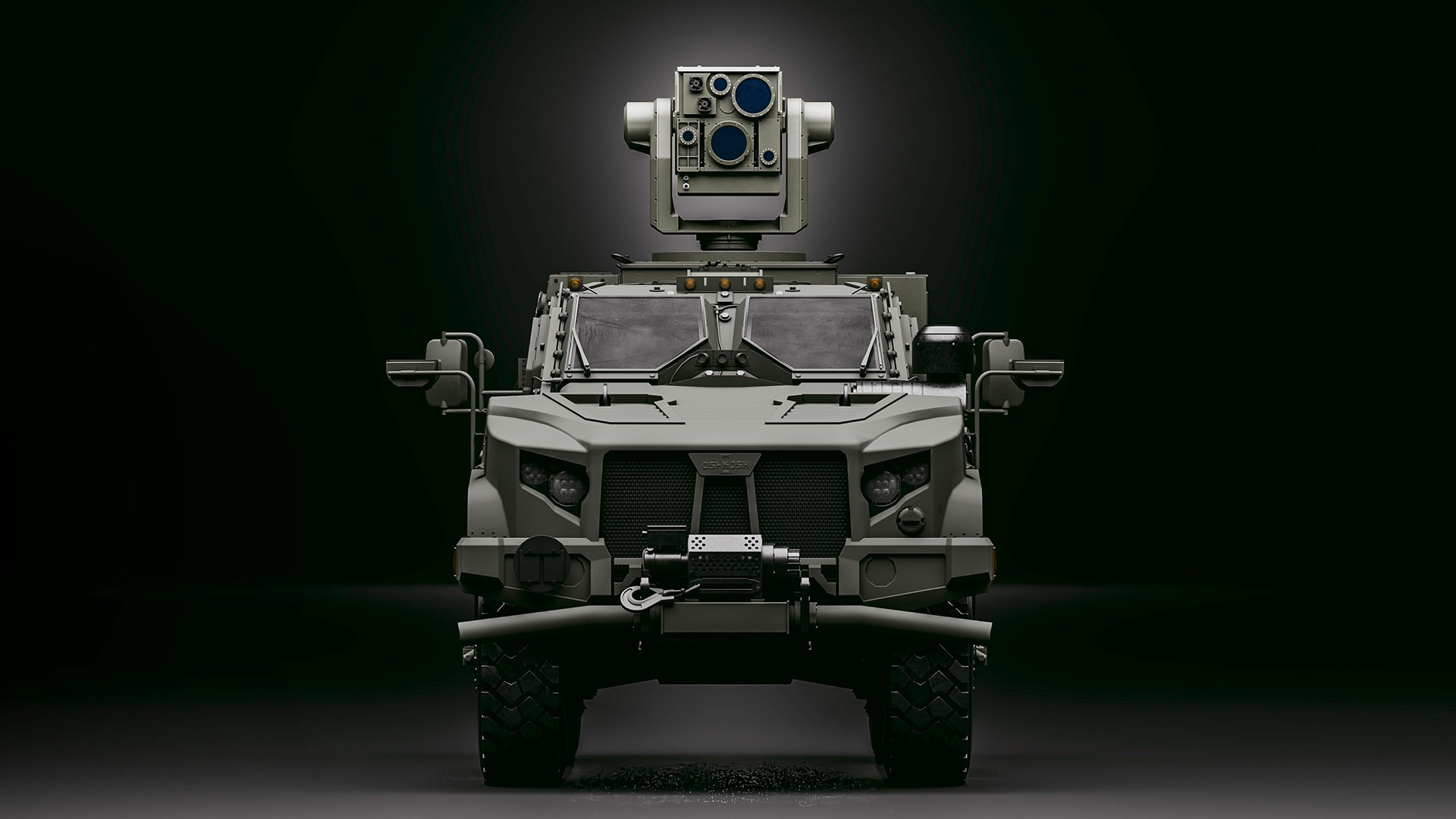
Let’s Advance Your Mission

Product Catalog

View the full catalog to explore our solutions in detail.

Thought Leadership

Three Questions About the Future of AI in Defense, Thoughts from the AI lead at AV’s Innovation Center

10/28/2025

Three Questions About the Future of AI in Defense, Thoughts from the AI lead at AV's Innovation Center

By Zarinah Casanova, AI Lead for AV’s Innovation Center 

Artificial intelligence has entered our daily lives—but on the battlefield, its role carries life-and-death consequences. That shift from everyday convenience to mission-critical responsibility is where my work begins.

For the past two decades, I’ve worked across cloud analytics, data science, and machine learning operations. Today, I lead AV’s Innovation Center in Annapolis Junction, Maryland, where we’re developing next-generation AI to keep our country safe. My own journey—from a high school work-study student to helping grow our lab from a single computer into a full data center—has reinforced a simple truth: in defense, AI is about responsibility. Systems must be reliable, explainable, and resilient because lives and missions depend on them.

The future of defense AI won’t be built by one person or one lab. It will come from collaboration across disciplines, communities, and nations. And as the technology races ahead, we have to stop and ask the toughest questions—the ones that will define whether AI strengthens our defenses or puts them at risk. AV’s Innovation Center was built for answers and there are three high-priority questions we’re working to address every day:

1. As national security missions grapple with the challenge of processing massive amounts of data, how can cutting-edge AI innovations be harnessed to make timely and impactful decisions?

Our missions are becoming more data-hungry, making breakthroughs in data collection, cleaning, and processing for AI an operational imperative. The traditional, time-consuming method of collecting all data and returning it to a central source for processing is no longer viable. By the time the data is ingested, the window for actionable intelligence has often passed. This inefficiency highlights the critical importance of decentralized, real-time data processing.

We are shifting towards architectures where processing and intelligence occur at the edge. This evolution involves deploying AI on low-resource or non-specialized hardware and utilizing it to process diverse raw data streams, such as those from sensors and network traffic, directly on site. The AV Innovation Center is on the cutting edge of this transformation, actively developing and testing these edge AI solutions to ensure timely and potentially autonomous actions in reaction to observations.

Additionally, innovative methods for data processing are essential. In our lab, we have prototyped an AI-driven data normalization process that automates the handling of rapidly changing data. This innovation addresses the ongoing struggle to keep pace with the ever-changing data landscape. The future of AI in defense hinges on these advancements, driving towards a paradigm of scalable, efficient, and real-time data processing that meets mission-critical needs with precision and speed.

 2. In the next five years, how far can we push AI at the edge—running on drones, satellites, or sensors in contested environments?

We’re actively working to translate the remarkable advances in artificial intelligence, particularly the reasoning and analytical capabilities demonstrated by large language models, into practical applications at the edge. While these publicly available Large Language Models (LLMs) are impressive, their size and general-purpose training present two key hurdles for deployment at the edge. First, their resource demands are often prohibitive for edge devices, and reliable network connectivity can’t be guaranteed. Second, they lack the specialized domain expertise necessary to interpret raw sensor data or contribute to real-time tactical decision-making.

The AV Innovation Center is focused on addressing these challenges by dramatically reducing model size while simultaneously ‘teaching’ those models to natively understand raw sensor data, recognize critical patterns, and enable proactive decision-making. In the next five years, this will lead to a significant leap in autonomous edge capabilities, enabling platforms to make complex, context-aware decisions in the most challenging environments.

3. How do we ensure that Autonomous AI systems behave as expected and remain responsible in critical scenarios?

Building autonomous AI for defense carries a significant responsibility, one we don’t take lightly. We proactively design for safety through monitoring and traceability right from the start. We also build in layers of oversight to keep the AI in check, ensuring it operates as intended. These factors are integral to our development process, ensuring our systems are transparent and accountable.

We establish evaluation frameworks early in the development process to rigorously assess safe operation of our AI systems. To support this, we engage with an AI review board composed of technical, legal, and compliance experts. This diverse oversight provides critical perspectives and helps us navigate complex challenges related to safe and responsible deployment.

These questions are not easy to solve – nor should they be. AV’s Innovation Center works to answer these questions by fostering a culture that welcomes critical thinking, especially when it comes to responsible innovation. We’re looking for people who are not only brilliant engineers but also deeply committed to building AI systems that operate reliably and as intended. By integrating these principles into our innovation process, we aim to develop AI systems that are both cutting-edge and responsible. If this sounds like you, explore opportunities and join me at AV as we ask – and answer – the questions most critical to protecting our nation.


ABOUT AV — JOINING THE MISSION

AV isn’t for everyone. We hire the curious, the relentless, the mission-obsessed. The best of the best.

We don’t just build defense technology—we redefine what’s possible. As the premier autonomous systems company in the U.S., AV delivers breakthrough capabilities across air, land, sea, space, and cyber. From AI-powered drones and loitering munitions to integrated autonomy and space resilience, our technologies shape the future of warfare and protect those who serve.

Founded by legendary innovator Dr. Paul MacCready, AV has spent over 50 years pushing the boundaries of what unmanned systems can do. Our heritage includes seven platforms in the Smithsonian—but we’re not building history, we’re building what’s next.

If you’re ready to build technology that matters—with speed, scale, and purpose—there’s no better place to do it than AV.

Let’s Advance Your Mission

Product Catalog

View the full catalog to explore our solutions in detail.