Press Release

AV and Alpha Unmanned Systems Announce MOU to Explore JUMP 20 Support in Spain

10/14/2026

Companies to explore local sustainment, training and technical support, with potential expansion into Europe and Latin America 

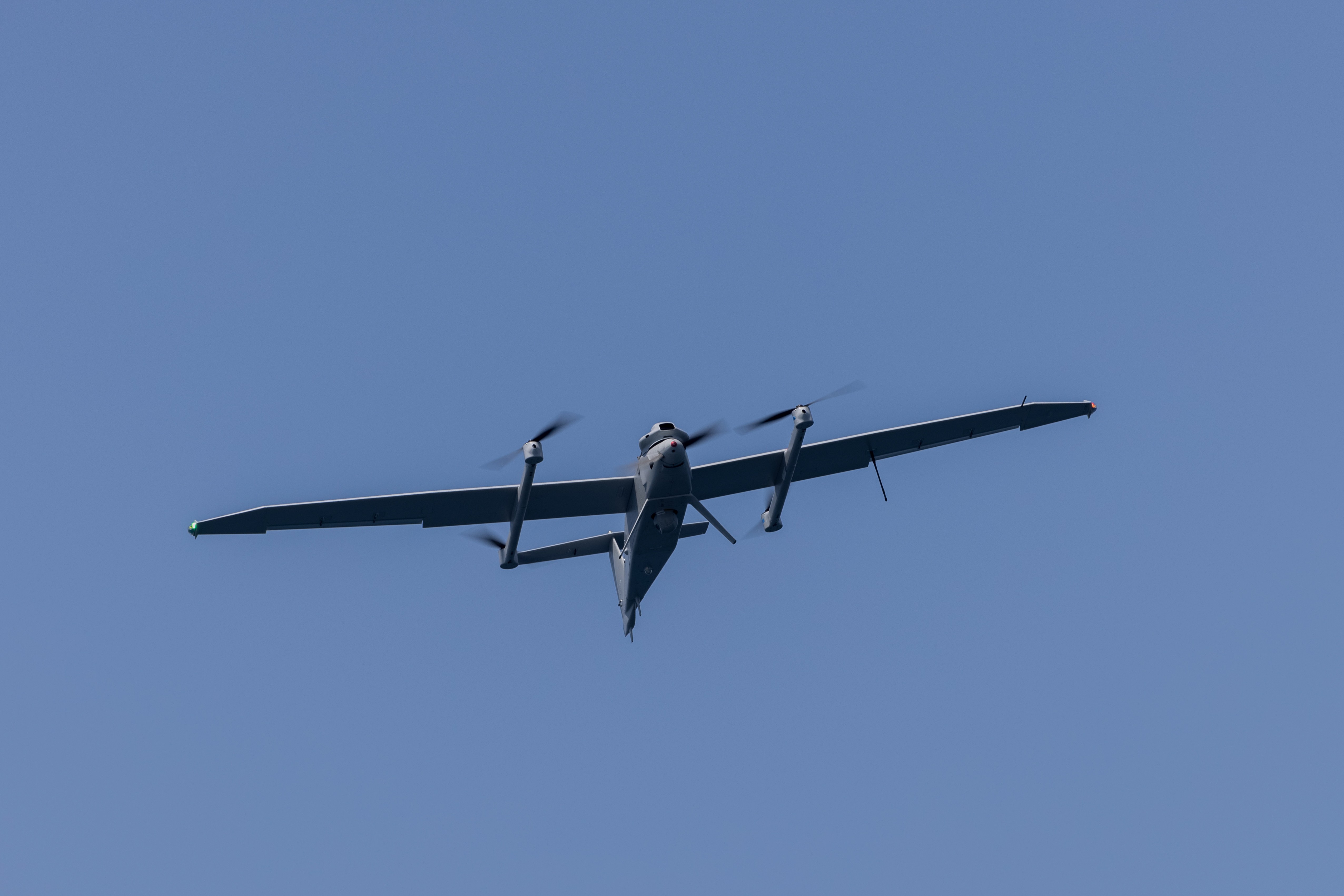
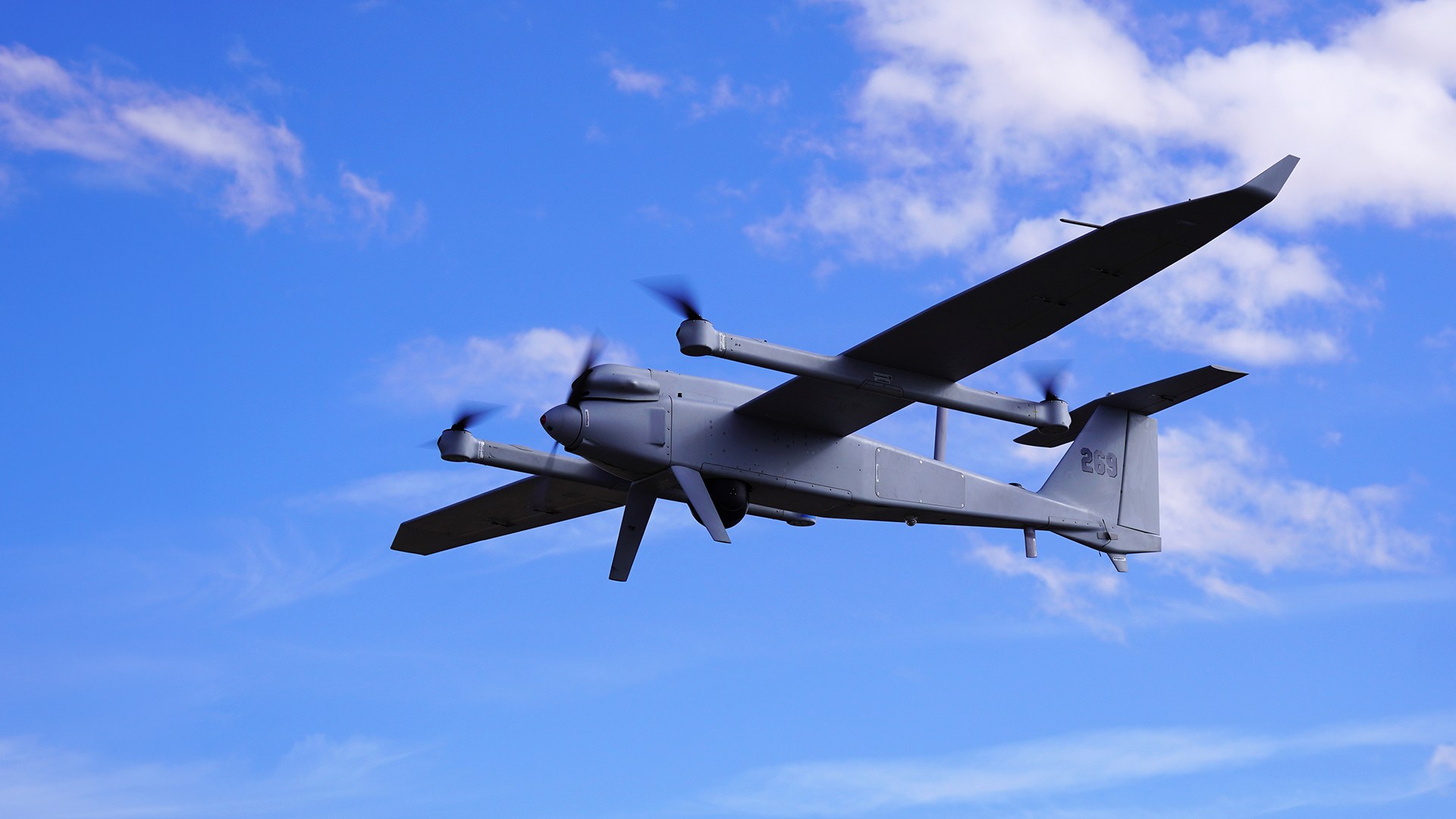
ARLINGTON, Va. — (OCTOBER 14, 2026) — AeroVironment, Inc. (“AV”) (NASDAQ: AVAV), a global defense technology leader, today announced a memorandum of understanding (MOU) with Alpha Unmanned Systems S.L. to explore collaboration supporting AV’s JUMP 20 fixed-wing unmanned aircraft system (UAS), which features vertical takeoff and landing (VTOL) capabilities. The announcement is being made in connection with the Association of the United States Army (AUSA) Annual Meeting & Exposition in Washington. 

“A platform only delivers value when operators can keep it flying,” said Shane Hastings, senior vice president and general manager of uncrewed systems at AV. “This agreement is about exploring how to bring training, maintenance and sustainment closer to JUMP 20 customers in Europe, beginning with opportunities in Spain.” 

The MOU establishes a framework for collaboration on JUMP 20 fielding, sustainment, training, maintenance and in-country and in-theater support, initially focused on Spain. The collaboration may expand to other markets in Europe and Latin America. The companies will also plan to evaluate integration of Alpha’s UAV subsystem products, including its GCASE Ground Control Station, GTRACK tracking system and AIS module, into the JUMP 20 platform. 

“This collaboration with AV is a significant step for Alpha, pairing our subsystem technologies and in-country support capabilities with the JUMP 20 platform,” said Eric Freeman, CEO of Alpha Unmanned Systems. “Together, we intend to explore opportunities to strengthen local support for JUMP 20 in Spain, with the potential to support additional customers across Europe.” 

About Alpha Unmanned Systems 

Alpha Unmanned Systems S.L. is a Madrid-based company that develops unmanned aircraft and related subsystems for defense and security applications. The company provides training, integration and support services.  

For more information, visit www.alphaunmannedsystems.com. 


About AV 

AeroVironment (“AV”) (NASDAQ: AVAV) is a defense technology leader delivering integrated capabilities across air, land, sea, space, and cyber. The Company develops and deploys autonomous systems, loitering munitions, counter-UAS technologies, space-based platforms, directed energy systems, and cyber and electronic warfare capabilities—built to meet the mission needs of today’s warfighter and tomorrow’s conflicts. With a national manufacturing footprint and a deep innovation pipeline, AV delivers proven systems and future-defining capabilities at speed, scale, and operational relevance. For more information, visit www.avinc.com. 

Safe Harbor Statement 

Certain statements in this press release may constitute “forward-looking statements” as defined in the Private Securities Litigation Reform Act of 1995. These statements are based on current expectations, plans, forecasts, and assumptions that involve risks and uncertainties, which could cause actual results to differ materially. Factors that may cause such differences include, but are not limited to, our ability to perform under existing contracts and obtain new ones; regulatory changes; supply chain stability, competitor activities; market growth; product development and/or manufacturing challenges; and general economic conditions. For a more detailed discussion of these risks, please refer to AeroVironment’s filings with the Securities and Exchange Commission. We undertake no obligation to update forward-looking statements as a result of new information or future events. 

//////////////////////////////////////////////////////////////////////////////////////////////////// 

For additional media and information, please follow us: 


Media Contact:  

Deb Richardson
pr@avinc.com 

667.356.1377 


Investor Contact:  

Denise Pacioni 

ir@avinc.com 

805.795.4108 

Domains

Let’s Advance Your Mission

Product Catalog

View the full catalog to explore our solutions in detail.

Thought Leadership

For Australia, Sovereign Doesn’t Have to Mean Alone

The question for Australia isn’t whether a capability is foreign or domestic. It’s whether Australia can control what happens next. 

By Sean Colvin, Director of Business Development, Asia Pacific, AV 

During six deployments to Afghanistan as a field service rep at AV, I learned that having a capability and being able to keep that capability in the fight are two very different things. 

We were fielding, training, and repairing small unmanned aircraft systems (s-UAS) in an environment where missions could change quickly and equipment was being used far harder than it ever would have been in a normal training environment. We couldn’t assume that the aircraft, payloads, batteries or support equipment would always be available when we needed them. 

So, we adapted. 

We learned to anticipate failures, carry the right spares, cross-train personnel and find solutions with whatever resources were available rather than waiting for the perfect replacement or support package. The people closest to the mission often had to make the adjustment in real time. 

Those deployments changed how I think about military capability. 

Having the best technology is not enough. What matters is whether you can get it where it needs to go, adapt it when the mission changes, sustain it when conditions become difficult and keep enough of it in the fight to matter. 

Nearly two decades later, I see a version of that same challenge playing out at a much larger scale in Australia and across the Indo-Pacific. 

For years, the defense industry has tended to treat sovereignty, or independence, as a question of origin. 

Where was a system designed? Where was it manufactured? Who owns the intellectual property? How much of its supply chain sits inside the country? 

Those are legitimate questions. But I don’t believe they are sufficient anymore, especially as they relate to Australia and the Indo-Pacific. 

The Australian Army is preparing for what its leadership describes as “archipelagic warfare” across the Indo-Pacific. It is prioritizing littoral maneuver, surveillance, reconnaissance, long-range strike, autonomous systems, resilient logistics and the command-and-control infrastructure required to connect them. 

In that environment, I believe sovereignty should be measured by more than where a capability was built. It should be measured by how much control Australia has over what happens next: how quickly it can acquire and field that capability, integrate Australian technology, adapt it as requirements change, sustain it at distance and scale it when demand grows. 

That is the distinction between possessing sovereign equipment and possessing what I would call operational sovereignty. 

Despite the fact that Australia has the ability to go it alone inside of its own very capable industrial infrastructure, I believe operational sovereignty means going together. 

Sovereignty Is Meaningless if You Don’t Control the Timeline 

During 16 years of working with customers in more than 40 countries, I have watched the same pattern repeat itself: the technical capability is often ready before the acquisition architecture, integration permissions or sustainment model required to actually field it. 

If we are serious when we talk about “speed to capability,” then sovereignty cannot only describe who built something. It must also describe whether the customer has a practical pathway to obtain and field it at operationally relevant speed. 

That issue was s particularly relevant last week at LAND FORCES 2026 in Perth, where I met with Australian customers about expanding their one-way attack capabilities. These conversations are about more than buying additional systems. They are about whether a different acquisition pathway can shorten the distance between an operational requirement and a fielded capability while creating a more responsive way to scale as demand grows. 

The fact that AV can now pursue Direct Commercial Sales (DCS) for one-way attack systems in Australia matters for precisely that reason. It creates another potential route between an operational requirement and the capability intended to satisfy it. And it does it with speed. 

That lesson extends well beyond one-way attack systems. 

A sovereign requirement without a responsive acquisition pathway is still a dependency. 

Don’t Build a New Aircraft Every Time You Invent a Better Sensor 

The same principle applies in the opposite direction. 

Australia has an extraordinarily capable defense technology sector. But sovereign industrial capability should not require every Australian innovation to sit on top of an Australian-built platform. 

That can actually constrain Australian technology rather than strengthen it. 

Our work with Australian defense technology company ARKEUS is a useful example of what the alternative can look like. Together, AV and ARKEUS integrated the Warden payload, an Australian-developed hyperspectral sensing technology, onto AV’s JUMP 20®, creating the first uncrewed platform to carry ARKEUS’ real-time, wide-area Hyperspectral Optical Radar capability. The result combines Australian sensor innovation with a proven allied aircraft to deliver a new intelligence surveillance and reconnaissance (ISR) capability without requiring Australia to develop an entirely new platform around the sensor. 

We integrated Warden onto JUMP 20 because JUMP 20 gives Warden the endurance, altitude, payload capacity and runway-independent access needed to keep that sensor on station for extended periods. Rather than building a dedicated aircraft around the sensor, we use JUMP 20’s modular architecture to put the right sensor on the right platform for the mission. 

I think the significance of that is larger than either ARKEUS or JUMP 20. 

The traditional way of thinking about sovereign capability might ask: Who built the aircraft? 

A more useful question is: How far can Australian technology travel? 

If an Australian company develops a better sensor, autonomy package, communications capability or payload, it should not necessarily need to develop an entirely new platform around it, even though Australia has the industrial capability to do just that. With modular architectures and willing industry partners, that technology can be integrated onto proven allied platforms and potentially gain access to a much larger capability ecosystem. 

That is not a concession of sovereignty. 

It is leverage. 

Australian innovation strengthens an allied platform. The allied platform gives Australian innovation another route to the warfighter. Both industrial bases become stronger. 

Critically, the customer gets capability faster than if every innovation requires a new platform to be designed around it. 

The Platform Is No Longer the Finished Product 

This matters because military requirements are becoming increasingly difficult to freeze. 

In conversations across the region, I routinely encounter customers who know the operational problem they need to solve before they know exactly what the final technical solution should look like. 

That is not indecision. It is increasingly the nature of modern warfare. 

Threats evolve. Sensors change. Communications requirements change. Adversaries introduce countermeasures. New payloads emerge. Lessons from current conflicts move around the world faster than traditional acquisition systems can respond to them. 

A platform selected against today’s requirement can therefore become inadequate long before the end of its intended service life. 

That changes what “proven” should mean. 

A proven platform is not merely one that works today. It is one that has enough architectural flexibility, industrial support and production maturity to keep changing tomorrow. 

I sometimes describe systems like our P550® as trucks for exactly this reason. The value isn’t simply what is carried on the platform when it leaves the factory. The value is that the platform provides the power, interfaces, payload capacity and architecture to carry different things as the mission changes. 

The platform becomes infrastructure for capability. 

That distinction will become increasingly important in the Indo-Pacific. 

Australian Capability Should Move in Both Directions 

If Australian technology should be able to move outward onto allied platforms, allied technology should also be able to develop deeper roots inside Australia’s industrial base. 

That is the other half of operational sovereignty. 

AV and NIOA Australia are pursuing an agreement around one-way attack systems. Signed during LAND FORCES 2026, the agreement establishes a framework for the companies to develop a path toward Australian co-production and localization of AV’s one-way attack systems. The specifics of that relationship matter, but the larger model matters more. 

Australia should not have to choose between fielding mature allied technology and developing its own industrial capability. 

The objective should be to do both. 

Trusted international technology can be paired with Australian industry for integration, sustainment, support and, where appropriate, deeper industrial participation. At the same time, Australian technologies can be integrated into international systems and potentially reach allied capability ecosystems. 

That is not a one-way supply chain. 

It is a two-way industrial network. 

I believe that is a much more useful way to think about the promise of AUKUS. 

AUKUS Should Be an Integration Engine 

The ambition for AUKUS should be greater than making it easier for three countries to purchase one another’s technology. 

The real potential of AUKUS is considerably broader than the submarine program (SSN-AUKUS) that is expanding the nuclear-powered attack submarine fleet. With proper execution, AUKUS could become a long-term integrated defense-industrial and technology ecosystem, particularly across the Indo-Pacific. 

Proper execution means that an Australian sensor should be able to find its way onto an American aircraft without years of unnecessary friction. American technology should be able to establish Australian sustainment and industrial capacity. British software or autonomy should be capable of being combined with technology developed in Australia or the United States when the mission demands it. 

The competitive advantage is not simply interoperability. 

It is recombination. 

Whichever alliance can identify the best available technology, combine it fastest, put it into the hands of warfighters and then change it again when the adversary responds will possess a significant advantage. 

That is particularly important for Australia. 

Geography makes sustainment difficult. Distance makes logistics unforgiving. The Indo-Pacific places extraordinary demands on range, persistence, communications and supply chains. And the pace of technological change means Australia cannot assume that the capability it purchases today will remain configured the same way throughout its operational life. 

So, I would judge sovereign capability against four practical questions. 

  1. Can Australia integrate it? Can Australian sensors, payloads, software and other technologies connect to it? 
  1. Can Australia adapt it? Can the capability change when Australian requirements or the threat changes? 
  1. Can Australia sustain it? Are the industrial relationships, technical knowledge and supply chains in place to keep it operating when distance and disruption begin to matter? 
  1. Can Australia scale it? If operational demand changes dramatically, can the industrial base deliver meaningful quantities rather than exquisite prototypes? 

If the answer to those questions is yes, I care considerably less about the flag painted on the factory where every component originated. 

Sovereign Doesn’t Have to Mean Alone 

Australia is right to demand greater self-reliance. 

But self-reliance and self-sufficiency are not the same thing. 

In fact, insisting that sovereignty requires Australia to independently recreate every platform, sensor, payload and component its military may need could produce the opposite of the intended result: slower capability, smaller production runs, less access to allied innovation and systems that become harder to adapt as the threat changes. 

There is another model. 

Build Australian technology that can make allied platforms better. Bring proven allied technologies into partnerships that strengthen Australian industrial capacity. Design systems around modularity rather than technological lock-in. Create acquisition pathways that move at the speed of operational requirements. Use AUKUS to make technology move more freely across trusted industrial bases. 

That is not giving up sovereignty. 

That is exercising it. 

The tactical edge in the Indo-Pacific will not belong to the country that can claim it built everything itself. 

It will belong to the force that can get the right capability, integrate the best available technology, sustain it at distance, produce it at scale and change it faster than the adversary can respond. 

Sovereign does not have to mean alone. 

ABOUT THE AUTHOR 

Sean Colvin, CAPM, is Director of Business Development for Asia Pacific at AV. During his 16 years with AV, he has supported customers and operations in more than 40 countries, including six deployments to Afghanistan. His experience spans international program management, business development, Foreign Military Sales and direct commercial programs. 

—— 

ABOUT AV, JOINING THE MISSION 

AeroVironment (AV) is a defense technology company with a mission to invent and deliver advantage to U.S. and allied militaries. AV isn’t for everyone. We hire the curious, the relentless, the mission-obsessed.  

AV doesn’t just build defense technology; we redefine what’s possible. As the premier autonomous systems company in the U.S., we deliver breakthrough capabilities across air, land, sea, space, and cyber. From autonomy-enabled drones and loitering munitions to integrated autonomy and space resilience, our technologies shape the future of warfare and protect those who serve. 

Founded by legendary innovator Dr. Paul MacCready, AV has spent more than 50 years pushing the boundaries of what unmanned systems can do. Our heritage includes seven platforms in the Smithsonian—but we’re not building history, we’re building what’s next. 

If you’re ready to build technology that matters – with speed, scale, and purpose – come find your people.  

EXPLORE OPPORTUNITIES 


Let’s Advance Your Mission

Product Catalog

View the full catalog to explore our solutions in detail.

Thought Leadership

2nd Marine Regiment Tests First-Ever Group 3 UAS Capabilities at the Conventional Level

07/22/2026

Posted to DVIDS

07.17.2026

Story by Sgt. Alexis French 

2nd Marine Division  

MARINE CORPS AIR GROUND COMBAT CENTER TWENTYNINE PALMS, Calif. – Amidst the remote sands and sweltering heat of the California desert, 2nd Marine Regiment, 2nd Marine Division, embarks on the U.S. Marine Corps’ pioneer test of the JUMP 20-X equipped with the Switchblade 300 Block 20 at the conventional level during Service Level Training Exercise 4-26.

JUMP 20-X is a Group 3 unmanned aircraft system possessing capabilities of 12 hours in-air flight time, electro-optical infrared camera payloads, a 115-mile operational range, and up to 30-pounds of payload capacity—leading to one of Jump 20-X’s biggest assets: the Switchblade 300 Block 20, a loitering munition released from the undercarriage of the JUMP 20-X.

On July 16th and 17th, 2nd Marines experimented JUMP 20-X equipped with the Switchblade 300 Block 20 munition alongside developer, AeroVironment. In a groundbreaking success for the regiment, they accurately engaged a target 25 kilometers into the battlespace.

“[Switchblade 300 Block 20] can be launched, go into a holding pattern as you look for your adversary and you can directly fly some organic precision fires that are tube launched from Marines on the ground,” said CWO2 Christopher Leone, the 2nd Marine Regiment intel operations and fusion officer; and intelligence, surveillance and reconnaissance tactical controller. “For the JUMP 20-X experiment that we’re doing, AeroVironment has tested its capabilities to launch that same ground loitering munition from the belly of the bird itself.”

Incorporating the Switchblade 300 Block 20 into the battlefield gives the Marine Corps an additional loitering munition that organically incorporates with troops on the ground–similar to Organic Precision Fires-Light that is currently used by infantry units–and provides fires at the regiment level to engage the adversary.

“We at 2nd Marines are the first ones testing a Group 3 asset at the Regimental level,” Leone said. “[The Marine Corps has] the Marine Unmanned Aerial Vehicle Squadrons 1, 2, and 3 that fly the MQ-9s in the Group 5 level of assets, but it would be great for the Regiment because we’re outside of the [air] wings. We’re supporting the Ground Combat Element that doesn’t have an asset that can fly as far as the Group 5, so this is something that hasn’t been tested before.”

2nd Marines realizes the positive impact this Group 3 asset will have in future operations as it provides capabilities not found in the Marine Corps’ other assets.

2nd Marine Regiment has only USMC Group 1 Program of Record in their arsenal to include the Puma AE, and quadcopters such as SkyDio X2D and Sky Raider, stated Leone.

With Group 1 assets having small duration flight times ranging from 30 minutes to an hour and a half and limited flight distance, the JUMP 20-X stands out for its longevity and ability to travel miles into deep battlespace.

“[JUMP 20-X] is big for us, and to fly it into the regimental deep space as we’re looking to shape fires in the environment for our battalions to keep moving towards the next objective–none of our current PORs that are Group 1 would be able to go that far,” Leone said. JUMP 20-X is a product of AeroVironment, who is also the producer of the Marine Corps’ Puma AE. Having that working relationship with the company, 2nd Marines reached out in February of this year, interested in their Group 3 capabilities.

“As the [2nd Marine] Regiment, this is the first conventional unit to at least test and do a combat research and development agreement with AeroVironment,” Leone said, referring to the predominant units working with AeroVironment being special forces across the Department of War. “We invited AeroVironment out here for our mid-planning conference, all in support of SLTE 4-26, and they agreed upon it and are in direct support of the regiment to give us this capability.”

As of now, 2nd Marines does not have any Small Unmanned Aircraft System Operators, MOS 7316, who have the training to fly Group 3 assets.

We’re trying to fix the lack of pilots for Group 3 through this week’s testing, experimentation and research, Leone said. Currently, MOS 7300 Marines fly the Group 2 Stalker and Group 5 assets.

Through learning side-by-side with AeroVironment contractors, who operate JUMP 20-X for the Marines at SLTE 4-26, 2nd Marines is confident that with their support through MDMX and MWX force-on-force later this August, they’ll be ahead of the curve in targeting the adversary–advancing the Marine Corps’ future of UAS capabilities deep into the ever-changing battlefield.

Let’s Advance Your Mission

Product Catalog

View the full catalog to explore our solutions in detail.

Press Release

AV Receives MQ‑31A Designation from Italian Ministry of Defence (MoD)

07/13/2026

AV Corporate Communications, Communications

ARLINGTON, Va., July, 2026 – AeroVironment, Inc. (“AV”) (NASDAQ: AVAV), a global defense technology leader, today announced that it has received an MQ-31A military designation from Italy’s Directorate of Aeronautical Armaments and Airworthiness (DAAA) to deliver the JUMP® 20 unmanned aircraft system (UAS) to the Italian Army. 

The MQ‑31A designation confirms that the Italian Ministry of Defence now recognizes JUMP 20 as an official military capability. 

“This designation validates that JUMP 20 meets the standards of a modern European military and underscores the system’s ability to deliver actionable intelligence and persistent overwatch in highly contested environments,” said Shane Hastings, Vice President and General Manager, Medium Unmanned Aircraft Systems at AV. “It also signals that Italy is treating JUMP 20 as an integrated element of its formal military inventory, rather than a limited trial or off‑the‑shelf experiment.” 

The MQ-31A designation is the next step following AV’s April 2025 contract to deliver JUMP 20 VTOL aircraft systems, sustainment, engineering, and support, replacing Italy’s legacy unmanned ISR fleet while enhancing NATO interoperability, expeditionary operations, and operational readiness. 

The JUMP 20 was selected over multiple bidders through a competitive procurement process and continues to grow in popularity among NATO forces in Europe. 

“Across Europe, JUMP 20 continues to gain traction with allied forces, including Italy, Denmark, Lithuania, and the Czech Republic, reinforcing its position as a trusted and rapidly adopted medium UAS platform,” said Hastings. 

Designed for simplicity and adaptability, JUMP 20 is a vertical takeoff and landing (VTOL), fixed‑wing unmanned aircraft system with more than 13 hours of endurance and an operational range of 185 km (115 mi). Runway‑independent, the system is built for rapid, safe deployment, launching and landing autonomously without the need for personnel intervention. Its rugged, easily transportable design makes it ideal for dynamic, on‑the‑move operations. The system offers best‑in‑class open system architecture, with more than 70 integrated payloads and over 500,000 flight hours in operational environments. 

Engineered with a 30‑pound modular payload capacity, JUMP 20 easily adapts to evolving concepts of operations (CONOPS) and multi‑domain mission demands. Its modular design ensures seamless integration of next‑generation sensors, communication tools and advanced autonomy, helping Italian forces maintain an edge in UAS battlefield innovation. 

About AV 

AeroVironment (“AV”) (NASDAQ: AVAV) is a defense technology leader delivering integrated capabilities across air, land, sea, space, and cyber. The Company develops and deploys autonomous systems, loitering munitions, counter-UAS technologies, space-based platforms, directed energy systems, and cyber and electronic warfare capabilities—built to meet the mission needs of today’s warfighter and tomorrow’s conflicts. At the core of these technologies lies AV_Halo™, a modular, mission-ready suite of AI-powered software tools that empowers warfighters and enables full-battlefield dominance: detect, decide, deliver. With a national manufacturing footprint and a deep innovation pipeline, AV delivers proven systems and future-defining capabilities at speed, scale, and operational relevance. For more information, visit www.avinc.com. 

Safe Harbor Statement 

Certain statements in this press release may constitute “forward-looking statements” as defined in the Private Securities Litigation Reform Act of 1995. These statements are based on current expectations, forecasts, and assumptions that involve risks and uncertainties, which could cause actual results to differ materially. Factors that may cause such differences include, but are not limited to, our ability to perform under existing contracts and obtain new ones; regulatory changes; competitor activities; market growth; product development challenges; and general economic conditions. For a more detailed discussion of these risks, please refer to AeroVironment’s filings with the Securities and Exchange Commission. We undertake no obligation to update forward-looking statements as a result of new information or future events. 

///////////////////////////////////////////////////////////////////////////////////////////////////// 

For additional media and information, please follow us: 


Media Contact:  

BJ Koubaroulis  
pr@avinc.com 

703.718.4060 


Investor Contact:  

Denise Pacioni 

ir@avinc.com 

805.795.4108 

Let’s Advance Your Mission

Product Catalog

View the full catalog to explore our solutions in detail.

Press Release

AV and Korean Air Sign Memorandum of Understanding to Advance Medium Unmanned Aircraft Systems for the Republic of Korea

10/21/2025

AV and Korean Air Sign Memorandum of Understanding to Advance Medium Unmanned Aircraft Systems for the Republic of Korea

SEOUL, Republic of Korea, October 21, 2025 — AeroVironment, Inc. (“AV”) (NASDAQ: AVAV), a global leader in all-domain unmanned systems, today announced the signing of a Memorandum of Understanding (MOU) that positions Korean Air as its priority partner in the Republic of Korea.

This alliance will focus on integrating and adapting AV’s JUMP® 20 Group 3 vertical takeoff and landing (VTOL), fixed-wing uncrewed aircraft to meet the specific needs of the Korean Defense market. It also establishes a foundation for long-term joint research and development, sustained innovation, and local production – supporting efforts by the Korean Ministry of National Defense to grow its unmanned system infrastructure and expand manufacturing within the country.

“This agreement signals our growing international footprint, market presence, and commitment to delivering adaptable solutions in collaboration with trusted, in-country partners around the world,” said Larry Satterfield, AV’s Senior Director of Business Development for Asia Pacific. “With incredible mission flexibility and a rapidly growing global demand for the platform, JUMP 20 will anchor our partnership with Korean Air and meet Korea’s emerging defense needs.”

By leveraging AV’s operational track record and Korean Air’s defense ecosystem, the collaboration ensures Korea’s armed forces gain a mission-ready MUAS solution built to meet evolving regional and global defense challenges.

With proven endurance, range, and multi-payload flexibility, JUMP 20 is the ideal platform for advanced intelligence, surveillance, and reconnaissance (ISR) operations and a wide range of evolving mission demands. It has emerged as the global Group 3 platform of choice, with recently awarded contracts across Europe, including Denmark, Italy, and multiple other NATO allies.


About AeroVironment, Inc.

AeroVironment (“AV”) (NASDAQ: AVAV) is a defense technology leader delivering integrated capabilities across air, land, sea, space, and cyber. The Company develops and deploys autonomous systems, loitering munitions, counter-UAS technologies, space-based platforms, directed energy systems, and cyber and electronic warfare capabilities—built to meet the mission needs of today’s warfighter and tomorrow’s conflicts. At the core of these technologies lies AV_Halo, a modular, mission-ready suite of AI-powered software tools that empowers warfighters and enables full-battlefield dominance: detect, decide, deliver. With a national manufacturing footprint and a deep innovation pipeline, AV delivers proven systems and future-defining capabilities at speed, scale, and operational relevance. For more information, visit www.avinc.com.


Safe Harbor Statement

Certain statements in this press release may constitute “forward-looking statements” as that term is defined in the Private Securities Litigation Reform Act of 1995. These statements are made on the basis of current expectations, forecasts and assumptions that involve risks and uncertainties, including, but not limited to, economic, competitive, governmental and technological factors outside of our control, that may cause our business, strategy or actual results to differ materially from those expressed or implied. Factors that could cause actual results to differ materially from the forward-looking statements include, but are not limited to, our ability to perform under existing contracts and obtain additional contracts; changes in the regulatory environment; the activities of competitors; failure of the markets in which we operate to grow; failure to expand into new markets; failure to develop new products or integrate new technology with current products; and general economic and business conditions in the United States and elsewhere in the world. For a further list and description of such risks and uncertainties, see the reports we file with the Securities and Exchange Commission. We do not intend, and undertake no obligation, to update any forward-looking statements, whether as a result of new information, future events or otherwise.


Contact:

AeroVironment
+1.703.418.2828
pr@avinc.com

Let’s Advance Your Mission

Product Catalog

View the full catalog to explore our solutions in detail.

Press Release

AV Signs Strategic Partnership with Taiwan’s National Chung-Shan Institute of Science and Technology

09/18/2025

AV Signs Strategic Partnership with Taiwan’s National Chung-Shan Institute of Science and Technology

TAIPEI, Taiwan, [September 18, 2025] — AeroVironment, Inc. (“AV”) (NASDAQ: AVAV), a global leader in all-domain defense technologies, today announced that it has signed a Memorandum of Understanding (MOU) with the National Chung-Shan Institute of Science and Technology (NCSIST), a leading research and development institution under Taiwan’s Ministry of National Defense, to collaborate on autonomous systems and technology to support Taiwan’s defense and security needs.

Signed during this week’s Taipei Aerospace & Defense Technology Exhibition (TADTE) 2025, the agreement establishes a framework for AV and NCSIST to jointly pursue opportunities to strengthen the lifecycle and sustainability of Taiwan’s unmanned and precision strike systems. Initially focused on AV’s JUMP® 20 and JUMP® 20-X vertical takeoff and landing (VTOL) fixed-wing platforms, AV will provide technical expertise, training, and proven sustainment processes to help NCSIST build infrastructure that enhances readiness and resilience on the island. Future efforts will include co-development of unmanned systems and collaboration around autonomy software.

The JUMP 20 system delivers advanced intelligence, surveillance, and reconnaissance (ISR) capabilities and unmatched adaptability to support a wide range of evolving mission demands. It has emerged as the global Group 3 platform of choice, with recently awarded contracts across Europe, including Denmark, Italy, and multiple other NATO allies.

“This partnership underscores AV’s long-term commitment to supporting the defense needs of Taiwan and our allies in the Indo-Pacific region,” said Justin McFarlin, Vice President of International Business Development for AV. “By combining the combat-proven effectiveness of AV systems with NCSIST’s advanced research and development capabilities, we are ensuring Taiwan can produce and sustain mission-critical systems, strengthen deterrence, and respond quickly to evolving threats.”

The MOU is part of an industrial participation or “offset” agreement tied to recent acquisitions and investments by the Taiwan Ministry of National Defense in AV’s uncrewed technology. In July 2024, AV announced U.S. State Department approval for a $60.2 million foreign military sale of the company’s Switchblade® 300 loitering munition systems to Taiwan. Last month, the Taiwanese government announced an expansive new procurement initiative for up to 100,000 UAS in order to defend its homeland and critical infrastructure.

“Taiwan has clearly signaled a demand to strengthen its domestic defense ecosystem and a desire to expand its self-reliance in defense production and lifecycle management,” said Brian Anderson, AV’s Director of International Business Development for Asia Pacific. “Through strong partnerships with our allies and partners–like NCSIST, AV is delivering mission-critical technologies and ensuring that systems already fielded around the globe remain ready and effective.”


About AeroVironment, Inc.

AeroVironment (“AV”) (NASDAQ: AVAV) is a defense technology leader delivering integrated capabilities across air, land, sea, space, and cyber. The Company develops and deploys autonomous systems, loitering munitions, counter-UAS technologies, space-based platforms, directed energy systems, and cyber and electronic warfare capabilities—built to meet the mission needs of today’s warfighter and tomorrow’s conflicts. At the core of these technologies lies AV_Halo, a modular, mission-ready suite of AI-powered software tools that empowers warfighters and enables full-battlefield dominance: detect, decide, deliver. With a national manufacturing footprint and a deep innovation pipeline, AV delivers proven systems and future-defining capabilities at speed, scale, and operational relevance. For more information, visit www.avinc.com.


Safe Harbor Statement

Certain statements in this press release may constitute “forward-looking statements” as that term is defined in the Private Securities Litigation Reform Act of 1995. These statements are made on the basis of current expectations, forecasts and assumptions that involve risks and uncertainties, including, but not limited to, economic, competitive, governmental and technological factors outside of our control, that may cause our business, strategy or actual results to differ materially from those expressed or implied. Factors that could cause actual results to differ materially from the forward-looking statements include, but are not limited to, our ability to perform under existing contracts and obtain additional contracts; changes in the regulatory environment; the activities of competitors; failure of the markets in which we operate to grow; failure to expand into new markets; failure to develop new products or integrate new technology with current products; and general economic and business conditions in the United States and elsewhere in the world. For a further list and description of such risks and uncertainties, see the reports we file with the Securities and Exchange Commission. We do not intend, and undertake no obligation, to update any forward-looking statements, whether as a result of new information, future events or otherwise.


Contact:

AeroVironment
+1.703.418.2828
pr@avinc.com

Let’s Advance Your Mission

Product Catalog

View the full catalog to explore our solutions in detail.

Press Release

AV Partners with ARKEUS to Deliver Hyperspectral Optical Radar Payload for JUMP 20 Uncrewed Platform

09/11/2025

AV Partners with ARKEUS to Deliver Hyperspectral Optical Radar Payload for JUMP 20 Uncrewed Platform

AV unveils new Hyperspectral Optical Radar (HSOR) payload for its JUMP 20 UAS, redefining autonomous Intelligence, Surveillance, and Reconnaissance (ISR) missions and equipping forces with comprehensive situational awareness across domains. [Credit: AV] 

ARLINGTON, VA., September 11, 2025 – Today, AeroVironment (“AV”) (NASDAQ: AVAV) unveiled the newest payload for its Group 3 JUMP 20 uncrewed autonomous system (UAS)–the Arkeus Hyperspectral Optical Radar (HSOR). The HSOR-equipped JUMP 20 redefines autonomous Intelligence, Surveillance, and Reconnaissance (ISR) missions and equips forces with comprehensive situational awareness across domains.

Integrating the autonomous, real-time Arkeus HSOR on the long-range, multi-mission AV JUMP 20 is a transformative step forward in reconnaissance technology. Built for congested and degraded visual conditions, the HSOR-equipped JUMP 20 offers long standoff and increased situational awareness in operational environments where visibility is limited, electromagnetic conditions are constrained, and payload flexibility is essential. Utilizing hyperspectral imaging to analyze materials’ unique spectral “fingerprint” enables rapid environmental analysis, including water depth, foliage density, subterranean activity, and more–day and night.

“The JUMP 20 is the first and only uncrewed platform to integrate Arkeus HSOR, which itself is the first real-time, wide-area scan, hyperspectral sensor,” said Trace Stevenson, President of Autonomous Systems for AV. “The technological innovation is groundbreaking and important. But most important is the capability we can now deliver to the warfighter.”

Leveraging an AI-driven data engine and rapid environmental assessments, the HSOR-equipped JUMP 20 provides operators with persistent detection, classification, location, and tracking of hundreds of contacts simultaneously–across land, sea, littoral, and transitional zones with no recalibration or hardware changes. With more than eight times the range in degraded visual environments as compared with traditional Electro-Optical Infrared (EO/IR) sensors, it is ideal for wide-area ISR, maritime domain awareness, search and rescue, counter narcotics operations, border security, and more.

“This HSOR-equipped JUMP 20 heralds a new era in multi-mission operations for forces that prioritize situational awareness across domains as the cornerstone of operational success,” said Simon Olsen, President & CEO of Arkeus. “Together with AV, we are enhancing operational efficiency and decision-making processes for warfighters in contested, congested battlespaces.”

The JUMP 20 is a vertical takeoff and landing (VTOL), fixed-wing uncrewed aircraft system (UAS) that provides advanced multi-sensor ISR services. The system delivers 13+ hours of endurance with a Line of Sight (LOS) operational range of 185 km (100nm) and a Beyond Line of Sight (BLOS) range of over 500nm. Operators can set it up and deploy it in less than 30 minutes without the need for launch or recovery equipment. With a 30-pound payload bay and common autopilot and ground control system architecture, the JUMP 20 is a highly customizable, modular platform that can be custom-configured to meet operational or customer requirements.


About AeroVironment, Inc.

AeroVironment (“AV”) (NASDAQ: AVAV) is a defense technology leader delivering integrated capabilities across air, land, sea, space, and cyber. The Company develops and deploys autonomous systems, loitering munitions, counter-UAS technologies, space-based platforms, directed energy systems, and cyber and electronic warfare capabilities—built to meet the mission needs of today’s warfighter and tomorrow’s conflicts. At the core of these technologies lies AV_Halo, a modular, mission-ready suite of AI-powered software tools that empowers warfighters and enables full-battlefield dominance: detect, decide, deliver. With a national manufacturing footprint and a deep innovation pipeline, AV delivers proven systems and future-defining capabilities at speed, scale, and operational relevance. For more information, visit www.avinc.com.


Safe Harbor Statement

Certain statements in this press release may constitute “forward-looking statements” as that term is defined in the Private Securities Litigation Reform Act of 1995. These statements are made on the basis of current expectations, forecasts and assumptions that involve risks and uncertainties, including, but not limited to, economic, competitive, governmental and technological factors outside of our control, that may cause our business, strategy or actual results to differ materially from those expressed or implied. Factors that could cause actual results to differ materially from the forward-looking statements include, but are not limited to, our ability to perform under existing contracts and obtain additional contracts; changes in the regulatory environment; the activities of competitors; failure of the markets in which we operate to grow; failure to expand into new markets; failure to develop new products or integrate new technology with current products; and general economic and business conditions in the United States and elsewhere in the world. For a further list and description of such risks and uncertainties, see the reports we file with the Securities and Exchange Commission. We do not intend, and undertake no obligation, to update any forward-looking statements, whether as a result of new information, future events or otherwise.


Contact:

AeroVironment
+1.703.418.2828
pr@avinc.com

Let’s Advance Your Mission

Product Catalog

View the full catalog to explore our solutions in detail.

Press Release

AV Expands Presence in Europe with New UK Office, Coproduction Agreement to Support Defence Market

09/10/2025

LONDON, England, September 10, 2025 – AeroVironment, Inc. (“AV”) (NASDAQ: AVAV), a global leader in all-domain uncrewed systems and defence technologies, today announced the opening of its new office in Hereford, United Kingdom. The facility is strategically located to bring the full spectrum of the company’s capabilities to the UK and European defence markets, extending AV’s global operations.

The new location will host a diverse team representing various AV product lines, including Tomahawk Ground Control Systems (GCS), small uncrewed aircraft systems (sUAS), medium uncrewed aircraft systems (MUAS), and ground-based systems. The specialized team will focus on driving innovation, providing operational support, and strengthening AV’s growing regional presence.

“We are intentionally investing and expanding in the UK to strengthen our global network and better collaborate with our key European defence customers–all with a mission of driving innovative, next-generation solutions to our warfighters and allies,” said Trace Stevenson, president of Autonomous Systems at AV. “From our Tomahawk GCS to our industry-leading precision strike and defensive systems, AV’s cutting-edge, integrated, reliable, and agile solutions are meeting the evolving needs of our customers worldwide.”

In addition to opening its new facility, AV is announcing a coproduction agreement with TIA Group to begin UK-based manufacturing operations. Located in Aerotech Business Park in Cheltenham, England, TIA will produce AV’s Tomahawk GCS Grip 23 TE controller – a rugged human-machine integrated controller for all-domain uncrewed operations and situational awareness for diverse missions. TIA is an experienced mechanical and electronic manufacturer with proven success in delivering specialized solutions to the UK Government, UK Ministry of Defence (MOD), and NATO customers.

“TIA Group is proud to have established a strong partnership with AV, positioning us to fully support their expansion into the UK and regional markets,” said David G. Watson MBE, Managing Director of TIA Group. “This significant collaboration milestone will broaden AV’s reach and enable the delivery of a responsive, first-class service, providing best-in-class AV products to UKMOD, our European partners, and allied nations. By leveraging TIA Group’s expertise in design, development, and manufacturing here in the UK, we will continue to provide customers worldwide with the agility and innovation they need.”

“Our expansion across the UK not only cements the Tomahawk Grip as a cornerstone for our growth in regional markets but also enhances our ability to deliver the broader family of AV systems to our global allies with scale and speed,” said Jason Hendrix, AV’s vice president and general manager of Small Uncrewed Aircraft Systems. “Through strong partnerships with industry leaders like TIA and key customers like the UK MOD and other NATO allies, we are establishing a foundation for future expansion to meet the evolving needs of the global defence industry.”


About AeroVironment, Inc.

AeroVironment (“AV”) (NASDAQ: AVAV) is a defense technology leader delivering integrated capabilities across air, land, sea, space, and cyber. The Company develops and deploys autonomous systems, loitering munitions, counter-UAS technologies, space-based platforms, directed energy systems, and cyber and electronic warfare capabilities—built to meet the mission needs of today’s warfighter and tomorrow’s conflicts. At the core of these technologies lies AV_Halo, a modular, mission-ready suite of AI-powered software tools that empowers warfighters and enables full-battlefield dominance: detect, decide, deliver. With a national manufacturing footprint and a deep innovation pipeline, AV delivers proven systems and future-defining capabilities at speed, scale, and operational relevance. For more information, visit www.avinc.com.


Safe Harbor Statement

Certain statements in this press release may constitute “forward-looking statements” as that term is defined in the Private Securities Litigation Reform Act of 1995. These statements are made on the basis of current expectations, forecasts and assumptions that involve risks and uncertainties, including, but not limited to, economic, competitive, governmental and technological factors outside of our control, that may cause our business, strategy or actual results to differ materially from those expressed or implied. Factors that could cause actual results to differ materially from the forward-looking statements include, but are not limited to, our ability to perform under existing contracts and obtain additional contracts; changes in the regulatory environment; the activities of competitors; failure of the markets in which we operate to grow; failure to expand into new markets; failure to develop new products or integrate new technology with current products; and general economic and business conditions in the United States and elsewhere in the world. For a further list and description of such risks and uncertainties, see the reports we file with the Securities and Exchange Commission. We do not intend, and undertake no obligation, to update any forward-looking statements, whether as a result of new information, future events or otherwise.


Contact:

AeroVironment
+1.703.418.2828
pr@avinc.com

Let’s Advance Your Mission

Product Catalog

View the full catalog to explore our solutions in detail.

Press Release

AV and UAS Denmark Establish Strategic Partnership to Advance Allied UAS Capabilities in Europe

06/18/2025

ARLINGTON, Va., June 18, 2025 – AeroVironment, Inc. (“AV”) (NASDAQ: AVAV) today announced it has signed a Memorandum of Understanding (MOU) with Hans Christian Andersen Aiport in Odense, Denmark–home to the UAS Denmark Test Center–to explore joint utilization of the center’s expansive airspace and advanced test facilities. The agreement aims to leverage UAS Denmark’s strategic range and infrastructure to support AV’s uncrewed aircraft system (UAS) demonstration operations, mission training, and customer integration activities across the region.

The collaboration is expected to enable joint research and development (R&D) initiatives and accelerate the growth of the UAS Denmark Test Center as a regional epicenter for advanced UAS innovation, evaluation, and operational readiness.

“This MOU represents a significant milestone in expanding AV’s operational footprint in Europe,” said Shane Hastings, AV’s vice president and general manager of Medium UAS. “Our partnership with UAS Denmark positions us to deliver enhanced capabilities, mission-critical training, and integrated UAS solutions to allied defense forces and government stakeholders across the region.”

This agreement follows AV’s February 2025 Framework Agreement with the Danish Ministry of Defence Acquisition and Logistics Organization (DALO), under which AV is delivering advanced UAS, operator and maintainer training, and lifecycle support to strengthen the Danish Armed Forces’ intelligence, surveillance, and reconnaissance (ISR) capabilities. The MOU with UAS Denmark builds on this momentum and reinforces AV’s commitment to delivering tactical advantage through scalable, reliable, and combat-proven UAS platforms.

By formalizing this collaboration, AV continues to expand its international partnerships and operational support capabilities—ensuring allied forces have access to the tools and training required to maintain readiness in dynamic environments.

Let’s Advance Your Mission

Product Catalog

View the full catalog to explore our solutions in detail.

Press Release

AV’s JUMP 20 Medium UAS Supports U.S. Navy’s 4th Fleet During Operation Southern Spear

06/12/2025

AV’s JUMP 20 Medium UAS Supports U.S. Navy’s 4th Fleet During Operation Southern Spear

ARLINGTON, Va., June 12, 2025 – AeroVironment, Inc. (“AV”) (NASDAQ: AVAV) delivered company-owned, company-operated (COCO) maritime intelligence, surveillance and reconnaissance (ISR) services in support of the U.S. Navy’s 4th Fleet as part of Operation Southern Spear. AV’s JUMP® 20 medium uncrewed aircraft system (MUAS) was deployed across the Caribbean and southern Atlantic region, providing persistent ISR where it actively tracked potential illicit activities within the 4th Fleet’s jurisdiction.

JUMP 20 is a vertical take-off and landing (VTOL) MUAS designed for rapid deployment, with fully hands-free autonomous launch and recovery capabilities on moving vessels—even in challenging maritime conditions, including sea state level 5 and winds exceeding 20 knots.

“Advancing and refining the JUMP 20 maritime offering has been a major focus and investment for AV during the past 18 months,” said Shane Hastings, AV’s vice president and general manager of medium UAS. “This contract represented the culmination of that work and marked the first of what we hope are many operational maritime deployments of the JUMP 20.  What sets the JUMP 20 apart from other Group 3 UAS in its class is its superior payload capacity, unmatched modularity and exceptional endurance – all delivered without the need for launch or recovery equipment enabling fully hands-free operations and maximizing operational safety.”

According to the Navy, “Operation Southern Spear was a successful operation designed to advance the Navy’s Hybrid Fleet Campaign, operationalizing Robotic and Autonomous Systems (RAS) through manned-unmanned teaming. In addition to meeting operational objectives, this operation transitioned from short-duration experimentation into long-duration operations aiding in the development of critical techniques and procedures designed to advance the global integration of RAS into the maritime environment. AV’s JUMP 20 served as a key ISR asset, operating alongside joint and interagency assets in the area.”

JUMP 20 has proven its reliability with over 130,000 land-based flight hours supporting U.S. Special Operations Command combat deployments.  JUMP 20’s expanded operations into these shipboard environments further extends its reach, enabling multi-mission multi-domain capabilities on a global scale, wherever and whenever needed.

AV’s JUMP 20 was ship-based and deployed for approximately six months during Operation Southern Spear under the Monitoring, Analysis, Reconnaissance, Logistics, Intelligence, and Network Services (MARLINS) Task Order as a subcontractor under the prime contractor, SMX.

Let’s Advance Your Mission

Product Catalog

View the full catalog to explore our solutions in detail.

Press Release

AV Secures $46.6M Contract with Italian Ministry of Defence for Combat-Proven JUMP 20 VTOL Aircraft System

04/21/2025

AV Secures $46.6M Contract with Italian Ministry of Defence for Combat-Proven JUMP 20 VTOL Aircraft System

ARLINGTON, Va., April 21, 2025 – AeroVironment (AV), a global leader in intelligent, multi-domain autonomous systems, today announced it has been awarded a $46.6M contract by the Italian Ministry of Defence (MOD) for the delivery of its JUMP® 20 vertical takeoff and landing (VTOL) medium uncrewed aircraft system (MUAS). The five-year contract encompasses the procurement of JUMP 20 air vehicles, engineering services, initial sustainment and onsite technical support – ensuring rapid fielding and operational readiness from day one.

JUMP 20 is a vertical take-off and landing (VTOL), fixed-wing UAS with 30 pounds of payload capacity, 13+ hours of endurance and an operational range of 185 km (115 mi). Purpose-built for expeditionary operations, the system can be stored and transported with ease and autonomously launched and recovered without personnel intervention, making it ideal for dynamic on-the-move operations.

The selection follows a rigorous and highly competitive procurement process, where JUMP 20 distinguished itself for its ability to meet the Italian MOD’s stringent technical and operational requirements while replacing their existing Shadow UAS fleet with a modern, adaptable solution.

“We are honored to strengthen our partnership with the Italian Ministry of Defence through the delivery of the JUMP 20, a system that enhances their operational capabilities,” said Shane Hastings, AV’s vice president and general manager of Medium UAS. “This contract builds on our history of supporting NATO allies with world-class uncrewed systems that reflects our unwavering commitment to innovation and mission success reinforcing our reputation as a trusted partner our customers can rely on.”

The JUMP 20 delivers advanced intelligence, surveillance, and reconnaissance (ISR) capabilities with multi-payload flexibility and seamless interoperability across current and future systems. Built on a Modular Open Systems Approach (MOSA), the platform enables rapid integration, easy upgrades, and unmatched adaptability to support a wide range of evolving mission demands.


Let’s Advance Your Mission

Product Catalog

View the full catalog to explore our solutions in detail.

Press Release

AV’s JUMP 20 Selected by Danish Defence Acquisition and Logistics Organisation for Tactical UAS Program of Record

02/10/2025

AV’s JUMP 20 Selected by Danish Defence Acquisition and Logistics Organisation for Tactical UAS Program of Record

ARLINGTON, Va., February 10, 2025 – AeroVironment (AV), through its wholly owned subsidiary Arcturus UAV, has been awarded a contract by the Danish Defence Acquisition and Logistics Organisation (DALO) with a contract ceiling value of $181 million to deliver the JUMP® 20 medium uncrewed aircraft system (UAS) to the Danish Armed Forces. This 10-year program of record will equip the Danish Army with JUMP 20 systems to enhance intelligence, surveillance, and reconnaissance (ISR) operations, reinforcing AV’s position as a global leader in advanced autonomous solutions.

JUMP 20 is a vertical take-off and landing (VTOL), fixed-wing UAS with 13+ hours of endurance and an operational range of 185 km (115 mi). Runway independent, the system is easily storable and transportable, and can autonomously launch and land at speed without personnel intervention, making it ideal for on-the-move operations.

“JUMP 20 sets the standard for simplicity, modularity, and durability—critical attributes for reliable performance in the demanding Scandinavian terrain,” said Shane Hastings, AV’s vice president and general manager for Medium UAS. “With a combat-proven track record and over 300,000 operational flight hours, JUMP 20 stands as a best-in-class UAS, equipping the Danish Armed Forces with unmatched multi-mission capabilities to operate effectively in complex and austere environments.”

With a 30-pound modular payload capacity, JUMP 20 is engineered to adapt to evolving CONOPS and multi-domain mission demands. Its modular design enables the Danish Armed Forces to seamlessly integrate emerging technologies, ensuring their UAS capabilities remain at the cutting edge. As AV continues to advance its portfolio of robust and diverse autonomy solutions, JUMP 20 is perfectly positioned to scale, incorporating future hardware and software enhancements to meet the dynamic needs of modern warfare.

“This significant contract win reinforces confidence in the JUMP 20 system and underscores AV’s commitment to delivering unmatched capability, reliability, and innovation to our customers,” said Hastings. “We have a longstanding relationship with the Danish Ministry of Defence, and we’re excited to build on that foundation—collaborating with the Danish Armed Forces to enhance their UAS capabilities for years to come.”


Let’s Advance Your Mission

Product Catalog

View the full catalog to explore our solutions in detail.