Thought Leadership

Demystifying Directed Energy Starts at the Trigger

07/21/2026

Aaron Westman, Senior Director of Business Development at AV 

In his April 2026 comments to the House Armed Services Committee, Secretary of War Pete Hegseth made an important point about directed energy.  

“The Department must reform its procurement processes, warfighting tactics, and policy limitations to ‘demystify’ Directed Energy weapons and facilitate their integration into the force structure,” he said. 

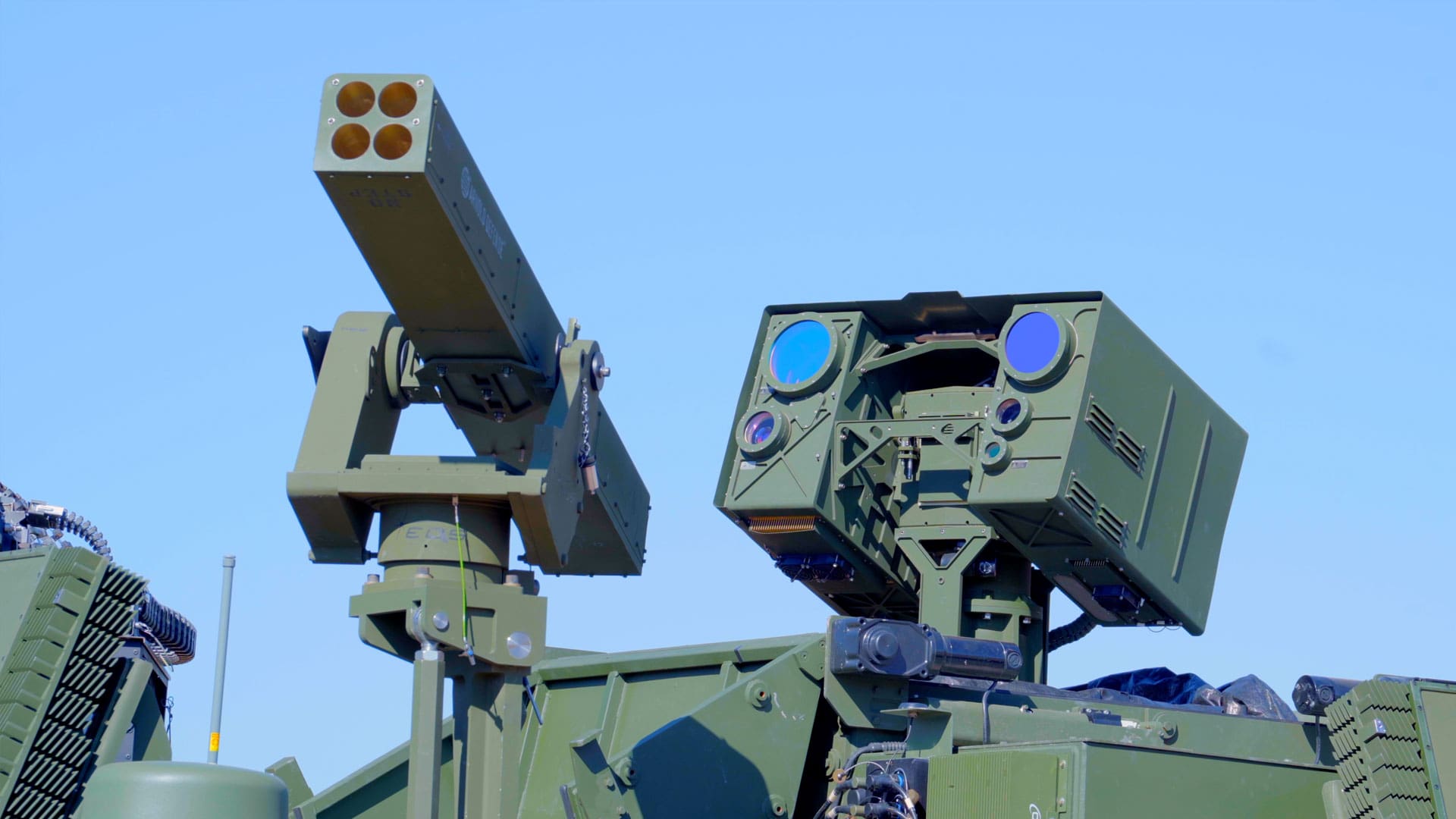
The recently reported directed energy demonstration at White Sands Missile Range shows that strategy starting to take share in real time. During the event, Secretary Hegseth took the controls of AV’s LOCUST® laser weapon system and defeated a drone within minutes after a brief introduction to the system. 

By directly participating in this kind of testing, Secretary Hegseth is doing more than observing another defense technology demonstration. He is helping demystify a class of weapons that many people still treat as futuristic, exotic, or experimental. For those of us who have spent years in this field, that matters. 

It also tells us something important about the weapon itself. 

Traditional air defense tests, especially kinetic interceptors, are rarely hands-on events for senior leaders.  

I’ve been a part of many of these events over the years and they are usually tense, highly choreographed, heavily instrumented exercises. Control rooms fill with engineers, range safety personnel, test directors, operators, telemetry specialists, and program officials.  

Everyone knows the stakes.  

A target is launched. Radars acquire it. Fire-control systems calculate firing solutions. An interceptor leaves the rail. Then everyone waits to see what happened. 

Senior leaders may attend. They may receive the briefing. They may watch the screens. But they usually do not pull the trigger. 

That is not a criticism of kinetic interceptors. It is the nature of the weapon.  

A missile shot is expensive, range-constrained, safety-intensive, and largely irreversible once launched. Before the test ever begins, there are extensive plans made around a potential misfire, a malfunction, or a debris event. The entire environment reflects the complexity and risk of putting a guided projectile into the air at high speed. 

What happened recently at White Sands, where AV’s LOCUST directed energy laser weapon system was fired by senior Pentagon officials, including Hegseth, represents a different paradigm. 

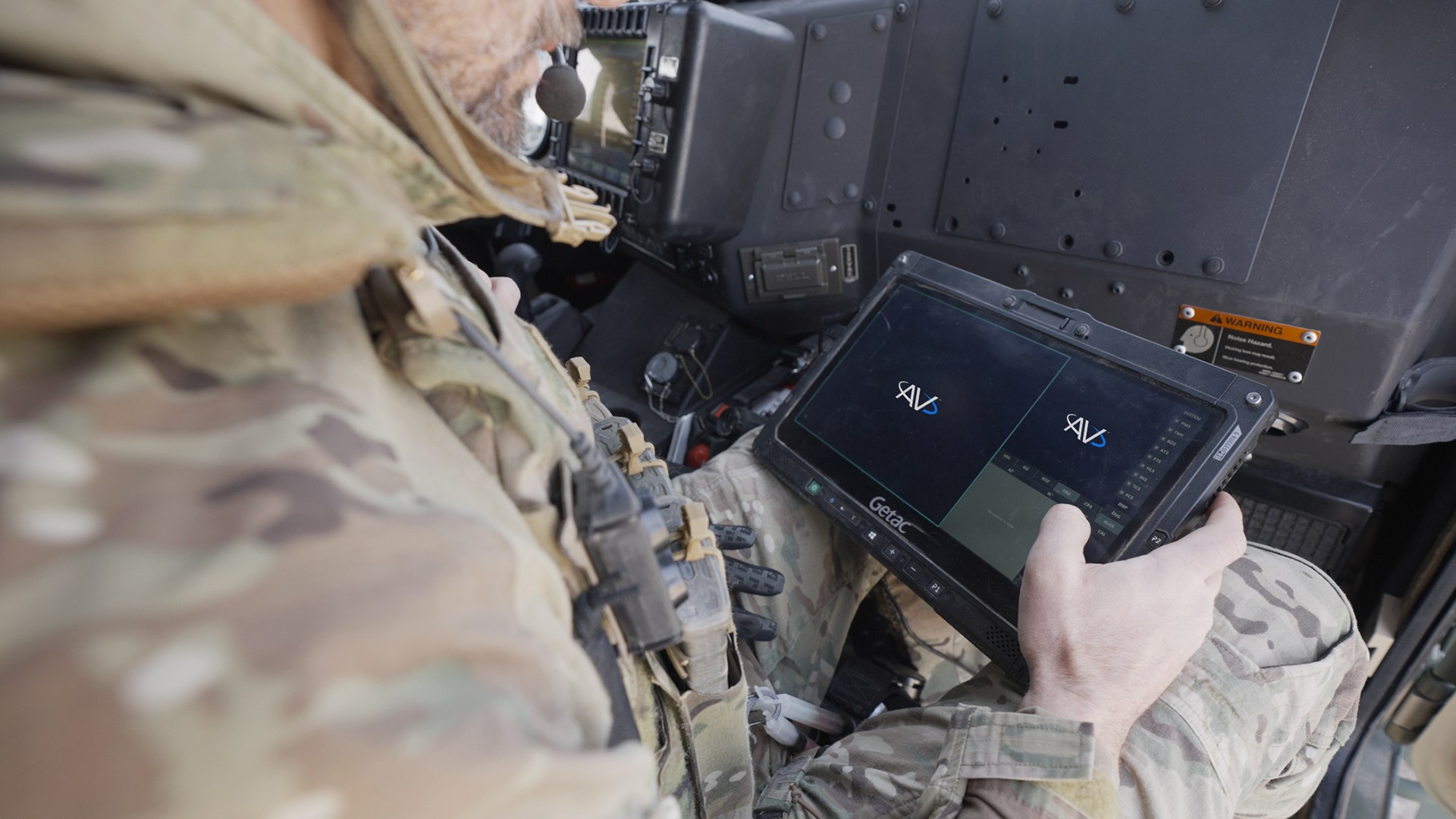
With directed energy, particularly AV’s LOCUST, senior leaders are not just watching an abstract engagement unfold on a screen. They can see the system. They can understand the engagement sequence. In some cases, they can directly participate in the act of operating the weapon by manipulating an intuitive XBOX gaming controller.  

Seamless integration of automation and artificial intelligence algorithms effortlessly guides the user’s hand to snap to the target. That is profoundly different from the traditional air defense test environment. 

And when you think about the drone threat, that difference matters. 

The unmanned aircraft threat is not terrifying because every drone is sophisticated. It is terrifying because so many are not. Commercially available drones are cheap, accessible, adaptable, and increasingly lethal in the hands of hostile actors. They do not require deep pockets, years of training, or a traditional defense industrial base to acquire and employ. 

That reality changes the problem. 

A threat that is cheap, numerous, and easy to use cannot be defeated only by systems that are expensive, scarce, and difficult to employ at scale. The countermeasure has to match the character of the threat. It has to be affordable. It has to be repeatable. It has to be trainable. It has to be safe enough to use in complex environments. And it has to be available when the next drone appears, not just when the magazine has been reloaded. 

That is where laser weapons, particularly AV’s LOCUST, are different. 

A directed energy laser weapon is technically sophisticated, but the engagement can be operationally intuitive. The system tracks the target. Engagement safety zones are tightly managed. The beam is precisely pointed. The effect is delivered at the speed of light. If the operator needs to engage again, the weapon can fire again. There is no interceptor to reload after every shot and no missile debris field to manage in the same way. 

These properties make laser weapons what I like to refer to as “unusually usable” for the C-UAS mission.  

And usability matters. 

It matters for training. It matters for confidence. It matters for safety. It matters for sustainment. It matters for cost. Most importantly, it matters for scale. A weapon that can be understood, trained, and operated repeatedly is a weapon that can move out of the demonstration lane and into the hands of warfighters. 

We’ve proven LOCUST in the field numerous times, including when we rolled it onboard the USS Bush and trained sailors who then shot down 100 percent of their targets after less than an hour of training. 

Having a laser weapon that is “unusually usable” also matters to the industrial base. 

Secretary Hegseth was clear in his posture statement that the Department needs a stronger and more consistent demand signal for directed energy weapons, not just for a handful of prototypes, but for production in meaningful quantities.  

That demand signal will not emerge if senior leaders, operators, acquisition officials, and policymakers continue to treat laser weapons as exotic technologies that only specialists can understand. 

Demand comes from confidence. 

Confidence comes from seeing the weapon work. It comes from understanding how it is employed. It comes from watching operators engage targets safely and repeatedly. And in some cases, it comes from experiencing the engagement first-hand. 

That is why the image of senior leaders engaging directly with directed energy is more than a photo opportunity. It is part of the demystification process Secretary Hegseth described. The point is not that dignitaries like firing lasers. Of course they do. 

The point is that they can. 

When a system like AV’s LOCUST can be demonstrated safely, repeatedly, and credibly in front of senior defense leaders, it shows that directed energy is no longer just a technology to be explained by specialists in a control room. It is becoming a weapon that operators can understand by using. 

For counter-UAS missions, that is exactly what the moment requires. 

The drone threat is scaling. The demand signal for directed energy has to scale with it. And before the Department can buy laser weapons in meaningful numbers, it has to become comfortable treating them not as mysteries, but as practical air defense tools. 

Demystifying directed energy does not start in a policy memo or a fancy PowerPoint slide; it starts at the trigger. 

ABOUT THE AUTHOR  

Aaron Westman is an engineer and leader specializing in counter-UAS and directed energy systems. He has played a key role advancing mobile laser weapon integration and operational deployment, supporting a variety of cross-domain capabilities that improve precision engagement and layered air defense. 

JOIN THE AV MISSION 

AV isn’t for everyone. We hire the curious, the relentless, the mission-obsessed. The best of the best. 

We don’t just build defense technology—we redefine what’s possible. As the premier autonomous systems company in the U.S., AV delivers breakthrough capabilities across air, land, sea, space, and cyber. From AI-powered drones and loitering munitions to integrated autonomy and space resilience, our technologies shape the future of warfare and protect those who serve. 

Founded by legendary innovator Dr. Paul B. MacCready, Jr., AV has spent over 50 years pushing the boundaries of what unmanned systems can do. Our heritage includes seven platforms in the Smithsonian—but we’re not building history, we’re building what’s next. 

If you’re ready to build technology that matters—with speed, scale, and purpose—there’s no better place to do it than AV. 

EXPLORE OPPORTUNITIES 


Let’s Advance Your Mission

Product Catalog

View the full catalog to explore our solutions in detail.

Thought Leadership

MILESTONES AT WHITE SANDS, Driscoll’s Test, The FAA and DoW’s Landmark Safety Agreement

Major paradigm shifts in defense do not announce themselves with fanfare. They show up as milestones. 

Last week, at White Sands Missile Range in New Mexico, Army Secretary Dan Driscoll climbed behind AV’s LOCUST®-powered vehicle and personally tested the Army’s directed-energy capability 

To some, it may have looked like a routine demonstration. For those of us who have spent our careers advancing laser weapon systems, it represents something far more significant: a turning point. 

For AV’s LOCUST-powered AMP-HEL system, the event marks another step toward a capability that is operational, deployable, scalable, and increasingly real in the minds of the Army and the American public alike. Lasers are no longer a future concept.  

They have arrived. 

Around the same time, another milestone at White Sands quietly arrived with far less attention. 

On April 10, the FAA and Department of War signed a landmark safety agreement creating a path for counter-drone laser systems to operate in coordination with civil aviation. This agreement followed another LOCUST-powered milestone, when the JIATF-401 tapped AV’s laser weapons system for testing at White Sands to help create the framework for that agreement.  

That agreement establishes where lasers can be used, how operators avoid conflicts with aircraft, and how these systems can be deployed safely and predictably 

That might sound bureaucratic. It is not. 

Together, those tests at White Sands, both Driscoll’s turn on the X-Box style controller and the FAA agreement, point to something larger: laser weapons are beginning to move from research and development to operational reality in broad daylight and on a wider scale. 

And history suggests this moment matters. 

America Wins When It Moves Technology Into Use 

The United States has always excelled at invention. But invention alone has never been the advantage. 

The internet emerged from defense-backed research. The space race created technologies that became foundational to the modern economy, from GPS to satellite communications. In every case, the pattern was the same: innovation mattered because America applied it, tested it, improved it, and scaled it. 

Which brings us to lasers. 

For years, the biggest obstacle to counter-drone laser systems was not the technology itself. It was the question of how to safely operate these systems in shared airspace. 

Since lasers interact directly with the atmosphere, legitimate concerns about aviation safety, sensor interference, and unintended exposure slowed broader operational use. 

That is why the FAA agreement matters so much. It represents a shift in the conversation from Can we make this technology work? to Can we deploy and scale it safely?  

And that shift is everything. 

The Jenny Lesson 

History offers a useful comparison. 

Most people assume American aviation dominance began with the Wright brothers. In truth, progress stalled after the Wright Flyer and Europe surged ahead. 

The turning point was not another invention. It was use. 

The Curtiss JN-4 “Jenny,” a relatively simple aircraft, flew real missions during General John J. Pershing’s expedition against Pancho Villa along the Southwest border. It was imperfect, but operational. And because it was operational, the United States gained trained personnel, institutional experience, and the foundation to scale aviation. 

By the time World War I arrived, America was no longer starting from zero. 

The lesson feels familiar. 

America invented the laser and has led directed-energy research for decades, from ABL and THEL to operational systems like LaWS. Yet, widespread deployment has lagged. We have proven concepts, but struggled to transition them into scalable capability. Meanwhile, competitors are moving quickly. 

Which is why these two moments at White Sands matter. 

When senior leaders are personally testing systems and regulatory frameworks begin to enable operational use, the conversation changes. The milestone is no longer scientific feasibility. It becomes operational adoption. 

What comes next is not another science project. 

It is demand. 

From Experimentation to Production 

A clear regulatory framework enables procurement. Procurement enables production. Production drives reliability, lower cost, stronger supply chains, and operational scale. 

This is how industries mature. 

Small drones are becoming cheaper, more capable, and more common. Homeland security, airspace protection, military installations, and critical infrastructure increasingly need affordable, scalable counter-drone defenses. 

Laser systems will not matter because they are novel, but because they become usable, trusted, and deployable. 

That is what milestones like White Sands and the FAA agreement may ultimately represent: the beginning of the transition from experimentation to production. 

The Window Is Open 

The United States still holds a strong position in directed energy, but history offers a warning: inventing a technology does not guarantee leadership in using it. 

Leadership comes from recognizing inflection points and acting on them. 

Driscoll’s White Sands test was a milestone. The FAA agreement was another. 

Neither milestone guarantees success. 

But together, they suggest something important: America may finally be building the conditions for laser systems to move from the lab to the field at scale.  

ABOUT THE AUTHOR  

Aaron Westman is an engineer and leader specializing in counter-UAS and directed energy systems. He has played a key role advancing mobile laser weapon integration and operational deployment, supporting a variety of cross-domain capabilities that improve precision engagement and layered air defense.  

JOIN THE AV MISSION  

AV isn’t for everyone. We hire the curious, the relentless, the mission-obsessed. The best of the best.  

We don’t just build defense technology—we redefine what’s possible. As the premier autonomous systems company in the U.S., AV delivers breakthrough capabilities across air, land, sea, space, and cyber. From AI-powered drones and loitering munitions to integrated autonomy and space resilience, our technologies shape the future of warfare and protect those who serve.  

Founded by legendary innovator Dr. Paul B. MacCready, Jr., AV has spent over 50 years pushing the boundaries of what unmanned systems can do. Our heritage includes seven platforms in the Smithsonian—but we’re not building history, we’re building what’s next.  

If you’re ready to build technology that matters—with speed, scale, and purpose—there’s no better place to do it than AV.  

EXPLORE OPPORTUNITIES 


Let’s Advance Your Mission

Product Catalog

View the full catalog to explore our solutions in detail.

Thought Leadership

100-Percent: LOCUST’s First Day at Sea

04/28/2026

By Mary Clum and John Garrity

When most people picture a shipboard laser weapon, they likely imagine a massive, bulky system—welded into the hull and fixed in place.

That’s not what we brought aboard USS George H.W. Bush.

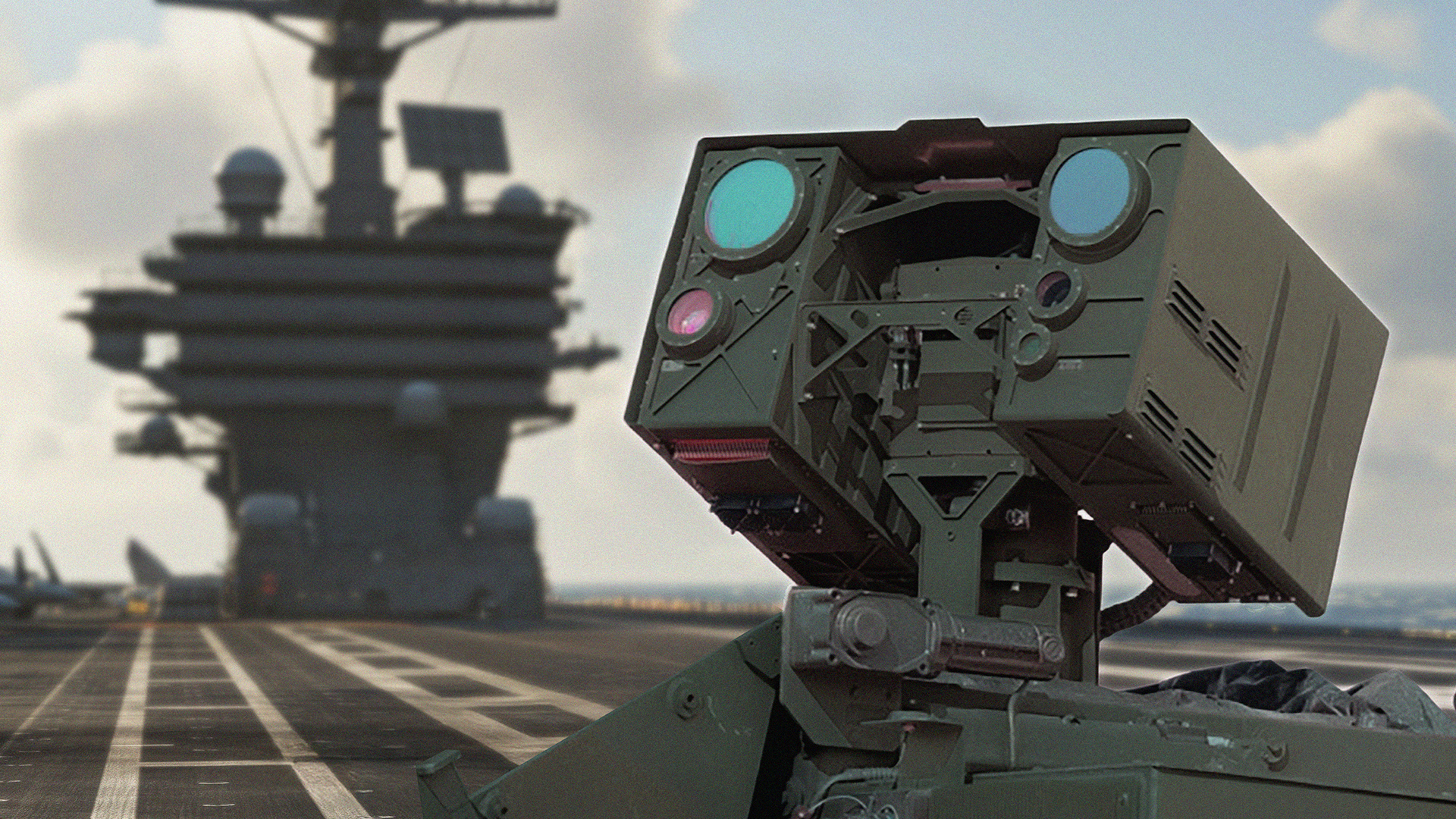
For a single day at sea, AV’s palletized LOCUST® laser weapon system was forklifted onto the flight deck, enabling a live-fire exercise that demonstrated its performance in real-world operational conditions. The system was powered from the ship, operated by sailors with less than an hour of training, and engaged every target presented. Every single target was destroyed. 100 percent success.

For the Navy, it was a first look at what our containerized, “roll‑on/roll‑off” laser weapon, LOCUST, can really do. For us, it was the payoff from years of work in directed energy—and a hint of where this technology is going.

From Bolted‑In Experiments to Roll‑On Capability

The Navy’s early laser efforts focused on high‑power systems integrated into the ship, hard‑wired into the hull and power system. Those programs taught us a lot, but they also revealed constraints: if the ship goes into maintenance, the weapon does too; if the laser needs upgrades, you work around the ship; moving capability between hulls is slow and costly.

Meanwhile, counter‑UAS was becoming a daily operational problem. The Army had proven that palletized, truck‑mounted lasers could consistently defeat small drones in harsh environments. The natural question was: could that same modular, field‑ready architecture work at sea?

AV’s mission? Prove it viable at sea.

Turning a Land System into a Sea System

On paper, we took a standard palletized LOCUST system—the same basic architecture used on land—and operated it from a carrier. In reality, we had to solve three sets of problems.

First, marinization. The LOCUST variant used on USS Bush was built on our Army fielded design, but carrier life demands more:

  • Hardened electronics for salt fog, humidity, vibration, and long deployments
  • Stabilization hardware to manage ship motion
  • Sealing and environmental protection so the system would be ready whenever it was needed
  • A laser weapon system that delivers precise, low-collateral effects—enhancing ship self-defense while minimizing risk to nearby personnel, platforms, and flight operations.

We implemented a series of hardware upgrades focused on these issues. Our software and tracking heritage, including work on the Optical Dazzling Interdictor, Navy, or ODIN, meant the control stack already reflected decades of naval experience. The emphasis here was making a proven laser weapon reliable at sea, not reinventing it.

Second, roll‑on/roll‑off. The Navy has been clear: it wants containerized, movable weapons. On USS Bush, LOCUST was:

  • Forklifted onto the flight deck in palletized form
  • Positioned in a location that required pausing normal flight operations during the test window
  • Forklifted back off once the demonstration ended so the carrier could resume its standard tempo

We wanted to show that a high‑energy laser could arrive as a containerized asset, fight, and then get out of the way. That flexibility—roll on, roll off—is exactly what the Navy has been signaling in its public comments on containerized systems.

Third, safety and integration. However, bringing a laser weapon onto a carrier isn’t just a technical question. The Navy reviewed how the system would be brought aboard, powered, and operated safely alongside flight deck activity and other systems. Working through that set of questions created a path not just for this event, but for future containerized deployments.

One Day, 100 Percent Successful Engagements

The test window aboard USS Bush lasted one day. Within that day, three things mattered most: effectiveness, repeatability, and usability.

Effectiveness was straightforward. LOCUST targeted, tracked and defeated every single small unmanned aircraft target and defeated all threats flown. 100 percent success. For any counter‑UAS system, kinetic or non‑kinetic, a 100 percent success rate in live testing is notable. For a palletized laser operating from a carrier, it was a clear signal: the technology is ready.

Repeatability came from the laser’s basic economics. Every engagement consumed electricity, not interceptors. In a kinetic system, these defeats would have meant that dozens of interceptors would have been expended, with all the associated production, storage, and resupply burden. With LOCUST, the system drew power from the ship, recharged, and was ready for the next shot. On a nuclear‑powered carrier, that’s a natural fit: high‑volume defense without an exponential logistics tail.

The most important part, though, was usability. Roughly half the engagements were executed by sailors—from enlisted operators up through senior officers, including flag leadership. Training time was measured in tens of minutes.

Within about an hour of using the system, sailors who had never fired a laser weapon before were acquiring targets, working the interface, and making successful engagements. That’s what it looks like when directed energy stops being a lab project and becomes a practical tool.

What It Meant for the Navy—and for Us

For the Navy, the USS Bush demonstration answered key questions that need to be addressed as technology transitions from labs to the field. Most important of all, the demo showed that a containerized laser weapon can operate effectively from a carrier without being permanently integrated into the ship. The demo also showed the Navy that training for these new systems can be straight forward and quickly implemented for sailors.

For AV, this demo validated a design philosophy that has been guiding this program over the last five years: Start with a modular, platform‑agnostic architecture and leverage decades of naval tracking and control experience to harden the system for the environment and let real operators use it. In working with the Navy during this demonstration, valuable lessons learned were gained of how to make the next generation of LOCUST Laser Weapon Systems tailored for the Navy. It also underscored where the technology is going. Across the services, modalities, and environments, interest in directed energy—especially for counter‑UAS—is now reflected in budgets, not just briefings. The center of gravity is shifting from one‑off demos to production and fielding.

Looking forward, we are laser-focused (pun intended) on scaling LOCUST production to meet the needs while continuing ruggedization and spiral upgrades for long‑duration maritime deployments. This should help us to provide evolving containerized variants tailored for the Navy and partners in maritime environments.

Lasers in the Layered Defense

Directed energy won’t replace every other effector, and it shouldn’t. RF systems, guns, and kinetic interceptors are all essential parts of a layered defense and sea deployments are no exception.

But against high volumes of small, inexpensive unmanned systems at sea, a containerized, ship‑powered laser offers something unique: very low marginal cost per shot, effectively bottomless “magazine” tied to ship power, modular deployment across platforms, and rapid usability by sailors.

On USS George H.W. Bush, that combination translated into a simple outcome: a laser weapon rolled onto the flight deck, powered up, trained its first Navy operators, hit 100-percent of the targets, and rolled back off.

ABOUT THE AUTHOR

John Garrity is an engineer and defense technology leader specializing in directed energy and counter-UAS systems. He has helped advance high-energy laser integration, fielding scalable solutions that enhance precision engagement, air defense, and layered protection across complex operational environments.

Mary Clum is a defense technology executive leading space, cyber, and directed energy initiatives. With more than 25 years of experience across AV, BlueHalo, and Raytheon, she has driven the development and deployment of advanced mission systems, guiding highly technical programs from innovation through operational fielding in support of national security.

JOIN THE AV MISSION

AV isn’t for everyone. We hire the curious, the relentless, the mission-obsessed. The best of the best.

We don’t just build defense technology—we redefine what’s possible. As the premier autonomous systems company in the U.S., AV delivers breakthrough capabilities across air, land, sea, space, and cyber. From AI-powered drones and loitering munitions to integrated autonomy and space resilience, our technologies shape the future of warfare and protect those who serve.

Founded by legendary innovator Dr. Paul B. MacCready, Jr., AV has spent over 50 years pushing the boundaries of what unmanned systems can do. Our heritage includes seven platforms in the Smithsonian—but we’re not building history, we’re building what’s next.

If you’re ready to build technology that matters—with speed, scale, and purpose—there’s no better place to do it than AV.

EXPLORE OPPORTUNITIES


Let’s Advance Your Mission

Product Catalog

View the full catalog to explore our solutions in detail.

LOCUST TATS

03/30/2026

Locust Tats

Domains

Solutions

Let’s Advance Your Mission

Product Catalog

View the full catalog to explore our solutions in detail.