
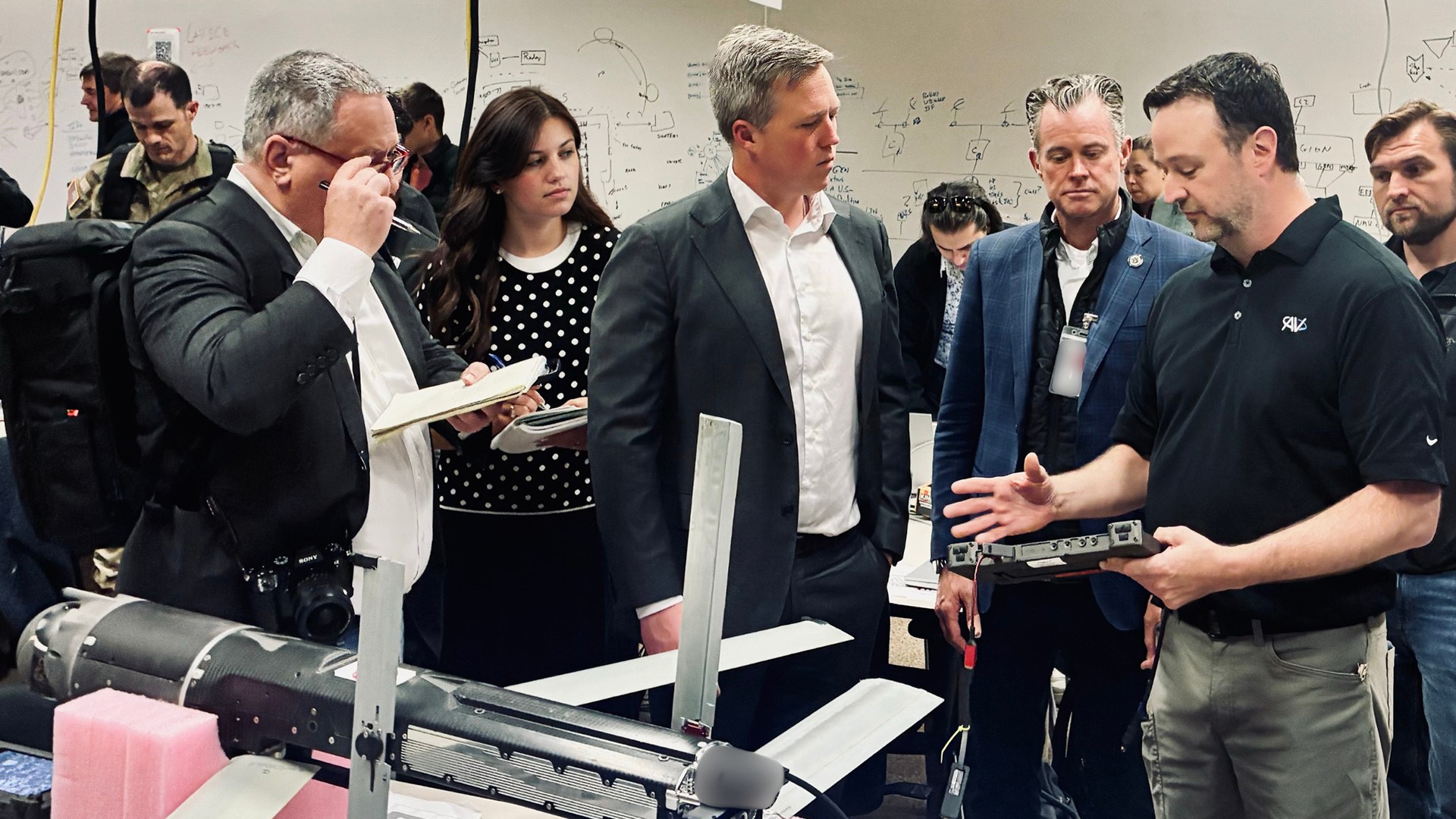
The defense industry just received an early look at its own future, and it arrived under the banner of Operation Jailbreak, a U.S. Army hackathon that brought together hundreds of engineers across our industry to expose the gaps in sharing data across systems.
What I witnessed firsthand at Fort Carson this spring was not just another interoperability demo; it was a proof point that open architectures and published APIs are moving from talking points to hard requirements. For the defense technology industry, the message is clear: integration can no longer depend on heroic, one-off events. It has to be designed into systems from day one.
Building the Software Bridge
The most important thing about Operation Jailbreak is that it was, by design, a bridge-building exercise. The Army asked industry to do something that has traditionally been painful and slow: connect legacy command-and-control (C2) architectures, autonomous systems, and sensors through a common, well-documented interface.
For this sprint, that bridge took the form of a complete, published software interface:
- Synchronous REST/HTTP APIs for command, configuration, and status.
- Asynchronous event and telemetry channels over WebSocket or publish–subscribe patterns.
- High-performance gRPC/Protocol Buffers for low-latency, time-sensitive data exchange.
- Formal specifications, including OpenAPI, AsyncAPI, and Protocol Buffer definitions, that compliant platforms could consume without a closed-door integration effort.
The AV_Halo™ COMMAND submission covered node discovery, telemetry, and flight actions across these protocol layers. During the sprint, AV_Halo COMMAND was used to connect the Switchblade® 400 from the Army’s Integrated Battle Command System – Maneuver (IBCS-M) without custom one-off integrations on either side.
What It Signaled to Industry
Operation Jailbreak made several points explicit.
- First, interoperability is now a design requirement, not a future enhancement. The Right to Integrate initiative sets the expectation that open interfaces, documented APIs, and Modular Open Systems Approach (MOSA) principles are prerequisites for participation, not optional differentiators.
- Second, the Army is shifting the burden of integration away from the warfighter and into the architecture. Army Chief Technology Officer Alex Miller has described the challenge bluntly: for too long, warfighters have been forced to serve as the integration point between disconnected systems. In an environment characterized by information overload, contested domains, and compressed decision timelines, that approach does not scale.
- Third, success will be measured less by the sophistication of any one system and more by how quickly that system can be integrated into a larger operational context. Army leadership has started to frame isolated, closed capabilities as a form of capability debt: impressive on their own but limiting when they cannot participate in a networked fight.
The Army’s emerging API marketplace, and its intent to make published interfaces and MOSA compliance contractual requirements, formalize this direction. Defense software is beginning the same transition that commercial platforms made years ago: ecosystems grow around specifications, not claims of openness.
A First Bridge, Not the End State
It is important to recognize what Operation Jailbreak was, and what it was not. It was a focused event where government and industry deliberately built the software bridge between legacy and modern systems under a clear set of constraints and success criteria. That bridge was necessary, and it worked.
But the long-term objective is not to hold recurring bridge-building events on every program. The objective was to encourage a different way of thinking: design future systems so that these bridges are inherent, not exceptional.
Operation Jailbreak provided the testing ground for this new way of thinking. Using specifications and disciplined architectures with modern APIs, integration timelines can collapse from months to days compared to traditional integrations using interface control documents (ICDs). Our own experience proved that to be true. AV achieved jailbroken status in just four days by integrating AV_Halo COMMAND’s open APIs, enabling status monitoring and high-level behavioral control from IBCS-M through AV-connected systems at the tactical edge.
Operation Jailbreak should be remembered as the first proof point of the operating model to come, and this level of connectivity should be the expectation, not the exception.
What Built-In Interoperability Should Look Like
If industry gets this right, the next generation of systems will not require ad hoc software bridges to connect into the fight. Instead, they will arrive with published, machine-readable APIs covering the full functional surface area; support for multiple interface patterns aligned with real operational use cases; and security architecture designed from the outset for shared, controlled access.
They will also include requirements and test cases tied directly to interface specifications and validated continuously, not just at milestone events. Equally important, they will be built for mixed, multi-vendor environments where collaboration is normal rather than exceptional.
Operation Jailbreak showed what happens when engineers from different organizations work side by side with soldiers and acquisition teams to integrate real systems while solving real mission problems such as counter-UAS and battlefield data sharing. That level of transparency and shared problem-solving needs to move from rare to routine.
The Path Ahead
For my team here at AV, Operation Jailbreak did not force a change in direction; it validated a strategy already centered on openness, modularity, and rapid integration. AV_Halo was built around the belief that future missions will be defined by how well systems work together, not how impressive they appear in isolation.
What Operation Jailbreak added was urgency. It clarified that the organizations that can integrate quickly, share data securely, and adapt software at operational tempo will be the ones that matter most on the modern battlefield.
For industry, the path forward is straightforward: design for integration as a primary requirement, publish interfaces with the same rigor applied to core mission software, and recognize that value increasingly comes from how well a system plugs into the larger architecture. For government, the task is equally clear: continue pushing openness into contracts, reward architectures that reduce operator burden and integration time, and keep creating venues where real systems can be integrated, tested, and iterated with soldiers in the loop.
Operation Jailbreak showed that when the right people, architectures, and incentives come together, the integration problem looks less like a barrier and more like a solvable engineering task. The next challenge is to make that solvable task the new normal rather than a once-a-year event.
ABOUT THE AUTHOR
Scott Bowman is AV’s Chief Technology Officer and Senior Vice President of Global Engineering, leading the company’s technical strategy and engineering organization. With more than 18 years of experience, he specializes in robotics, autonomous systems, software, RF systems, and open architecture technologies that enable interoperable, mission-ready uncrewed systems for defense customers.
JOIN THE AV MISSION
AV isn’t for everyone. We hire the curious, the relentless, the mission-obsessed. The best of the best.
We don’t just build defense technology—we redefine what’s possible. As the premier autonomous systems company in the U.S., AV delivers breakthrough capabilities across air, land, sea, space, and cyber. From AI-powered drones and loitering munitions to integrated autonomy and space resilience, our technologies shape the future of warfare and protect those who serve.
Founded by legendary innovator Dr. Paul B. MacCready, Jr., AV has spent over 50 years pushing the boundaries of what unmanned systems can do. Our heritage includes seven platforms in the Smithsonian—but we’re not building history, we’re building what’s next.
If you’re ready to build technology that matters—with speed, scale, and purpose—there’s no better place to do it than AV.