News

AV Awarded $20 Million Contract to Advance Ceramic Materials Research for the U.S. Air Force and Space Force

05/28/2026

BJ Koubaroulis, Corporate Communications Specialist

ARLINGTON, Va. – May 28, 2026 – AeroVironment, Inc. (“AV”) (NASDAQ: AVAV), a global leader in defense technology innovation, today announced it has been awarded a $20 million Ceramics Advanced Materials and Processes (CAMP) contract by the Air Force Research Laboratory (AFRL) Materials and Manufacturing Directorate to advance next-generation ceramic and ceramic matrix composite materials (CMCs) for extreme aerospace and defense applications supporting the U.S. Air and Space Forces. 

Under the 39-month contract, AV’s materials experts will partner with AFRL scientists and engineers at Wright-Patterson Air Force Base in Dayton, Ohio, to accelerate development, field advanced capabilities faster, and strengthen mission readiness while reducing lifecycle costs. The team will apply advanced additive manufacturing, three-dimensional (3D) printing, and sensor integration techniques to create lightweight, thermally resilient structures—such as high speed aerodynamic vehicles, turbine engines, rocket propulsion systems, transparent armor, thermal-protection tiles, and nozzle extensions—designed to perform in the most extreme environments. 

“CAMP represents a vital investment in technologies that will preserve America’s advantage across air and space domains,” said Johnathan Jones, Senior Vice President of Cyber and Mission Solutions at AV. “By advancing the next generation of high-temperature materials and manufacturing processes, we will deliver capabilities that enhance mission readiness, extend operational endurance, and strengthen the technological superiority of our Air and Space Forces.” 

Research conducted under the CAMP program will advance next-generation ceramics through precursor synthesis and processing, novel fabrication and design methods, microstructural characterization, and advanced modeling to better predict performance and durability. The effort will span the full lifecycle of material innovation, integrating embedded sensors for real-time health monitoring and developing multifunctional ceramics for aerospace, space, energy, and defense applications—from satellite propulsion and helicopter armor to ultra-efficient energy systems and advanced sensors. 

“Collaborations with our customers are at the heart of what we do,” said Dr. John Hogan, Vice President of Defense and Interagency Service at AV. “Through the CAMP program, we’re not just developing better ceramics—we’re creating the materials foundation for the future of flight and space operations. This collaboration ensures our research directly supports mission readiness, durability, and operational effectiveness for the Air and Space Forces.” 

About AV 

AeroVironment (“AV”) (NASDAQ: AVAV) is a defense technology leader delivering integrated capabilities across air, land, sea, space, and cyber. The Company develops and deploys autonomous systems, loitering munitions, counter-UAS technologies, space-based platforms, directed energy systems, and cyber and electronic warfare capabilities—built to meet the mission needs of today’s warfighter and tomorrow’s conflicts. At the core of these technologies lies AV_Halo™, a modular, mission-ready suite of AI-powered software tools that empowers warfighters and enables full-battlefield dominance: detect, decide, deliver. With a national manufacturing footprint and a deep innovation pipeline, AV delivers proven systems and future-defining capabilities at speed, scale, and operational relevance. For more information, visit www.avinc.com. 

Safe Harbor Statement 

Certain statements in this press release may constitute “forward-looking statements” as defined in the Private Securities Litigation Reform Act of 1995. These statements are based on current expectations, forecasts, and assumptions that involve risks and uncertainties, which could cause actual results to differ materially. Factors that may cause such differences include, but are not limited to, our ability to perform under existing contracts and obtain new ones; regulatory changes; competitor activities; market growth; product development challenges; and general economic conditions. For a more detailed discussion of these risks, please refer to AeroVironment’s filings with the Securities and Exchange Commission. We undertake no obligation to update forward-looking statements as a result of new information or future events. 

///////////////////////////////////////////////////////////////////////////////////////////////////// 

For additional media and information, please follow us: 


Media Contact:  

BJ Koubaroulis  
pr@avinc.com 

703.718.4060 


Investor Contact:  

Denise Pacioni 

ir@avinc.com 

805.795.4108 

Domains

Capabilities

Let’s Advance Your Mission

Product Catalog

View the full catalog to explore our solutions in detail.

News

AV Expands Huntsville Facility to Accelerate Production of Next-Generation Freedom Eagle-1 Interceptor

05/26/2026

BJ Koubaroulis, Corporate Communications Specialist

Facility expansion positions AV to scale production, accelerate fielding, and provide cost-effective defense against mass aerial threats 

ARLINGTON, Va., May 26, 2026 – AeroVironment, Inc. (“AV”) (NASDAQ: AVAV), a global defense technology leader, today announced an additional government investment of $20.2 million in AV’s Huntsville, Alabama facility to increase quantities of Low-Rate Initial Production (LRIP) and accelerate future Full-Rate Production (FRP) of the Next-Generation Counter-Unmanned Aircraft System Missile (NGCM), known as Freedom Eagle-1 (FE-1). 

The expanded site will serve as the system-level integration, manufacturing, and production hub for FE-1, enabling rapid scale-up of interceptor production and accelerated delivery timelines to meet urgent U.S. Army and Combatant Command operational needs.  

The 24,000-square-foot expansion and associated job growth in Huntsville reflect AV’s continued investment in meeting evolving national security demands for subsonic missiles while strengthening cost-effective production capacity, driving innovation, and supporting on-time delivery. 

“Growing our presence in Huntsville places AV more firmly at the center of the Army’s air and missile defense ecosystem, enabling tighter integration, faster iteration, and more efficient production at scale,” said Wahid Nawabi, Chairman, President and Chief Executive Officer at AV. “That proximity is critical as we begin production of Freedom Eagle-1, a system designed to deliver a scalable, cost-effective response to increasingly complex and high-volume aerial threats.” 

The investment builds on AV’s recent selection and $95.9 million contract award under the U.S. Army’s NGCM and Long-Range Kinetic Interceptor (LRKI) programs, executed through the U.S. Army Combat Capabilities Development Command Aviation & Missile Center (CCDC AvMC) and the Aviation & Missile Technology Consortium (AMTC), and marks the next phase in transitioning Freedom Eagle-1 from development to scaled production and operational fielding. 

In March, AV announced a $97 million contract to design and integrate prototype test environments for next-generation missile defense sensor testing at Redstone Arsenal — a Huntsville-based federal center that is home to more than 70 organizations, including NASA, the FBI, Missile Defense Agency, Army Program Acquisition Executive Fires, and the future U.S. Space Command headquarters. 

“This expansion is a critical step in scaling production of Freedom Eagle-1 and accelerating its delivery to the field,” said Jimmy Jenkins, Executive Vice President of AV’s Precision Strike and Defense Systems Group. “By increasing manufacturing capacity, strengthening integration, and enabling production at volume, we’re delivering a cost-effective interceptor designed to counter increasingly complex and high-volume aerial threats.” 

Freedom Eagle-1 is designed to address these challenges with a combination of performance and affordability. The system is a low-cost, high-performance interceptor capable of neutralizing Groups 2 and 3 UAS while maintaining residual capability against Group 1 UAS, fixed-wing, and rotary-wing aircraft, with increased lethality, extended range, and rapid launch capabilities. 

The system has achieved several key development milestones, including a successful live-fire demonstration of its dual-thrust solid rocket motor, controlled test vehicle launches, and warhead testing, demonstrating technical maturity and reduced risk as the program transitions toward field deployment. 

“As the nation’s defense and security demands increase, it is crucial that we meet capability needs, and there is no better place for AV’s expansion as Alabama continues to lead in defense manufacturing and innovation,” said Congressman Robert Aderholt (AL-04). 

The expansion in Huntsville also reflects AV’s broader strategy to scale domestic manufacturing capacity, following a recent announcement of a $30 million expansion of its Albuquerque, New Mexico campus, a move that is expected to generate more than $670 million in economic impact over the next decade, create more than 450 high-wage jobs, and boost production of mission-critical defense and space technologies. 

About AV 

AeroVironment (“AV”) (NASDAQ: AVAV) is a defense technology leader delivering integrated capabilities across air, land, sea, space, and cyber. The Company develops and deploys autonomous systems, loitering munitions, counter-UAS technologies, space-based platforms, directed energy systems, and cyber and electronic warfare capabilities—built to meet the mission needs of today’s warfighter and tomorrow’s conflicts. At the core of these technologies lies AV_Halo™, a modular, mission-ready suite of AI-powered software tools that empowers warfighters and enables full-battlefield dominance: detect, decide, deliver. With a national manufacturing footprint and a deep innovation pipeline, AV delivers proven systems and future-defining capabilities at speed, scale, and operational relevance. For more information, visit www.avinc.com. 

Safe Harbor Statement 

Certain statements in this press release may constitute “forward-looking statements” as defined in the Private Securities Litigation Reform Act of 1995. These statements are based on current expectations, forecasts, and assumptions that involve risks and uncertainties, which could cause actual results to differ materially. Factors that may cause such differences include, but are not limited to, our ability to perform under existing contracts and obtain new ones; regulatory changes; competitor activities; market growth; product development challenges; and general economic conditions. For a more detailed discussion of these risks, please refer to AeroVironment’s filings with the Securities and Exchange Commission. We undertake no obligation to update forward-looking statements as a result of new information or future events. 

///////////////////////////////////////////////////////////////////////////////////////////////////// 

For additional media and information, please follow us: 


Media Contact:  

BJ Koubaroulis  
pr@avinc.com 

703.718.4060 


Investor Contact:  

Denise Pacioni 

ir@avinc.com 

805.795.4108 


Domains

Let’s Advance Your Mission

Product Catalog

View the full catalog to explore our solutions in detail.

News

AV Expands AV_Halo™ Platform with INSTINCT and DETECT to Enable Faster, Resilient Decision-Making at the Edge

05/19/2026

BJ Koubaroulis, Corporate Communications Specialist

Extending AV_Halo with distributed autonomy and resilient RF sensing to enable faster decisions and mission execution in denied environments 

ARLINGTON, Va., May 19, 2026 — AeroVironment, Inc. (“AV”) (NASDAQ: AVAV), a global defense technology leader, today announced the two latest additions to its AV_Halo™ unified mission software platform: AV_Halo INSTINCT, a next-generation autonomy framework for multi-platform uncrewed systems (UxS), and AV_Halo DETECT, an advanced radio frequency (RF) sensing and security solution for contested and denied environments. 

The announcement was made today at SOF Week in Tampa, Florida, where defense leaders and special operations forces are focused on advancing capabilities for contested, multi-domain operations. 

Together, INSTINCT and DETECT expand AV_Halo’s role as a modular, open-architecture ecosystem, delivering synchronized autonomy, resilient sensing, and faster, more informed decision-making across intelligence, surveillance, and reconnaissance (ISR), loitering, strike, and counter–Unmanned Aircraft System (C-UAS) missions. 

“In an era of contested communications and proliferated autonomy, advantage goes to the force that can decide and act faster at the edge,” said Wahid Nawabi, Chairman, President, and Chief Executive Officer at AV. “INSTINCT and DETECT fundamentally change that equation, combining distributed autonomy with resilient sensing so forces can see earlier, decide with confidence, and execute in real time, even when networks are degraded or denied. This is about compressing the time from detection to action while preserving mission effectiveness in the most challenging environments.” 

AV_Halo INSTINCT is a next-generation autonomy software framework engineered to empower military forces with superior multi-platform Uncrewed System (UxS) command and control (C2). Designed with rigorous input from operational experts, INSTINCT delivers distributed, collaborative mission execution for new and legacy platforms across Intelligence, Surveillance, and Reconnaissance (ISR), loitering, counter- Uncrewed Aircraft System (C-UAS) and precision strike profiles with C2 integration. 

Benefits of INSTINCT: 

  • Reduces operator workload, enabling focus on mission intent over platform control  
  • Natural language tasking for faster, more intuitive command and control  
  • Integrates with AV_Halo MENTOR to accelerate training and Tactics, Techniques, and Procedures (TTP) development with realistic, multi-level simulation 
  • Modular, MOSA-based architecture for rapid integration and deployment on SWaP-C constrained systems  
  • Mission-proven performance in major U.S. military operations across contested, multi-domain environments 

AV_Halo DETECT is a breakthrough RF spectrum sensing and networking software suite designed to empower both new and legacy unmanned platforms with advanced communications and mission autonomy. It is engineered with the mission-critical demands of distributed Intelligence, Surveillance, and Reconnaissance (ISR), loitering, and precision strike operations in mind. DETECT seamlessly integrates with AV_Halo COMMAND, enabling rapid autonomous response informed by real-time threat perception, even in the most challenging and contested environments. 

Benefits of DETECT: 

  • AI-driven RF Detection enables automatic threat identification and location 
  • Scalable, layered security that complements and enhances existing perimeter systems  
  • Resilient under electronic attack, maintaining detection, comms, and localization  
  • Seamless integration with radar, cameras, access control, and C2 systems  
  • Fills gaps in legacy security architectures for true defense-in-depth  
  • Enterprise-ready, with support, training, and customization to scale with mission needs 

“INSTINCT and DETECT reflect a shift toward integrated autonomy and sensing within a single, open ecosystem,” said Scott Bowman, Chief Technology Officer and Vice President of Global Engineering at AV. “By distributing intelligence across platforms and delivering a resilient RF picture of the battlespace, we enable customers to integrate faster, adapt tactics rapidly, and maintain operational advantage.” 

Today’s announcement comes less than six months after AV rolled out CORTEX and MENTOR and less than a year since AV released the software suite with COMMAND, PINPOINT and VISION modules. 

As AV continues to expand the platform with additional mission applications, simulation, and intelligence services, AV_Halo is designed to scale with evolving mission requirements and integrate seamlessly across joint, allied, and commercial systems. 

Both AV_Halo INSTINCT and AV_Halo DETECT are available today and can be tailored to specific platforms, sensors, and operational environments. 

About AV  

AV (NASDAQ: AVAV) is a defense technology leader delivering integrated capabilities across air, land, sea, space, and cyber. The Company develops and deploys autonomous systems, loitering munitions, counter-UAS technologies, space-based platforms, directed energy systems, and cyber and electronic warfare capabilities—built to meet the mission needs of today’s warfighter and tomorrow’s conflicts. At the core of these technologies lies AV_Halo™, a modular, mission-ready suite of AI-powered software tools that empowers warfighters and enables full-battlefield dominance: detect, decide, deliver. With a national manufacturing footprint and a deep innovation pipeline, AV delivers proven systems and future-defining capabilities at speed, scale, and operational relevance. For more information, visit www.avinc.com. 

Safe Harbor Statement 

Certain statements in this press release may constitute “forward-looking statements” as defined in the Private Securities Litigation Reform Act of 1995. These statements are based on current expectations, forecasts, and assumptions that involve risks and uncertainties, which could cause actual results to differ materially. Factors that may cause such differences include, but are not limited to, our ability to perform under existing contracts and obtain new ones; regulatory changes; competitor activities; market growth; product development challenges; and general economic conditions. For a more detailed discussion of these risks, please refer to AeroVironment’s filings with the Securities and Exchange Commission. We undertake no obligation to update forward-looking statements as a result of new information or future events. 

///////////////////////////////////////////////////////////////////////////////////////////////////// 

For additional media and information, please follow us: 

Media Contact:  

BJ Koubaroulis  
pr@avinc.com 

703.718.4060 

Investor Contact:  

Denise Pacioni 

ir@avinc.com 

805.795.4108 


Let’s Advance Your Mission

Product Catalog

View the full catalog to explore our solutions in detail.

News

Why We Created MAYHEM 10—and What the Battlefield Now Demands

05/18/2026

By Brian Young, Senior Vice President of Loitering Munitions 

For most of the last two decades, the question in precision strike has been straightforward: can you find and hit the target? 

That standard didn’t just influence a category, it defined it. It laid the foundation for systems like Switchblade®, the weapon that wrote the loitering munition playbook and invented an entirely and way of thinking. 

But the battlefield has changed. 

Today, the challenge isn’t just hitting a target. It’s understanding what that target is, how it’s behaving, what else is happening around it, and then deciding, in real time, what effect actually makes sense. In many cases, destruction isn’t the first or even the best option. 

What we’re seeing now is a gap between how quickly threats are evolving and how rigid many systems still are. Threats are more dynamic, more distributed, and more difficult to detect. They operate in contested and denied environments, often without reliable GPS, and they evolve faster than traditional systems can adapt. 

At the same time, many U.S. and partner platforms remain locked into a single mission, configured and deployed with a fixed outcome in mind. Which forces operators to commit early, often before they have the full picture, and limits their ability to adjust when the situation inevitably changes. 

That’s the problem we set out to solve. 

We created MAYHEM 10 because the battlefield now demands flexibility at a level that hasn’t existed in this category before. It’s not just about delivering an effect, it’s about tailoring that effect to the threat, in real time, as the mission unfolds. 

MAYHEM 10 is the first system in a new product line built around that idea. At its core, it’s a multi-role launched effect designed to give operators options. Not just the ability to strike, but to observe, detect, disrupt, deceive, relay communications, and, when required, apply kinetic force. 

That may sound like a simple expansion of capability, but it’s actually a shift in how these systems are designed and employed. 

The key difference is that MAYHEM 10 isn’t just a munition. It’s an architecture. 

We built it as an open, modular system from the beginning. That allows us to integrate multiple payloads like EO/IR sensors, electronic warfare packages, communications relays, and lethal effects onto a single platform. It also allows us to bring in third-party software and autonomy much more quickly, treating capability more like an application than a fixed feature set. 

In practical terms, that means a single system can launch, navigate into a contested environment, detect signals, identify targets, and determine the appropriate response, all within the same mission profile. 

And importantly, it can do that at meaningful operational distances—on the order of 100 kilometers with up to 50 minutes of endurance, while maintaining standoff from the threat. 

Where this truly changes the equation is when MAYHEM 10 operates in a pack.  

There’s a lot of discussion right now around “swarming.” I think that term misses the point. What matters isn’t just putting more systems in the air. It’s creating coordinated, collaborative effects that actually solve the mission. 

With MAYHEM 10, we’re focused on collaborative attack and on systems that communicate, share information, and dynamically assign roles in real time. 

That allows a team of systems to operate very differently than anything we’ve seen before. 

One system might be focused on signal detection. Another might classify and confirm a target using onboard sensors and AI-enabled targeting. A third might carry the appropriate effect, kinetic or non-kinetic, and execute at the right moment. And because they’re connected through a secure mesh network, they can adjust roles as the situation changes. 

That’s the real advantage. 

It’s not just mass. It’s intelligent mass, where every system contributes to the mission in a coordinated way. 

That coordination also compresses the sense-decide-act loop. Instead of passing information between disconnected systems, decisions can be made within the network itself, at machine speed, while still keeping the operator in control of how autonomy is applied. 

This is especially important in contested environments. 

We’ve designed MAYHEM 10 to operate where GPS may be denied and communications are challenged. By combining onboard processing, alternative navigation approaches, and adaptable data links, the system can continue to function even as conditions degrade. 

At the same time, the architecture allows us to rapidly integrate new technologies as they emerge, whether that’s improved autonomy, better sensors, or more advanced electronic warfare capabilities. The system isn’t locked into what it was at launch. It evolves. 

That speed of adaptation is critical. 

If there’s one clear lesson from recent conflicts, it’s that timelines have compressed dramatically. Capabilities are evolving in weeks, not years. Systems that can’t keep up become obsolete quickly. 

We built MAYHEM 10 to operate on that timeline. 

It’s modular in production, which means we can configure systems late in the process based on mission needs. It’s designed for scalable manufacturing, ultimately reaching Low-Rate Initial Production by Fall of 2026 with the ability to scale to hundreds per month by the first half of 2027. And it’s built to accept updates in the field, so capability can continue to improve after deployment. 

At the same time, none of this matters if the system isn’t reliable. 

One of the most important lessons we’ve learned over the past 20 years is that reliability is a capability. It’s what allows you to scale. It’s what builds trust with the operator. And it’s what ensures that when a system is called upon, it performs exactly as expected. 

We’ve taken that foundation, everything we’ve learned from developing and deploying loitering munitions at scale and built it into MAYHEM 10. 

What we’re ultimately delivering is not just a new system, but a new way of thinking about this category. 

The future isn’t about single-purpose platforms. It’s about multi-mission systems that can adapt to a wide range of scenarios. It’s about software-defined capability that evolves over time. And it’s about coordinated systems that can operate together to create effects greater than the sum of their parts. 

The battlefield is only getting more dynamic. 

The systems that succeed won’t be the ones that hit the hardest. They’ll be the ones that adapt the fastest, coordinate the smartest, and deliver the right effect at the right moment. 

That’s why we created MAYHEM 10. 

ABOUT THE AUTHOR 

Brian Young is Senior Vice President of Loitering Munitions at AeroVironment, where he leads the company’s portfolio of precision strike and launched effects systems, including the combat-proven Switchblade® family and next-generation platforms such as MAYHEM 10. With more than two decades of experience in aerospace and defense, he specializes in advancing autonomous systems, scalable production, and mission-adaptable capabilities for modern warfare.  

He has played a central role in evolving loitering munitions from single-purpose systems into flexible, multi-mission solutions that support distributed operations across air, ground, and maritime domains. 

JOIN THE AV MISSION 

AV isn’t for everyone. We hire the curious, the relentless, the mission-obsessed. The best of the best. 

We don’t just build defense technology—we redefine what’s possible. As the premier autonomous systems company in the U.S., AV delivers breakthrough capabilities across air, land, sea, space, and cyber. From AI-powered drones and loitering munitions to integrated autonomy and space resilience, our technologies shape the future of warfare and protect those who serve. 

Founded by legendary innovator Dr. Paul B. MacCready, Jr., AV has spent over 50 years pushing the boundaries of what unmanned systems can do. Our heritage includes seven platforms in the Smithsonian—but we’re not building history, we’re building what’s next. 

If you’re ready to build technology that matters—with speed, scale, and purpose—there’s no better place to do it than AV. 

EXPLORE OPPORTUNITIES 


Let’s Advance Your Mission

Product Catalog

View the full catalog to explore our solutions in detail.

News

AV Awarded $43M DoW Contract to Integrate PANTHER Phased Array Antenna on SkyRange Platforms for Hypersonic Telemetry

05/12/2026

ARLINGTON, Va., May 11 2026 — The Department of War (DoW) Test Resource Management Center (TRMC) has awarded AeroVironment (“AV”) (NASDAQ: AVAV), the leader in all-domain defense technologies, a three-year, $43M contract to integrate its PANTHER (Phased Array Next-gen Telemetry Hypersonic Emitter Receiver) phased array antenna system on DoW SkyRange platforms. This program will enhance the nation’s weapons testing capabilities and accelerate testing timelines by delivering rapidly deployable antenna systems to track multiple targets simultaneously. 

“As near-peer threats evolve and global tensions rise, our country is developing the technologies required to maintain military dominance–and the next-generation tracking and telemetry tools to support them,” said Mary Clum, President of AV’s Space, Cyber & Directed Energy segment. “Alongside our customers at TRMC and across the War Department, AV is transforming the nation’s security testing infrastructure with defense tech innovation to address growing threats.” 

PANTHER creates a scalable, reconfigurable antenna that supports multi-band, multi-target tracking for various missions and test scenarios. The all-digital framework facilitates autonomous operation along with remote access and control. PANTHER is agile, modular, and platform agnostic–delivering a significant increase in efficacy with a reduced footprint as compared to traditional parabolic dish systems currently used to test long-range missiles. Integrating PANTHER on DoW SkyRange platforms provides a mobile, rapidly deployable air-based solution to track multiple targets. 

SkyRange is a DoW TRMC initiative that leverages high-altitude, long-endurance unmanned aircraft outfitted with advanced telemetry, communications, and data-collection payloads to create a more flexible, airborne test infrastructure. 

“PANTHER provides a reliable, efficient method for gathering the critical data needed for long-range missile testing,” said Dr. Satya Ponnaluri, Vice President of Hypersonic RF and Radar at AV. “Ultimately, this multi-band, multi-target tracking technology will allow for more frequent testing cycles and faster weapons development timelines for our nation–neutralizing global threats and maintaining our strong national security posture.” 

This program builds upon AV’s proven experience in delivering transformative testing capabilities–drastically reducing technical risks, development costs, and delivery timelines. AV continues to integrate PANTHER on DoW SkyRange platforms at GrandSKY in Grand Forks, North Dakota. The team is collaborating with the state of North Dakota and Bismarck State College to develop a certification program that will train technicians and build a highly-skilled workforce pipeline in support of PANTHER operation and maintenance at GrandSKY.  

About AV  

AV (NASDAQ: AVAV) is a defense technology leader delivering integrated capabilities across air, land, sea, space, and cyber. The Company develops and deploys autonomous systems, loitering munitions, counter-UAS technologies, space-based platforms, directed energy systems, and cyber and electronic warfare capabilities—built to meet the mission needs of today’s warfighter and tomorrow’s conflicts. At the core of these technologies lies AV_Halo™, a modular, mission-ready suite of AI-powered software tools that empowers warfighters and enables full-battlefield dominance: detect, decide, deliver. With a national manufacturing footprint and a deep innovation pipeline, AV delivers proven systems and future-defining capabilities at speed, scale, and operational relevance. For more information, visit www.avinc.com. 

Safe Harbor Statement 

Certain statements in this press release may constitute “forward-looking statements” as defined in the Private Securities Litigation Reform Act of 1995. These statements are based on current expectations, forecasts, and assumptions that involve risks and uncertainties, which could cause actual results to differ materially. Factors that may cause such differences include, but are not limited to, our ability to perform under existing contracts and obtain new ones; regulatory changes; competitor activities; market growth; product development challenges; and general economic conditions. For a more detailed discussion of these risks, please refer to AeroVironment’s filings with the Securities and Exchange Commission. We undertake no obligation to update forward-looking statements as a result of new information or future events. 

///////////////////////////////////////////////////////////////////////////////////////////////////// 

For additional media and information, please follow us: 


Media Contact:  

BJ Koubaroulis  
pr@avinc.com 

703.718.4060 


Investor Contact:  

Denise Pacioni 

ir@avinc.com 

805.795.4108 

Let’s Advance Your Mission

Product Catalog

View the full catalog to explore our solutions in detail.

News

The Strait of Hormuz is Showing us Why Mine Countermeasures Must Evolve for a Contested Maritime Fight

05/11/2026

By Chris Gibson, Eric Wirstrom, VideoRay, an AV company 

The Strait of Hormuz has a way of clarifying priorities. 

When maritime traffic slows, reroutes, or halts altogether, the global economy feels it almost immediately. Beneath the headlines about tankers and geopolitics is a quieter, more consequential reality: securing contested waters quickly and at range is becoming increasingly difficult. 

The problem with mine countermeasures (MCM) today is not that they don’t work. 

It’s that they take too long and requires operators to be too close to mines and adversaries. 

In a permissive environment, that tradeoff has been acceptable. In a contested maritime battlespace like the Strait of Hormuz, it is not. 

Some 20 percent of the world’s oil transits the Strait, and even small disruptions to the chokepoint ripple globally. America needs the tools to clear that chokepoint in the face of adversary opposition. The operational requirement is plain: before ships can move safely, someone has to clear the water. 

And today, that process is measured in time, risk, and proximity. 

Mine countermeasures have historically followed a sequential model.  

  1. Search wide areas.
  2. Identify potential threats. 
  3. Return to reacquire them. 
  4. Determine whether they are dangerous. 
  5. Neutralize them.  

It is a disciplined, proven approach, but inherently slow. Each step depends on the last. Each step introduces delay. 

In contested waters, time and proximity are risks.  

But there’s more to consider, like reach. 

Traditional MCM operations require ships, divers, and crews to operate in or near the threat area. Proximity to the threat limits how far operations can extend without escalating risk. 

Our predecessors thought to solve the MCM problem by increasing the speed of clearance, reducing time in threat envelope. We propose an alternative: doing it without having to be there at all. 

That is the shift now underway, and it’s how our team at VideoRay is approaching the future of undersea autonomy.  And it’s why we built our most advanced unmanned underwater vehicles (UUV), like Mission Specialist Wraith. 

The future of mine countermeasures is moving toward a fundamentally different model: single-sortie detect to engage, or SSDTE. But this time we want to execute SSDTE over the horizon. 

Instead of breaking the mission into separate phases across multiple platforms, the objective is to complete the entire sequence, detection, identification, and neutralization, in one continuous operation using a system of systems. No return to base. No handoff between teams. No delay between finding a threat and acting on it. 

These are the keys to compressing time on station.  

Current autonomous capabilities push mine hunting beyond the 300 feet a human diver can operate to ROV-enabled missions at 300 meters, which improves identification and neutralization confidence and increases clearance rates while reducing risk to both mission and force. 

This is a key to extending operational reach.  

Together, these two shifts, compressing time and extending operational reach, change the equation entirely. What once required multiple missions and close human involvement can now be executed remotely, continuously, and at scale. 

But enabling this model requires solving a problem that has historically been taken for granted: communications. 

Traditional subsea operations rely on high-bandwidth, low-latency links. In contested environments, those links are often degraded, intermittent, or unavailable altogether. The legacy approach—an operator controlling a vehicle in real time—does not translate over the horizon. 

The solution is not simply better connectivity. 

It is greater autonomy — enabling a shift from Human in the Loop, where operators directly control semi-autonomous systems, to Human on the Loop, where fully autonomous systems execute the mission under supervisory oversight. 

Modern systems are being designed to operate with a level of independence that allows them to execute critical tasks without continuous human control. A vehicle can be deployed into an area, navigate to a target, and conduct inspection autonomously. It can then report back, allowing an operator to make a determination and authorize the next step, whether that is further investigation or neutralization. 

The human remains in control of the decision. 

The system takes on the burden of execution. 

This shift from manual control to supervisory control is what makes over-the-horizon operations viable. It allows missions to continue despite degraded communications while preserving the judgment and accountability that human operators provide. 

The result is a new operational model defined not just by speed, but by compressed time in the detect-to-engage sequence, delivering greater operational reach, reduced risk to mission and force, and higher confidence in clearance outcomes. This is not just an improvement in capability; it is a redefinition of presence. 

The operator no longer has to be co-located with the problem. The mission can be executed forward, while decision-making remains removed from risk. 

And critically, this model is not tied to a single platform or system. It is built as a system of systems—modular, interoperable, and platform-agnostic. The mission dictates the configuration, allowing different technologies to integrate and operate as a unified whole. 

That flexibility is essential in a domain where conditions change rapidly, and no single solution fits every scenario. 

While these advancements are being driven by defense requirements, their implications extend well beyond military operations. Offshore energy companies and subsea infrastructure providers face many of the same challenges: limited access, high operational costs, and risk to personnel. The ability to deploy smaller, autonomous systems from unmanned platforms offers a path to greater efficiency and expanded capability without the overhead of traditional approaches. 

In both cases, the trajectory is clear. 

Greater emphasis on outcomes over process. 

The Strait of Hormuz is not an isolated incident. It is a preview of a maritime environment where access is contested, time is compressed, and distance matters. 

In that environment, the advantage will not go to the side with the most manned assets in the water. 

It will go to the side that can act fastest, and from farthest away. 

Because beneath the surface, the problem is no longer just clearing threats. 

It is doing so without delay, and without being there at all. 

ABOUT THE AUTHORS 

Chris Gibson is Chief Executive Officer of VideoRay, a subsidiary of AV and a global leader in underwater robotic systems. A more than 20-year veteran of the company, he has helped drive innovation in modular, mission-ready ROV technology supporting defense, offshore energy, and critical infrastructure operations worldwide. 

Eric Wirstrom is Vice President of Sales & Business Development at VideoRay and a former U.S. Navy leader in autonomous and remotely operated systems for diving, salvage, and explosive ordnance disposal, with deep experience shaping operational concepts, requirements, and resourcing for maritime robotics and subsea mission execution. 

JOIN THE AV MISSION 

AV isn’t for everyone. We hire the curious, the relentless, the mission-obsessed. The best of the best. 

We don’t just build defense technology—we redefine what’s possible. As the premier autonomous systems company in the U.S., AV delivers breakthrough capabilities across air, land, sea, space, and cyber. From AI-powered drones and loitering munitions to integrated autonomy and space resilience, our technologies shape the future of warfare and protect those who serve. 

Founded by legendary innovator Dr. Paul B. MacCready, Jr., AV has spent over 50 years pushing the boundaries of what unmanned systems can do. Our heritage includes seven platforms in the Smithsonian—but we’re not building history, we’re building what’s next. 

If you’re ready to build technology that matters—with speed, scale, and purpose—there’s no better place to do it than AV. 

EXPLORE OPPORTUNITIES 

Let’s Advance Your Mission

Product Catalog

View the full catalog to explore our solutions in detail.

News

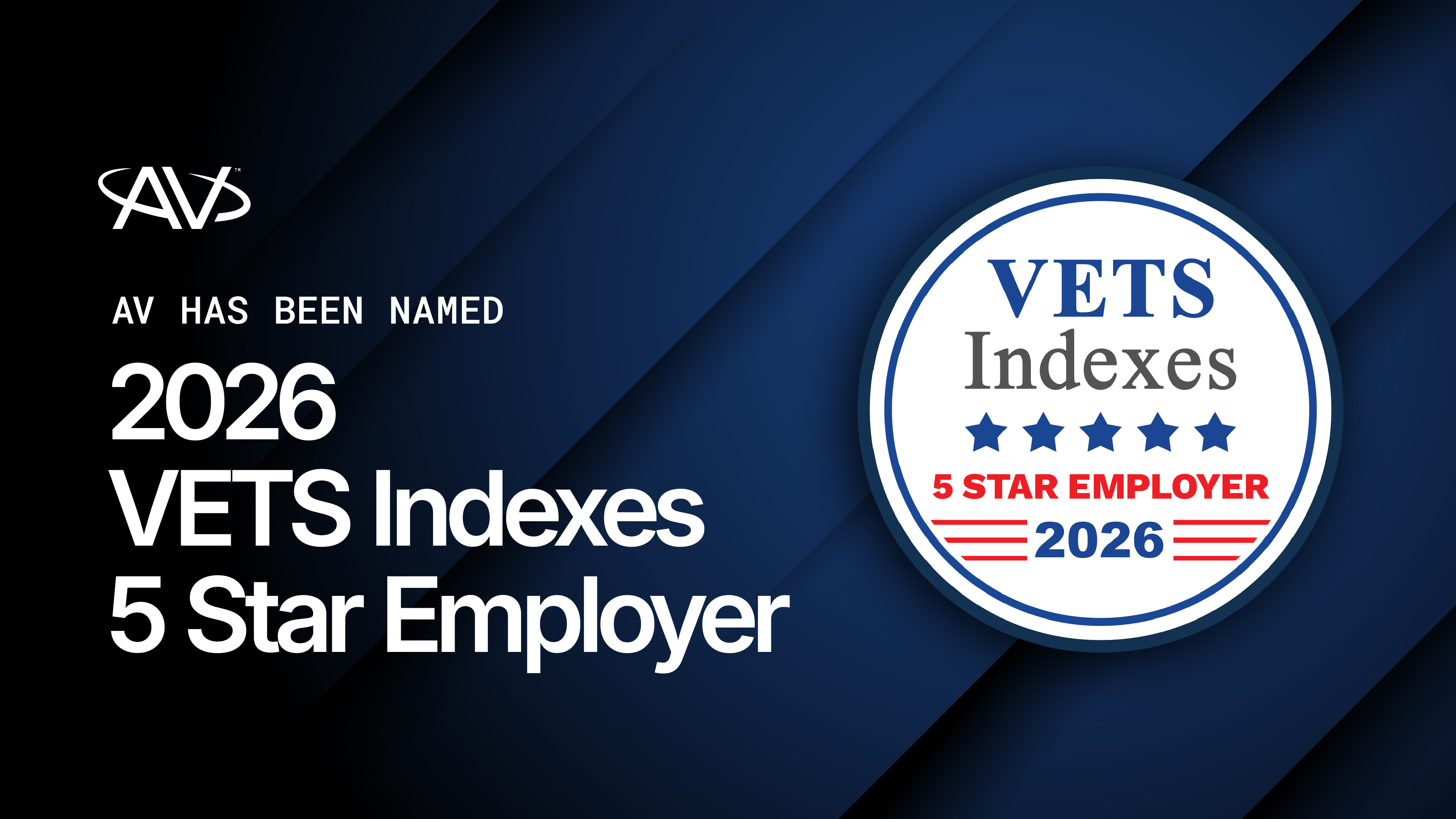
AV Recognized as Top Veteran Employer

05/04/2026

AV awarded VETS Indexes 5 Star Employer Award in 2026, HIRE Vets Gold Medallion in 2025

By Emily Rule, Digital Media Content Analyst

AV has been named a 2026 VETS Indexes 5 Star Employer, the highest level of recognition awarded to organizations demonstrating exceptional commitment to the veteran community. The honor recognizes employers who excel in recruiting, hiring, developing, and retaining veterans, while fostering a culture that supports military families, National Guard and Reserve members, and military spouses.

“These recognitions reflect the work we do every day—from strengthening our veteran hiring pipeline to supporting military families and building an environment where those who have served can continue to lead, grow, and thrive,” said Archana Nirwan, AV’s Chief People Officer. “Honoring veterans is not a program—it is a responsibility and a privilege.”

This marks AV’s second recognition of its commitment to supporting veterans in recent months, following the 2025 Gold Medallion Award.

AV’s mission to empower and protect warfighters extends beyond active service. The company actively recruits, trains, and mentors veterans, providing meaningful opportunities to continue serving through innovation and national security impact.

Veterans are a cornerstone of AV’s workforce, bringing proven leadership, discipline, and operational expertise. AV offers a mission-driven environment where that experience directly contributes to solving complex challenges in defense and security.

“That service itch never goes away,” said Lieutenant Colonel Paul Webber (Ret.), AV’s Director of Strategic Initiatives and Advanced Defense Solutions, former Marine Corps Special Operations Officer. “Many veterans are searching for purpose after service. At AV, I found a mission that continues to matter.”

AV also supports the Department of War SkillBridge program, enabling transitioning service members to gain hands-on experience across the organization. Once onboard, veterans receive ongoing mentorship and support as they transition into civilian careers.

This recognition reflects the people behind the mission—veterans and military family members whose leadership and commitment help define AV’s culture and drive its impact.

“To every veteran and military family member at AV: thank you for your service, your leadership, and the excellence you bring to our mission,” Nirwan added. “This award belongs to you.”
EXPLORE OPPORTUNITIES

Let’s Advance Your Mission

Product Catalog

View the full catalog to explore our solutions in detail.

News

AV’s UES Awarded $25M AFRL Contract to Mature Human Performance Technologies for Warfighter Readiness

04/07/2026

AV’s UES Awarded $25M AFRL Contract to Mature Human Performance Technologies for Warfighter Readiness

The United States Air Force has awarded UES, a division of advanced research and development leader AeroVironment, Inc. (“AV”) (NASDAQ: AVAV), a three-year, $25M contract to transition innovative human health and performance technologies from research to field deployment.

Supporting the Air Force Research Laboratory’s 711th Human Performance Wing Human Effectiveness Directorate (711 HPW), AV will mature mid-stage sensor, diagnostic, and material technologies that have remained largely confined to Technology Readiness Levels (TRL) 3-5. Work completed under this contract will accelerate the delivery of deployable solutions to enhance warfighter readiness, resilience, and survivability.

“With stringent requirements, harsh operating environments, and limited access to specialized infrastructure, health-focused devices for our military service members have faced unique challenges in reaching operational use,” said Dr. Stephaney Shanks, Vice President of Health and Performance Technologies at AV. “AV has the tools, track record, and technical expertise to tackle these challenges with solutions that deliver real-world impact, using the power of science to protect and empower our warfighters.”

With in-house prototyping and AI-enhanced data analytics, AV will test at scale and advance health-focused technologies and devices. This work integrates disciplined research methods and structured decision criteria to identify viable solutions for transition. The scope of work will focus on four critical areas:

  • Advanced sensor systems for airframe and pilot integration, improving in-field monitoring of physiological and environmental conditions.
  • Ruggedized wearable diagnostic tools for medical, chemical, and biological assessments in austere conditions
  • Powerful AI/ML-enabled databases and analytics to convert raw biosensor data into actionable insights and intelligence
  • Emerging biotechnology platforms, including stress-mitigating probiotics and synbio-based sensors, to support and protect force health

“By integrating biosensing and advanced materials with AI-enabled analytics and insights, we’re shaping the future of military readiness,” added Johnathan Jones, Senior Vice President of Cyber and Mission Solutions at AV. “Taking technology from the lab to the frontlines, we’re turning today’s challenges into tomorrow’s capabilities.”

AV has collaborated with the 711 HPW on prior efforts, such as deploying onboard oxygen monitoring sensors to investigate unexplained physiological events (UPEs) in pilots. This contract builds upon these successes to address hardware ruggedization, faster data processing, and enhanced user interfaces, meeting the demands of the Air and Space Force.

Domains

Let’s Advance Your Mission

Product Catalog

View the full catalog to explore our solutions in detail.

News

AV Selected to Deliver Intelligence, Surveillance and Reconnaissance Services to U.S. Navy with JUMP 20-X, Advanced Payload Integrations

03/31/2026

AV Selected to Deliver Intelligence, Surveillance and Reconnaissance Services to U.S. Navy with JUMP 20-X, Advanced Payload Integrations

AeroVironment, Inc. (“AV”) (NASDAQ: AVAV), a global leader in autonomous systems and intelligence services, today announced its selection by the United States Navy to provide Contractor-Owned, Contractor-Operated (COCO) Intelligence, Surveillance and Reconnaissance (ISR) services in support of critical naval operations. Under the Navy’s recently announced initiative to expand and modernize ISR capabilities, AV will compete for delivery orders alongside other selected industry partners to deliver turnkey persistent ISR support–with autonomous platforms, multi-sensor integration, and intelligence expertise.

AV’s JUMP 20-X Group 3 vertical take-off and landing (VTOL) uncrewed aircraft system (UAS) will equip the Navy with expanded ISR capabilities tailored to support diverse land and maritime missions. The platform enables multi-domain missions with fully autonomous, hands-free operation and more than 13 hours of flight time, a 115-mile (185 km) range, and 30 pounds of payload capacity. With more than 70 different payload integrations, JUMP 20-X is uniquely configurable to meet mission-specific requirements.  The system is engineered to eliminate the need for bulky launch and recovery equipment, simplifying logistics and enabling rapid deployment while reducing required operational space.

“We are honored to be selected as a partner to help the U.S. Navy expand its ISR services and enhance mission-critical awareness for warfighters around the globe,” said Shane Hastings, Vice President of Medium Uncrewed Systems at AV. “We have the people and product to deliver a superior capability across the fleet and are committed to supporting our customers with a flexible, scalable, full lifecycle ISR solution–any mission, any domain.”

This selection reinforces AV’s longstanding commitment to advancing U.S. national security objectives and supporting operational readiness across global theaters. The company has successfully delivered advanced ISR support services to the US Naval Forces Southern Command/US 4th Fleet, the US Marine Corps 22nd Marine Expeditionary Unit, and the Korean Navy.

“This is a win for AV and a win for the US Navy,” said Hastings. “Our technology is deployed, proven, and mature. Our team is ready to deliver. We are reshaping our nation’s ISR capabilities.”

NAVAIR Public Release SPR-2026-0153. Distribution Statement A – Approved for public release; distribution is unlimited. 

Let’s Advance Your Mission

Product Catalog

View the full catalog to explore our solutions in detail.

News

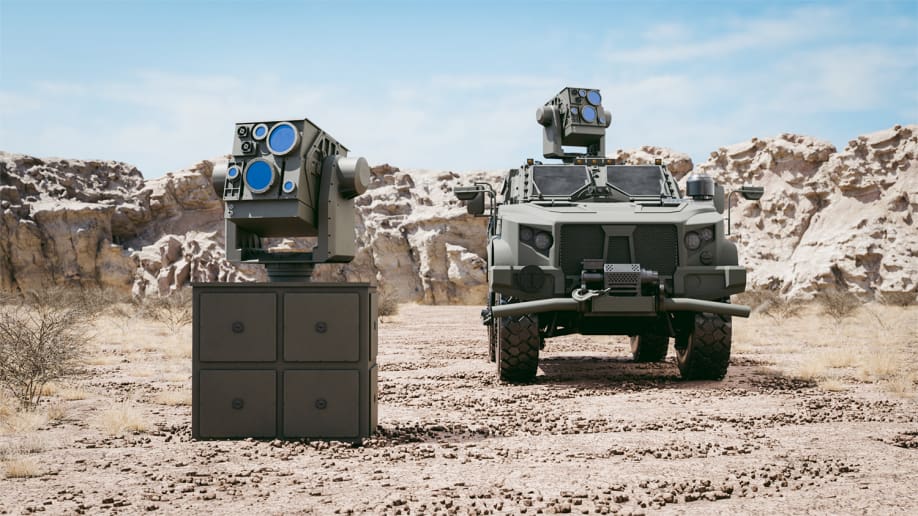
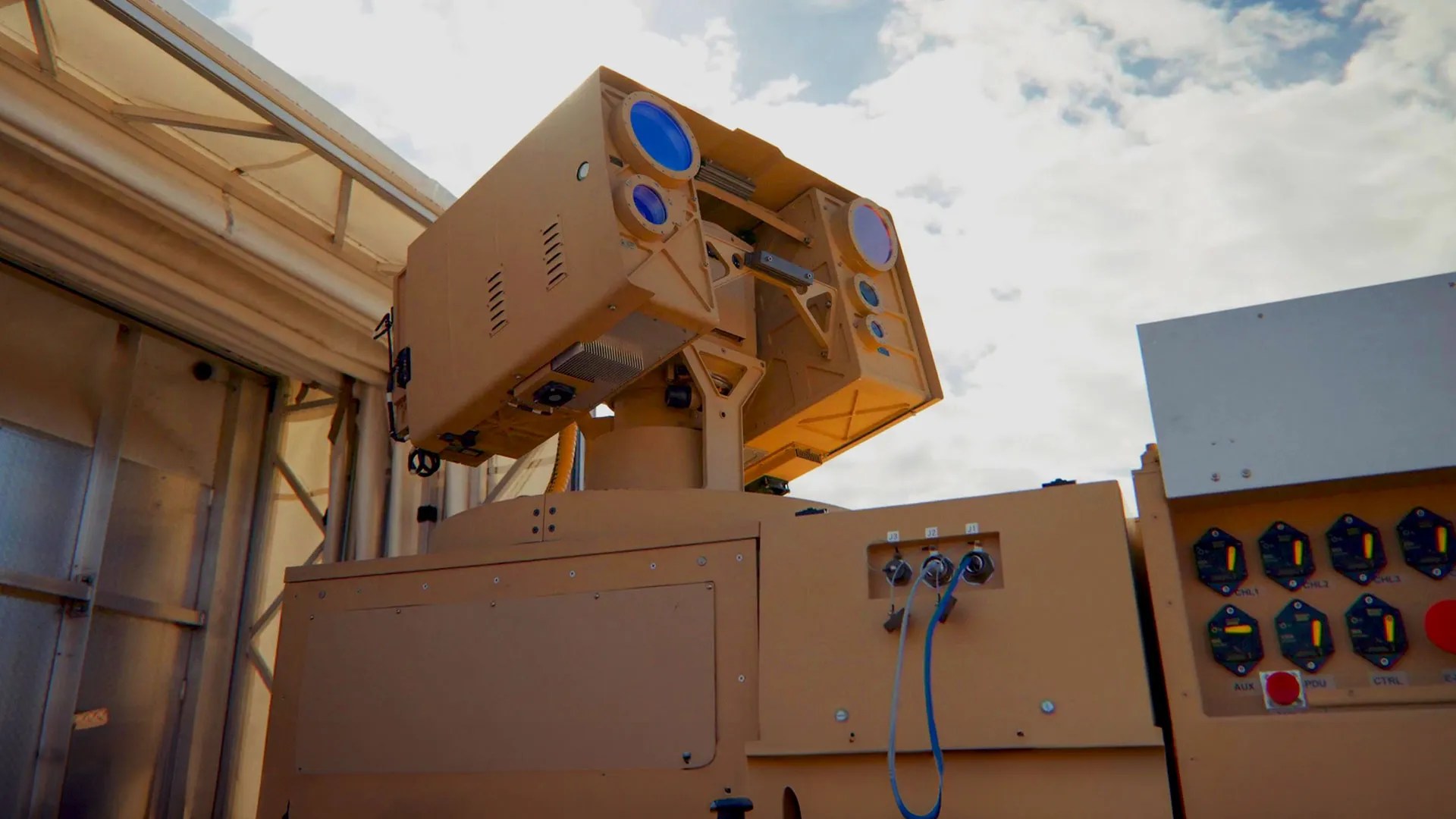
AV Unveils LOCUST® X3: Third-Generation Modular Directed Energy Weapon System

03/24/2026

AV Unveils LOCUST® X3: Third-Generation Modular Directed Energy Weapon System

AeroVironment, Inc. (“AV”) (NASDAQ: AVAV), a global defense technology leader, today announced the release of LOCUST® X3, the third generation of AV’s high-energy laser weapon system that delivers precise, speed-of-light engagement for rapid defeat of unmanned aerial threats.

LOCUST X3 builds on lessons learned from widely deployed systems to set a new standard in modular, AI-enabled drone defense—delivering unprecedented precision, scalability, and operational flexibility to defeat current and emerging aerial threats, including Group 1-3 unmanned aircraft systems and unmanned surface vehicles.

Recently featured by CBS News’ 60 Minutes, the LOCUST X3 offers cost-effective engagements below $5 per shot and sustained defense without the reload limitations of traditional defense systems, LOCUST X3 offers a transformative solution for modern air defense.

“In today’s rapidly evolving battlespace, adversaries are deploying mass drone attacks and saturation tactics that threaten mission success and warfighter survivability,” said Wahid Nawabi, Chairman, President, and Chief Executive Officer at AV. “With LOCUST X3, we deliver an affordable, scalable solution to outpace and neutralize large-scale aerial threats, safeguard critical infrastructure, and maintain decisive advantage wherever the fight demands.”

The new LOCUST X3 features a scalable 20–35+ kilowatt laser, a modular beam director, and advanced AI-enabled detection, tracking, and engagement automation powered by AV_Halo™ PINPOINT, part of the company’s hardware-agnostic software platform for layered counter-Unmanned Aircraft System (C-UAS) defense.

Aligned with Department of War’s mandated Modular Open Systems Approach (MOSA) principles, LOCUST X3 enables rapid upgrades and seamless integration across both fixed and mobile defense platforms. LOCUST X3 builds on the proven legacy of the LOCUST platform, which has been successfully fielded through the Army Multi-Purpose High Energy Laser (AMP-HEL) and Palletized High Energy Laser (PHEL) programs, and validated on platforms like the Joint Light Tactical Vehicle (JLTV) and the Infantry Squad Vehicle (ISV).

“LOCUST X3 transforms how defenders respond to the challenge of massed drone attacks,” said Mary Clum, President of AV’s Space, Cyber & Directed Energy segment. “Its modular design and advanced AI allow for resilient, adaptive protection of critical assets—on any platform, at the tactical edge or at fixed sites. With LOCUST X3, operators can now counter high-volume threats with unmatched speed, precision, and affordability.”

LOCUST X3: Precise, Persistent, and Production-Ready for Modern Defense

Designed for persistent counter-UAS defense, LOCUST X3 offers: 

  • Maintainability and Maneuverability in the Field: The LOCUST X3 is battle tested, leveraging hundreds of lessons learned from prior deployments that drive system performance, and field maintainability—particularly in dynamic, high-density threat environments.
  • Platform Agnostic: The LOCUST X3 is ready for the fight today and in the future, regardless of configuration and platform. Seamless integration on tactical vehicles (e.g., JLTV, ISV), fixed sites for broad platform and mission compatibility, or scaled for maritime environments.
  • Producibility In Mind: The third-generation LOCUST technology optimized for repeatable manufacturing and force-wide deployment. Built with modular subsystems and dual-use, commercially mature components to enable rapid production ramp, reduced unit cost at scale, and sustainable long-term support.
  • Scaled Lethality: The LOCUST X3 leverages best of breed laser capability to scale the lethality of the system to be right sized from low power configurations to high power 30kW+ configurations to be right sized for all customer missions and needs.
  •  AV_Halo PINPOINT Precision: AV’s exclusive software delivers unmatched precision in acquisition, targeting and pointing. This removes the burden on the operator and allows them to focus on the mission while providing seamless tracking, identification, and defeat.

Domains

Capabilities

Solutions

Let’s Advance Your Mission

Product Catalog

View the full catalog to explore our solutions in detail.

News

Iran’s cheap drones are a drain on the U.S. weapons stockpile. Could lasers help fend them off?

03/15/2026

They call it asymmetric warfare: our highly sophisticated interceptor missiles – Patriots, THAADs – against Iran’s low-tech drones, made of materials you can largely get at your corner hobby store.

While attacks by Iranian drones were down this past week, the amount of damage they have done has come as a jolt. An Iranian drone attack caused the first American casualties of the war when it killed six soldiers in Kuwait. Iranian drones are a drain on the U.S. weapons stockpiles and a threat to the Strait of Hormuz. We have found that in the race for a counter weapon, there are contenders that look like science fiction. Lasers that focus on zapping drones out of the sky.

Let’s Advance Your Mission

Product Catalog

View the full catalog to explore our solutions in detail.

News

Why lasers, at $3 per shot, may be the next frontier for stopping drone attacks

Amid attacks from cheaply made Iranian Shahed drones, the U.S. is looking toward new, cost-effective ways to neutralize the threat.

A drone attack killed six U.S. service members in Kuwait. To shoot down the drones, which can cost as little as $20,000 each, the U.S. military is using anti-missile interceptors that cost millions.

Laser technology is still relatively young and experimental. But with a cost of just a few dollars a shot, lasers are being looked at as a possible solution as combatting Iran’s drones drains the U.S. weapons stockpile, according to Wahid Nawabi, CEO of American defense contractor AeroVironment.

Let’s Advance Your Mission

Product Catalog

View the full catalog to explore our solutions in detail.