Press Release

AV’s LOCUST Demonstrates Landmark Capability at White Sands with JIATF-401 and FAA

05/06/2026

Coordinated test confirms safe, controlled laser engagement of drone targets in complex national airspace

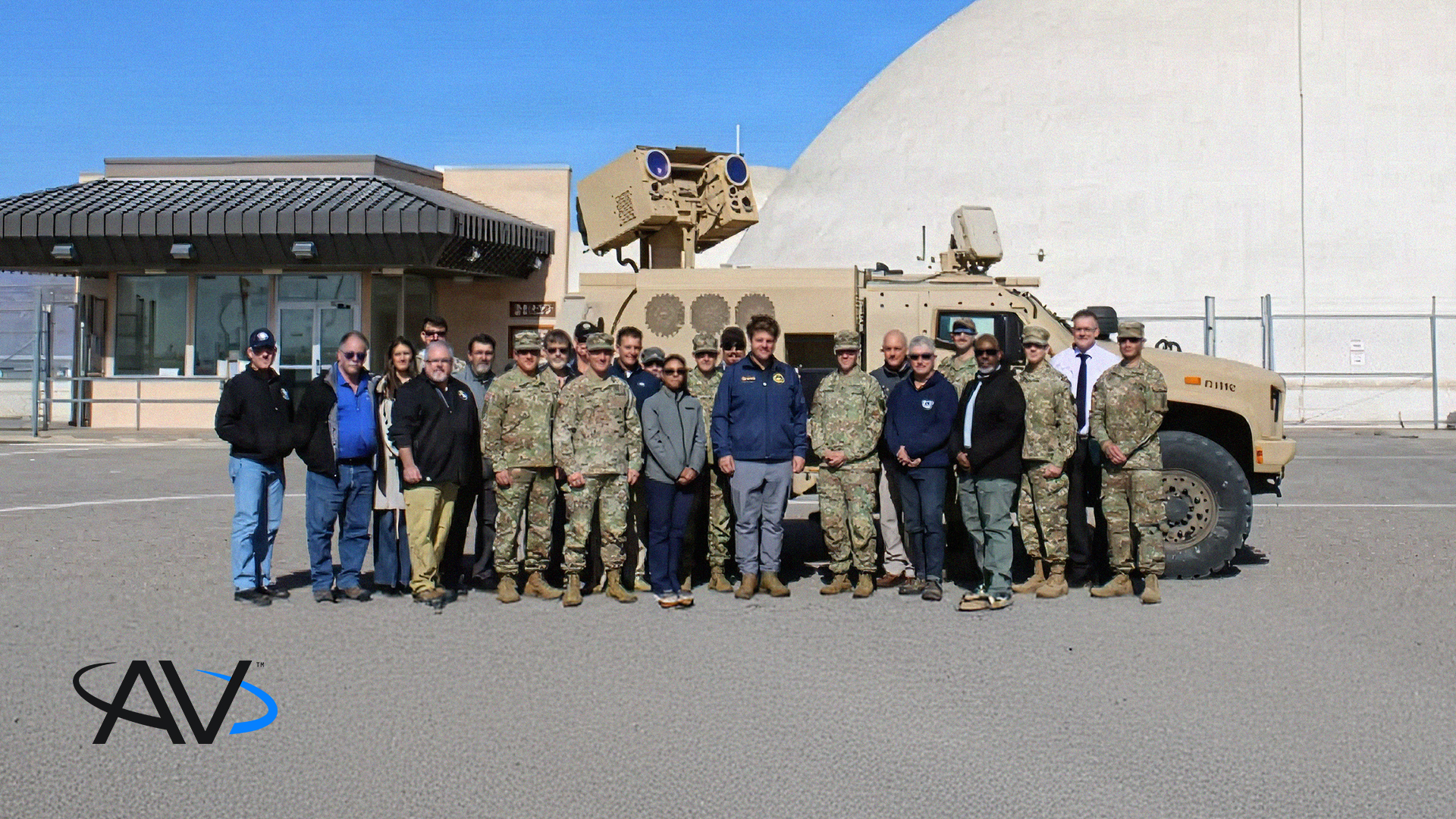
AV’s LOCUST ® high-energy laser system undergoes testing at White Sands Missile Range, demonstrating safe, precise counter-drone capability in coordination with DOW–FAA national airspace validation efforts. (Photo Courtesy of the U.S. Army).


ARLINGTON, Va. – May 6, 2026 — AeroVironment, Inc. (“AV”) (NASDAQ: AVAV) today announced a historic milestone for directed energy and homeland defense following the successful execution of a first-of-its-kind counter-unmanned aircraft system (C-UAS) laser test in coordination with the U.S. Department of War and the Federal Aviation Administration (FAA).

During an early March test event at White Sands Missile Range (WSMR), led by Joint Interagency Task Force 401 (JIATF-401), AV’s LOCUST® high-energy laser system demonstrated its ability to safely and effectively defend U.S. national airspace against emerging drone threats, directly supporting a subsequent agreement between the DOW and FAA that validates the system for domestic use.

“This is a defining moment for directed energy and for the future of homeland defense,” said John Garrity, Vice President for Directed Energy Systems at AV. “LOCUST has now proven its ability to operate safely and effectively in the most complex airspace environment in the world. This achievement accelerates the transition of directed energy from experimentation to operational deployment—delivering a scalable, cost-effective solution to counter the rapidly growing drone threat.”

The test at WSMR demonstrated automated safety shut-off capabilities that ensure the system only engages validated targets, among other safety features. The testing also showed no adverse impact to civilian aircraft during controlled evaluation scenarios and showed precision engagement through strict positive identification protocols.

AV’s LOCUST also showed the ability to hit both stationary and airborne targets to demonstrate accuracy, persistence, and operational realism.

“This successful test showcases the significant advancements we’re making in counter-drone technology to ensure that our warfighters have the most advanced tools to defend the homeland,” U.S. Army Brigadier General Matt Ross, director of JIATF-401 said recently in a joint Press Release. “By working hand-in-hand with the FAA and our interagency partners, the Department of War is proving that these cutting-edge capabilities are safe, effective, and ready to protect all air travelers from illicit drone use in the national airspace.”

The demonstration at WSMR comes amid increasing urgency to address drone incursions across U.S. airspace. The successful validation of LOCUST underscores its role as a critical layer in a modern, integrated air defense architecture—providing precision engagement, deep magazine capacity, and the ability to defeat threats at the speed of light.

“The FAA’s top priority is protecting the safety of the American flying public, and we value the collaboration with the Department of War in that effort,” FAA Administrator Bryan Bedford said in the release. “Following a thorough, data-informed Safety Risk Assessment, we determined that these systems do not present an increased risk to the flying public. We will continue working with our interagency partners to ensure the National Airspace System remains safe while addressing emerging drone threats.”

 AV recently announced LOCUST as a key offering in its new rollout of Halo_Shield™, —a layered, tile-based defense architecture that integrates sensors, battle management, and effectors to identify, detect, track, and defeat evolving aerial threats—positioning the company to help defend critical infrastructure, secure borders, and protect the American public as drone incursions continue to rise across U.S. airspace.

“JIATF-401’s coordination across federal partners was instrumental in aligning operational, safety and regulatory stakeholders for this unprecedented test,” said Mary Clum, President of Space, Cyber and Directed Energy at AV. “PEO Missiles & Space – PAE Fires continues to drive directed energy innovation and fielding, while the FAA’s rigorous safety oversight is enabling the responsible integration of these capabilities into national airspace.”

About AV

AeroVironment (“AV”) (NASDAQ: AVAV) is a defense technology leader delivering integrated capabilities across air, land, sea, space, and cyber. The Company develops and deploys autonomous systems, loitering munitions, counter-UAS technologies, space-based platforms, directed energy systems, and cyber and electronic warfare capabilities—built to meet the mission needs of today’s warfighter and tomorrow’s conflicts. At the core of these technologies lies AV_Halo™, a modular, mission-ready suite of AI-powered software tools that empowers warfighters and enables full-battlefield dominance: detect, decide, deliver. With a national manufacturing footprint and a deep innovation pipeline, AV delivers proven systems and future-defining capabilities at speed, scale, and operational relevance. For more information, visit www.avinc.com.

Safe Harbor Statement

Certain statements in this press release may constitute “forward-looking statements” as defined in the Private Securities Litigation Reform Act of 1995. These statements are based on current expectations, forecasts, and assumptions that involve risks and uncertainties, which could cause actual results to differ materially. Factors that may cause such differences include, but are not limited to, our ability to perform under existing contracts and obtain new ones; regulatory changes; competitor activities; market growth; product development challenges; and general economic conditions. For a more detailed discussion of these risks, please refer to AeroVironment’s filings with the Securities and Exchange Commission. We undertake no obligation to update forward-looking statements as a result of new information or future events.

/////////////////////////////////////////////////////////////////////////////////////////////////////

For additional media and information, please follow us:

Media Contact:

BJ Koubaroulis
pr@avinc.com

703.718.4060

Investor Contact:

Denise Pacioni

ir@avinc.com

805.795.4108


Let’s Advance Your Mission

Product Catalog

View the full catalog to explore our solutions in detail.

Thought Leadership

We’re Fighting 2026 Drone Swarms with Cold War Architecture. It’s Time to Upgrade.

05/05/2026

Two S-Curves and the Counter-UAS Challenge: How Halo_Shield Was Built on the MAYA Concept

By Paul Webber, Director, Strategic Initiatives, Advanced Defense Solutions, AV

U.S. and allied partners have a problem: new and very real threats from a class of low-cost, autonomous, or semi-autonomous weapons that have disrupted traditional military advantages by imposing exponential costs on legacy Western defense systems. Recent media reports of Iranian Shahed-type attacks on U.S. radar facilities in the Arabian Gulf are but one example.  Shaheds cost tens of thousands of dollars, cheap enough to field at scale by most of adversary nations, and capable of delivering deadly effects. And the threat is worldwide; Russia has launched tens of thousands of long-range drones into Ukraine and are producing hundreds per day.

I’ve spent most of my career working with people whose job is to keep bad things from happening to Americans. For the past several years, I’ve architected counter-drone (C-UAS) solutions at AV. I’m paying attention to the technology paradigm shift in real time, where an S-curve that moves faster and scales wider is putting unprecedented strain on defenses built for a different era.

A useful way to understand this paradigm shift is to view the evolution of air defense as two separate S-curves (measurable growth over time) and recognize that today’s challenge is the growing mismatch between them.

S-curve #1: Traditional Air Defense

This model was designed to protect high-value assets from a limited number of high-end threats. It assumes centralized sensing and command and control (C2), time to build clean tracks, human decision management, and hard-kill interceptors to finish. Inside those assumptions, the traditional model works extremely well. The challenge is that its design assumptions don’t translate cleanly to the problem of mass adversary drones. A radar built to see large, predictable signatures at range is not optimized to find masses of drones with small radar cross sections hugging terrain as they approach our defenses.

The issue is not that the model failed. It did exactly what it was designed to do.

S-curve #2: The UAS Era and Distributed C-UAS

The UAS era flips the math, because low-cost platforms have been fielded at scale, with widely varying signatures, dynamic tactics, and coordinated deployment from saturation to swarming. The shift is not just in complexity, but in volume and velocity. The limiting factor is the speed with which a defense can detect, correlate, decide, and assign effects to mitigate those threats.

Which is where defenses break down.

Defenses don’t fail because they can’t defeat a drone. They fail because they lack counter drone capacity, because operators are saturated, decision timelines stretch, and expensive effects get consumed faster than they can be replenished.

It’s an architectural gap, not a technology gap.

From Problem to Architecture

America’s answer to mass cheap drones can’t be to stretch legacy systems further, which will be neither effector nor affordable. It has to be a rethinking of how we scale and build CUAS capacity.

At AV, that shift is taking shape in Halo_Shield™: a modular, tile-based, distributed C-UAS architecture designed for high-volume environments. Instead of concentrating sensors, decisions, and effectors at a single point, Halo_Shield distributes them across the battlespace. Each Halo_Shield “Tile” functions as a self-contained node, combining sensing, processing, and engagement capabilities at the edge, while contributing to a shared operational picture through AV_Halo, our AI-driven command platform delivering unified, real-time battlespace awareness and control.

This is a fundamental change in how defense is constructed.

Point defense concentrates capability, and it inherits limits. Distributed defense multiplies capability.

By dispersing sensors and effectors, Halo_Shield extends detection timelines, increases engagement opportunities, and builds depth into the fight, enabling attrition before threats ever reach a final engagement window. Just as importantly, it scales without creating new bottlenecks. Each Tile adds capacity, but not complexity.

Where Good Ideas Break Down

There is a hard truth in C-UAS.

Many capable solutions work in demonstration events but fail in deployment because their interfaces are too complex, integration with command-and-control architectures is too fragile, and data overloads operators and slows decisions.

Implementing MAYA: Most Advanced Yet Acceptable

As I continue to watch the S-curve paradigm shift, I keep coming back to a design principle of product innovation: MAYA, Most Advanced Yet Acceptable.

MAYA reminds us that having exquisite technology does not necessarily mean having efficient, effective fieldable systems. Especially in defense, the best solution is the one that can be trusted, trained, integrated, and fielded quickly and repeatedly.

Applied to C-UAS, MAYA means being advanced enough to compress the OODA loop (Observe, Orient, Decide, Act) against scale and speed, while still acceptable enough to fit real operator workflows, rules of engagement constraints, and integration realities.

We’ve all seen the brilliant concept and working demonstration. And then reality shows up: the user experience looks like a cockpit built by committee, the integration requires sequential miracles, the sustainment plan is basically “good luck.” The operator does not trust it, and the system never scales past the pilot.

MAYA forces discipline: innovation must scale operationally, not just technically. And in C-UAS, MAYA is not just philosophy. It is survival.

We developed Halo_Shield around this philosophy.

What MAYA Looks Like in Practice

MAYA isn’t a slogan. It shows up in how systems are built, deployed, and actually used in the field. And the MAYA approach tends to share a few traits.

It starts with progress that can be measured, or stepwise capability growth. Real phases, real metrics, real learning, real measurable outcomes.

It requires clear human-in-the-loop boundaries. Automation should remove friction and compress decision time, not create mystery behavior. Trust is earned one engagement at a time.

It demands simplicity in the form of clean workflows that reduce screens and cognitive load. If the system requires a new operator for every new sensor, you did not scale the system. You scaled the staffing problem.

It depends on architecture that assumes change or what we call “Integration-first Architecture.” Sensors and effectors will evolve faster than legacy C2 cycles. The architecture assumes change as a feature, not a surprise.

Tiles Versus Point Defense: The Distributed Path to Scale

This is where the distributed concept comes in, and it is not as exotic as it sounds.

A traditional point defense site has multiple sensors and effectors applied from a single geographic location. It is usually governed by the sensor with the biggest sensing range and the effector with the longest effective range. This is a valid construct, but it also has a hard limit: finite weapons before reload, finite operator bandwidth, and a tendency to centralize decisions until the system itself becomes the bottleneck.

Distributed defense does not concentrate capacity. It multiplies it.

Halo_Shield’s distributed approach adapts a proven doctrinal idea, area air defense, to the UAS scale problem. We call a geographic area where sensors and effectors are dispersed and not co-located a “Tile.”

Each Tile has edge processing and a C2 interface to manage the mitigation cycle locally while still contributing to a broader operational picture. Tiles are modular by design, combining AV-recommended components with Government-furnished and third-party sensors and effectors, so customers can leverage what they have today and integrate new capabilities as needs evolve.

The practical takeaway is simple: distribution helps elongate detect, track, identify, and defeat to accelerate situational awareness and enable attrition in depth instead of only at the last second. You build Tiles around limited first S-curve air defense sites and increase total system carrying capacity without pretending one point defense site can do it all.

Passive Versus Active: Right Sensor, Right Time, Right Place

Active radar has a place in the mitigation cycle as well. But in a transparent battlefield with long-range precision weapons and shrinking sensor-to-shooter timelines, “radiate all the time everywhere” is not a survivability plan.

A distributed approach like Halo_Shield enables more low- or no-signature, multi-phenomenology sensing such as passive radar, acoustics, and distributable Electro-Optical/Infra-Red (EO/IR), paired with edge computation that limits what must be transmitted to higher echelons.

That reduces bandwidth demand and lowers the risk that central nodes become both overloaded and targetable. It also aligns with first principles. A threat UAS must disturb air to generate lift and move. It must have physical form to carry the technologies that make it a threat. Radio Frequency (RF) detection is valuable when it provides high information value and can support pairing and scheduling, but it is not the only foundation. A signature-centric detection strategy creates an on-ramp for advanced processing and helps reduce latency in high-density environments.

The Bottom Line

This shift in air defense is not just about a new threat. It’s about new requirements: throughput, adaptability, and trust at scale.

MAYA is the discipline that keeps us honest. It forces a simple question: will this be fielded, used, and trusted when the sky gets busy, not just when the demo is clean?

Halo_Shield is the architecture that puts that discipline into practice: not a brittle, centralized stack that collapses under its own weight, but a distributed approach that can grow, integrate, and keep pace.

Together, they move us away from point solutions and toward something more durable: a distributed, scalable, operationally viable defense that delivers value on day one and stays relevant as the fight evolves.

And to be clear, Halo_Shield is not just an upgrade. It’s a shift in how we build defense in the first place, designed for the new S-curve and built to scale with it.

WHAT’S NEXT IN THIS SERIES?

In Part 2, Paul will unpack solutions to the modern C-UAS challenge, including phased introduction of an effective and efficient distributed sensing and effecting architecture, and how leaders can measure C-UAS capacity, and how to move quickly from demo to scale.

ABOUT THE AUTHOR

Paul Webber is a retired Marine Raider and strategic advisor with two decades of leadership, special operations, and systems analysis experience. He blends operational insight with design thinking to tackle complex defense challenges, particularly in emerging domains like C-UAS. Paul holds an MBA from the University of Georgia, an MS from the Naval Postgraduate School, maintains a Top Secret-SCI clearance, and applies a human-centered lens to technology adoption and workflow design in defense environments.

——

ABOUT AV — JOINING THE MISSION

AeroVironment (AV) is a defense technology company with a mission to invent and deliver advantage to U.S. and allied militaries. AV isn’t for everyone. We hire the curious, the relentless, the mission-obsessed.

AV doesn’t just build defense technology; we redefine what’s possible. As the premier autonomous systems company in the U.S., we deliver breakthrough capabilities across air, land, sea, space, and cyber. From autonomy-enabled drones and loitering munitions to integrated autonomy and space resilience, our technologies shape the future of warfare and protect those who serve.

Founded by legendary innovator Dr. Paul MacCready, AV has spent over 50 years pushing the boundaries of what unmanned systems can do. Our heritage includes seven platforms in the Smithsonian—but we’re not building history, we’re building what’s next.

If you’re ready to build technology that matters – with speed, scale, and purpose – come find your people.

EXPLORE OPPORTUNITIES

Domains

Capabilities

Solutions

Let’s Advance Your Mission

Product Catalog

View the full catalog to explore our solutions in detail.

News

AV Recognized as Top Veteran Employer

05/04/2026

AV awarded VETS Indexes 5 Star Employer Award in 2026, HIRE Vets Gold Medallion in 2025

By Emily Rule, Digital Media Content Analyst

AV has been named a 2026 VETS Indexes 5 Star Employer, the highest level of recognition awarded to organizations demonstrating exceptional commitment to the veteran community. The honor recognizes employers who excel in recruiting, hiring, developing, and retaining veterans, while fostering a culture that supports military families, National Guard and Reserve members, and military spouses.

“These recognitions reflect the work we do every day—from strengthening our veteran hiring pipeline to supporting military families and building an environment where those who have served can continue to lead, grow, and thrive,” said Archana Nirwan, AV’s Chief People Officer. “Honoring veterans is not a program—it is a responsibility and a privilege.”

This marks AV’s second recognition of its commitment to supporting veterans in recent months, following the 2025 Gold Medallion Award.

AV’s mission to empower and protect warfighters extends beyond active service. The company actively recruits, trains, and mentors veterans, providing meaningful opportunities to continue serving through innovation and national security impact.

Veterans are a cornerstone of AV’s workforce, bringing proven leadership, discipline, and operational expertise. AV offers a mission-driven environment where that experience directly contributes to solving complex challenges in defense and security.

“That service itch never goes away,” said Lieutenant Colonel Paul Webber (Ret.), AV’s Director of Strategic Initiatives and Advanced Defense Solutions, former Marine Corps Special Operations Officer. “Many veterans are searching for purpose after service. At AV, I found a mission that continues to matter.”

AV also supports the Department of War SkillBridge program, enabling transitioning service members to gain hands-on experience across the organization. Once onboard, veterans receive ongoing mentorship and support as they transition into civilian careers.

This recognition reflects the people behind the mission—veterans and military family members whose leadership and commitment help define AV’s culture and drive its impact.

“To every veteran and military family member at AV: thank you for your service, your leadership, and the excellence you bring to our mission,” Nirwan added. “This award belongs to you.”

EXPLORE OPPORTUNITIES

Let’s Advance Your Mission

Product Catalog

View the full catalog to explore our solutions in detail.

Press Release

U.S. Army Selects AV’s Switchblade® 400 for LASSO Program

Award establishes Switchblade 400 as key component of Army’s enduring next-generation loitering munition program

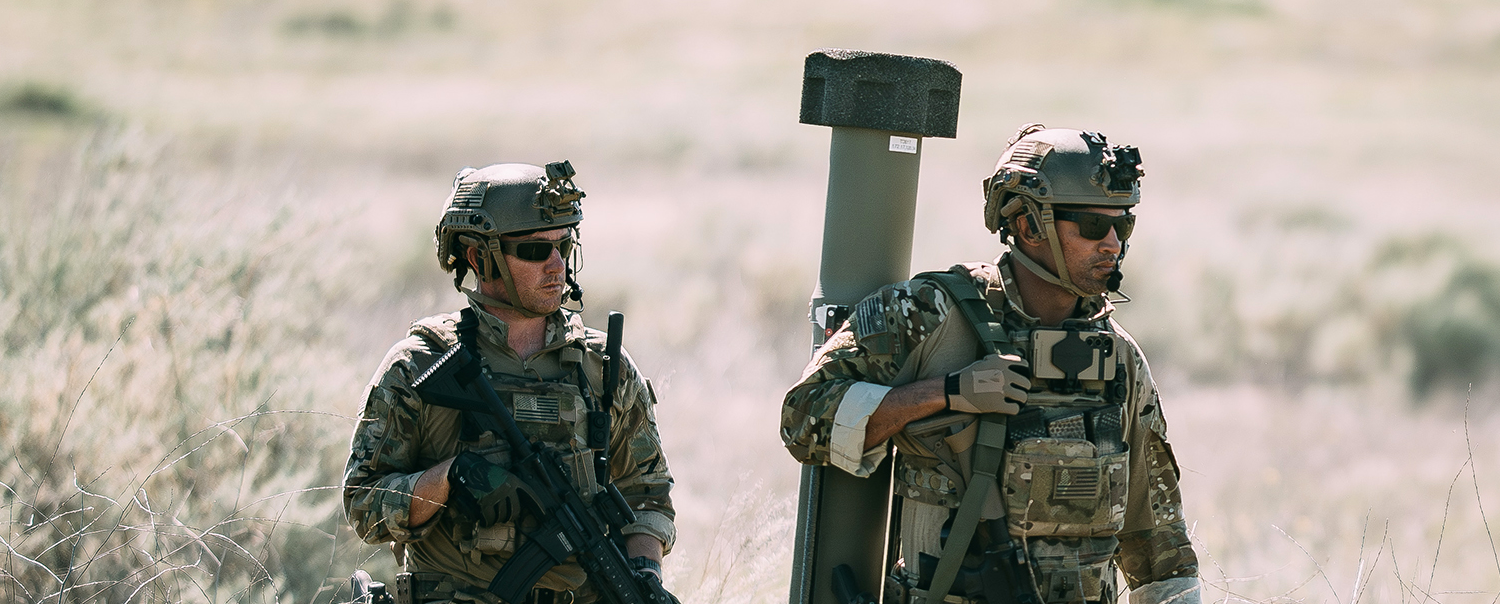
ARLINGTON, Va. — May 4, 2026 — AeroVironment, Inc. (“AV”) (NASDAQ: AVAV), today announced that it has been awarded a prototype agreement from the U.S. Army for the Low-Altitude Stalking and Strike Ordnance (LASSO) program to support the rapid development, delivery and testing of the Switchblade® 400 loitering munition.

The award establishes Switchblade 400, AV’s medium-range, man-portable, anti-armor loitering munition, as a key component of the Army’s LASSO Program, supporting the service’s modernization priorities for rapidly deployable, precision strike capabilities that can operate effectively in contested environments.

“This award reflects the Army’s confidence not only in Switchblade 400, but in AV’s ability to deliver at scale,” said Trace Stevenson, President of Autonomous Systems at AV. “Being selected under the LASSO program positions AV as a long-term partner to the Army as it modernizes its loitering munition capabilities, from development and testing through production, fielding, and continuous capability evolution.”

The first loitering munition purpose-built to operate within AV_Halo™, AV’s modular command-and-control ecosystem, Switchblade 400 incorporates advanced aided target recognition (ATR) and autonomous capabilities to detect, classify, and engage targets, day or night, in denied and contested environments while delivering the same anti-armor performance comparable to larger systems, like the Switchblade 600 Blk 2.

Core to Switchblade 400 is the implementation of a Modular Open Systems Approach (MOSA) in system design to ensure long term system resilience and relevance allowing for interoperability, upgradeability, and affordability as missions evolve.

Known as the “Lightweight Tank Destroyer,” and sized to fit common launch tubes, Switchblade 400 enables a sensor-to-shooter concept of operations that allows a single soldier to detect, identify, and engage targets through a unified, networked architecture – shortening decision timelines while increasing precision, speed, and operational flexibility at the tactical edge. The system features an all-up round (AUR) weighing under 40 pounds that provides the soldier with a lightweight, man-portable, anti-tank weapon system.

“Switchblade 400 is the product of continuous feedback from the field and the soldiers who rely on our systems in real-world operations,” said Brian Young, Senior Vice President of Loitering Munitions at AV. “We are constantly leaning forward, integrating new capabilities, enhancing performance, and reducing the burden on the warfighter. That soldier-driven approach is central to how we develop, test, and deliver capability for the Army.”

The new OTA award under LASSO follows a recent $186 million delivery order from the U.S. Army for Switchblade®600 Block 2 and Switchblade® 300 Block 20 explosively formed penetrator (EFP) loitering munition systems, part of the Army’s existing five-year, $990 million Indefinite Delivery, Indefinite Quantity (IDIQ) contract under the Lethal Unmanned Systems (LUS) Directed Requirement (DR), which was awarded in August 2024.  It was the Army’s first Switchblade order containing EFP payload, delivering enhanced lethality against armored threats.

“The Army’s trust in the Switchblade family has been earned through years of real-world use by soldiers who rely on these systems every day,” said Jimmy Jenkins, Executive Vice President of Precision Strike and Defense Systems at AV. “That trust reflects a clear operational need for precision, speed, and adaptability at the tactical edge—capabilities the Switchblade family is designed to deliver as missions and threats continue to change.”

About AV

AeroVironment (“AV”) (NASDAQ: AVAV) is a defense technology leader delivering integrated capabilities across air, land, sea, space, and cyber. The Company develops and deploys autonomous systems, loitering munitions, counter-UAS technologies, space-based platforms, directed energy systems, and cyber and electronic warfare capabilities—built to meet the mission needs of today’s warfighter and tomorrow’s conflicts. At the core of these technologies lies AV_Halo™, a modular, mission-ready suite of AI-powered software tools that empowers warfighters and enables full-battlefield dominance: detect, decide, deliver. With a national manufacturing footprint and a deep innovation pipeline, AV delivers proven systems and future-defining capabilities at speed, scale, and operational relevance. For more information, visit www.avinc.com.

Safe Harbor Statement

Certain statements in this press release may constitute “forward-looking statements” as defined in the Private Securities Litigation Reform Act of 1995. These statements are based on current expectations, forecasts, and assumptions that involve risks and uncertainties, which could cause actual results to differ materially. Factors that may cause such differences include, but are not limited to, our ability to perform under existing contracts and obtain new ones; regulatory changes; competitor activities; market growth; product development challenges; and general economic conditions. For a more detailed discussion of these risks, please refer to AeroVironment’s filings with the Securities and Exchange Commission. We undertake no obligation to update forward-looking statements as a result of new information or future events.

/////////////////////////////////////////////////////////////////////////////////////////////////////

For additional media and information, please follow us:

Media Contact:

BJ Koubaroulis
pr@avinc.com

703.718.4060

Investor Contact:

Denise Pacioni

ir@avinc.com

805.795.4108

Let’s Advance Your Mission

Product Catalog

View the full catalog to explore our solutions in detail.

Thought Leadership

100-Percent: LOCUST’s First Day at Sea

04/28/2026

By Mary Clum and John Garrity

When most people picture a shipboard laser weapon, they likely imagine a massive, bulky system—welded into the hull and fixed in place.

That’s not what we brought aboard USS George H.W. Bush.

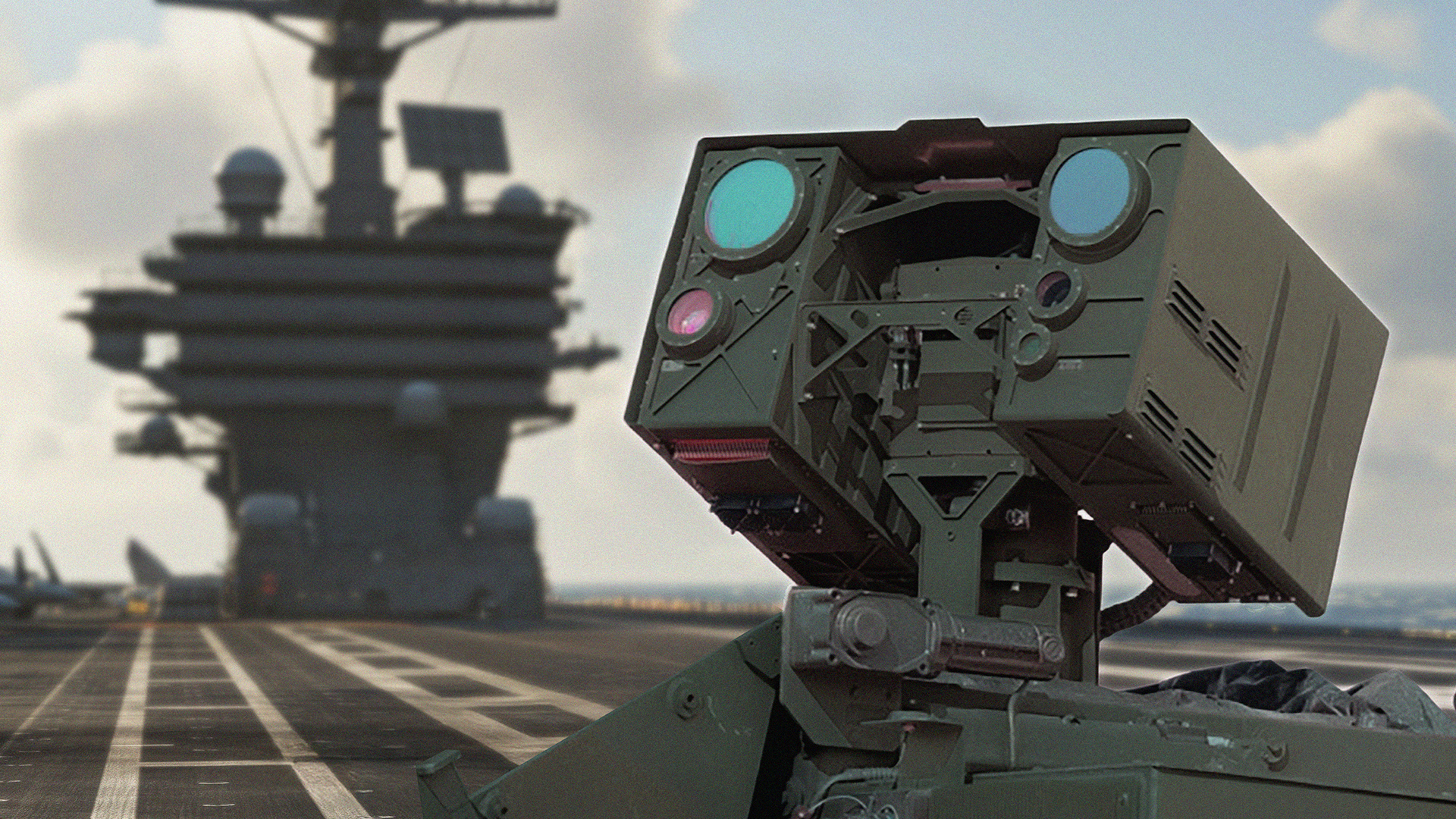
For a single day at sea, AV’s palletized LOCUST® laser weapon system was forklifted onto the flight deck, enabling a live-fire exercise that demonstrated its performance in real-world operational conditions. The system was powered from the ship, operated by sailors with less than an hour of training, and engaged every target presented. Every single target was destroyed. 100 percent success.

For the Navy, it was a first look at what our containerized, “roll‑on/roll‑off” laser weapon, LOCUST, can really do. For us, it was the payoff from years of work in directed energy—and a hint of where this technology is going.

From Bolted‑In Experiments to Roll‑On Capability

The Navy’s early laser efforts focused on high‑power systems integrated into the ship, hard‑wired into the hull and power system. Those programs taught us a lot, but they also revealed constraints: if the ship goes into maintenance, the weapon does too; if the laser needs upgrades, you work around the ship; moving capability between hulls is slow and costly.

Meanwhile, counter‑UAS was becoming a daily operational problem. The Army had proven that palletized, truck‑mounted lasers could consistently defeat small drones in harsh environments. The natural question was: could that same modular, field‑ready architecture work at sea?

AV’s mission? Prove it viable at sea.

Turning a Land System into a Sea System

On paper, we took a standard palletized LOCUST system—the same basic architecture used on land—and operated it from a carrier. In reality, we had to solve three sets of problems.

First, marinization. The LOCUST variant used on USS Bush was built on our Army fielded design, but carrier life demands more:

  • Hardened electronics for salt fog, humidity, vibration, and long deployments
  • Stabilization hardware to manage ship motion
  • Sealing and environmental protection so the system would be ready whenever it was needed
  • A laser weapon system that delivers precise, low-collateral effects—enhancing ship self-defense while minimizing risk to nearby personnel, platforms, and flight operations.

We implemented a series of hardware upgrades focused on these issues. Our software and tracking heritage, including work on the Optical Dazzling Interdictor, Navy, or ODIN, meant the control stack already reflected decades of naval experience. The emphasis here was making a proven laser weapon reliable at sea, not reinventing it.

Second, roll‑on/roll‑off. The Navy has been clear: it wants containerized, movable weapons. On USS Bush, LOCUST was:

  • Forklifted onto the flight deck in palletized form
  • Positioned in a location that required pausing normal flight operations during the test window
  • Forklifted back off once the demonstration ended so the carrier could resume its standard tempo

We wanted to show that a high‑energy laser could arrive as a containerized asset, fight, and then get out of the way. That flexibility—roll on, roll off—is exactly what the Navy has been signaling in its public comments on containerized systems.

Third, safety and integration. However, bringing a laser weapon onto a carrier isn’t just a technical question. The Navy reviewed how the system would be brought aboard, powered, and operated safely alongside flight deck activity and other systems. Working through that set of questions created a path not just for this event, but for future containerized deployments.

One Day, 100 Percent Successful Engagements

The test window aboard USS Bush lasted one day. Within that day, three things mattered most: effectiveness, repeatability, and usability.

Effectiveness was straightforward. LOCUST targeted, tracked and defeated every single small unmanned aircraft target and defeated all threats flown. 100 percent success. For any counter‑UAS system, kinetic or non‑kinetic, a 100 percent success rate in live testing is notable. For a palletized laser operating from a carrier, it was a clear signal: the technology is ready.

Repeatability came from the laser’s basic economics. Every engagement consumed electricity, not interceptors. In a kinetic system, these defeats would have meant that dozens of interceptors would have been expended, with all the associated production, storage, and resupply burden. With LOCUST, the system drew power from the ship, recharged, and was ready for the next shot. On a nuclear‑powered carrier, that’s a natural fit: high‑volume defense without an exponential logistics tail.

The most important part, though, was usability. Roughly half the engagements were executed by sailors—from enlisted operators up through senior officers, including flag leadership. Training time was measured in tens of minutes.

Within about an hour of using the system, sailors who had never fired a laser weapon before were acquiring targets, working the interface, and making successful engagements. That’s what it looks like when directed energy stops being a lab project and becomes a practical tool.

What It Meant for the Navy—and for Us

For the Navy, the USS Bush demonstration answered key questions that need to be addressed as technology transitions from labs to the field. Most important of all, the demo showed that a containerized laser weapon can operate effectively from a carrier without being permanently integrated into the ship. The demo also showed the Navy that training for these new systems can be straight forward and quickly implemented for sailors.

For AV, this demo validated a design philosophy that has been guiding this program over the last five years: Start with a modular, platform‑agnostic architecture and leverage decades of naval tracking and control experience to harden the system for the environment and let real operators use it. In working with the Navy during this demonstration, valuable lessons learned were gained of how to make the next generation of LOCUST Laser Weapon Systems tailored for the Navy. It also underscored where the technology is going. Across the services, modalities, and environments, interest in directed energy—especially for counter‑UAS—is now reflected in budgets, not just briefings. The center of gravity is shifting from one‑off demos to production and fielding.

Looking forward, we are laser-focused (pun intended) on scaling LOCUST production to meet the needs while continuing ruggedization and spiral upgrades for long‑duration maritime deployments. This should help us to provide evolving containerized variants tailored for the Navy and partners in maritime environments.

Lasers in the Layered Defense

Directed energy won’t replace every other effector, and it shouldn’t. RF systems, guns, and kinetic interceptors are all essential parts of a layered defense and sea deployments are no exception.

But against high volumes of small, inexpensive unmanned systems at sea, a containerized, ship‑powered laser offers something unique: very low marginal cost per shot, effectively bottomless “magazine” tied to ship power, modular deployment across platforms, and rapid usability by sailors.

On USS George H.W. Bush, that combination translated into a simple outcome: a laser weapon rolled onto the flight deck, powered up, trained its first Navy operators, hit 100-percent of the targets, and rolled back off.

ABOUT THE AUTHOR

John Garrity is an engineer and defense technology leader specializing in directed energy and counter-UAS systems. He has helped advance high-energy laser integration, fielding scalable solutions that enhance precision engagement, air defense, and layered protection across complex operational environments.

Mary Clum is a defense technology executive leading space, cyber, and directed energy initiatives. With more than 25 years of experience across AV, BlueHalo, and Raytheon, she has driven the development and deployment of advanced mission systems, guiding highly technical programs from innovation through operational fielding in support of national security.

JOIN THE AV MISSION

AV isn’t for everyone. We hire the curious, the relentless, the mission-obsessed. The best of the best.

We don’t just build defense technology—we redefine what’s possible. As the premier autonomous systems company in the U.S., AV delivers breakthrough capabilities across air, land, sea, space, and cyber. From AI-powered drones and loitering munitions to integrated autonomy and space resilience, our technologies shape the future of warfare and protect those who serve.

Founded by legendary innovator Dr. Paul B. MacCready, Jr., AV has spent over 50 years pushing the boundaries of what unmanned systems can do. Our heritage includes seven platforms in the Smithsonian—but we’re not building history, we’re building what’s next.

If you’re ready to build technology that matters—with speed, scale, and purpose—there’s no better place to do it than AV.

EXPLORE OPPORTUNITIES


Let’s Advance Your Mission

Product Catalog

View the full catalog to explore our solutions in detail.

Press Release

AV Announces Halo_Shield™, Comprehensive Tile-Based C-UAS Solution

Unique, Modular Layered Defense Architecture System Combines the Best of AV and its OEM Suppliers to Protect Critical Asset Locations
Halo Shield
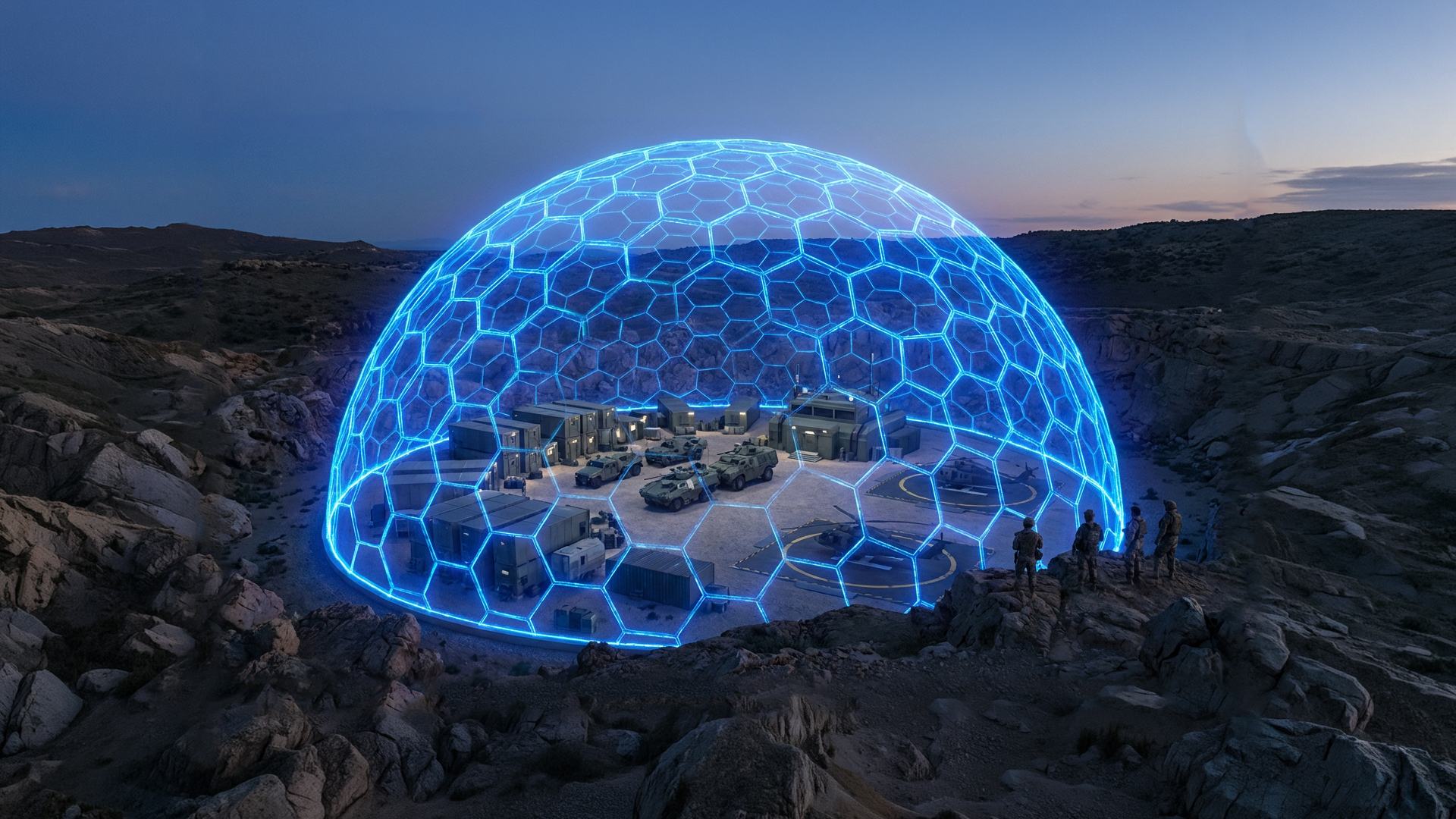
Halo_Shield™ is a modular, tile-based defense that delivers scalable, layered protection to detect, track, and defeat evolving aerial threats across the modern battlespace. (Photo AV)

ARLINGTON, Va. — April 28, 2026 — AeroVironment, Inc. (“AV”) (NASDAQ: AVAV), a global leader in multi-domain defense solutions today announced the release of Halo_Shield™, a modular, distributed, and cost-effective counter-unmanned aircraft system (C-UAS) designed to predict, detect, track, identify and defeat advanced airborne threats—including Group 1–5 UAS, coordinated drone swarms, and subsonic cruise missiles—protecting critical infrastructure and deployed forces worldwide.

AV made the announcement at Modern Day Marine on April 28 at the Walter E. Washington Convention Center in Washington, D.C.

Developed as part of AV’s holistically integrated C-UAS strategy, Halo_Shield introduces a unique, tile-based layered defense architecture that is open, scalable, and adaptable to today’s evolving threats. The system is designed to support emerging homeland defense priorities by enabling resilient, area-wide protection of high-value U.S. and allied partner assets, including borders, military installations, and other critical infrastructure. AV is currently demonstrating capabilities and has deployed Halo_Shield tiles at select critical sites.

“The character of the air threat has fundamentally changed,” said Wahid Nawabi, Chairman, President, and Chief Executive Officer at AV. “Cheap, massed, and coordinated aerial systems are stressing traditional point defenses. Halo_Shield is our answer—a collaborative, modular approach that brings together the best of AV and a trusted supplier ecosystem to close those gaps.”

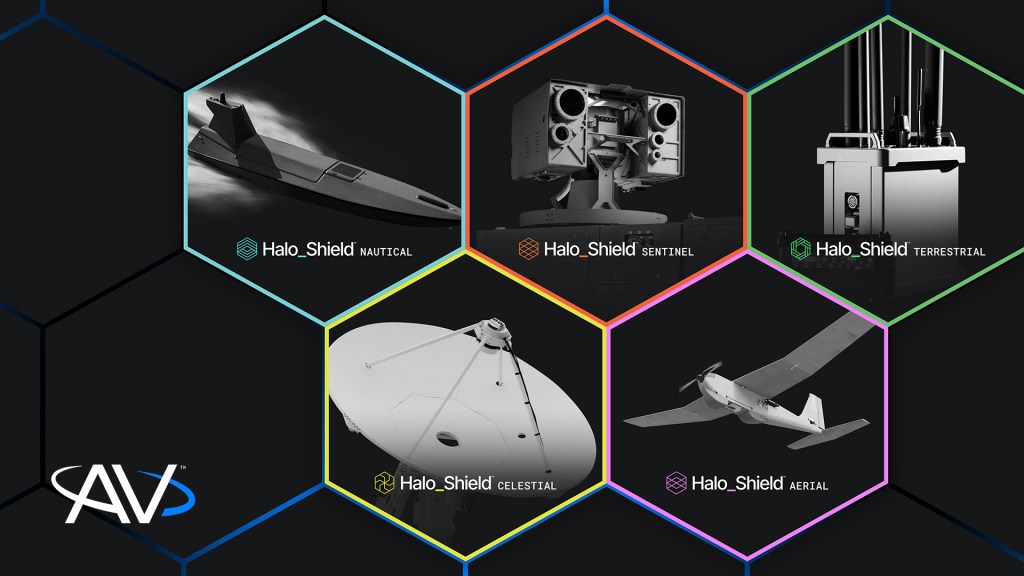
At the core of Halo_Shield is a mission-tailored, distributed and domain-specific tile architecture—comprising Sentinel, Terrestrial, Nautical, Aerial and Celestial tiles. Each tile delivers a specialized combination of sensors, effectors, and command-and-control capabilities, drawing on technology from AV and its trusted ecosystem of suppliers. The result is a cost-efficient defense architecture that is offense-ready, extends protection beyond point defense and sustains decisive situational advantage in contested battlespaces across air, land, sea and space.

Designed for plug-and-play integration, Halo_Shield is deployable as portable fly-away kits and integrates seamlessly with existing customer sensors, effectors, and command-and-control frameworks—delivering scalable, resilient, area-wide protection with minimal training and personnel demands. Powered by AV_Halo™, AV’s unified software platform, the system is purpose-built yet agnostic, designed to incorporate new capabilities while seamlessly integrating with customers’ existing command-and-control systems.

“Halo_Shield is engineered like an edge processing-capable set of tiles for modern air defense,” said Larry Lloyd, Senior Vice President of Strategic Initiatives at AV. “Each tile is a self-contained capability that can operate on its own or snap together to build exactly the defense architecture a mission demands. That modularity lets operators scale, adapt, and reconfigure in real time as threats evolve, without redesigning the system or retraining the force. It’s how you move from static point defense to a living, mission-tailored shield.”

The unique tile-based architecture integrates a tailored mix of sensors and effectors from AV and its trusted partners, unified by an overarching battle manager. It includes systems such as AV’s LOCUST® laser weapon system, Switchblade® loitering munitions, and Titan® 4 and Titan MS RF C-UAS systems, among others.

With AV_Halo™ COMMAND, each tile can operate independently or be rapidly combined to extend detection ranges, accelerate the kill chain, and expand coverage across large geographic areas for preferential engagement.

Halo_Shield is a game-changing architecture:

  • Affordably extending defensive protection beyond traditional C-UAS point defense
  • Optimizing sensors and effectors placement to maximize mission effectiveness
  • Maximizing the system’s weapons carrying capacity to address all threat scenarios
  • Disaggregating the C-UAS mitigation cycle at the tile level to simplify higher echelon command and control (C2) workload
  • Integrating left of launch with offensive delivery to thwart threats prior to attack

More information about each tile, Sentinel, Terrestrial, Nautical, Aerial and Celestial, will be released in upcoming announcements.

About AV

AeroVironment (“AV”) (NASDAQ: AVAV) is a defense technology leader delivering integrated capabilities across air, land, sea, space, and cyber. The Company develops and deploys autonomous systems, loitering munitions, counter-UAS technologies, space-based platforms, directed energy systems, and cyber and electronic warfare capabilities—built to meet the mission needs of today’s warfighter and tomorrow’s conflicts. At the core of these technologies lies AV_Halo™, a modular, mission-ready suite of AI-powered software tools that empowers warfighters and enables full-battlefield dominance: detect, decide, deliver. With a national manufacturing footprint and a deep innovation pipeline, AV delivers proven systems and future-defining capabilities at speed, scale, and operational relevance. For more information, visit www.avinc.com.

Safe Harbor Statement

Certain statements in this press release may constitute “forward-looking statements” as defined in the Private Securities Litigation Reform Act of 1995. These statements are based on current expectations, forecasts, and assumptions that involve risks and uncertainties, which could cause actual results to differ materially. Factors that may cause such differences include, but are not limited to, our ability to perform under existing contracts and obtain new ones; regulatory changes; competitor activities; market growth; product development challenges; and general economic conditions. For a more detailed discussion of these risks, please refer to AeroVironment’s filings with the Securities and Exchange Commission. We undertake no obligation to update forward-looking statements as a result of new information or future events.

/////////////////////////////////////////////////////////////////////////////////////////////////////

For additional media and information, please follow us:

Media Contact:

BJ Koubaroulis
pr@avinc.com

703.718.4060

Investor Contact:

Denise Pacioni

ir@avinc.com

805.795.4108


Let’s Advance Your Mission

Product Catalog

View the full catalog to explore our solutions in detail.