Tomahawk GCS
08/14/2026
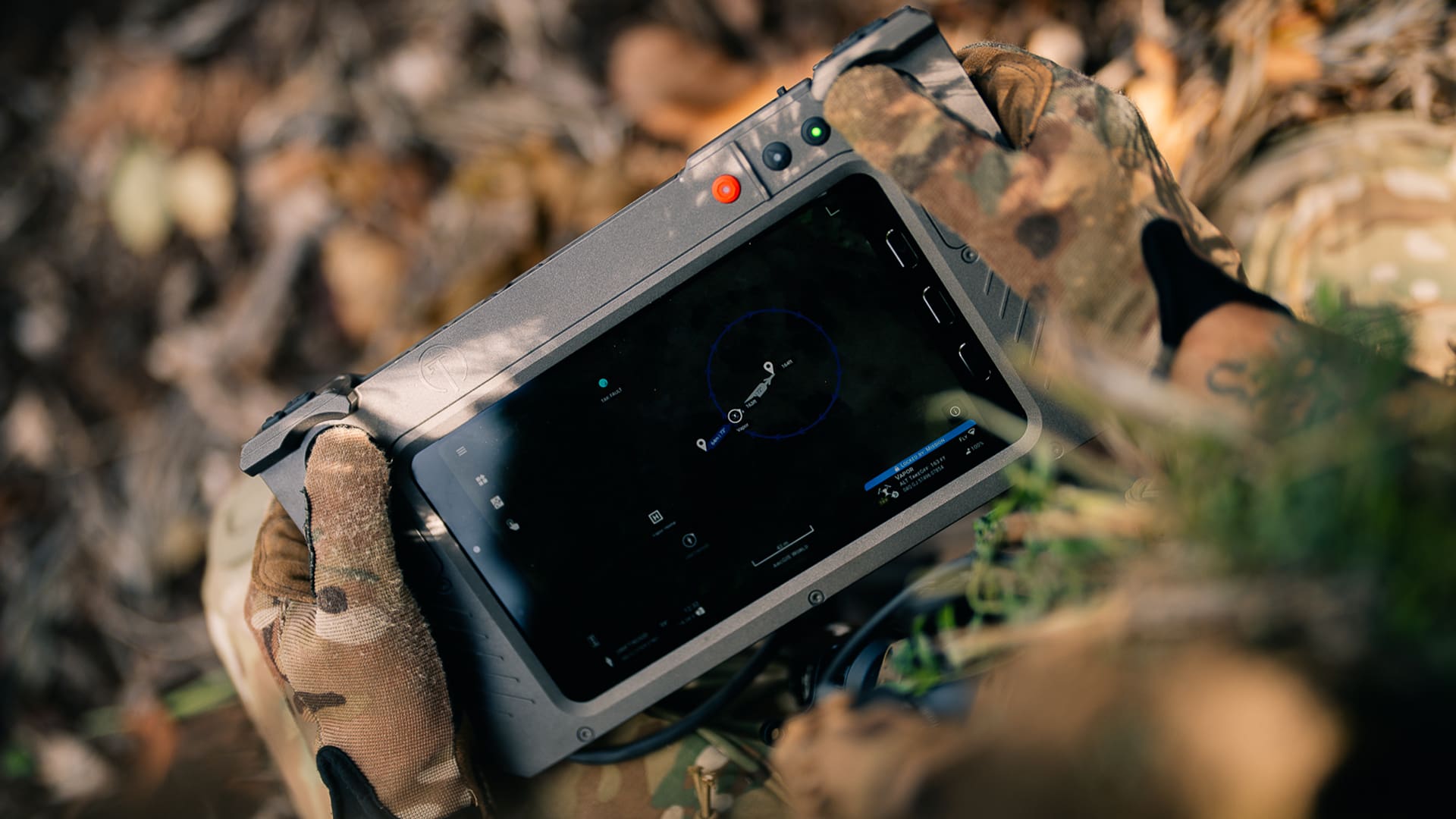

08/14/2026
Thought Leadership
01/08/2026

Not a day goes by in DC without someone grabbing a microphone, stepping to a podium—or settling into a cushy seat on a panel—to declare the need for “more innovation” and a “revitalized industrial base.”
It’s become a ritual without results.
However, with the recent release of the U.S. Department of War’s (DoW) Acquisition Transformation Strategy, we have a real chance to drive meaningful change. It’s more than a political directive; it’s a blueprint for the leaders within the defense industrial base to make it a reality.
Secretary of War Pete Hegseth has just thrown the game-winning pass into the air. Scoring means turning strategy into capability, which hinges on how quickly industry can prepare the operating forces to receive Hegseth’s pass. With DoW and Congress behind this effort, the question becomes simple: how do we continue to move the ball down the field and get it over the goal line? Industry can do that in three ways.
First, we need a true, shared tactical command-and-control backbone across the Services—replacing today’s patchwork of soldier-level controllers and incompatible software that can’t integrate with other Service-level C2 systems.
Second, we need rapid-fire prototyping that puts hardware into soldiers’ hands, rather than abandoning promising tech in the Valley of Death—or worse, shrink-wrapped in warehouses.
Third, we need Field Service Representatives (FSR) who can accelerate the DOTMLPF-P process through hands-on training in the field and by providing feedback to develop doctrine for the force. It’s the process no one budgets for, even though it ultimately determines whether anything reaches the fight or adds any real value once it gets there. (Lay readers: DOTMLPF-P is the framework for planning and building capabilities that aligns new technology with the American way of fighting, policy, resources, training, and manning.)
This is the beginning of a shift from ritual to results, and it’s going to reshape how our troops score touchdowns in the years ahead.
The next war will be fought by squads remotely commanding robotic systems: unmanned ground vehicles hauling gear, drones scouting ahead, loitering munitions circling above… Incredible capability, cognitive overload.
If we expect troops to fight and manage all that tech simultaneously, we need a single pane of glass—one intuitive control platform that feels as natural as a rifle and radio. Common control isn’t about user interface design; it’s about survival under pressure.
Key philosophy is ‘one-to-many.’ There will be a sharp rise in the number of ground, aerial, and maritime robotics systems procured and deployed across the Department. As the number of systems employed by the soldier increases, we should avoid the desire to give every soldier a controller. One soldier can control a swarm of one-way attack systems while employing the ISR to initiate and close the kill chain. Also, systems that are fully autonomous won’t require ‘control,’ but they will need to be tracked in and out of the battlespace, which is why interoperable software like Android Tactical Assault Kit (ATAK) will be critical.
Programs like the U.S. Army’s Human Machine Integrated Formations (HMIF), under the newly established Portfolio Acquisition Executive Fires (PAE Fires), are pushing in the right direction with modular architectures and open APIs. But let’s stop pretending interoperability can be bolted on later. If a system can’t plug into a common architecture from day one, it shouldn’t make it past the gate.
In the end, command-and-control is the real high ground and the side that seizes it early will shape the fight long before the first shot is fired.
Ukraine proved what most of us already knew: Concepts are validated in contact, not in meetings.
The U.S. can’t wait for perfect requirements or five-year procurement cycles. It needs continuous experimentation, real soldiers, Marines, and special operators running gear hard in dirty conditions, feeding lessons back to designers in real time. Because the truth is brutal: our adversaries iterate faster than our acquisition system, and the first time that gap shows up will be in combat, not a conference room.
We finally have alignment: Congress, the Pentagon, and industry all want faster prototyping. The fix is to make it permanent. Here’s how:
1. Expand Research, Development, Test, and Evaluation (RDT&E) contracts. Fund multiple vendors per capability.
2. Push prototypes to more units by shifting early S&T funding into applied research for more testing and experimentation.
3. Take advantage of units the Army, Air Force, and Marines have stood up for this purpose.
The Army’s Transformation in Contact initiative to adapt its organizations and technologies rapidly and continuously on the modern battlefield is a glimpse of the future: brigades re-organizing on the fly, integrating manned and unmanned assets, building strike companies where scouts, EW teams, and loitering munitions operate as one lethal formation.
We need to embrace that future and put the hardware in the dirt. Let the warfighters break it, tweak it, and own it. That’s how we’ll close the gap between PowerPoint and performance—and how we’ll keep that gap from becoming a battlefield surprise.
We used to know how to do this. When M-ATVs and MRAPs rolled into Afghanistan, the only reason they worked was because industry flooded the fight with FSRs. They taught troops how to operate this lifesaving equipment quickly and effectively and kept them in the fight.
Unfortunately, the FSR experience in Iraq and Afghanistan exposed poignant shortcomings of relying on civilian contractors on a battlefield. Today, adding FSRs into a contract can get a bad rap as the Services seek self-reliance in operation and repair of systems.
That’s a valid critique, maintaining equipment at the lower echelons should be a given. But the battlefield we’re preparing for, including autonomy at the edge, open architectures, and rapid software pushes, moves too fast for traditional schoolhouse training to keep up. As we field systems from multiple vendors, ideally all riding on a common control platform, units will be asked to self-train across half a dozen new interfaces at once. Therefore, DoW should embrace FSRs for training and fielding new systems in user-friendly ways so that FSRs are not required to operate those systems in theater. For its part, industry must be ready to provide FSRs early, hit the ground running with new equipment training teams, and turn complex unfamiliar gear into usable combat power on day one.
Vendors need to be prepared to hire and bake FSRs into every major test, experiment, and early fielding event. These embedded experts will accelerate the DOTMLPF-P as they close the loop between design and doctrine, between factory and foxhole.
If a system shows up to a battalion and no one knows how to use it, that’s not on the operator, that’s on the planners, acquirers, and vendors.
It’s easy to mock Pentagon flow charts and acronyms like DOTMLPF-P, but those structures exist for a reason: to protect our troops. We can’t just give soldiers new equipment without the opportunity to learn and train. When it comes to combat, brilliance in the basics keeps Americans alive. Rigorous training on common platforms in peace is the operating system of war.
Secretary Hegseth’s pass is already in the air, and for the first time in a long time the field is wide open. If industry leans in now to build common control from the start, push prototypes into the dirt, and embed the experts who turn complexity into confidence, the force will catch that ball at full stride. That’s how we move from strategy to capability, from talking about modernization to living it. This moment is an opportunity disguised as a challenge, and if we seize it, the next generation of warfighters won’t just be better equipped, they’ll be decisively ahead.
ABOUT THE AUTHOR
Chris Meyers is a Senior Director at AV. He is a retired Marine Colonel who served as an Armor Officer, a Joint Terminal Attack Control (JTAC), Legislative Liaison, and Program & Budget Officer. He deployed to Iraq and Afghanistan, commanded 1st Tank Battalion, and led the Marine Corps’ liaison office to the U.S. House of Representatives.
ABOUT AV — JOINING THE MISSION
AeroVironment (AV) is a defense technology company with a mission to invent and deliver advantage to U.S. and allied militaries. AV isn’t for everyone. We hire the curious, the relentless, the mission-obsessed.
AV doesn’t just build defense technology; we redefine what’s possible. As the premier autonomous systems company in the U.S., we deliver breakthrough capabilities across air, land, sea, space, and cyber. From autonomy-enabled drones and loitering munitions to integrated autonomy and space resilience, our technologies shape the future of warfare and protect those who serve.
Founded by legendary innovator Dr. Paul MacCready, AV has spent over 50 years pushing the boundaries of what unmanned systems can do. Our heritage includes seven platforms in the Smithsonian—but we’re not building history, we’re building what’s next.
If you’re ready to build technology that matters – with speed, scale, and purpose – come find your people.
Press Release
09/12/2025
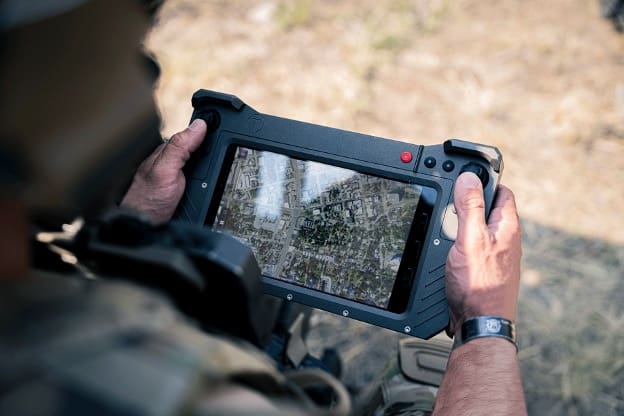
The Grip TA5 was selected as the Dismounted Common Controller (DCC) as part of the $5.1M U.S. Army RCCTO Human-Machine Integrated Formations (HMIF) rapid prototyping project.
ARLINGTON, Va., [September 12, 2025] — AeroVironment, Inc. (“AV”) (NASDAQ: AVAV), a global leader in all-domain defense technologies, today unveiled its Tomahawk Grip TA5. The Grip TA5 is an 8-inch tactical controller designed to deliver enhanced situational awareness, precision strike capabilities, and seamless scalability across mission sets for today’s modern warfighter.
Built to integrate with the military-grade Samsung Tab Active5 Tactical Edition, the Grip TA5 turns off-the-shelf tablets into mobile command centers. It’s modular architecture and multi-platform compatibility offers operators command and control of multiple robotic assets in real-time – enhancing mission adaptability and response speed. The system enables intelligence, surveillance and reconnaissance (ISR) missions, target acquisition and tracking, situational command and control (C2), and fire control functions–enabling direct operation of lethal payloads, loitering munitions, and direct-fire weapons. At just 2.5 pounds, the compact, rugged controller meets MIL-STD-810 and adds enhanced software security, advanced networking, and hot-swapping flexibility—positioning AV as the permanent control layer regardless of the underlying device model.
“Our ability to deliver effective, next-generation solutions at mission scale and speed positions AV as a top developer and manufacturer in the defense industry,” said Trace Stevenson, President of Autonomous Systems for AV. “The Grip TA5 is more than a controller. It’s a force multiplier that brings speed, interoperability, and future-ready capabilities to the modern warfighter.”
In May, AV announced that its Tomahawk Ground Control Station (GCS) product line was awarded a $5.1 million contract by the U.S. Army Rapid Capabilities and Critical Technologies Office (RCCTO) in support of the Human-Machine Integrated Formations (HMIF) rapid prototyping project. The Grip TA5 was officially selected as the Dismounted Common Controller (DCC) to advance human-machine teaming and strengthen battlefield command and control.
AV previously developed and delivered multiple iterations of prototypes based on the previous Samsung Tab Active3 as part of the United States Marine Corps’ Force Design 2030. The Grip TA5 leverages lessons learned from this work, adding the interoperability and multi-mission capabilities needed to meet requirements for the U.S. Army’s Low Altitude Stalking and Strike Ordinance (LASSO), Long Range Reconnaissance (LRR), and Launched Effects (LE) programs while still maintaining operability with USMC programs, like Marine Air-Ground Tablet (MAGTAB).
The Grip TA5 expands AV’s Tomahawk Ground Control Station product line, which also includes the Grip S20 designed around the Samsung Galaxy S20 Tactical Edition smart phone. Responding to operator feedback for larger screen sizes, the Grip TA5 offers a ruggedized and streamlined, cost-effective solution with an expandable port for dual 8-inch displays to boost visibility and efficiency. The controller will begin shipping as a standard catalog configuration or as an alternative option with AV platforms starting in late 2025.
“Developed for warfighters from warfighter feedback, the Grip TA5 highlights our focus on rapidly turning feedback into real, fielded innovation,” said John Bolen, AV’s Tomahawk GCS Product Line Manager. “By expanding screen size, enhancing networking, and offering scalability across clients, vehicles, and operations, we are giving soldiers a tactical edge on the battlefield.”
AeroVironment (“AV”) (NASDAQ: AVAV) is a defense technology leader delivering integrated capabilities across air, land, sea, space, and cyber. The Company develops and deploys autonomous systems, loitering munitions, counter-UAS technologies, space-based platforms, directed energy systems, and cyber and electronic warfare capabilities—built to meet the mission needs of today’s warfighter and tomorrow’s conflicts. At the core of these technologies lies AV_Halo, a modular, mission-ready suite of AI-powered software tools that empowers warfighters and enables full-battlefield dominance: detect, decide, deliver. With a national manufacturing footprint and a deep innovation pipeline, AV delivers proven systems and future-defining capabilities at speed, scale, and operational relevance. For more information, visit www.avinc.com.
Certain statements in this press release may constitute “forward-looking statements” as that term is defined in the Private Securities Litigation Reform Act of 1995. These statements are made on the basis of current expectations, forecasts and assumptions that involve risks and uncertainties, including, but not limited to, economic, competitive, governmental and technological factors outside of our control, that may cause our business, strategy or actual results to differ materially from those expressed or implied. Factors that could cause actual results to differ materially from the forward-looking statements include, but are not limited to, our ability to perform under existing contracts and obtain additional contracts; changes in the regulatory environment; the activities of competitors; failure of the markets in which we operate to grow; failure to expand into new markets; failure to develop new products or integrate new technology with current products; and general economic and business conditions in the United States and elsewhere in the world. For a further list and description of such risks and uncertainties, see the reports we file with the Securities and Exchange Commission. We do not intend, and undertake no obligation, to update any forward-looking statements, whether as a result of new information, future events or otherwise.
AeroVironment
+1.703.418.2828
pr@avinc.com
Press Release
09/10/2025
LONDON, England, September 10, 2025 – AeroVironment, Inc. (“AV”) (NASDAQ: AVAV), a global leader in all-domain uncrewed systems and defence technologies, today announced the opening of its new office in Hereford, United Kingdom. The facility is strategically located to bring the full spectrum of the company’s capabilities to the UK and European defence markets, extending AV’s global operations.
The new location will host a diverse team representing various AV product lines, including Tomahawk Ground Control Systems (GCS), small uncrewed aircraft systems (sUAS), medium uncrewed aircraft systems (MUAS), and ground-based systems. The specialized team will focus on driving innovation, providing operational support, and strengthening AV’s growing regional presence.
“We are intentionally investing and expanding in the UK to strengthen our global network and better collaborate with our key European defence customers–all with a mission of driving innovative, next-generation solutions to our warfighters and allies,” said Trace Stevenson, president of Autonomous Systems at AV. “From our Tomahawk GCS to our industry-leading precision strike and defensive systems, AV’s cutting-edge, integrated, reliable, and agile solutions are meeting the evolving needs of our customers worldwide.”
In addition to opening its new facility, AV is announcing a coproduction agreement with TIA Group to begin UK-based manufacturing operations. Located in Aerotech Business Park in Cheltenham, England, TIA will produce AV’s Tomahawk GCS Grip 23 TE controller – a rugged human-machine integrated controller for all-domain uncrewed operations and situational awareness for diverse missions. TIA is an experienced mechanical and electronic manufacturer with proven success in delivering specialized solutions to the UK Government, UK Ministry of Defence (MOD), and NATO customers.
“TIA Group is proud to have established a strong partnership with AV, positioning us to fully support their expansion into the UK and regional markets,” said David G. Watson MBE, Managing Director of TIA Group. “This significant collaboration milestone will broaden AV’s reach and enable the delivery of a responsive, first-class service, providing best-in-class AV products to UKMOD, our European partners, and allied nations. By leveraging TIA Group’s expertise in design, development, and manufacturing here in the UK, we will continue to provide customers worldwide with the agility and innovation they need.”
“Our expansion across the UK not only cements the Tomahawk Grip as a cornerstone for our growth in regional markets but also enhances our ability to deliver the broader family of AV systems to our global allies with scale and speed,” said Jason Hendrix, AV’s vice president and general manager of Small Uncrewed Aircraft Systems. “Through strong partnerships with industry leaders like TIA and key customers like the UK MOD and other NATO allies, we are establishing a foundation for future expansion to meet the evolving needs of the global defence industry.”
AeroVironment (“AV”) (NASDAQ: AVAV) is a defense technology leader delivering integrated capabilities across air, land, sea, space, and cyber. The Company develops and deploys autonomous systems, loitering munitions, counter-UAS technologies, space-based platforms, directed energy systems, and cyber and electronic warfare capabilities—built to meet the mission needs of today’s warfighter and tomorrow’s conflicts. At the core of these technologies lies AV_Halo, a modular, mission-ready suite of AI-powered software tools that empowers warfighters and enables full-battlefield dominance: detect, decide, deliver. With a national manufacturing footprint and a deep innovation pipeline, AV delivers proven systems and future-defining capabilities at speed, scale, and operational relevance. For more information, visit www.avinc.com.
Certain statements in this press release may constitute “forward-looking statements” as that term is defined in the Private Securities Litigation Reform Act of 1995. These statements are made on the basis of current expectations, forecasts and assumptions that involve risks and uncertainties, including, but not limited to, economic, competitive, governmental and technological factors outside of our control, that may cause our business, strategy or actual results to differ materially from those expressed or implied. Factors that could cause actual results to differ materially from the forward-looking statements include, but are not limited to, our ability to perform under existing contracts and obtain additional contracts; changes in the regulatory environment; the activities of competitors; failure of the markets in which we operate to grow; failure to expand into new markets; failure to develop new products or integrate new technology with current products; and general economic and business conditions in the United States and elsewhere in the world. For a further list and description of such risks and uncertainties, see the reports we file with the Securities and Exchange Commission. We do not intend, and undertake no obligation, to update any forward-looking statements, whether as a result of new information, future events or otherwise.
AeroVironment
+1.703.418.2828
pr@avinc.com
Press Release
05/19/2025
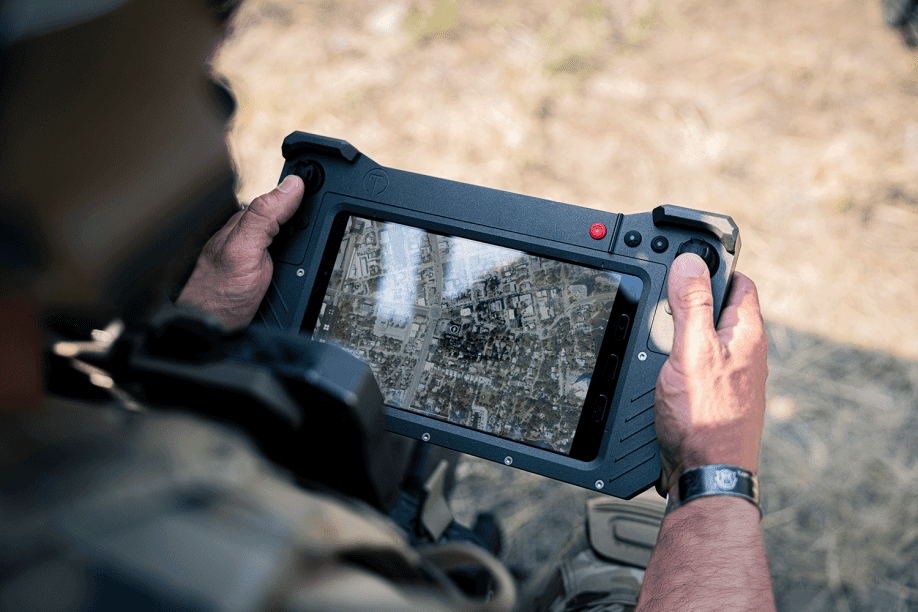
ARLINGTON, Va., May 19, 2025 – Tomahawk GCS, an AeroVironment (“AV”) product line specializing in autonomous and intelligent multi-domain systems, has been awarded a $5.1 million contract to support the U.S. Army Rapid Capabilities and Critical Technologies Office (RCCTO) Human- Machine Integrated Formations (HMIF) rapid prototyping project. Following a rigorous selection process, AV’s Tomahawk’s Grip TA5 was selected as the Dismounted Common Controller (DCC) to significantly enhance human-machine teaming for battlefield operations.
The HMIF initiative, led by the U.S. Army RCCTO, is accelerating the integration of autonomous and robotic systems into formations to enhance situational awareness, lethality, and survivability. With its modular architecture and multi-platform compatibility, the Grip TA5 provides operators command-and-control of multiple robotic assets in real-time, enhancing mission adaptability and response speed.
“This award is a huge milestone, not just for AV, but for the future of human-machine teaming on the battlefield,” said Jason Hendrix, AV’s vice president and general manager of Small Uncrewed Aircraft Systems. “We’re proud to continue pushing the boundaries of what’s possible in multi-domain operations and delivering proven technology to the warfighter.”
News
07/10/2024
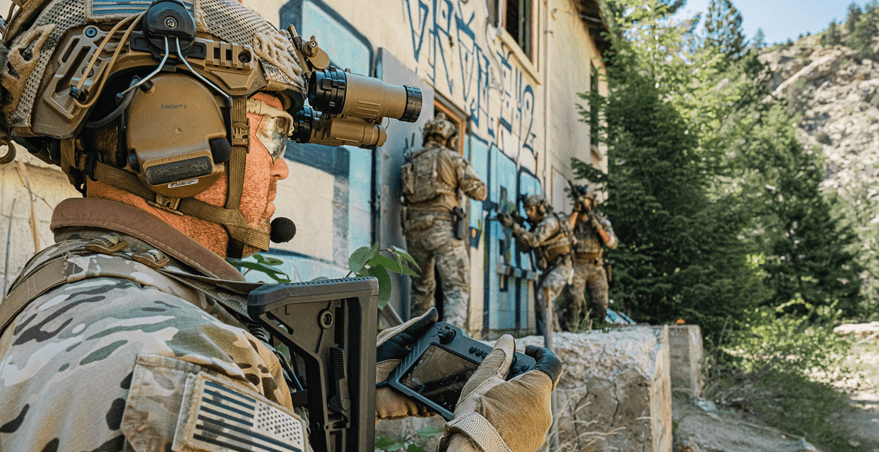
“E Pluribus Unum”—“Out of Many, One”—is the traditional motto of the United States. In the UxS realm, the Tomahawk Ecosystem expands that maxim; its “single pane of glass” user experience—its physical controller and software application—achieves common control of multiple multidomain uncrewed systems and links them to each other. The Ecosystem supports new technologies and can quickly integrate AI capabilities, providing warfighters with an intuitive, effective, soldier-first solution.
Press Release
02/08/2024
ARLINGTON, Va., February 8, 2024 – AeroVironment’s Tomahawk product line has been awarded a $2.67 million contract from Advanced Technology International (ATI) that will be managed by the U.S. Marine Corps Warfighting Lab (MCWL). This contract supports the Marine Corps’ Force Design 2030 and other Department of Defense (DoD) initiatives of enhancing lethality and mission success across the warfighting functions.
Under the contract, AeroVironment will deliver prototype Tomahawk Grip Tab Active (Grip TA) controllers and supporting test kits, allowing the DoD to evaluate the technical capabilities for future operations. RAID System, provides a large screen and ensures current and future cyber, safety, and fire control requirements are met.
The Tomahawk Grip TA controllers will be part of the larger Kinesis Ecosystem that already includes 20+ robotic systems, various input devices, and numerous AI-enhanced capabilities. This ecosystem uniquely enables multi-domain, many-to-many UxV operation through a single user interface, all while reducing the physical and cognitive burdens placed on the operator.
“AeroVironment is excited to deliver these systems to the DoD,” said Scott Bowman, Tomahawk Robotics product line manager at AeroVironment. “The tablet-based Grip Tab Active Controller will provide a larger viewing area and dedicated safety functions to operate large vehicles and weapon systems, all while maintaining the low-profile, ruggedized design our customers have come to expect from the Tomahawk product line. This controller will improve operator efficiency and unlock new use cases such as fire control and sensor-to-shooter.”
This contract extends the ongoing work between the Tomahawk Robotics product line and the DoD to provide a common controller for the DoD’s tactical robotic systems.
Tomahawk Robotics is the visionary force behind the groundbreaking Kinesis Ecosystem, an unmatched tactical capability designed for the warfighter first. At the heart of this innovation lies Kinesis, an AI-enhanced and open architecture common control system that seamlessly integrates the network of battle-proven UxVs, sensors, and third-party software onto a single glass pane. Powered by innovation, the Kinesis Ecosystem delivers targeted situational awareness and precision strike capabilities for the human-machine team across the battlespace.