Thought Leadership

When a Drone Threat Becomes an EOD Problem

09/09/2026

By Florian Gruener, Managing Director of Telerob, an AV Company 

A recent incident at Leipzig/Halle Airport is a good example of how the threat from unmanned systems is changing. 

Authorities discovered an unmanned drone carrying an improvised explosive device on airport grounds near Ukrainian cargo aircraft. Leipzig/Halle is one of Europe’s largest freight hubs and a critical logistics gateway supporting global commerce and the movement of military supplies into Eastern Europe. 

In a matter of moments, a transportation hub became the scene of an active security incident. 

Flights were disrupted. Security perimeters expanded. Explosive ordnance disposal specialists responded. 

For investigators, the danger was not simply the drone itself. It was everything they did not know. 

Was the explosive stable? Could it be remotely triggered? Would moving the drone initiate the device? Was there a chemical, biological or radiological threat? Was this the only device? 

These are the kinds of questions EOD operators must answer before they can safely deal with an unknown explosive. 

And the basic principle is quite simple: the more distance you can put between the operator and an unknown explosive, the better. 

That is why another unmanned system became an important part of the response that day at Leipzig. 

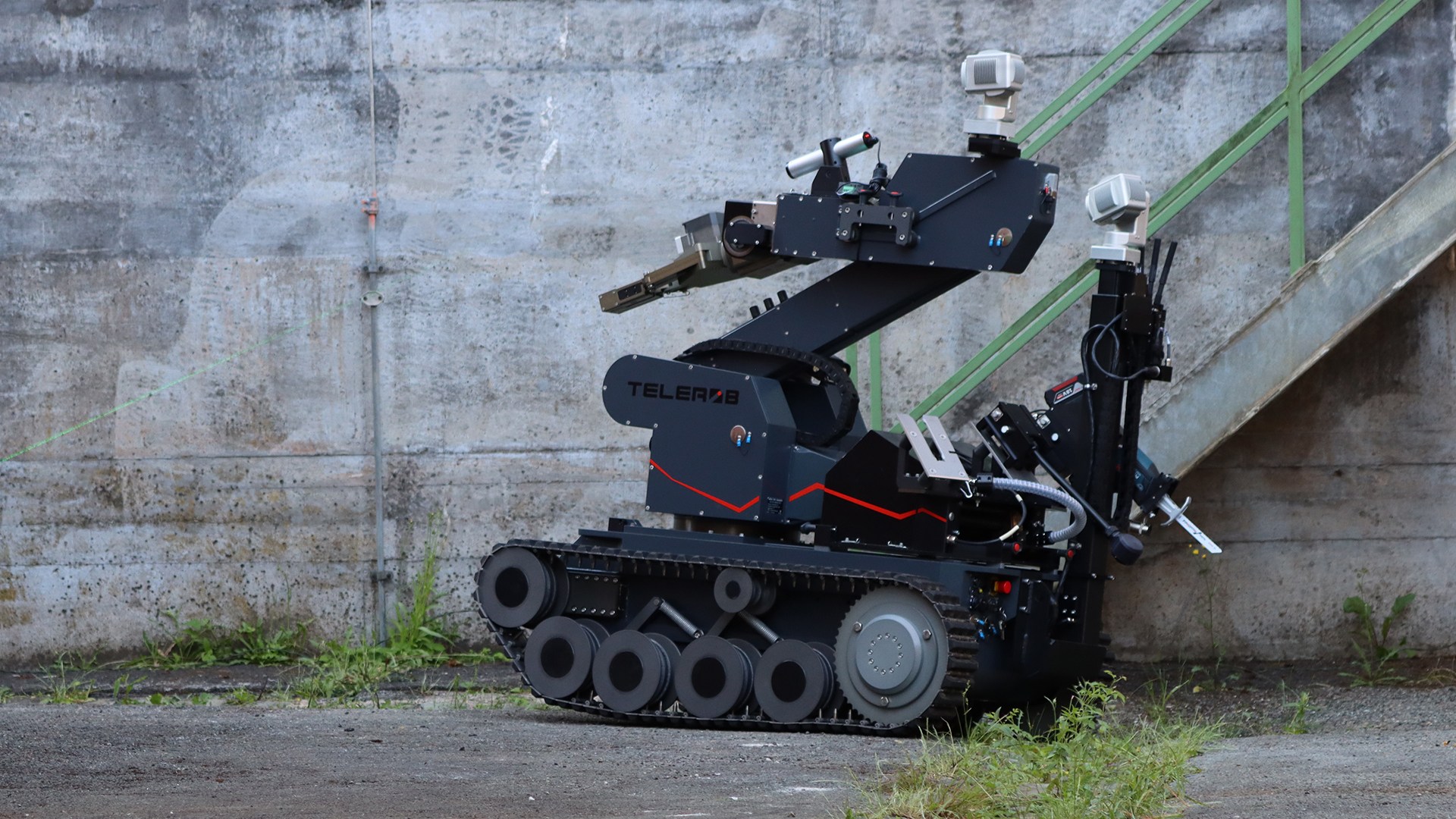
AV’s tEODor™ EVO, a remotely operated unmanned ground vehicle, moved toward the threat, allowing bomb technicians to remain at a safer distance while they investigated and manipulated the device and supported the safe removal of the detonator. 

The headlines were about a drone. 

But for me, Leipzig demonstrated something that deserves much more attention as governments and critical infrastructure operators invest in counter-UAS: 

Stopping the drone is not necessarily the end of the mission. 

When Counter-UAS Becomes EOD 

A great deal of investment is currently going into counter-UAS capabilities, and as the modern UAS threat continues to evolve quickly, we are constantly asking questions like: 

Can we detect the drone? Can we identify it? Can we track it? Can we jam it, intercept it or otherwise defeat it? 

All of these are important questions. 

But if that drone is carrying an explosive payload, bringing it to the ground does not necessarily solve the problem. 

It changes the problem. We need to start asking new questions. 

The threat that was moving through the air is now sitting on the ground. Someone still needs to determine what it is carrying. Someone needs to inspect it. Someone needs to understand whether it can be moved. And eventually, someone needs to render it safe. 

The mission has transitioned from counter-UAS to EOD. 

This is an important connection because counter-UAS and EOD are often treated as separate capabilities. Operationally, however, the transition between them can happen in seconds. 

First, you have a drone in the air. 

Then, you have a drone on the ground. 

If that drone is carrying an explosive payload, you now have an EOD problem. 

That means protecting airports, military installations, ports, logistics hubs and other critical infrastructure requires us to think beyond how we defeat the aircraft. We also have to plan for what happens after the aircraft is defeated. 

A Cheap System Can Create an Expensive Problem 

Leipzig also demonstrates why this problem is becoming more urgent. 

The economics of the drone threat are highly asymmetric. 

Commercial drones can fly significant distances, navigate accurately and carry meaningful payloads. At the same time, they are widely available and comparatively inexpensive. 

A system costing hundreds or thousands of dollars can potentially create effects costing millions. 

It can interrupt airport operations. It can disrupt logistics. It can threaten military movements. It can force the closure of infrastructure and require a significant security response. 

We have seen this development very clearly in active conflicts over the last several years. The same technologies and tactics can create serious problems far beyond a traditional front line. 

For me, the important question is not simply what the drone costs. 

It is what effect the drone can create and whether we are prepared for the complete response that follows. 

Why Distance Matters 

EOD robots are not new. We have been building these systems at Telerob and AV for decades, and the basic principle behind them has remained remarkably consistent. 

If a dangerous task can be performed remotely, there is no reason to put a person directly next to the danger when that can be avoided. 

That does not mean the robot replaces the EOD operator. I think this is an important distinction. 

The operator understands the situation. The operator evaluates the threat. The operator makes the decisions. 

The robot gives that person the ability to act on those decisions from a safer distance. 

At Leipzig, bomb technicians could maneuver tEODor toward the drone, inspect the device through its cameras and use its manipulator to interact with the payload while remaining at a protected distance. 

There is no single technical feature that makes an EOD robot effective. It is the combination of mobility, cameras, manipulation, communications and mission-specific tools working together to give the operator the capabilities needed for a particular situation. 

Technology does not resolve an EOD incident. 

Trained people do. 

Planning for the Complete Response 

We should not think about counter-UAS simply as a sequence that ends when a drone is detected, tracked and defeated. 

We should think about the complete response. 

Can we detect the drone? 

Can we identify what it is doing? 

Can we stop it? 

And then, can we safely deal with what remains? 

That last question will become increasingly important as drones become more capable, accessible and adaptable. 

Different missions will require different robotic systems. Some situations will require larger platforms with significant manipulation capabilities. Others may require smaller, rapidly deployable systems. There will not be one robot that fits every mission. 

But the objective remains the same: give operators the information and physical capability they need while keeping them as far away from the danger as reasonably possible. 

Leipzig demonstrated why that matters. 

Leipzig is a reminder that defeating an unmanned threat doesn’t necessarily eliminate it. Sometimes, it simply moves the threat from one domain to another. 

The organizations responsible for protecting critical infrastructure need to plan for that transition before it happens. 

Because the C-UAS mission may end when the drone reaches the ground, but the EOD mission may only be beginning. 

ABOUT THE AUTHOR 

Florian Gruener is Managing Director of Telerob GmbH and leads AV’s Unmanned Ground Vehicle product line. He has worked in the unmanned ground systems industry for many years, supporting military, law enforcement and public safety customers worldwide. 

JOIN THE AV MISSION  

AV isn’t for everyone. We hire the curious, the relentless, the mission-obsessed. The best of the best.  

We don’t just build defense technology—we redefine what’s possible. As the premier autonomous systems company in the U.S., AV delivers breakthrough capabilities across air, land, sea, space, and cyber. From AI-powered drones and loitering munitions to integrated autonomy and space resilience, our technologies shape the future of warfare and protect those who serve.  

Founded by legendary innovator Dr. Paul B. MacCready, Jr., AV has spent over 50 years pushing the boundaries of what unmanned systems can do. Our heritage includes seven platforms in the Smithsonian—but we’re not building history, we’re building what’s next.  

If you’re ready to build technology that matters—with speed, scale, and purpose—there’s no better place to do it than AV.  
EXPLORE OPPORTUNITIES 


Let’s Advance Your Mission

Product Catalog

View the full catalog to explore our solutions in detail.

Press Release

AV Introduces TOM 50 RE, a Backpackable UGV for Rapid Reconnaissance and Explosive Ordnance Disposal

06/14/2026

Lightweight uncrewed ground vehicle expands mission flexibility for highly mobile units operating in complex and contested environments 

OSTFILDERN, GERMANY — (June 15, 2026) — AeroVironment, Inc. (“AV”), a global leader in autonomous systems, today announced the launch of TOM 50 RE, a compact, backpackable uncrewed ground vehicle (UGV) developed by its wholly owned subsidiary Telerob.  

Designed for mobile exploration, mission-accompanying reconnaissance, explosive threat disposal, and operational support, TOM 50 RE enables dismounted forces, explosive ordnance disposal (EOD) teams, and special operations units—including SWAT—to rapidly deploy robotic capability wherever the mission demands. 

The announcement was made at Eurosatory 2026, a global event for defence and security held in Paris. 

“The introduction of TOM 50 RE reflects AV’s commitment to delivering robotic systems that directly address the realities of modern ground combat and explosive threat environments,” said Wahid Nawabi, Chairman, President, and Chief Executive Officer of AV. “Today’s operators need systems that move with them, adapt to multiple missions, and provide immediate intelligence while reducing risk to human life. TOM 50 RE delivers that capability in a highly portable form factor built for the tactical edge.” 

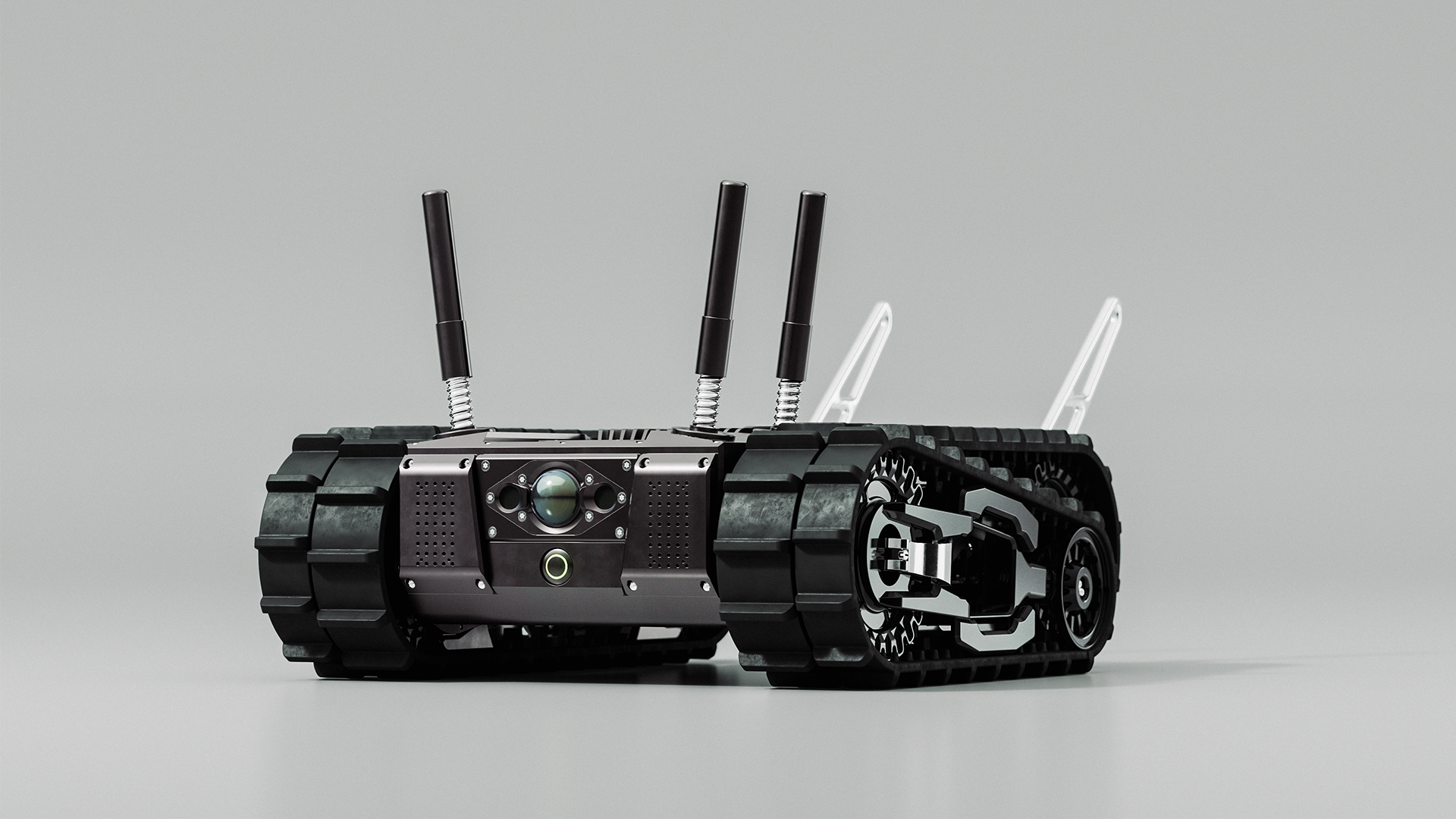
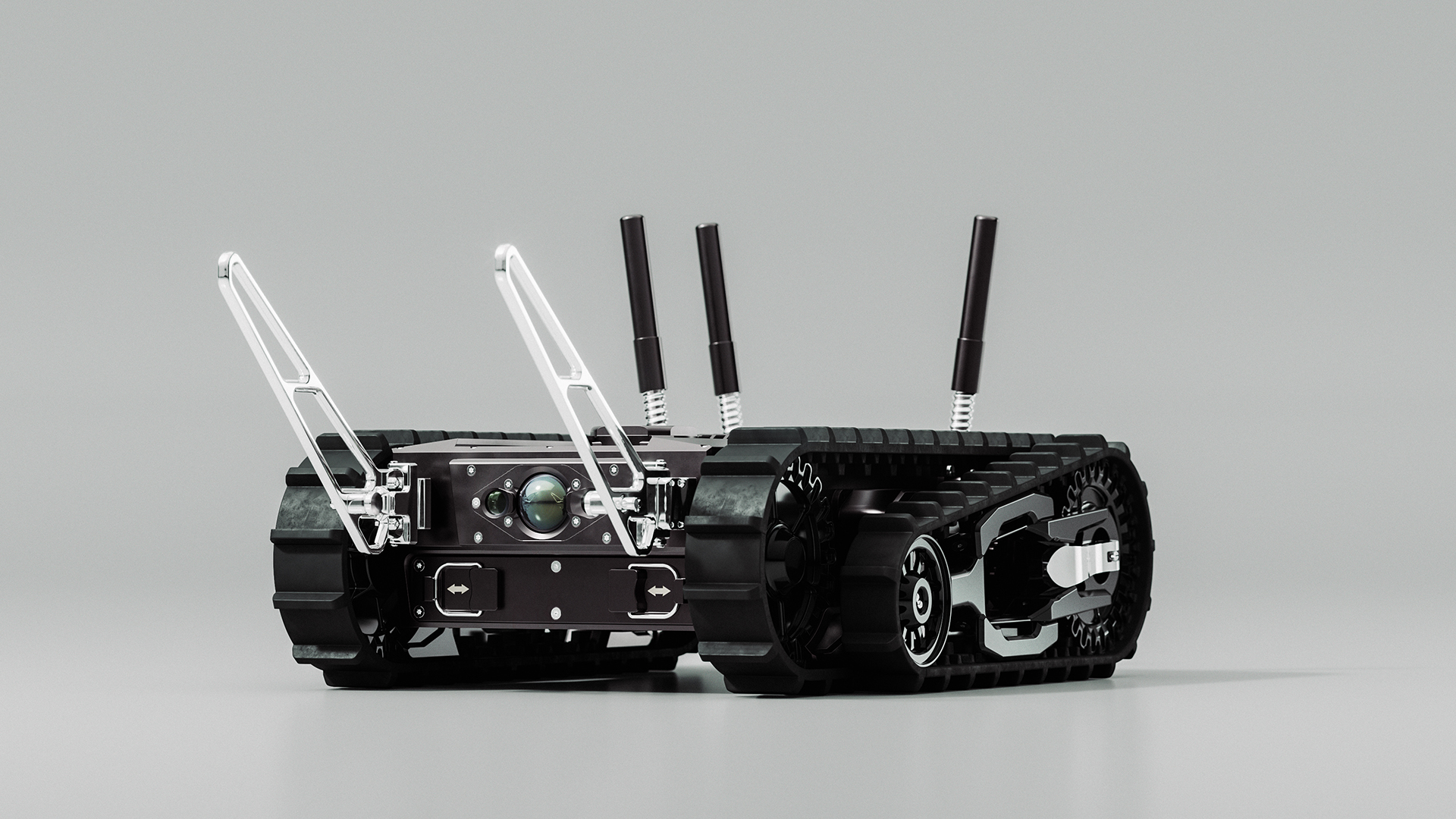
Weighing less than 10 kilograms (22 pounds) and compact enough to be carried by a single operator, TOM 50 RE enables rapid deployment in confined and complex terrain, while its tracked design, stair-climbing flipper system, and dedicated mobility attachments allow it to overcome obstacles, navigate stairs and uneven terrain, and operate inside structures, delivering up to five hours of endurance and supporting payloads of up to five kilograms without compromising mobility. 

With state-of-the-art onboard simultaneous localization and mapping (SLAM) capability, TOM 50 RE autonomously generates detailed maps of interior spaces, including multi-level buildings and global positioning system (GPS)-denied environments such as underground structures and dense urban terrain. Operators can identify and record points of interest directly within the digital map and export mission data immediately following operations, accelerating intelligence exploitation, supporting informed decision-making, and enabling more effective follow-on planning. 

Equipped with four integrated high-resolution wide-angle cameras with infrared capability, TOM 50 RE delivers persistent 360-degree situational awareness in day, night, and degraded visual environments. Its advanced internet protocol (IP)-mesh radio architecture provides secure, resilient communications while enabling the system to function as a mobile repeater, extending connectivity for forces operating deep inside structures or complex terrain.  

Its modular architecture, enabled by the Mission Module Interface (MMI) or an adapter supporting Telerob’s Universal Component Interface (UCI), allows operators to integrate mission-specific payloads, including advanced camera systems and disruptors, and tailor the system to evolving operational requirements. 

“TOM 50 RE was designed to deliver immediate robotic capability at the point of need, where operators face the greatest uncertainty and risk,” said Florian Gruener, Managing Director of Telerob and Product Line General Manager for Uncrewed Ground Vehicles. “Its ability to rapidly conduct these missions in complex terrain allows forces to gain critical situational awareness, mitigate threats, and make faster, more informed decisions—while keeping personnel out of harm’s way.” 

Controlled through AV_Halo™ COMMAND running on the Tomahawk Grip family of systems or the Robo Command Control System, operators can seamlessly manage TOM 50 RE alongside other uncrewed systems, enabling coordinated robotic operations and enhancing situational awareness across the mission. 

The Four Missions 

  • For mobile exploration, TOM 50 RE provides immediate situational awareness in unknown or high-risk environments, allowing operators to scout structures, confined spaces, and urban terrain without exposing personnel to danger. 


  • In mission-accompanying reconnaissance, the system’s integrated simultaneous localization and mapping (SLAM) capability enables it to navigate multi-story buildings, generate detailed interior maps, and identify and mark hazards or points of interest for follow-on forces. 


  • In defusing missions, TOM 50 RE supports the safe neutralization of improvised explosive devices and explosive hazards through modular disruptor and drop-charge payloads, allowing operators to mitigate threats from a safe distance.  


  • In its support role, in cooperation with the telemax EVO family of products, the system can serve as a mobile communications relay, extend operational reach, provide additional viewing angles, and enhance coordination between robotic and human elements across distributed teams. 

TOM 50 RE expands AV’s portfolio of intelligent, mission-ready ground robotic systems supporting defence, security, and public safety forces worldwide. 

About AV  

AV (NASDAQ: AVAV) is a defence technology leader delivering integrated capabilities across air, land, sea, space, and cyber. The Company develops and deploys autonomous systems, loitering munitions, counter-UAS technologies, space-based platforms, directed energy systems, and cyber and electronic warfare capabilities—built to meet the mission needs of today’s warfighter and tomorrow’s conflicts. At the core of these technologies lies AV_Halo™, a modular, mission-ready suite of AI-powered software tools that empowers warfighters and enables full-battlefield dominance: detect, decide, deliver. With a national manufacturing footprint and a deep innovation pipeline, AV delivers proven systems and future-defining capabilities at speed, scale, and operational relevance. For more information, visit www.avinc.com. 

Safe Harbor Statement 

Certain statements in this press release may constitute “forward-looking statements” as defined in the Private Securities Litigation Reform Act of 1995. These statements are based on current expectations, forecasts, and assumptions that involve risks and uncertainties, which could cause actual results to differ materially. Factors that may cause such differences include, but are not limited to, our ability to perform under existing contracts and obtain new ones; regulatory changes; competitor activities; market growth; product development challenges; and general economic conditions. For a more detailed discussion of these risks, please refer to AeroVironment’s filings with the Securities and Exchange Commission. We undertake no obligation to update forward-looking statements as a result of new information or future events. 

///////////////////////////////////////////////////////////////////////////////////////////////////// 

For additional media and information, please follow us: 


Media Contact:  

BJ Koubaroulis  
pr@avinc.com 

703.718.4060 


Investor Contact:  

Denise Pacioni 

ir@avinc.com 

805.795.4108 


Let’s Advance Your Mission

Product Catalog

View the full catalog to explore our solutions in detail.

TOM 50 RE

06/12/2026

Let’s Advance Your Mission

Product Catalog

View the full catalog to explore our solutions in detail.