Thought Leadership

For Australia, Sovereign Doesn’t Have to Mean Alone

10/14/2026

The question for Australia isn’t whether a capability is foreign or domestic. It’s whether Australia can control what happens next. 

By Sean Colvin, Director of Business Development, Asia Pacific, AV 

During six deployments to Afghanistan as a field service rep at AV, I learned that having a capability and being able to keep that capability in the fight are two very different things. 

We were fielding, training, and repairing small unmanned aircraft systems (s-UAS) in an environment where missions could change quickly and equipment was being used far harder than it ever would have been in a normal training environment. We couldn’t assume that the aircraft, payloads, batteries or support equipment would always be available when we needed them. 

So, we adapted. 

We learned to anticipate failures, carry the right spares, cross-train personnel and find solutions with whatever resources were available rather than waiting for the perfect replacement or support package. The people closest to the mission often had to make the adjustment in real time. 

Those deployments changed how I think about military capability. 

Having the best technology is not enough. What matters is whether you can get it where it needs to go, adapt it when the mission changes, sustain it when conditions become difficult and keep enough of it in the fight to matter. 

Nearly two decades later, I see a version of that same challenge playing out at a much larger scale in Australia and across the Indo-Pacific. 

For years, the defense industry has tended to treat sovereignty, or independence, as a question of origin. 

Where was a system designed? Where was it manufactured? Who owns the intellectual property? How much of its supply chain sits inside the country? 

Those are legitimate questions. But I don’t believe they are sufficient anymore, especially as they relate to Australia and the Indo-Pacific. 

The Australian Army is preparing for what its leadership describes as “archipelagic warfare” across the Indo-Pacific. It is prioritizing littoral maneuver, surveillance, reconnaissance, long-range strike, autonomous systems, resilient logistics and the command-and-control infrastructure required to connect them. 

In that environment, I believe sovereignty should be measured by more than where a capability was built. It should be measured by how much control Australia has over what happens next: how quickly it can acquire and field that capability, integrate Australian technology, adapt it as requirements change, sustain it at distance and scale it when demand grows. 

That is the distinction between possessing sovereign equipment and possessing what I would call operational sovereignty. 

Despite the fact that Australia has the ability to go it alone inside of its own very capable industrial infrastructure, I believe operational sovereignty means going together. 

Sovereignty Is Meaningless if You Don’t Control the Timeline 

During 16 years of working with customers in more than 40 countries, I have watched the same pattern repeat itself: the technical capability is often ready before the acquisition architecture, integration permissions or sustainment model required to actually field it. 

If we are serious when we talk about “speed to capability,” then sovereignty cannot only describe who built something. It must also describe whether the customer has a practical pathway to obtain and field it at operationally relevant speed. 

That issue was s particularly relevant last week at LAND FORCES 2026 in Perth, where I met with Australian customers about expanding their one-way attack capabilities. These conversations are about more than buying additional systems. They are about whether a different acquisition pathway can shorten the distance between an operational requirement and a fielded capability while creating a more responsive way to scale as demand grows. 

The fact that AV can now pursue Direct Commercial Sales (DCS) for one-way attack systems in Australia matters for precisely that reason. It creates another potential route between an operational requirement and the capability intended to satisfy it. And it does it with speed. 

That lesson extends well beyond one-way attack systems. 

A sovereign requirement without a responsive acquisition pathway is still a dependency. 

Don’t Build a New Aircraft Every Time You Invent a Better Sensor 

The same principle applies in the opposite direction. 

Australia has an extraordinarily capable defense technology sector. But sovereign industrial capability should not require every Australian innovation to sit on top of an Australian-built platform. 

That can actually constrain Australian technology rather than strengthen it. 

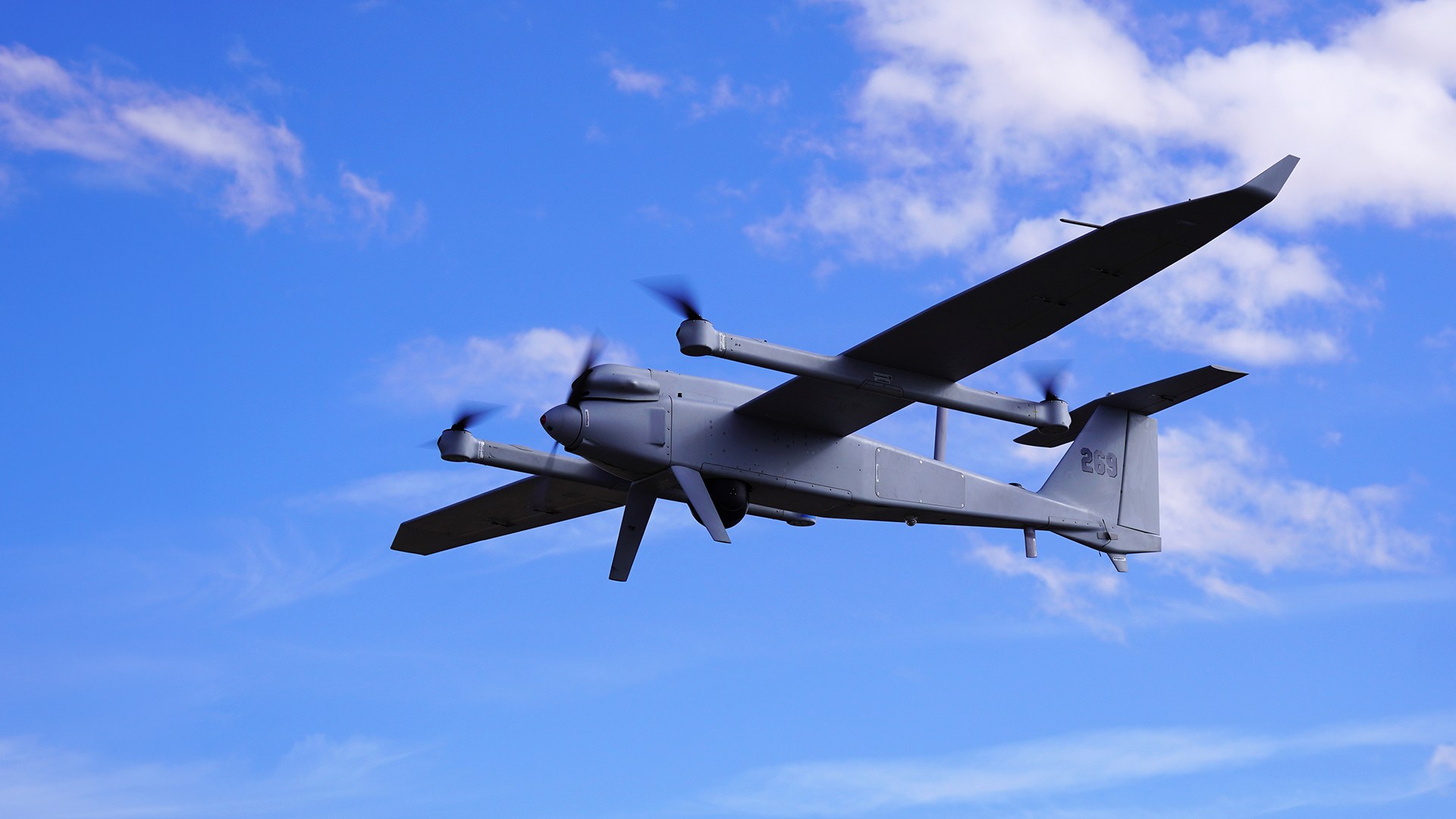
Our work with Australian defense technology company ARKEUS is a useful example of what the alternative can look like. Together, AV and ARKEUS integrated the Warden payload, an Australian-developed hyperspectral sensing technology, onto AV’s JUMP 20®, creating the first uncrewed platform to carry ARKEUS’ real-time, wide-area Hyperspectral Optical Radar capability. The result combines Australian sensor innovation with a proven allied aircraft to deliver a new intelligence surveillance and reconnaissance (ISR) capability without requiring Australia to develop an entirely new platform around the sensor. 

We integrated Warden onto JUMP 20 because JUMP 20 gives Warden the endurance, altitude, payload capacity and runway-independent access needed to keep that sensor on station for extended periods. Rather than building a dedicated aircraft around the sensor, we use JUMP 20’s modular architecture to put the right sensor on the right platform for the mission. 

I think the significance of that is larger than either ARKEUS or JUMP 20. 

The traditional way of thinking about sovereign capability might ask: Who built the aircraft? 

A more useful question is: How far can Australian technology travel? 

If an Australian company develops a better sensor, autonomy package, communications capability or payload, it should not necessarily need to develop an entirely new platform around it, even though Australia has the industrial capability to do just that. With modular architectures and willing industry partners, that technology can be integrated onto proven allied platforms and potentially gain access to a much larger capability ecosystem. 

That is not a concession of sovereignty. 

It is leverage. 

Australian innovation strengthens an allied platform. The allied platform gives Australian innovation another route to the warfighter. Both industrial bases become stronger. 

Critically, the customer gets capability faster than if every innovation requires a new platform to be designed around it. 

The Platform Is No Longer the Finished Product 

This matters because military requirements are becoming increasingly difficult to freeze. 

In conversations across the region, I routinely encounter customers who know the operational problem they need to solve before they know exactly what the final technical solution should look like. 

That is not indecision. It is increasingly the nature of modern warfare. 

Threats evolve. Sensors change. Communications requirements change. Adversaries introduce countermeasures. New payloads emerge. Lessons from current conflicts move around the world faster than traditional acquisition systems can respond to them. 

A platform selected against today’s requirement can therefore become inadequate long before the end of its intended service life. 

That changes what “proven” should mean. 

A proven platform is not merely one that works today. It is one that has enough architectural flexibility, industrial support and production maturity to keep changing tomorrow. 

I sometimes describe systems like our P550® as trucks for exactly this reason. The value isn’t simply what is carried on the platform when it leaves the factory. The value is that the platform provides the power, interfaces, payload capacity and architecture to carry different things as the mission changes. 

The platform becomes infrastructure for capability. 

That distinction will become increasingly important in the Indo-Pacific. 

Australian Capability Should Move in Both Directions 

If Australian technology should be able to move outward onto allied platforms, allied technology should also be able to develop deeper roots inside Australia’s industrial base. 

That is the other half of operational sovereignty. 

AV and NIOA Australia are pursuing an agreement around one-way attack systems. Signed during LAND FORCES 2026, the agreement establishes a framework for the companies to develop a path toward Australian co-production and localization of AV’s one-way attack systems. The specifics of that relationship matter, but the larger model matters more. 

Australia should not have to choose between fielding mature allied technology and developing its own industrial capability. 

The objective should be to do both. 

Trusted international technology can be paired with Australian industry for integration, sustainment, support and, where appropriate, deeper industrial participation. At the same time, Australian technologies can be integrated into international systems and potentially reach allied capability ecosystems. 

That is not a one-way supply chain. 

It is a two-way industrial network. 

I believe that is a much more useful way to think about the promise of AUKUS. 

AUKUS Should Be an Integration Engine 

The ambition for AUKUS should be greater than making it easier for three countries to purchase one another’s technology. 

The real potential of AUKUS is considerably broader than the submarine program (SSN-AUKUS) that is expanding the nuclear-powered attack submarine fleet. With proper execution, AUKUS could become a long-term integrated defense-industrial and technology ecosystem, particularly across the Indo-Pacific. 

Proper execution means that an Australian sensor should be able to find its way onto an American aircraft without years of unnecessary friction. American technology should be able to establish Australian sustainment and industrial capacity. British software or autonomy should be capable of being combined with technology developed in Australia or the United States when the mission demands it. 

The competitive advantage is not simply interoperability. 

It is recombination. 

Whichever alliance can identify the best available technology, combine it fastest, put it into the hands of warfighters and then change it again when the adversary responds will possess a significant advantage. 

That is particularly important for Australia. 

Geography makes sustainment difficult. Distance makes logistics unforgiving. The Indo-Pacific places extraordinary demands on range, persistence, communications and supply chains. And the pace of technological change means Australia cannot assume that the capability it purchases today will remain configured the same way throughout its operational life. 

So, I would judge sovereign capability against four practical questions. 

  1. Can Australia integrate it? Can Australian sensors, payloads, software and other technologies connect to it? 
  1. Can Australia adapt it? Can the capability change when Australian requirements or the threat changes? 
  1. Can Australia sustain it? Are the industrial relationships, technical knowledge and supply chains in place to keep it operating when distance and disruption begin to matter? 
  1. Can Australia scale it? If operational demand changes dramatically, can the industrial base deliver meaningful quantities rather than exquisite prototypes? 

If the answer to those questions is yes, I care considerably less about the flag painted on the factory where every component originated. 

Sovereign Doesn’t Have to Mean Alone 

Australia is right to demand greater self-reliance. 

But self-reliance and self-sufficiency are not the same thing. 

In fact, insisting that sovereignty requires Australia to independently recreate every platform, sensor, payload and component its military may need could produce the opposite of the intended result: slower capability, smaller production runs, less access to allied innovation and systems that become harder to adapt as the threat changes. 

There is another model. 

Build Australian technology that can make allied platforms better. Bring proven allied technologies into partnerships that strengthen Australian industrial capacity. Design systems around modularity rather than technological lock-in. Create acquisition pathways that move at the speed of operational requirements. Use AUKUS to make technology move more freely across trusted industrial bases. 

That is not giving up sovereignty. 

That is exercising it. 

The tactical edge in the Indo-Pacific will not belong to the country that can claim it built everything itself. 

It will belong to the force that can get the right capability, integrate the best available technology, sustain it at distance, produce it at scale and change it faster than the adversary can respond. 

Sovereign does not have to mean alone. 

ABOUT THE AUTHOR 

Sean Colvin, CAPM, is Director of Business Development for Asia Pacific at AV. During his 16 years with AV, he has supported customers and operations in more than 40 countries, including six deployments to Afghanistan. His experience spans international program management, business development, Foreign Military Sales and direct commercial programs. 

—— 

ABOUT AV, JOINING THE MISSION 

AeroVironment (AV) is a defense technology company with a mission to invent and deliver advantage to U.S. and allied militaries. AV isn’t for everyone. We hire the curious, the relentless, the mission-obsessed.  

AV doesn’t just build defense technology; we redefine what’s possible. As the premier autonomous systems company in the U.S., we deliver breakthrough capabilities across air, land, sea, space, and cyber. From autonomy-enabled drones and loitering munitions to integrated autonomy and space resilience, our technologies shape the future of warfare and protect those who serve. 

Founded by legendary innovator Dr. Paul MacCready, AV has spent more than 50 years pushing the boundaries of what unmanned systems can do. Our heritage includes seven platforms in the Smithsonian—but we’re not building history, we’re building what’s next. 

If you’re ready to build technology that matters – with speed, scale, and purpose – come find your people.  
EXPLORE OPPORTUNITIES 


Let’s Advance Your Mission

Product Catalog

View the full catalog to explore our solutions in detail.

Press Release

AV and NIOA Sign Agreement to Advance One-Way Attack Localization and Co-Production in Australia

10/13/2026

Companies to explore Australian production, integration, sustainment and support for AV’s one-way attack systems.   

PERTH, Australia, OCTOBER 08, 2026 — AeroVironment, Inc. (“AV”) (NASDAQ: AVAV) and NIOA Australia have signed a memorandum of understanding (MOU) to explore opportunities to expand Australian industry participation supporting AV’s one-way attack systems. 

Signed during LAND FORCES 2026, the agreement establishes a framework for AV and NIOA to identify and facilitate a path forward for the localization, co-production and sustainment of AV’s one-way attack systems in Australia. 

Under the MOU, the companies will explore opportunities to combine AV’s autonomous systems with NIOA’s sovereign weapons and munitions expertise. Potential areas of cooperation include local manufacturing and integration, in-country support and sustainment, and the development of Australian variants incorporating NIOA-developed payloads, warheads and mission effects where technically, commercially and legally feasible. 

“AV’s one-way attack systems are proven capabilities with growing demand from U.S. allies and partners around the world,” said Wahid Nawabi, chairman, president and chief executive officer at AV. “Our collaboration with NIOA creates a pathway to expand that capability in Australia and explore how Australian industry can contribute to the manufacture, integration, support and sustainment of AV’s one-way attack systems.”   

The MOU also contemplates NIOA serving, subject to final agreements and required approvals, as an Australian distributor and authorized support partner for AV’s one-way attack systems. The companies plan to evaluate opportunities for NIOA to support Australian customer engagement, training, logistics, maintenance coordination, inventory management and other in-country sustainment activities. 

The parties also share a non-binding ambition to explore the establishment of Australia as a regional center of excellence for advanced launched effects and loitering munitions, combining AV’s autonomous systems with NIOA’s sovereign weapons and munitions expertise. The MOU contemplates potential local manufacture, integration, sustainment and future capability development for Australian and allied customers, subject to applicable laws, approvals and subsequent agreements. 

The MOU is non-binding, and any future technology transfer, manufacturing, distribution or other commercial activities will be subject to applicable U.S. and Australian laws and regulations, required government approvals and separate definitive agreements between AV and NIOA. 

About AV 

AeroVironment (“AV”) (NASDAQ: AVAV) is a defense technology leader delivering integrated capabilities across air, land, sea, space, and cyber. The Company develops and deploys autonomous systems, loitering munitions, counter‑UAS technologies, space‑based platforms, directed energy systems, and cyber and electronic warfare capabilities—built to meet the mission needs of today’s warfighter and tomorrow’s conflicts. With a national manufacturing footprint and a deep innovation pipeline, AV delivers proven systems and future‑defining capabilities at speed, scale, and operational relevance. For more information, visit www.avinc.com. 

About NIOA 

NIOA is a privately-owned global munitions company established in Queensland, Australia, in 1973. Its operations include NIOA Australia, NIOA New Zealand, the Australian Missile Corporation, Barrett Firearms in the United States, NIOA United Kingdom and joint venture Rheinmetall NIOA Munitions. NIOA is a major tenant at the Australian Government-owned munitions facility at Benalla, Victoria, and a joint venture partner in the Rheinmetall NIOA Munitions artillery shell forging plant at Maryborough, Queensland. 

Safe Harbor Statement 

Certain statements in this press release may constitute “forward‑looking statements” as defined in the Private Securities Litigation Reform Act of 1995. These statements are based on current expectations, forecasts, and assumptions that involve risks and uncertainties, which could cause actual results to differ materially. Factors that may cause such differences include, but are not limited to, our ability to perform under existing contracts and obtain new ones; regulatory changes; competitor activities; market growth; product development challenges; and general economic conditions. For a more detailed discussion of these risks, please refer to AeroVironment’s filings with the Securities and Exchange Commission. We undertake no obligation to update forward‑looking statements as a result of new information or future events. 

///////////////////////////////////////////////////////////////////////////////////////////////////// 

For additional media and information, please follow us: 

Media Contact:  

Deb Richardson
pr@avinc.com 

667-356-1377 


Investor Contact:  

Denise Pacioni 

ir@avinc.com 

805.795.4108 


Let’s Advance Your Mission

Product Catalog

View the full catalog to explore our solutions in detail.

Thought Leadership

2nd Marine Regiment Tests First-Ever Group 3 UAS Capabilities at the Conventional Level

07/22/2026

Posted to DVIDS

07.17.2026

Story by Sgt. Alexis French 

2nd Marine Division  

MARINE CORPS AIR GROUND COMBAT CENTER TWENTYNINE PALMS, Calif. – Amidst the remote sands and sweltering heat of the California desert, 2nd Marine Regiment, 2nd Marine Division, embarks on the U.S. Marine Corps’ pioneer test of the JUMP 20-X equipped with the Switchblade 300 Block 20 at the conventional level during Service Level Training Exercise 4-26.

JUMP 20-X is a Group 3 unmanned aircraft system possessing capabilities of 12 hours in-air flight time, electro-optical infrared camera payloads, a 115-mile operational range, and up to 30-pounds of payload capacity—leading to one of Jump 20-X’s biggest assets: the Switchblade 300 Block 20, a loitering munition released from the undercarriage of the JUMP 20-X.

On July 16th and 17th, 2nd Marines experimented JUMP 20-X equipped with the Switchblade 300 Block 20 munition alongside developer, AeroVironment. In a groundbreaking success for the regiment, they accurately engaged a target 25 kilometers into the battlespace.

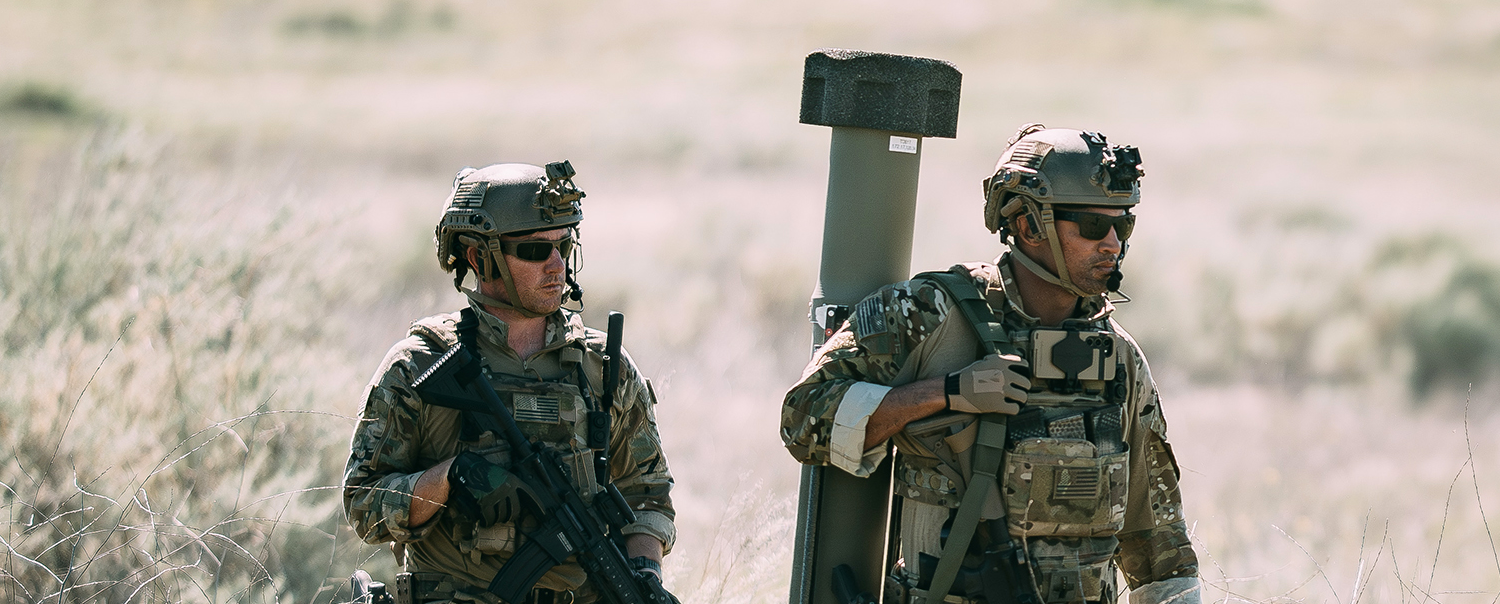
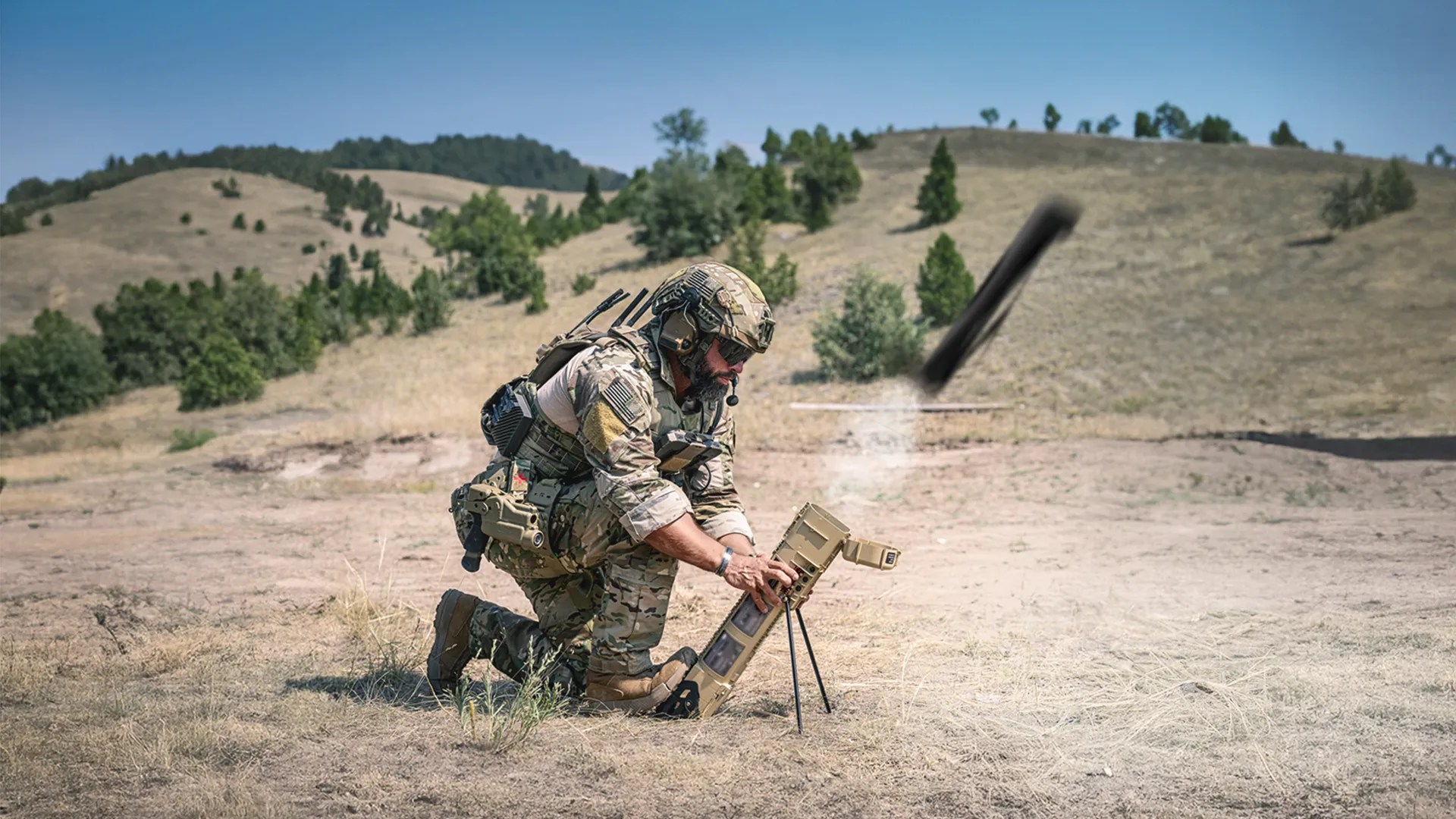
“[Switchblade 300 Block 20] can be launched, go into a holding pattern as you look for your adversary and you can directly fly some organic precision fires that are tube launched from Marines on the ground,” said CWO2 Christopher Leone, the 2nd Marine Regiment intel operations and fusion officer; and intelligence, surveillance and reconnaissance tactical controller. “For the JUMP 20-X experiment that we’re doing, AeroVironment has tested its capabilities to launch that same ground loitering munition from the belly of the bird itself.”

Incorporating the Switchblade 300 Block 20 into the battlefield gives the Marine Corps an additional loitering munition that organically incorporates with troops on the ground–similar to Organic Precision Fires-Light that is currently used by infantry units–and provides fires at the regiment level to engage the adversary.

“We at 2nd Marines are the first ones testing a Group 3 asset at the Regimental level,” Leone said. “[The Marine Corps has] the Marine Unmanned Aerial Vehicle Squadrons 1, 2, and 3 that fly the MQ-9s in the Group 5 level of assets, but it would be great for the Regiment because we’re outside of the [air] wings. We’re supporting the Ground Combat Element that doesn’t have an asset that can fly as far as the Group 5, so this is something that hasn’t been tested before.”

2nd Marines realizes the positive impact this Group 3 asset will have in future operations as it provides capabilities not found in the Marine Corps’ other assets.

2nd Marine Regiment has only USMC Group 1 Program of Record in their arsenal to include the Puma AE, and quadcopters such as SkyDio X2D and Sky Raider, stated Leone.

With Group 1 assets having small duration flight times ranging from 30 minutes to an hour and a half and limited flight distance, the JUMP 20-X stands out for its longevity and ability to travel miles into deep battlespace.

“[JUMP 20-X] is big for us, and to fly it into the regimental deep space as we’re looking to shape fires in the environment for our battalions to keep moving towards the next objective–none of our current PORs that are Group 1 would be able to go that far,” Leone said. JUMP 20-X is a product of AeroVironment, who is also the producer of the Marine Corps’ Puma AE. Having that working relationship with the company, 2nd Marines reached out in February of this year, interested in their Group 3 capabilities.

“As the [2nd Marine] Regiment, this is the first conventional unit to at least test and do a combat research and development agreement with AeroVironment,” Leone said, referring to the predominant units working with AeroVironment being special forces across the Department of War. “We invited AeroVironment out here for our mid-planning conference, all in support of SLTE 4-26, and they agreed upon it and are in direct support of the regiment to give us this capability.”

As of now, 2nd Marines does not have any Small Unmanned Aircraft System Operators, MOS 7316, who have the training to fly Group 3 assets.

We’re trying to fix the lack of pilots for Group 3 through this week’s testing, experimentation and research, Leone said. Currently, MOS 7300 Marines fly the Group 2 Stalker and Group 5 assets.

Through learning side-by-side with AeroVironment contractors, who operate JUMP 20-X for the Marines at SLTE 4-26, 2nd Marines is confident that with their support through MDMX and MWX force-on-force later this August, they’ll be ahead of the curve in targeting the adversary–advancing the Marine Corps’ future of UAS capabilities deep into the ever-changing battlefield.

Let’s Advance Your Mission

Product Catalog

View the full catalog to explore our solutions in detail.

Press Release

U.S. Army Selects AV’s Switchblade® 400 for LASSO Program

05/04/2026

Award establishes Switchblade 400 as key component of Army’s enduring next-generation loitering munition program

ARLINGTON, Va. — May 4, 2026 — AeroVironment, Inc. (“AV”) (NASDAQ: AVAV), today announced that it has been awarded a prototype agreement from the U.S. Army for the Low-Altitude Stalking and Strike Ordnance (LASSO) program to support the rapid development, delivery and testing of the Switchblade® 400 loitering munition.

The award establishes Switchblade 400, AV’s medium-range, man-portable, anti-armor loitering munition, as a key component of the Army’s LASSO Program, supporting the service’s modernization priorities for rapidly deployable, precision strike capabilities that can operate effectively in contested environments.

“This award reflects the Army’s confidence not only in Switchblade 400, but in AV’s ability to deliver at scale,” said Trace Stevenson, President of Autonomous Systems at AV. “Being selected under the LASSO program positions AV as a long-term partner to the Army as it modernizes its loitering munition capabilities, from development and testing through production, fielding, and continuous capability evolution.”

The first loitering munition purpose-built to operate within AV_Halo™, AV’s modular command-and-control ecosystem, Switchblade 400 incorporates advanced aided target recognition (ATR) and autonomous capabilities to detect, classify, and engage targets, day or night, in denied and contested environments while delivering the same anti-armor performance comparable to larger systems, like the Switchblade 600 Blk 2.

Core to Switchblade 400 is the implementation of a Modular Open Systems Approach (MOSA) in system design to ensure long term system resilience and relevance allowing for interoperability, upgradeability, and affordability as missions evolve.

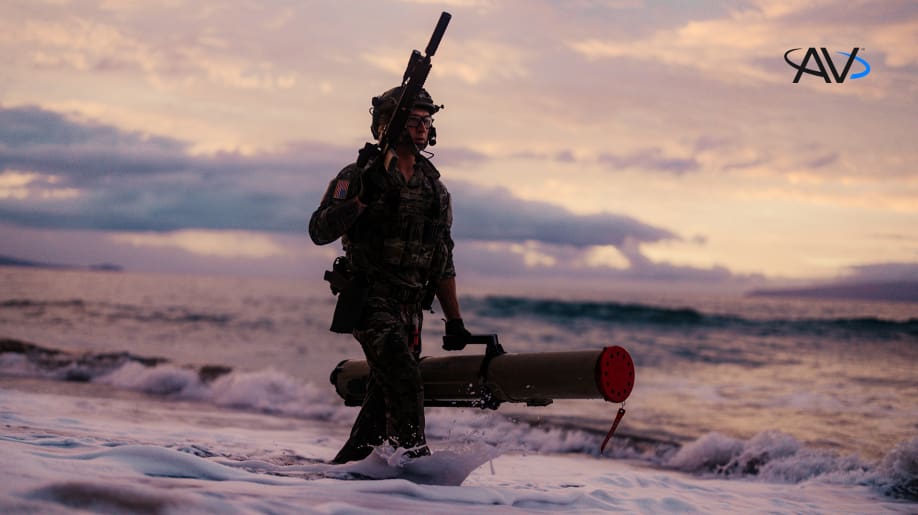
Known as the “Lightweight Tank Destroyer,” and sized to fit common launch tubes, Switchblade 400 enables a sensor-to-shooter concept of operations that allows a single soldier to detect, identify, and engage targets through a unified, networked architecture – shortening decision timelines while increasing precision, speed, and operational flexibility at the tactical edge. The system features an all-up round (AUR) weighing under 40 pounds that provides the soldier with a lightweight, man-portable, anti-tank weapon system.

“Switchblade 400 is the product of continuous feedback from the field and the soldiers who rely on our systems in real-world operations,” said Brian Young, Senior Vice President of Loitering Munitions at AV. “We are constantly leaning forward, integrating new capabilities, enhancing performance, and reducing the burden on the warfighter. That soldier-driven approach is central to how we develop, test, and deliver capability for the Army.”

The new OTA award under LASSO follows a recent $186 million delivery order from the U.S. Army for Switchblade®600 Block 2 and Switchblade® 300 Block 20 explosively formed penetrator (EFP) loitering munition systems, part of the Army’s existing five-year, $990 million Indefinite Delivery, Indefinite Quantity (IDIQ) contract under the Lethal Unmanned Systems (LUS) Directed Requirement (DR), which was awarded in August 2024.  It was the Army’s first Switchblade order containing EFP payload, delivering enhanced lethality against armored threats.

“The Army’s trust in the Switchblade family has been earned through years of real-world use by soldiers who rely on these systems every day,” said Jimmy Jenkins, Executive Vice President of Precision Strike and Defense Systems at AV. “That trust reflects a clear operational need for precision, speed, and adaptability at the tactical edge—capabilities the Switchblade family is designed to deliver as missions and threats continue to change.”

About AV

AeroVironment (“AV”) (NASDAQ: AVAV) is a defense technology leader delivering integrated capabilities across air, land, sea, space, and cyber. The Company develops and deploys autonomous systems, loitering munitions, counter-UAS technologies, space-based platforms, directed energy systems, and cyber and electronic warfare capabilities—built to meet the mission needs of today’s warfighter and tomorrow’s conflicts. At the core of these technologies lies AV_Halo™, a modular, mission-ready suite of AI-powered software tools that empowers warfighters and enables full-battlefield dominance: detect, decide, deliver. With a national manufacturing footprint and a deep innovation pipeline, AV delivers proven systems and future-defining capabilities at speed, scale, and operational relevance. For more information, visit www.avinc.com.

Safe Harbor Statement

Certain statements in this press release may constitute “forward-looking statements” as defined in the Private Securities Litigation Reform Act of 1995. These statements are based on current expectations, forecasts, and assumptions that involve risks and uncertainties, which could cause actual results to differ materially. Factors that may cause such differences include, but are not limited to, our ability to perform under existing contracts and obtain new ones; regulatory changes; competitor activities; market growth; product development challenges; and general economic conditions. For a more detailed discussion of these risks, please refer to AeroVironment’s filings with the Securities and Exchange Commission. We undertake no obligation to update forward-looking statements as a result of new information or future events.

/////////////////////////////////////////////////////////////////////////////////////////////////////

For additional media and information, please follow us:

Media Contact:

BJ Koubaroulis
pr@avinc.com

703.718.4060

Investor Contact:

Denise Pacioni

ir@avinc.com

805.795.4108

Let’s Advance Your Mission

Product Catalog

View the full catalog to explore our solutions in detail.

Switchblade® 300 Block 20

04/01/2026

Switchblade® 300 Block 2

Let’s Advance Your Mission

Product Catalog

View the full catalog to explore our solutions in detail.

News

AV Receives $186 Million U.S. Army Delivery Order for Next-Generation Switchblade Systems

02/26/2026

AV Receives $186 Million U.S. Army Delivery Order for Next-Generation Switchblade Systems

ARLINGTON, Va. — February 26, 2026 — AeroVironment, Inc. (“AV”) (NASDAQ: AVAV), a global leader in autonomous systems and precision strike solutions, today announced receipt of a $186 million delivery order from the U.S. Army for Switchblade® 600 Block 2 and Switchblade® 300 Block 20 explosively formed penetrator (EFP) loitering munition systems.

The order was issued under the Army’s existing five-year, $990 million Indefinite Delivery, Indefinite Quantity (IDIQ) contract for Lethal Unmanned Systems (LUS), which was awarded in August 2024. This delivery order marks the U.S. Army’s first procurement of AV’s next-generation Switchblade product line, underlining a significant step forward in fielding advanced, precision loitering munitions across infantry and maneuver formations. It is the Army’s first Switchblade order containing EFP payload, delivering enhanced lethality against armored threats.

“This delivery order reflects the Army’s confidence in the next evolution of the Switchblade family and its relevance to modern, contested battlefields,” said Brian Young, Senior Vice President of Loitering Munitions at AV. “Switchblade 600 Block 2 and Switchblade 300 Block 20 build on years of combat experience while delivering meaningful upgrades in autonomy, resilience, and lethality tailored to today’s operational demands.”

Switchblade 600 Block 2 is AV’s most advanced long-range loitering munition to date, designed for multi-domain operations and ruggedized for maritime and highly contested environments. Developed in collaboration with United States Special Operations Command (SOCOM), the system features upgraded avionics and advanced Automatic Target Recognition (ATR), enabling faster detection, identification, and engagement of threats. Integrated resilient communications, including Silvus MANET radios, support distributed operations and extended handoff ranges, while improved navigation and mission resilience allow effective employment in GPS-challenged environments. These upgrades provide commanders with increased reach, flexibility, and confidence against armored and high-value targets.

Switchblade 300 Block 20 introduces a new modular payload capability to the combat-proven, backpackable loitering munition. For the first time, the Army has procured the system with an Explosively Formed Penetrator (EFP) payload, delivering enhanced lethality against armored threats while retaining the speed, portability, and ease of use that have made Switchblade 300 a trusted solution at the small-unit level. The Block 20 configuration also includes sensor improvements, enhanced user interfaces, and extended range options, allowing rapid, precision effects beyond line of sight.

Together, the Switchblade 600 Block 2 and Switchblade 300 Block 20 provide the Army with a scalable family of precision loitering munitions—from lightweight, single-operator systems to long-endurance, multi-domain capabilities—designed to operate seamlessly across echelons and mission sets.

“This delivery order further advances the Army’s Lethal Unmanned Systems Directed Requirement and reinforces AV’s role as the leading provider of combat-proven loitering munition systems,” said Young. “As we continue to invest in expanding Switchblade manufacturing capacity and accelerating delivery timelines, we are continuing to meet the growing demand for these products from U.S. and allied forces.”

Let’s Advance Your Mission

Product Catalog

View the full catalog to explore our solutions in detail.

News

AeroVironment and General Dynamics Land Systems Successfully Demonstrate PERCH Loitering Munitions Launcher

12/10/2025

AeroVironment and General Dynamics Land Systems Successfully Demonstrate PERCH Loitering Munitions LauncherGeneral Dynamics Land Systems today announced a successful demonstration of the Precision Effects & Reconnaissance, Canister-Housed (PERCH) system, codeveloped with strategic partner AeroVironment (AV), at the U.S. Army’s Machine Assisted Rugged Sapper (MARS) event at Fort Hood, Texas.
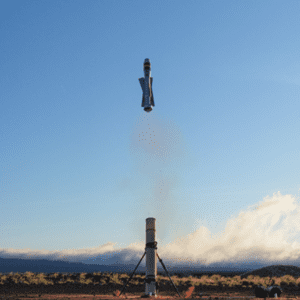
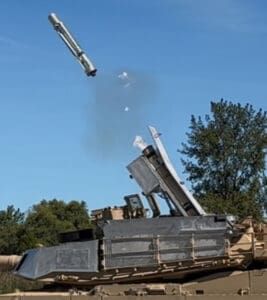
PERCH is a modular kit that integrates AV’s Switchblade 300 and Switchblade 600 loitering munitions into M1A2 Abrams SEPv3 main battle tanks and Stryker infantry carrier vehicles for beyond-line-of-sight surveillance and lethality. PERCH does not require welding nor cutting for mounting; instead, it replaces the Abrams’ loader sponson box and is bolted into place using existing attachment points. Future iterations will operate on existing vehicle computer systems.

At the MARS demo on Oct. 26-30, users completed a complex obstacle breach with the aid of beyond-line-of-sight reconnaissance and over-the-horizon targeting of high-value targets provided by a Switchblade 300 and a Switchblade 600 launched from an Abrams tank via PERCH.

“PERCH allows units to deploy Switchblade loitering munitions far forward on the battlefield while remaining covered and concealed themselves,” said Jim Pasquarette, vice president, U.S. strategy and business development, General Dynamics Land Systems. “We have seen a lot of Soldier interest in this readymade, effective concept, and we look forward to future demonstrations. With our partners at AV, we’re generating the power to win on the modern battlefield.”

“Integrating Switchblade 300 and 600 into General Dynamics Land Systems platforms through the PERCH modular kit delivers immediate operational advantages – extending reach and enabling rapid, precise effects from protected positions,” said Brian Young, senior vice president, loitering munitions systems at AV. “This demonstration showcased the expanded beyond-line-of-sight precision engagement capabilities available to our military by embedding mature loitering munition systems on combat vehicles. We value our partnership with GDLS and our shared commitment to delivering reliable, field-ready solutions to warfighters.” Learn more.

Let’s Advance Your Mission

Product Catalog

View the full catalog to explore our solutions in detail.

Press Release

AV Unveils Next Generation of Switchblade® Loitering Munitions

10/13/2025

AV Unveils Next Generation of Switchblade® Loitering Munitions

Switchblade 600 Block 2, Switchblade 400, and Switchblade 300 Block 20 with EFP Deliver Multi-Domain, Scalable Lethality and Mission Flexibility 

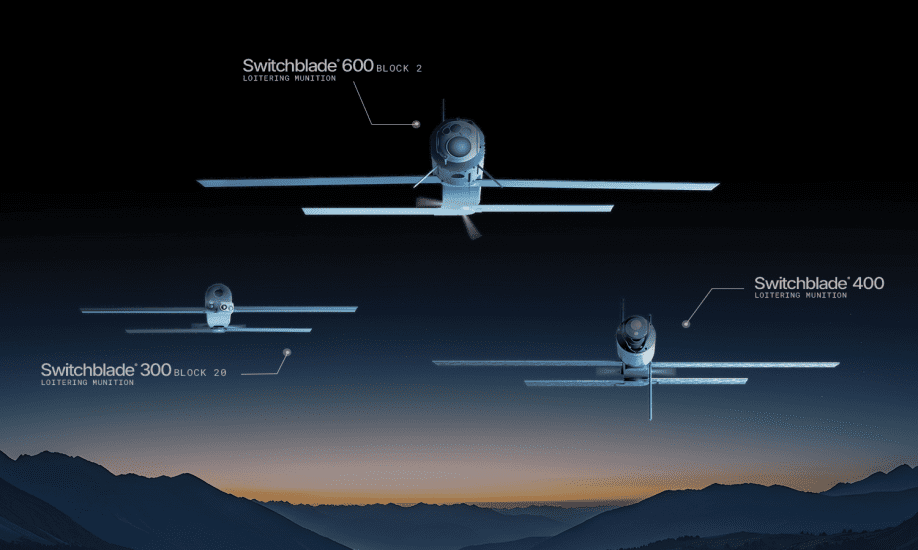
ARLINGTON, Va. — October 13, 2025 — AeroVironment, Inc. (“AV”) (NASDAQ: AVAV), the leading global provider of loitering munition systems, today announced the expansion of its combat-proven Switchblade® family of precision loitering munitions with three new systems: the Switchblade 600 Block 2, the Switchblade 400, and the Switchblade 300 Block 20 equipped with a modular explosively formed penetrator (EFP) payload. Together, these systems expand the Switchblade product line across echelons and mission sets–from backpackable, close-in lethal precision effects to long-endurance, multi-domain anti-armor solutions, ensuring warfighters maintain tactical overmatch in the most contested environments.

“Warfighters require scalable, reliable, and interoperable effects that can be tailored to the threat and the environment,” said Trace Stevenson, President of Autonomous Systems at AV. “These three new Switchblade variants deliver that flexibility and scalability. Each design builds on proven fielded capability while adding important new capabilities that reduce risk and expand mission sets.”

Switchblade® 600 Block 2 is a next-generation, long-endurance, multi-domain loitering munition with advanced avionics, pinpoint precision, and a secondary payload bay for multi-mission flexibility. Enhanced AI/ML-enabled onboard processing with advanced Automatic Target Recognition (ATR), encrypted M-Code GPS, and integrated Silvus MANET radios provides unmatched situational awareness and resilient Command and Control (C2) in contested environments. Switchblade 600 Block 2 offers 20% longer endurance and 100+km handoff and relay range and is IP67-rated for maritime applications.

The all-new Switchblade® 400 is a medium-range, man-portable anti-armor loitering munition with rocket-assisted take-off (RATO). At under 40 pounds for the all-up round (AUR), the effector provides a single soldier with lethal standoff capability in under five minutes to defeat tanks and heavily armored targets with precision accuracy. Sized to fit in common launch tubes (CLT), the unit’s design streamlines training and enables rapid, plug-and-play integration. Its ATR and advanced edge computing provide autonomous detection, classification, and elimination of threats–day or night.

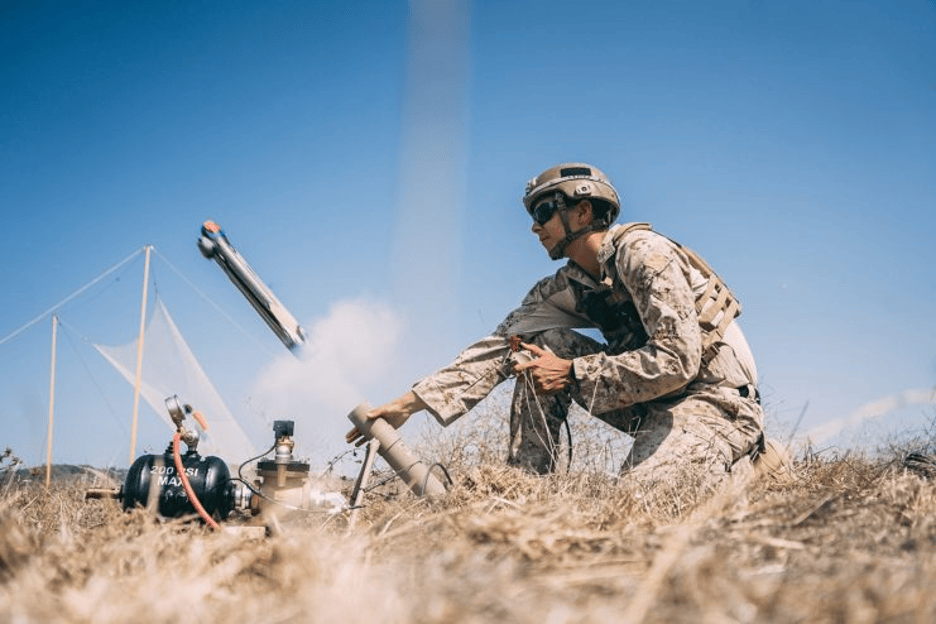
The combat-proven Switchblade® 300 Block 20 now features a modular payload bay, supporting an Explosively Formed Penetrator (EFP) warhead for increased lethality against armored threats. With the AUR weighing just 7.2 lbs, the backpackable precision loitering munition enables a single operator to deliver beyond-line-of-sight (BLOS) lethal effects in less than two minutes with improved endurance. The updated platform features an enhanced sensor and panning camera suite, a touchscreen tap-to-target interface with multiple commit angles, user-selectable point of detonation with continuous Positive Identification (PID), and extended range with an optional 30 km antenna.

Developed with Modular Open Systems Approach (MOSA) standards, the new Switchblade systems allow seamless integration with command and control (C2) platforms, including ATAK, Nett Warrior, and AV_Halo™ Command Tactical software with Kinesis universal tactical control architecture for fast, intuitive operation. Driven by AV_Halo Vision (previously AV’s SPOTR-Edge™ software) – part of AV’S unified suite of mission-ready software tools – these platforms provide onboard computer vision for detection, classification, localization, and tracking of operationally relevant objects, including people, vehicles, and maritime vessels–day or night, even in GPS-denied or comms-degraded environments. With a common design architecture, the systems share the same tablet-based Fire Control user interface (UI), patented wave-off and recommit features, encrypted datalinks, and mission planning–reducing logistical burdens and operator training time.

“AV has delivered thousands of Switchblade systems over the last 13 years, with hundreds of combat engagements shaping our design evolution,” said Jimmy Jenkins, Executive Vice President of Precision Strike and Defense Systems at AV. “The new Switchblade systems are warfighter-driven solutions—faster, smarter, and optimized for multi-domain operations. Our continuous innovation ensures US and allied forces remain equipped with rapid, adaptable, and overwhelming precision strike effects to maintain a tactical advantage on the modern battlefield.”

From US soldiers to frontline Ukrainian warfighters, Switchblade is the trusted, battle-proven loitering munition system of choice–offering cost-effective lethality in contested, congested battlespaces. The all-new Switchblade 400, Switchblade 600 Block 2, and Switchblade 300 Block 20 with EFP build on this legacy of innovation and reliability. AV is investing in the rapid expansion of its Switchblade manufacturing capacity–accelerating production of its Switchblade 600 over the last year from 40 to 240 systems per month. With growing demand from US and allied forces, continued investments in its Simi Valley, California, manufacturing facility, and the opening of its new next-generation manufacturing facility in Salt Lake City, Utah, AV anticipates production growth to more than 1,200 per month in the near future.

###

About AV

AV (NASDAQ: AVAV) is a defense technology leader delivering integrated capabilities across air, land, sea, space, and cyber. The Company develops and deploys autonomous systems, loitering munitions, counter-UAS technologies, space-based platforms, directed energy systems, and cyber and electronic warfare capabilities—built to meet the mission needs of today’s warfighter and tomorrow’s conflicts. At the core of these technologies lies AV_Halo, a modular, mission-ready suite of AI-powered software tools that empowers warfighters and enables full-battlefield dominance: detect, decide, deliver. With a national manufacturing footprint and a deep innovation pipeline, AV delivers proven systems and future-defining capabilities at speed, scale, and operational relevance. For more information, visit www.avinc.com.

Safe Harbor Statement

Certain statements in this press release may constitute “forward-looking statements” as defined in the Private Securities Litigation Reform Act of 1995. These statements are based on current expectations, forecasts, and assumptions that involve risks and uncertainties, which could cause actual results to differ materially. Factors that may cause such differences include, but are not limited to, our ability to perform under existing contracts and obtain new ones; regulatory changes; competitor activities; market growth; product development challenges; and general economic conditions. For a more detailed discussion of these risks, please refer to AeroVironment’s filings with the Securities and Exchange Commission. We undertake no obligation to update forward-looking statements as a result of new information or future events.

/////////////////////////////////////////////////////////////////////////////////////////////////////

For additional media and information, please follow us:

Media Contact:

Ashley Young
pr@avinc.com
703.718.4060

Investor Contact:

Denise Pacioni
ir@avinc.com
805.795.4108


About AeroVironment, Inc.

AeroVironment (“AV”) (NASDAQ: AVAV) is a defense technology leader delivering integrated capabilities across air, land, sea, space, and cyber. The Company develops and deploys autonomous systems, loitering munitions, counter-UAS technologies, space-based platforms, directed energy systems, and cyber and electronic warfare capabilities—built to meet the mission needs of today’s warfighter and tomorrow’s conflicts. At the core of these technologies lies AV_Halo, a modular, mission-ready suite of AI-powered software tools that empowers warfighters and enables full-battlefield dominance: detect, decide, deliver. With a national manufacturing footprint and a deep innovation pipeline, AV delivers proven systems and future-defining capabilities at speed, scale, and operational relevance. For more information, visit www.avinc.com.


Safe Harbor Statement

Certain statements in this press release may constitute “forward-looking statements” as that term is defined in the Private Securities Litigation Reform Act of 1995. These statements are made on the basis of current expectations, forecasts and assumptions that involve risks and uncertainties, including, but not limited to, economic, competitive, governmental and technological factors outside of our control, that may cause our business, strategy or actual results to differ materially from those expressed or implied. Factors that could cause actual results to differ materially from the forward-looking statements include, but are not limited to, our ability to perform under existing contracts and obtain additional contracts; changes in the regulatory environment; the activities of competitors; failure of the markets in which we operate to grow; failure to expand into new markets; failure to develop new products or integrate new technology with current products; and general economic and business conditions in the United States and elsewhere in the world. For a further list and description of such risks and uncertainties, see the reports we file with the Securities and Exchange Commission. We do not intend, and undertake no obligation, to update any forward-looking statements, whether as a result of new information, future events or otherwise.


Contact:

AeroVironment
+1.703.418.2828
pr@avinc.com

Let’s Advance Your Mission

Product Catalog

View the full catalog to explore our solutions in detail.

Press Release

AV Secures $288 Million Delivery Order on $990 Million Contract with U.S. Army

02/03/2025

AV Secures $288 Million Delivery Order on $990 Million Contract with U.S. ArmyARLINGTON, Va., February 03, 2025 – AeroVironment (AV), a global leader in intelligent, multi-domain robotic systems, today announced it has been awarded its third delivery order for Switchblade® loitering munition systems in the amount of $288 million as part of U.S. Army’s Directed Requirement (DR) for Lethal Unmanned Systems (LUS).  This is the third award in the last 12 months, totaling $471.3 millions.  This award is the third such delivery order awarded to AV as part of the multi-year contract with a ceiling value of $990M, which was secured in August 2024.
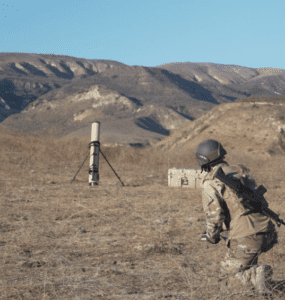
“AV is honored to continue fulfilling this important contract providing the U.S. Army with exceptional and reliable loitering munition solutions,” said Brett Hush, AV’s senior vice president and general manager of Loitering Munition Systems. “We continue to deliver for the U.S. Army with our superior supply chain and manufacturing capacity.”

Switchblade represents the next generation of extended-range loitering munition systems, providing operators in the field with a multi-mission loitering munition system capable of multi-domain operations. The combat-proven system also features high-precision optics and extended loitering endurance.


Let’s Advance Your Mission

Product Catalog

View the full catalog to explore our solutions in detail.

Press Release

U.S. GAO Denies Protest of $990 Million Switchblade Systems Contract

12/17/2024

U.S. GAO Denies Protest of $990 Million Switchblade Systems ContractArlington, Va., December 17, 2024 – The U.S. Government Accountability Office (GAO) has denied the protest filed on September 6, 2024, challenging the U.S. Army’s sole-source award of a $990 million contract for AV’s Switchblade® systems.
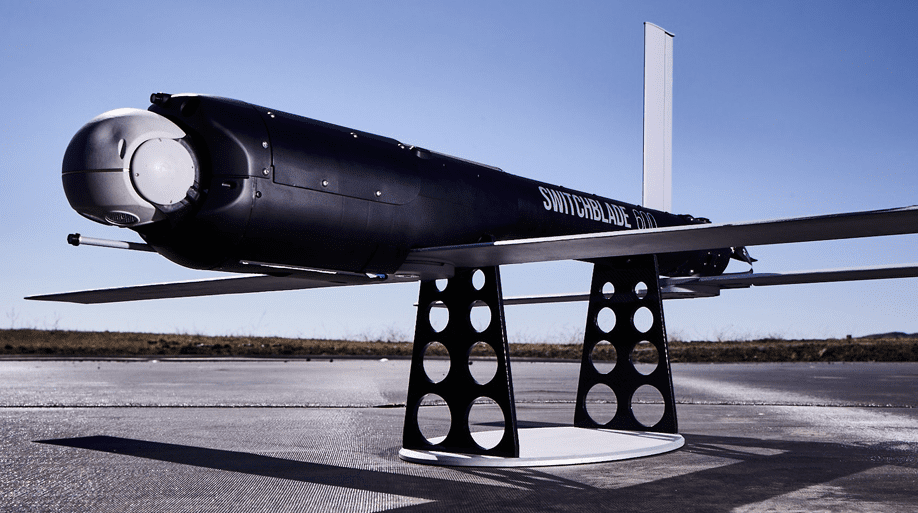
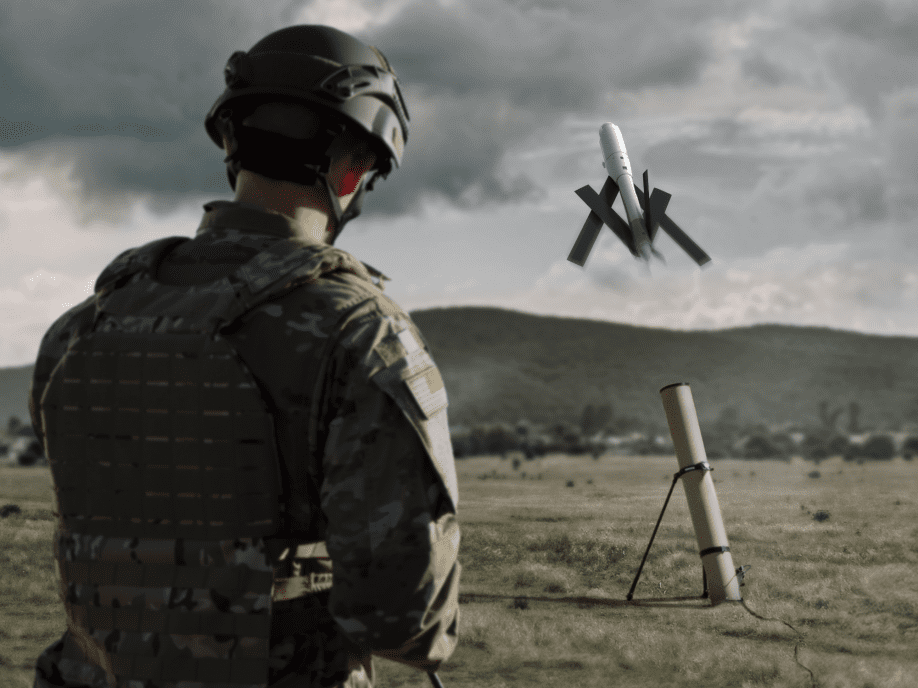
This decision reaffirms confidence in the integrity of the Army’s procurement process and its thorough evaluation of operational requirements. AV is proud to continue delivering these combat-proven, mission-critical Switchblade systems to meet the warfighter’s operational needs.

“AV remains steadfast in our commitment to fulfilling this important contract and upholding our mission to provide innovative, relevant, and effective capabilities to those who serve and defend freedom,” said Wahid Nawabi, AV’s chairman, president, and chief executive officer.


Let’s Advance Your Mission

Product Catalog

View the full catalog to explore our solutions in detail.

Press Release

AV Secures $743 Million Additional Contract Ceiling for Switchblade Loitering Munition Systems

10/14/2024

AV Secures $743 Million Additional Contract Ceiling for Switchblade Loitering Munition Systems

Arlington, Va., October 14, 2024 – AeroVironment (AV), a global leader in intelligent, multi-domain robotic systems, announced today that the U.S. Army has awarded a $54.9 million delivery order for the production of Switchblade® loitering munition systems. The recently announced award includes an additional contract ceiling of $743 million with $54.9 million in new funding.  This contract is issued as part of a broader, previously executed, indefinite delivery, indefinite quantity contract, and ensures continued support for both the U.S. Army and several allied partners, including Lithuania, Romania, and Sweden.

Work on this contract will be performed in Simi Valley, California, with an estimated completion date of June 30, 2026. The award, which leverages fiscal 2023 and 2024 Army funds along with Foreign Military Sales, highlights AV’s ongoing commitment to delivering proven, battlefield-ready technology that meets the evolving needs of modern armed forces.

“This contract allows us to continue delivering Switchblade systems to the U.S. Army and allied partners at speed with upgraded capabilities based on real-time battlefield feedback,” said Brett Hush, AV’s senior vice president and general manager of Loitering Munition Systems. “We are honored to provide the U.S. Army and our international partners with battle-proven technology.” AV remains focused on providing warfighters with superior, reliable, affordable systems at scale to meet the evolving requirements of its global defense customers.


Let’s Advance Your Mission

Product Catalog

View the full catalog to explore our solutions in detail.

News

AV Secures $54.8 Million Contract Modification for Switchblade Loitering Munition Systems

10/09/2024

Switchblade Launch

AeroVironment (AV), a global leader in intelligent, multi-domain robotic systems, announced today that the U.S. Army has awarded a $54.8 million contract modification for the production of Switchblade® loitering munition systems. This modification, issued as part of a broader indefinite delivery, indefinite quantity contract, ensures continued support for both the U.S. Army and several allied partners, including Lithuania, Romania, and Sweden.

Work on this contract will be performed in Simi Valley, California, with an estimated completion date of June 30, 2026. The award, which leverages fiscal 2023 and 2024 Army funds along with Foreign Military Sales, highlights AV’s ongoing commitment to delivering proven, battlefield-ready technology that meets the evolving needs of modern armed forces.

“This contract modification allows us to continue delivering Switchblade systems to the U.S. Army and allied partners at speed with upgraded capabilities based on real-time battlefield feedback,” said Brett Hush, AV’s senior vice president and general manager of Loitering Munition Systems. “We are honored to provide the U.S. Army and our international partners with battle-proven technology.”

AV remains focused on providing warfighters with superior, reliable, affordable systems at scale to meet the evolving requirements of its global defense customers.

Let’s Advance Your Mission

Product Catalog

View the full catalog to explore our solutions in detail.