AV_Halo COMMAND

04/01/2026

AV_Halo Command

Let’s Advance Your Mission

Product Catalog

View the full catalog to explore our solutions in detail.

Thought Leadership

Breaking the Silos: How Integrated Airspace Will Secure and Sustain America’s Future

01/28/2026

Breaking the Silos: How Integrated Airspace Will Secure and Sustain America’s Future

The most transformative leap in aviation will not come from a new aircraft.

It will come from a new way of thinking about airspace itself.

For decades, our skies have been organized in silos, divided by function and ownership – military aviation here, civil aviation there, commercial drones somewhere else, and counter-UAS systems operating in the shadows.

Each domain evolved in isolation with its own systems, protocols, priorities, sensors, rules, and command structures.

That siloed approach delivered progress, but it also introduced risk. When aircraft, sensors, and command systems cannot speak the same language, airspace becomes dangerous, harder to defend, and easier to exploit.

We saw the consequences of that fragmentation in January 2024, when an enemy drone reportedly infiltrated a U.S. military base in Jordan by following one of our own drones through the perimeter in order to attack Tower 22, a logistics outpost near the Syrian border, killing three American soldiers and injuring dozens more. Counter-UAS systems were uncertain whether the enemy drone was friend or foe because there was no shared information set between the base’s air traffic control system and its defensive network.

That tragedy exposed a hard truth: when airspace systems cannot share a common operating picture, even sophisticated defenses can be rendered uncertain by the most rudimentary threats at the worst possible moment.

The same dynamic now threatens civilian airspace at home. Commercial and civil drone activity is expanding rapidly around airports, cities, critical infrastructure, and major events. When a drone appears without clear identification or intent, airports slow or stop operations. Delays cascade. Risks rise. And if intent is malicious, the consequences can be far worse.

If our skies are going to become busier, they must also become smarter—and more integrated.

From Fragmentation to a Shared Airspace Reality

Today’s air traffic systems were designed for crewed aviation. Small uncrewed aircraft often do not appear on traditional radar or Automatic Dependent Surveillance-Broadcast (ADS-B displays). As a result, air traffic controllers frequently learn about potential hazards through slow, late and imprecise visual reports. Meanwhile, counter-UAS systems—often deployed for legitimate protection—may emit effects that air traffic controllers cannot see or account for in real time.

This is not a technology gap. It is an integration gap.

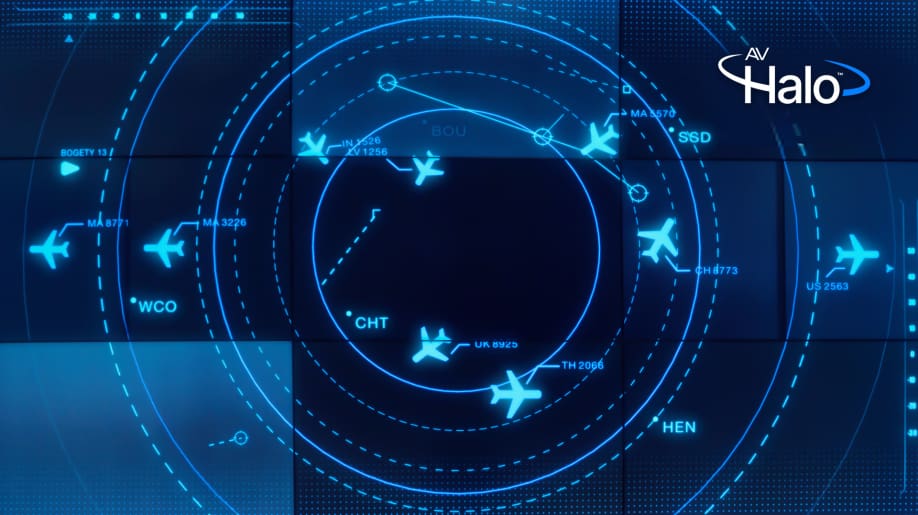
When airspace systems can ingest data from ground radar, ADS-B, commercial sensors, UAS telemetry, and counter-UAS networks, and fuse that information into a single and secure operating picture, the entire dynamic changes. Hazards are detected earlier. Intent is easier to assess. Compliant aircraft fade into the background. Airports keep moving safely and efficiently.

That integrated model is no longer aspirational. It is operational.

That’s exactly what we’re doing in Springfield, Ohio, where we’ve launched a new Beyond Visual Line of Sight (BVLOS) airspace management capability at the National Advanced Air Mobility Center of Excellence (NAAMCE) at Springfield-Beckley Municipal Airport in partnership with the Air Force and Ohio Department of Transportation in collaboration with CAL Analytics.

We are proving that BVLOS operations can be executed safely, predictably, and at scale by routing diverse surveillance and flight data through a unified command-and-control (C2) architecture. The result is a living, real-time view of shared airspace—one that treats crewed aircraft, uncrewed systems, and defensive operations as parts of the same ecosystem.

This is not a demonstration site. Pending regulatory approval, it is an operational blueprint for how airports, states, and federal regulators can manage integrated airspace nationwide.

Ohio is developing sophisticated UAS Traffic Management (UTM) capabilities to safely enable commercial drone delivery and future air taxi operations for companies like Amazon and Uber—where scaling these services depends on collision-free integration with helicopters and other low-altitude aircraft. Getting that integration right does more than improve safety; it opens the door to meaningful economic growth and provides a practical blueprint for managing the increasingly crowded skies communities across the country will soon face.

A New Model for Shared Airspace, Our Approach

The expansion of BVLOS operations depends on Ground-Based Detect and Avoid (GBDAA) and space-based surveillance working in concert with existing air traffic infrastructure.

1. GBDAA systems monitor the airspace using ground and satellite-based sensors and provide real-time situational awareness and maneuver guidance to UAS operators, significantly reducing the risk of collisions. 

2. GBDAA can complement or provide an alternative to onboard systems, offering broader surveillance capabilities and covering larger operational areas. 

3. GBDAA systems can leverage existing Air Traffic Control infrastructure and Commercial Off the Shelf Sensors (COTS) sensors, as a cost-effective, scalable solution for further integrating drones into the National Airspace System. 

By integrating federal and local surveillance feeds, flight intent data, and environmental information into a common platform—AV_Halo™ COMMAND (C2 system) and CAL Analytics’ Advanced Air Mobility (AAM)—operators can safely separate aircraft, avoid conflicts, and transition from segregated to fully integrated airspace operations.

What makes this approach novel is the paradigm shift to a modular, data-driven architecture designed to seamlessly distribute real-time information across a scalable set of interrelated airspace services.

This is how we’ve broken out of the silos and stove-pipes, allowing multi-sensor tracking and fusion to provide the situational awareness needed to detect, classify, and track crewed and uncrewed aircraft across wide areas, while the airspace-management layer translates that awareness into coordinated separation, alerting, and oversight across jurisdictions.

This integrated architecture allows Ground-Based Detect and Avoid to function as a true enabler of scaled BVLOS operations rather than a collection of localized safety tools.

The result is a GBDAA framework that scales from individual operations to regional corridors—supporting safe integration, consistent decision-making, and the data foundation required for broader BVLOS adoption and policy evolution.

From Proof to Policy, Enabling the Economy

This collaboration isn’t theoretical. The AV_Halo COMMAND architecture is already going through operational approvals in Ohio and also in North Dakota, where it will support detect-and-avoid conflict-alerting missions for both military and commercial operators in our work with GrandSKY UAS Flight Operations Center.

GrandSKY serves as a living testbed for integrating military and civilian drone operations into the National Airspace System, leading the Department of War’s Project ULTRA by conducting real-world logistics and cargo flights between military bases to stress-test, validate, and refine UAS traffic management in mixed-use airspace. AV and CAL Analytics’ solutions are also advancing through the FAA’s near-term approval process, undergoing the full rigor of safety risk management review.

Our work in both Ohio and North Dakota is building the data and policy foundations for nationwide BVLOS operations—a future where uncrewed systems can fly beyond the horizon as safely as manned aircraft do today.

These deployments are generating what policymakers need most: real operational data. Data that informs standards. Data that accelerates rulemaking. Data that turns “can we?” into “how fast?”

Living testbeds like Ohio and North Dakota—where military and civilian operations coexist—are shaping the future of UAS traffic management and logistics corridors. They are stress-testing policy in real airspace, not in simulation, and laying the groundwork for national BVLOS integration.

What is at stake is not convenience. It is national resilience.

The ability to defend critical sites, move supplies, support emergency response, and unlock new economic activity depends on shared, resilient airspace infrastructure. Fragmented systems cannot scale to meet that demand. Integrated systems can.

Breaking down the silos between civil and military aviation, between safety and security, between innovation and regulation is no longer optional. It is foundational.

The future of American airspace will be defined not by who owns the sky—but by how well we share it.

About the Author

Stephen Lloyd is a Senior Director, C2 & Tracking Systems at AeroVironment, where he leads development of AV_Halo for air-traffic control, BVLOS drone operations and counter-UAS applications. He retired from the Federal Aviation Administration after a 40-year career, having held senior roles in air traffic operations, safety management systems and the National Airspace System. A former chair of the FAA ATO Safety Committee, he collaborated closely with the National Transportation Safety Board and later joined the Air Force Research Laboratory SkyVision GBDAA team. His contributions have been recognized with awards including the 2019 ATCA Civilian Team Award and the 2020 AUVSI Excellence Award in Technology & Innovation.

Join the AV Mission

AV isn’t for everyone. We hire the curious, the relentless, the mission-obsessed. The best of the best.

We don’t just build defense technology—we redefine what’s possible. As the premier autonomous systems company in the U.S., AV delivers breakthrough capabilities across air, land, sea, space, and cyber. From AI-powered drones and loitering munitions to integrated autonomy and space resilience, our technologies shape the future of warfare and protect those who serve.

Founded by legendary innovator Dr. Paul B. MacCready, Jr., AV has spent over 50 years pushing the boundaries of what unmanned systems can do. Our heritage includes seven platforms in the Smithsonian—but we’re not building history, we’re building what’s next.

If you’re ready to build technology that matters—with speed, scale, and purpose—there’s no better place to do it than AV.

Let’s Advance Your Mission

Product Catalog

View the full catalog to explore our solutions in detail.

News

AV and CAL Analytics Launch Operational BVLOS Airspace Management Facility in Partnership with the U.S. Air Force and Ohio Department of Transportation

01/27/2026

AV and CAL Analytics Launch Operational BVLOS Airspace Management Facility in Partnership with the U.S. Air Force and Ohio Department of Transportation

SPRINGFIELD, Ohio – January 27, 2026 – AeroVironment, Inc. (“AV”) (NASDAQ: AVAV), a global defense technology leader delivering software-enabled disruptive autonomous systems, and CAL Analytics, an innovator in advanced airspace management technologies, today announced the completed installation and initial operation of a new Beyond Visual Line of Sight (BVLOS) airspace management facility at the National Advanced Air Mobility Center of Excellence (NAAMCE) at Springfield-Beckley Municipal Airport in Springfield, Ohio.

Initially developed under a Cooperative Research and Development Agreement (CRADA) between the Air Force Research Laboratory (AFRL) and the Ohio Department of Transportation (ODOT), the project now features an upgraded installation that integrates AV_Halo™ COMMAND, AV’s command and control (C2) architecture, with CAL Analytics’ Advanced Air Mobility (AAM) enterprise platform to establish the nation’s premiere test environment and management facility, where Department of War operators can safely conduct BVLOS missions in shared airspace utilizing existing Federal Aviation Administration (FAA) ground radar feeds.

“This installation establishes the blueprint for how airports and states across the country can safely integrate uncrewed aircraft into existing airspace,” said Wahid Nawabi, Chairman, President and Chief Executive Officer at AV. “As the FAA defines the future of BVLOS rule-making, this facility provides the real-world operational data, safety validation, and interoperability framework regulators need. The system we’ve installed in Ohio isn’t just a mock-up or a test site — pending FAA approval it will be an operational and scalable model for nationwide deployment and the foundation for truly integrated air mobility.”

The integration will support flight tests, evaluation, and day-to-day operations by routing AFRL’s access to the FAA’s ground-radar network through AV_Halo™ COMMAND — AV’s modular, software-driven C2 architecture that fuses multiple enhanced sensor feeds, into a single, secure operating picture, giving operators continuous situational awareness for BVLOS mission planning and airspace safety.

“AV_Halo is the connective tissue that turns a collection of sensors, radars, and platforms into a living, breathing airspace system,” said Stephen Lloyd, Senior Director C2, CUAS, and Tracking at AV. “By fusing FAA ground radar, and COTS surveillance sensors into a single, secure operating picture, AV_Halo delivers the assured visibility and machine-speed decision support needed for predictable BVLOS operations—and makes it possible to scale effortlessly from a single site to an entire statewide corridor.”

When combined with CAL Analytics’ AAM enterprise platform, the system unifies radar and advanced DAA into a single real-time airspace view—enabling detect-and-avoid, extending autonomous BVLOS operations with precision and confidence.

“Beyond Visual Line of Sight operations are the key to unlocking the next generation of air mobility,” said Dr. Sean Calhoun, Managing Director of CAL Analytics. “This facility will prove that BVLOS can be executed safely and reliably in shared airspace—and that matters because it sets the foundation for statewide corridors, national standards, and an entirely new layer of transportation infrastructure that will reshape how we move people, goods, data, and critical services across the country.”

Pending full FAA approval, the facility will support local missions and real-time monitoring of UAS activity as AFRL, ODOT, the FAA, AV, and CAL Analytics collaborate to validate airspace-safety technologies, advance air-mobility corridors, drive economic development, and shape national BVLOS rules and integration standards.

Plans are already underway to extend the system to enable corridors between Springfield and Columbus, Ohio, adding new radar sites and expanding detect-and-avoid coverage to support broader BVLOS operations across Ohio and additional sites nationwide.

Let’s Advance Your Mission

Product Catalog

View the full catalog to explore our solutions in detail.

News

AeroVironment Announces Expansion of AV_Halo™ Unified Software Platform with CORTEX and MENTOR

12/02/2025

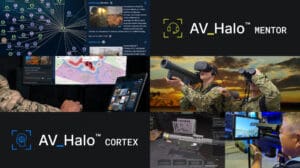
ARLINGTON, Va., December 02, 2025 – AeroVironment, Inc. (“AV”) (NASDAQ: AVAV), a global defense technology leader delivering software-enabled disruptive autonomous systems, today announced the next phase of its AV_Halo™ unified mission software platform with the release of AV_Halo CORTEX, a next-generation intelligence fusion and analysis environment, and AV_Halo MENTOR, a warfighter readiness suite that spans immersive virtual and/or augmented reality (VR/AR) weapons training and mission rehearsal.

In September, AV launched AV_Halo, a hardware-agnostic platform that unifies multi-domain command and control (C2), AI-enhanced intelligence, synthetic training, and autonomous targeting into a single open-standards ecosystem. The addition of CORTEX and MENTOR advances that ecosystem, bringing deeper intelligence fusion, enhanced situational awareness, and more sophisticated operator preparedness into the same unified architecture.

“In today’s rapidly evolving operational environment, the advantage goes to those who can understand faster and prepare smarter,” said Wahid Nawabi, AV Chairman, President, and Chief Executive Officer. “CORTEX and MENTOR extend AV_Halo’s role as the connective tissue across missions—fusing global information, AI-powered analytics, and immersive training into a single ecosystem that helps warfighters outpace threats, reduce risk, and make better decisions at mission speed.”

The addition of CORTEX and MENTOR marks the next step in AV_Halo’s roadmap, introducing two mission-critical capability sets that advance the platform’s ability to deliver faster understanding, smarter preparation, and decisive advantage across every domain – air, land, sea, space, and cyber.

AeroVironment Announces Expansion of AV_Halo™ Unified Software Platform with CORTEX and MENTOR

AV_Halo MENTOR: Warfighter Readiness Suite with Immersive Training and Mission Preparation Simulation — AV_Halo MENTOR, with its flagship Virtual Systems Trainer (VST) technology, offers operators immersive VR/AR weapons training system to build proficiency across Stinger, Javelin, Igla, and other mission-critical weapons systems. It delivers a full 360-degree virtual environment generated from real-world electro-optical and Digital Terrain Elevation Data (DTED) within a simulation framework supporting multiple missions for both individual and team-based training. Integrated with AV’s simulation architecture, the system enables instructors to create custom scenarios, rehearse complex engagements, and conduct detailed after-action reviews that accelerate learning and reinforce readiness. Available as a fixed installation or a portable, rapidly deployable kit, MENTOR allows units to train at the same high standards anywhere, from home stations to forward environments.

AV_Halo CORTEX: AI-Driven Intelligence Fusion, OSINT Integration & Autonomous Analysis — AV_Halo CORTEX leverages AV’s mission-ready Scraawl technology, an AI-driven intelligence environment that fuses open source intelligence (OSINT), multi-source data, autonomous analysis, and real-time information into one operational picture. It collects and searches millions of global data points, including publicly available information (PAI) via news content, social media posts, shared imagery and video, and an array of sensor feeds. Integrated analytics across text, imagery, video, geospatial layers, and network relationships accelerate insight, while GeoPoint, AV’s proprietary geolocation engine, delivers metadata-independent geolocation using only visual cues. CORTEX also provides PAI-driven drone-threat detection for persistent awareness. With GPT-powered Insight Agents, analysts can query datasets conversationally, producing rapidly sourced intelligence that strengthens mission decisions. These intelligence markers can be shared seamlessly across AV_Halo and other third-party platforms for advanced situational awareness and action queuing.

“CORTEX can detect and characterize emerging drone patterns around critical infrastructure in minutes, a task that once took analysts hours. MENTOR enables air-defense teams to immediately rehearse engagements against those same threats inside a fully immersive environment,” said Scott Bowman, AV Chief Technology Officer & Vice President of Global Engineering. “Together, these products point to the future of mission software—tightly linked, increasingly autonomous intelligence and training that anticipate threats before they emerge.”

Looking ahead, AV will continue expanding AV_Halo with autonomous mission agents, advanced simulation environments, enhanced airspace deconfliction tools, and additional intelligence and C2 services, delivering synchronized autonomy, cross-domain coordination, and mission adaptability across tomorrow’s multi-domain battlespace.

AV_Halo follows the principles of the Modular Open Systems Approach (MOSA), a design strategy mandated by the U.S. Department of War (DoW) to improve interoperability, agility, and sustainability in defense systems. As missions evolve, AV_Halo scales effortlessly, offering reliable solutions that adapt to emerging threats and operational demands so that operators can deploy exactly what is needed for any mission while minimizing cost. It seamlessly integrates across allied military and commercial systems, setting a new standard for interoperability in complex, multi-domain environments.

About AV

AV (NASDAQ: AVAV) is a defense technology leader delivering integrated capabilities across air, land, sea, space, and cyber. The Company develops and deploys autonomous systems, loitering munitions, counter-UAS technologies, space-based platforms, directed energy systems, and cyber and electronic warfare capabilities—built to meet the mission needs of today’s warfighter and tomorrow’s conflicts. At the core of these technologies lies AV_Halo, a modular, mission-ready suite of AI-powered software tools that empowers warfighters and enables full-battlefield dominance: detect, decide, deliver. With a national manufacturing footprint and a deep innovation pipeline, AV delivers proven systems and future-defining capabilities at speed, scale, and operational relevance. For more information, visit www.avinc.com.

Safe Harbor Statement

Certain statements in this press release may constitute “forward-looking statements” as defined in the Private Securities Litigation Reform Act of 1995. These statements are based on current expectations, forecasts, and assumptions that involve risks and uncertainties, which could cause actual results to differ materially. Factors that may cause such differences include, but are not limited to, our ability to perform under existing contracts and obtain new ones; regulatory changes; competitor activities; market growth and market adoption of new products; product development challenges; and general economic conditions. For a more detailed discussion of these risks, please refer to AeroVironment’s filings with the Securities and Exchange Commission. We undertake no obligation to update forward-looking statements as a result of new information or future events.

Let’s Advance Your Mission

Product Catalog

View the full catalog to explore our solutions in detail.

News

AV Announces Collaboration with OpenJAUS for Autonomous Uncrewed System (Uxs) Interoperability

10/31/2025

AV Announces Collaboration with OpenJAUS for Autonomous Uncrewed System (Uxs) Interoperability

ARLINGTON, Va. — October 31, 2025 — AeroVironment, Inc. (“AV”) (NASDAQ: AVAV), a global defense technology leader delivering software-enabled disruptive autonomous systems, today announced a collaboration with OpenJAUS, LLC., a leader in middleware software solutions for unmanned and robotic systems, to integrate the JAUS standard into AV_Halo™ Command, a first-of-its-kind cross-architecture software solution for controlling uncrewed systems (UxS).

The collaboration integrates AV_Halo Command’s modular software and suite of application programming interfaces (APIs) with the OpenJAUS software development kit (SDK), creating a unified, open-standards framework for rapid UxS and control system integration. The integration extends AV_Halo compatibility to seamlessly incorporate JAUS-compliant assets, allowing original equipment manufacturers (OEMs) to integrate their platforms faster and more easily.

“The modern battlespace is defined by speed, complexity, and connectivity—and winning it demands seamless interoperability, not proprietary silos,” said Scott Bowman, Chief Technology Officer at AV. “Our collaboration with OpenJAUS reinforces AV’s leadership in open-architecture design and our commitment to the Modular Open Systems Approach (MOSA). By breaking down barriers between platforms and accelerating multi-capability integrations, we’re ensuring the warfighter stays ahead in an increasingly complex, data-driven battlespace.”

By adding the OpenJAUS standard into AV_Halo Command, AV is providing a scalable, platform and sensor-agnostic command and control (C2) solution that enhances interoperability, reduces barriers between systems, accelerates capability integration, and empowers the warfighter with a faster, stronger, more flexible and unified mission-ready toolkit that includes new systems, new payloads, AI capabilities, and more input devices.

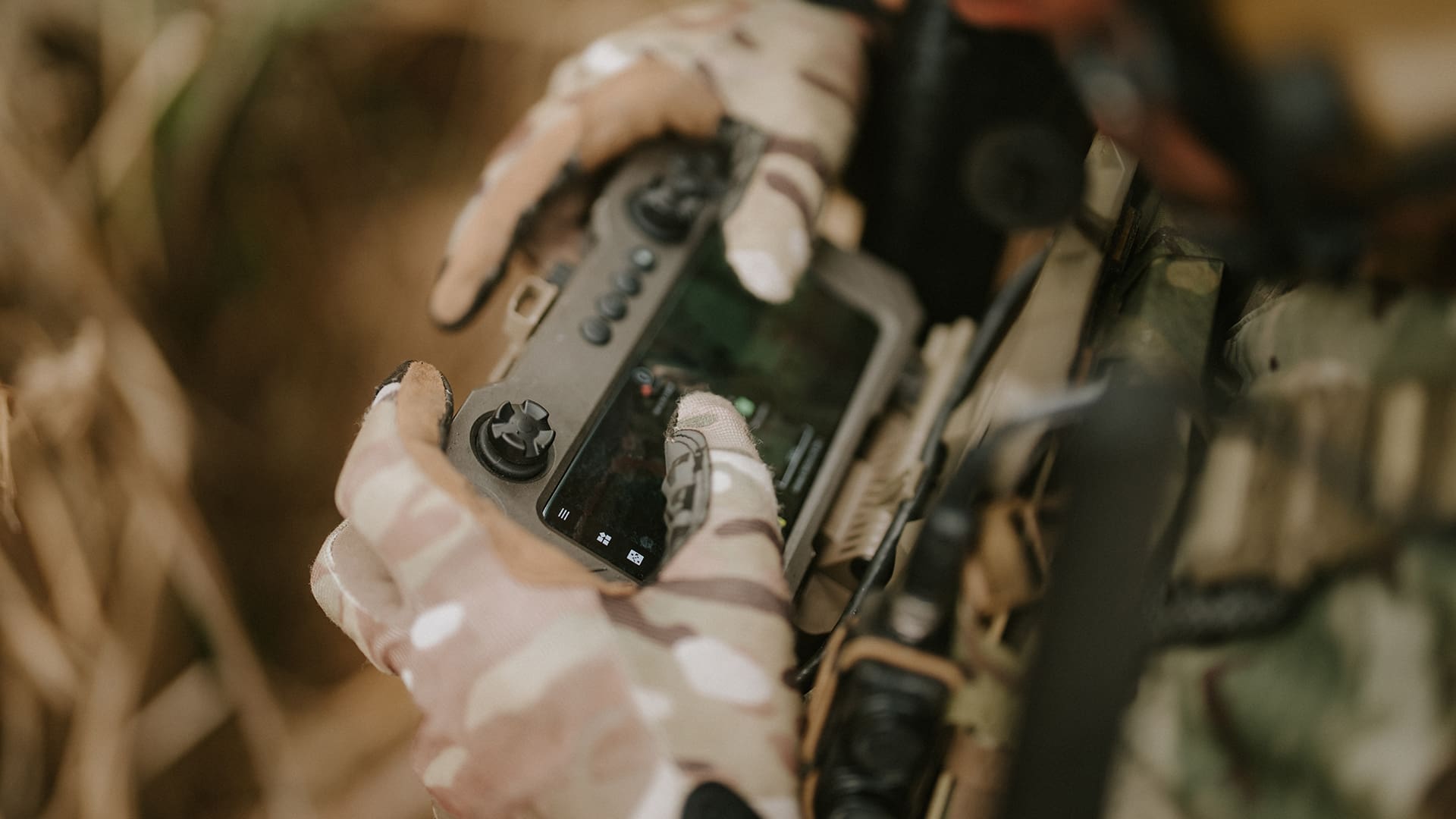
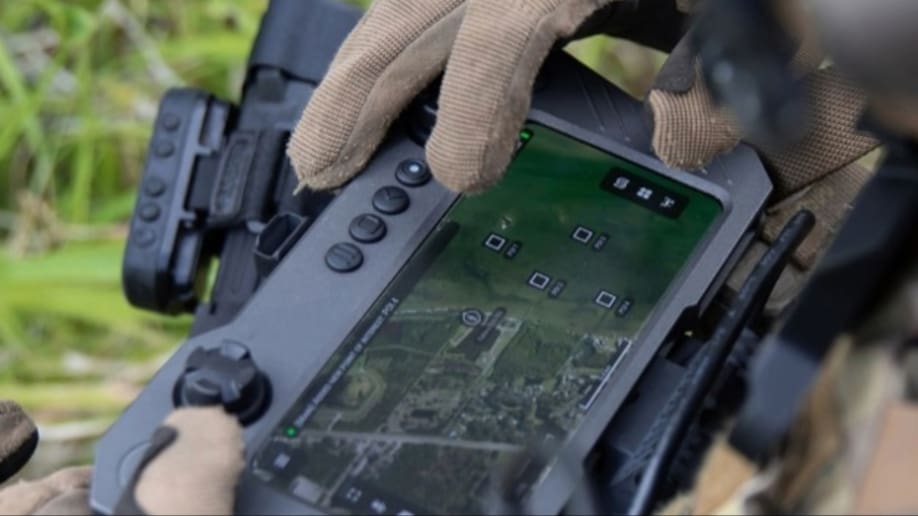
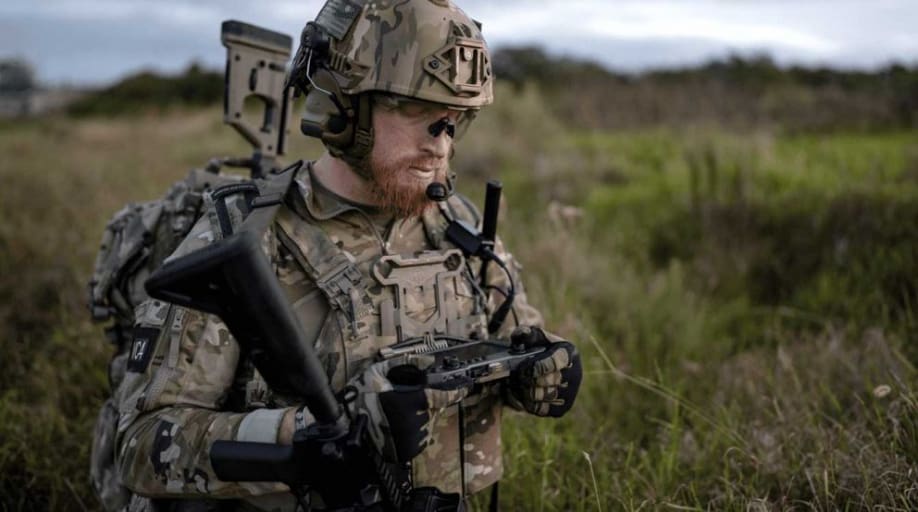
Through integration with AV’s Tomahawk™ Grip family of rugged ground control system (GCS) hardware controllers, AV_Halo Command provides a single “pane of glass” for viewing and controlling more than 25 uncrewed systems from over a dozen manufacturers at the tactical edge.

“OpenJAUS and industry collaborators are building a growing ecosystem of JAUS-based components for robotics and autonomous systems. Our collaboration with AV and their AV_Halo™ Command software brings a world-class control solution into this growing interoperability market,” said Tom Galluzzo, co-Founder at OpenJAUS.

“By unifying control across platforms and payloads, AV_Halo Command drastically reduces training time and complexity—allowing operators to focus on outcomes, not interfaces,” said Bowman. “It’s about giving the warfighter a common language for every system they touch, and ensuring every mission starts at full effectiveness.”

AV_Halo Command is currently integrated with systems from industry leaders, including Parrot, Teal, Ghost Robotics, Boston Dynamics, QinetiQ North America, Skydio, General Dynamics, BAE Systems, AV and DefendTex.


Domains

Capabilities

Solutions

Let’s Advance Your Mission

Product Catalog

View the full catalog to explore our solutions in detail.

Press Release

AV Awarded U.S. Army RCCTO Contract for Kinesis, Named Lead Software & Systems Integrator for HMIF

09/29/2025

AV Awarded U.S. Army RCCTO Contract for Kinesis, Named Lead Software & Systems Integrator for HMIF

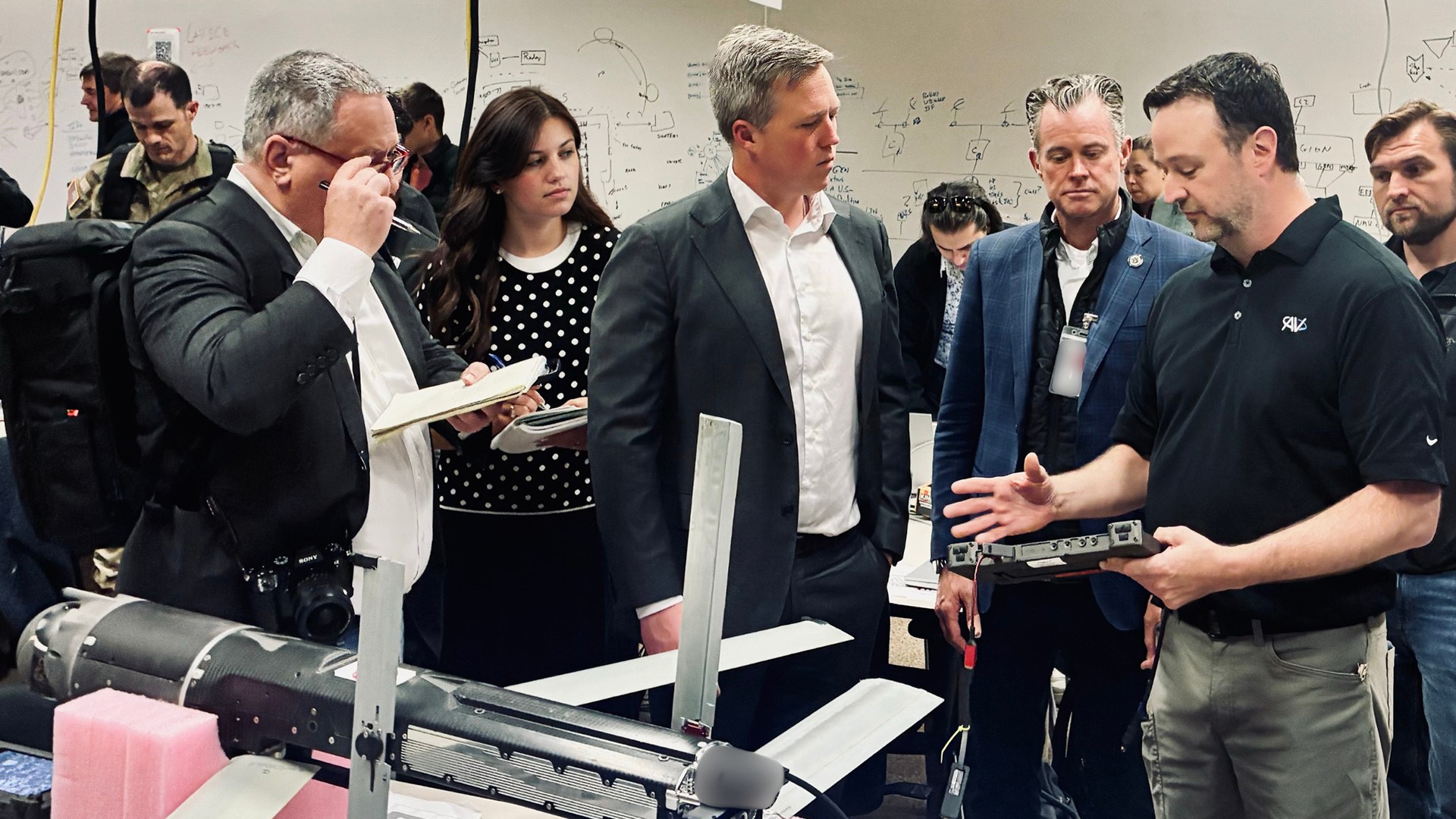
ARLINGTON, Va., September 29, 2025 –AeroVironment, Inc. (“AV”) (NASDAQ: AVAV) today announced a contract award from the U.S. Army Rapid Capabilities and Critical Technologies Office (RCCTO) for its tactical mission planning and command and control (C2) software for the Human-Machine Integrated Formations (HMIF) Increment 1 program.

HMIF accelerates the fielding of robotic formations to leverage machines to offload risk and provides Soldiers with additional information for decision-making for armored and infantry formations. Each formation will include ground and air systems and enablers to aid in the human decision-making process to find, fix, and engage enemy targets. HMIF prototype development supports existing and future robotic programs of record by mitigating risk associated with enabling capabilities such as the common architecture, communications and networking.

AV’s software solution, Kinesis, will provide a unified interface to meet the needs of HMIF for mission planning, tactical awareness, autonomy management, and payload control to simplify complex operations and accelerate mission capabilities with unmatched scale and speed.

“AV’s Kinesis software is a true force multiplier that allows a single tactical operator to control a mixed fleet of autonomous systems developed by multiple OEMs, transforming military operations and accelerating our combat readiness,” said Jason Hendrix, AV Vice President and General Manager. “By leveraging the simplicity and scalability of our open and modular software ecosystem, RCCTO is developing HMIF for ultimate mission flexibility–helping warfighters quickly, easily, and safely carry out autonomous missions across domains.”

Trace Stevenson, President of Autonomous Systems at AV, added: “We are delivering superior autonomous solutions to warfighters, not just through our trusted and proven platforms but with our advanced controllers and software capabilities that simplify sophisticated operations, augment force capacity, and drive mission outcomes. Together with U.S. Army RCCTO and an incredible team of industry partners, we are pushing the boundaries of the possible in multi-domain operations.”

Kinesis provides interoperability across tactical C2 platforms, including TAK/ATAK. Its built-in Software Developers Kit creates a collaborative development environment for expanded modularity and integrations of third-party software. To support the HMIF program’s software needs, AV is leveraging strategic partnerships with industry leading expertise from Applied Research Associates’ Neya Systems, Parry Labs, and QinetiQ. The team’s collective capabilities will provide robust solutions that offer unmatched operational efficiency and deliver a comprehensive solution for the U.S. Army’s HMIF requirements.


About AV

AV (NASDAQ: AVAV) is a defense technology leader delivering integrated capabilities across air, land, sea, space, and cyber. The Company develops and deploys autonomous systems, loitering munitions, counter-UAS technologies, space-based platforms, directed energy systems, and cyber and electronic warfare capabilities—built to meet the mission needs of today’s warfighter and tomorrow’s conflicts. At the core of these technologies lies AV_Halo, a modular, mission-ready suite of AI-powered software tools that empowers warfighters and enables full-battlefield dominance: detect, decide, deliver. With a national manufacturing footprint and a deep innovation pipeline, AV delivers proven systems and future-defining capabilities at speed, scale, and operational relevance. For more information, visit www.avinc.com.

Safe Harbor Statement

Certain statements in this press release may constitute “forward-looking statements” as that term is defined in the Private Securities Litigation Reform Act of 1995. These statements are made on the basis of current expectations, forecasts and assumptions that involve risks and uncertainties, including, but not limited to, economic, competitive, governmental and technological factors outside of our control, that may cause our business, strategy or actual results to differ materially from those expressed or implied. Factors that could cause actual results to differ materially from the forward-looking statements include, but are not limited to, our ability to perform under existing contracts and obtain additional contracts; changes in the regulatory environment; the activities of competitors; failure of the markets in which we operate to grow; failure to expand into new markets; failure to develop new products or integrate new technology with current products; and general economic and business conditions in the United States and elsewhere in the world. For a further list and description of such risks and uncertainties, see the reports we file with the Securities and Exchange Commission. We do not intend, and undertake no obligation, to update any forward-looking statements, whether as a result of new information, future events or otherwise.

/////////////////////////////////////////////////////////////////////////////////////////////////////

For additional media and information, please follow us:

Media Contact:
Ashley Young
pr@avinc.com
703.718.4060

Investor Contact:
Denise Pacioni
ir@avinc.com
805.795.4108


About AeroVironment, Inc.

AeroVironment (“AV”) (NASDAQ: AVAV) is a defense technology leader delivering integrated capabilities across air, land, sea, space, and cyber. The Company develops and deploys autonomous systems, loitering munitions, counter-UAS technologies, space-based platforms, directed energy systems, and cyber and electronic warfare capabilities—built to meet the mission needs of today’s warfighter and tomorrow’s conflicts. At the core of these technologies lies AV_Halo, a modular, mission-ready suite of AI-powered software tools that empowers warfighters and enables full-battlefield dominance: detect, decide, deliver. With a national manufacturing footprint and a deep innovation pipeline, AV delivers proven systems and future-defining capabilities at speed, scale, and operational relevance. For more information, visit www.avinc.com.


Safe Harbor Statement

Certain statements in this press release may constitute “forward-looking statements” as that term is defined in the Private Securities Litigation Reform Act of 1995. These statements are made on the basis of current expectations, forecasts and assumptions that involve risks and uncertainties, including, but not limited to, economic, competitive, governmental and technological factors outside of our control, that may cause our business, strategy or actual results to differ materially from those expressed or implied. Factors that could cause actual results to differ materially from the forward-looking statements include, but are not limited to, our ability to perform under existing contracts and obtain additional contracts; changes in the regulatory environment; the activities of competitors; failure of the markets in which we operate to grow; failure to expand into new markets; failure to develop new products or integrate new technology with current products; and general economic and business conditions in the United States and elsewhere in the world. For a further list and description of such risks and uncertainties, see the reports we file with the Securities and Exchange Commission. We do not intend, and undertake no obligation, to update any forward-looking statements, whether as a result of new information, future events or otherwise.


Contact:

AeroVironment
+1.703.418.2828
pr@avinc.com

Let’s Advance Your Mission

Product Catalog

View the full catalog to explore our solutions in detail.