
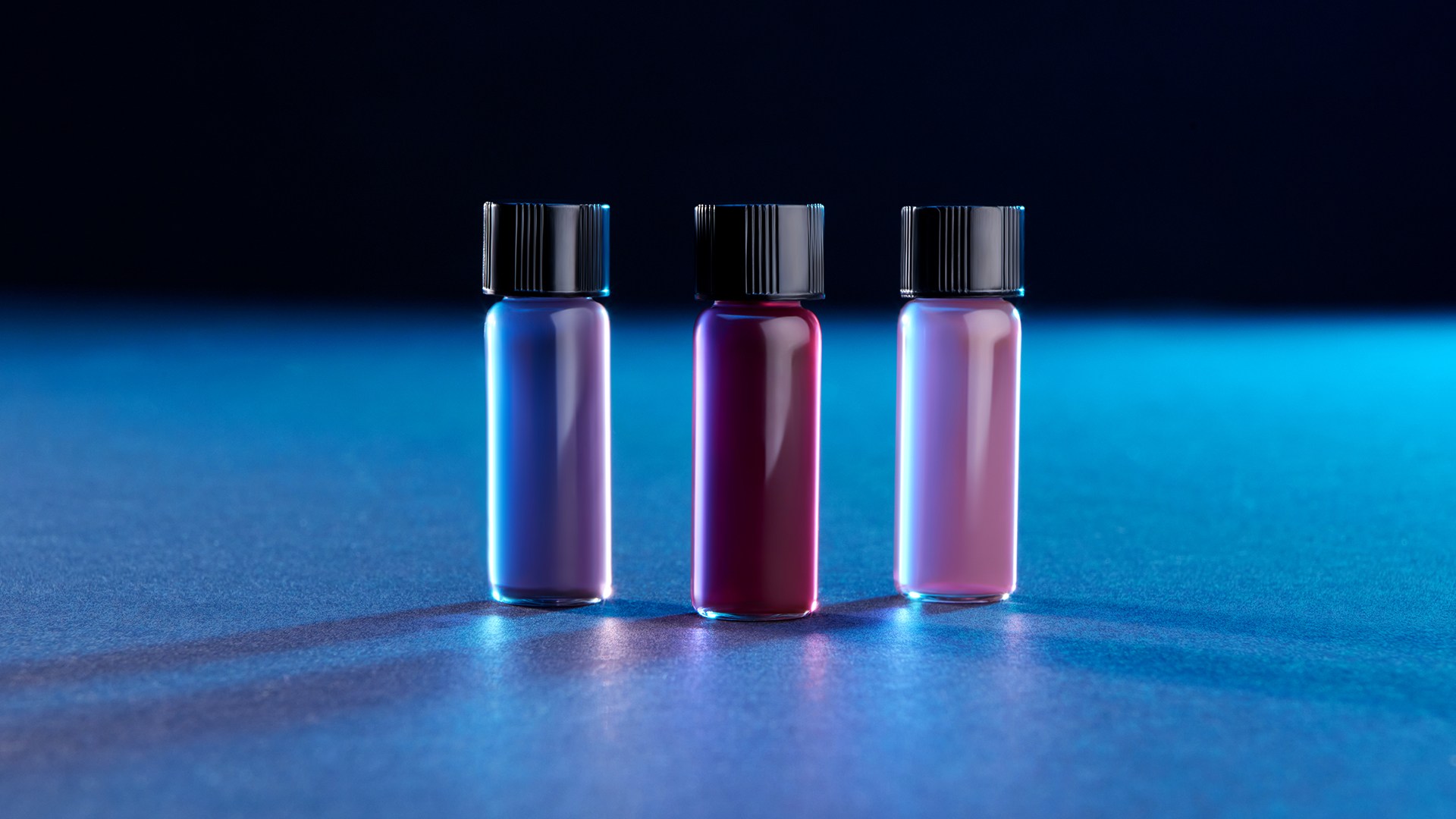
AV’s investment in Dayton is an investment in America’s biomanufacturing future to reduce dependence on China’s critical materials
By Lucas Beagle, Ph.D., Senior Director of Advanced Research and Development Division
With AV’s recent announcement of its $15 million investment in the Dayton area, we’re bringing online a 46,000‑square‑foot manufacturing facility in Xenia, Ohio, dedicated to advanced biomanufacturing that will support both commercial partners and the Department of War.
AV has been advancing breakthrough technologies in the Dayton region for more than five decades, helping pioneer biomanufacturing capabilities that produce the critical materials needed to strengthen U.S. manufacturing, secure domestic supply chains, and enhance national resilience.
To me, this expansion facility in Dayton represents a special moment that I have been building toward ever since I was a kid growing algae in vats in my parents’ garage and making a mess. I was convinced biology could power the next generation of breakthroughs in fuels and materials. But forty years later, I’ve learned that this isn’t just science; it’s national security.
As this facility has moved from concept to reality, its strategic importance has become increasingly clear. In a world where China dominates critical rare earth supply chains and has shown a willingness to use that position as geopolitical leverage, rebuilding domestic manufacturing capacity is no longer optional.
That’s why biomanufacturing appears on the Department of War’s critical technology list, and why it’s central to concepts like contested logistics, producing essential materials closer to where they are needed, under more challenging conditions. AV’s Dayton‑area investment is designed to help address these national needs.
Why Biomanufacturing, and Why Now
Over the last several years, we’ve learned some hard lessons about supply chains. COVID-19 exposed just how fragile our industrial base can be. More recently, global events have strained critical material supplies once again. We’ve seen firsthand that the United States is grossly “under-infrastructured” when it comes to biomanufacturing capacity.
We’ve also witnessed China’s rapid rise as a dominant force in rare earth minerals and its willingness to leverage that advantage against geopolitical rivals. Just last week, Reuters reported that China began restricting exports of rare earths and rare-earth magnet precursors (terbium, dysprosium oxide, and yttrium oxide) to Japan, a move that could disrupt Japanese manufacturers supplying critical components to global semiconductor companies, automakers, and defense contractors.
China currently accounts for an estimated 70% of global production of rare earth elements such as neodymium, dysprosium, and ytterbium. These are the very materials AV is working to produce at scale, helping reduce America’s dependence on foreign sources and strengthen the resilience of domestic supply chains.
Industry partnerships, including the Defense Industrial Base Consortium and other public-private initiatives, are beginning to shift the landscape but significant work remains to build a secure, domestic rare earth supply chain capable of competing with China’s longstanding dominance.
Biomanufacturing offers a fundamentally different way to produce the materials we need. We’ve used biology in production for a long time; brewing is one simple example. But we haven’t fully harnessed the power of precision fermentation: engineering microbes to produce exactly the molecules we want, at scale, and often more efficiently than traditional chemical processes can manage. As reactors get larger, the economics improve. The core challenge shifts to feeding and managing the bacteria, rather than wrestling with complex synthesis routes.
What We’re Building in the Dayton Area
At this new facility, we’re bringing online 1,200 liters of biomanufacturing capacity, along with matching downstream processing capabilities, and we’ve deliberately designed it for future expansion. Our goal is to reach military-relevant production volumes of key products from this site within about a year.
We’re initially focused on three main product lines, with others in development:
- Drop‑in biofuel replacement
A biologically produced fuel designed as a drop‑in replacement for standard fuel, allowing us to integrate with existing infrastructure and platforms while reducing logistics risk.
- Bio‑cementation for advanced construction
A bacterial system capable of bio‑cementation of loose aggregate, using living systems to bind and stabilize materials. This can support construction or reinforcement of surfaces and structures in austere, resource‑constrained environments, with applications for both defense and civil infrastructure.
- Proteins for rare earth element recovery
A protein that selectively binds to individual rare earth elements in a mixture, enabling their separation and recovery. Rare earth elements are essential components of modern electronics and defense systems. Biologically enabled separation offers more flexible and potentially more sustainable recovery pathways.
The facility is designed to serve as a higher‑throughput prototype‑level production site: a place where we can develop and prove technologies, then transition them to larger contract manufacturing organizations as demand grows, while continuing to produce meaningful quantities here in Dayton.
Why Dayton, Why Greene County, Why Now
We could have built this capability in a lot of places. We chose Greene County and the broader Dayton region for several reasons that go beyond proximity to Wright‑Patterson Air Force Base.
First, this is not new ground for us. AV has had a deep commitment to Dayton and surrounding communities for roughly fifty years, building advanced materials and technologies for the government and the community at large. Over those decades, we’ve learned how to move novel materials from concept to production, and many of those lessons translate directly into biomanufacturing.
Second, the Dayton region is logistically and structurally ideal. The Midwest is hard to beat when it comes to feedstock availability, transportation infrastructure, and space to build. Here, we have access to I‑70 and I‑75, rail, and water, everything you need to move inputs and products efficiently. We’re already seeing large‑scale fermentation facilities planned just across the border in Indiana, and we believe Ohio is still an under‑tapped opportunity in the broader bioeconomy.
Third, the talent and ecosystem are here. The region has a highly trained workforce and a growing base of technical and industrial expertise. Proximity to Wright‑Patterson Air Force Base matters, but just as important is the broader ecosystem of engineers, scientists, manufacturers, and community partners that will help this facility succeed.
This is not a one-time investment. We are working closely with local communities to grow a sustainable talent pipeline that supports the region’s long-term economic growth.
This new facility will create 200 permanent jobs and an estimated $28 million per year in economic impact to the Beavercreek-Dayton region.
Our partnerships with the University of Dayton, Wright State University, and Sinclair Community College are creating internship and workforce development programs that give students hands-on experience in advanced manufacturing, biomanufacturing, and materials science before transitioning into full-time careers.
We are also investing in the next generation by partnering with local high schools to increase awareness of advanced manufacturing careers and inspire students to pursue opportunities in STEM and the skilled trades. Programs like DaytonMADE (Dayton bioManufacturing Awareness and Discovery Experience), our free immersive summer camp held at Wright State University designed to introduce local high school students to biotechnology and biomanufacturing.
Years in the Making
This project is the result of four to five years of sustained effort, not a recent pivot to a trending topic. Long before biomanufacturing was in the spotlight, we were traveling to Washington, D.C., and working with congressional representatives in the Dayton area to explain what biomanufacturing is, why it matters for our nation’s resilience, and why our team at AV is uniquely positioned to lead.
We’ve had strong support from leaders including Congressman Mike Turner, and representatives at the county, state, and federal levels, as well as engagement from other states. Those conversations have been constructive and ongoing, helping build the policy and funding environment needed to make facilities like this possible.
Looking Ahead
We expect production to begin within the next year, with the first economic and employment impacts becoming visible over that same period. The 200 positions we’ve announced are permanent roles in the Beavercreek/Xenia area, not just temporary construction jobs, and we’ve designed the facility with expansion in mind.
For me, personally, this is the culmination of a long‑held vision: using biology to produce fuels and materials in ways that are more resilient, more flexible, and better aligned with the nation’s strategic needs. If I could talk to that younger version of myself tending algae vats in the garage, I’d tell him two things: use better containers and keep going. The technology needed time to mature and so did the need for it.
That moment is here now, and Dayton is at the center of it.
ABOUT THE AUTHOR
Dr. Lucas K. Beagle is a scientist and leader specializing in materials science, technology transition and biomanufacturing. He has played a key role in advancing and onboarding biomanufacturing capabilities and pipelining new technologies from AV’s fundamental research into innovative defense-focused products.
JOIN THE AV MISSION
AV isn’t for everyone. We hire the curious, the relentless, the mission-obsessed. The best of the best.
We don’t just build defense technology—we redefine what’s possible. As the premier autonomous systems company in the U.S., AV delivers breakthrough capabilities across air, land, sea, space, and cyber. From AI-powered drones and loitering munitions to integrated autonomy and space resilience, our technologies shape the future of warfare and protect those who serve.
Founded by legendary innovator Dr. Paul B. MacCready, Jr., AV has spent over 50 years pushing the boundaries of what unmanned systems can do. Our heritage includes seven platforms in the Smithsonian—but we’re not building history, we’re building what’s next.
If you’re ready to build technology that matters—with speed, scale, and purpose—there’s no better place to do it than AV.